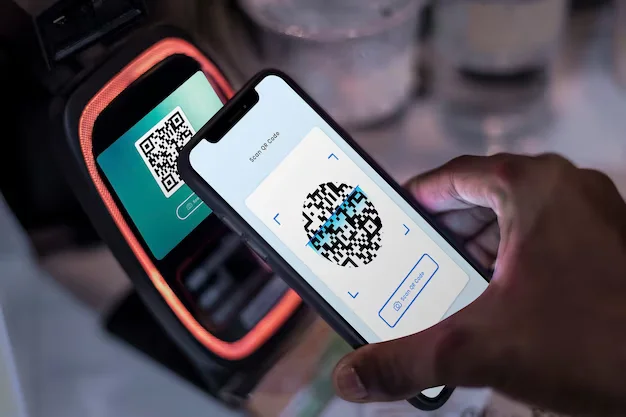
QRIS Will Change How You Pay in Asia

10 Ways QRIS Will Change How You Pay in Asia

Financial fragmentation can make traveling and trading between different nations very difficult because traditional currency exchange is often slow and expensive. However once you learn how Indonesia’s QRIS expansion connects Asian markets you will see a much smoother payment experience. I have analyzed how this cross border growth allows local businesses to accept international payments while seeing a massive boost in tourist spending.

The Problem With Traditional Currency Exchange

Many travelers still rely on physical cash or credit cards that charge very high fees for every international transaction. This approach creates a massive disconnect because users want a fast and digital way to pay for goods in a foreign country. You might feel frustrated when your local payment app fails to work the moment you cross a border. Traditional exchange methods are like carrying a heavy bag of coins and hoping every shop has the right change for you.

The solution lies in a unified digital system that works across different national boundaries instantly. Indonesia’s QRIS system allows a user to scan a single code to pay in their own currency while the merchant receives local funds. Once nations apply these interoperable standards you will see much higher trade efficiency across Asia. I have seen small vendors in Bali and Bangkok increase their sales by simply accepting digital payments from foreign visitors.
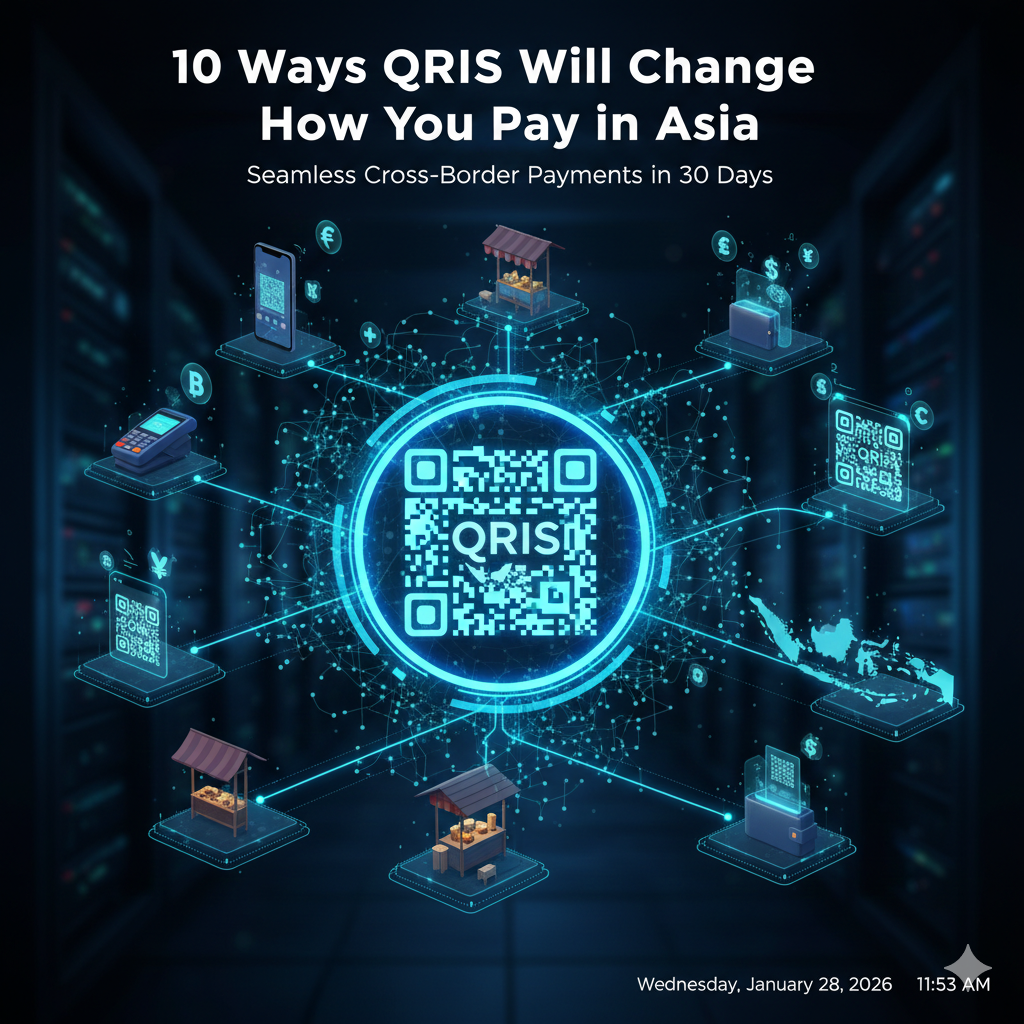
QRIS Will Change How You Pay in Asia

Strategy 1: Link Local QRIS to Regional Networks

Indonesia is actively connecting its national QR standard to other countries like Thailand, Malaysia, and Singapore. Specifically this link allows an Indonesian traveler to use their local banking app to pay for a meal in Kuala Lumpur. This integration removes the need for physical currency and lowers the cost for every person involved. Therefore you get a seamless experience that feels just like paying for something in your hometown.

Strategy 2: Implement Real Time Exchange Rates

Users love transparency because they want to know exactly how much they are spending in their own money. QRIS expansion uses real time rates to convert the price of a product at the exact moment of the scan. For example a shopper can see the cost in Rupiah even if the price tag is in Thai Baht. This level of detail builds immediate trust and encourages users to spend more during their travels.

Strategy 3: Optimize for Small Merchant Adoption

Many local businesses in Asia do not have expensive credit card machines because the fees are too high for their small margins. However QRIS is very cheap to implement since it only requires a printed code or a simple smartphone app. Because of this even the smallest street food stall can now accept international digital payments. This inclusion helps a wider range of local businesses benefit from the growth of regional tourism.

Strategy 4: Use QRIS to Drive Tourism Spending

A convenient payment system is a great way to encourage visitors to spend more money on local experiences. You can tell a traveler that they can pay for everything from a taxi ride to a luxury dinner using one single app. This creates a natural sense of ease that makes people more likely to choose Indonesia as their next destination. Consequently the local economy grows as digital friction disappears from the travel journey.

Strategy 5: Automate High Speed Settlement

Manual bank transfers between countries take a long time and often involve many different middlemen. However the QRIS cross border network uses advanced technology to settle transactions almost immediately. Your local business does not have to wait days to receive the funds from an international customer. Therefore you maintain a healthy cash flow and can restock your inventory without any delay.

Strategy 6: Provide Secure and Encrypted Transactions

Security is a primary concern for everyone who moves money across international borders today. QRIS uses high level encryption to ensure that every payment is safe from hackers and fraudulent activity. This ensures that both the customer and the merchant are protected during the digital handshake. Prompt and secure transactions help build a strong reputation for the Asian financial network as a whole.

Strategy 7: Collect Data for Regional Market Insights

Social proof and market data help you grow your business by showing you what your customers truly want. Indonesia’s central bank can use the data from QRIS to see which regions are seeing the most international spending. This allows the government to tailor its tourism and trade policies to match real world behavior. This simple step makes the entire regional economy much more responsive to changing user needs.

Strategy 8: Create a Seamless Bridge for Asian Trade

There are times when small businesses want to buy supplies from a neighboring country without opening a foreign bank account. You should use QRIS as a bridge that allows for easy business to business payments across Asia. This reduces friction and prevents small owners from having to deal with complex international wire transfers. A smooth payment bridge keeps the regional supply chain moving forward without any stops.

Strategy 9: Use Mobile Accessibility for Financial Inclusion

You want to make it as easy as possible for everyone to join the digital economy regardless of their location. Because many people in Asia use smartphones as their primary tool for internet access QRIS is the perfect solution. This saves people from the extra step of visiting a bank or carrying large amounts of cash. Therefore a single smartphone starts a financial journey that can lead directly to better economic health.

Strategy 10: Retarget International Shoppers Digitally

If a tourist buys from your shop using QRIS you can potentially use that connection to keep them engaged. For instance you can offer a digital loyalty card that stays in their mobile wallet for their next visit. This reminder should focus on the unique local experience your brand offers to every traveler. Remarketing with a personalized touch is a great way to win a repeat customer from across the globe.

Conclusion and Next Steps

If you follow the growth of this system you should soon see much better results for regional Asian trade. Please do not forget to let me know how you got on in the comments below. I am always interested in hearing your thoughts so tell me which part of this expansion you felt worked best for you.

FAQs

1 What is Indonesia’s QRIS expansion?

It is the growth of a unified QR payment standard that allows users to pay digitally across different Asian countries.

2 How does it help local Asian businesses?

It allows small merchants to accept international payments easily without expensive hardware or high fees.

3 Can I use QRIS in Thailand or Malaysia?

Yes, Indonesia has already established links with these countries to allow for cross border digital payments.

4 Is the QRIS system safe for travelers?

Yes, it uses advanced encryption and central bank oversight to ensure that every transaction is secure.

5 What is the first step for a business to accept QRIS?

The first step is to register with a participating bank or payment provider to receive your unique merchant QR code.

Also Read: Financial Fragmentation in a Multipolar World: Payment Guide

Unlock Seamless Shopping with One-Click Checkout

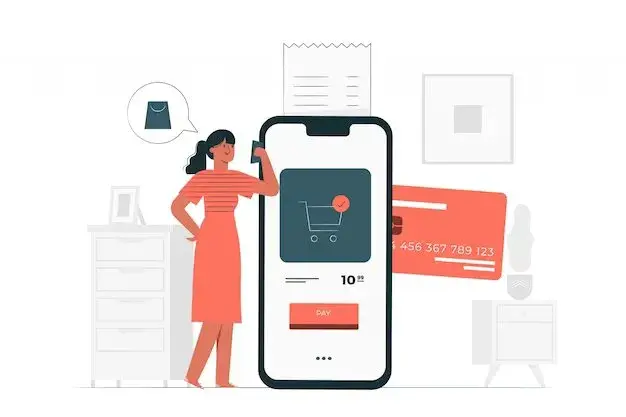
In today’s fast-paced digital world, online shoppers demand speed and convenience. The traditional checkout process, with its multiple steps and form fields, can often feel cumbersome. This friction can lead to cart abandonment, a significant challenge for e-commerce businesses. Enter one-click checkout, a game-changing technology that promises a smoother and faster customer journey. This innovative approach simplifies the final step of a purchase, allowing customers to complete their transaction with a single click. As a result, businesses can boost conversion rates and improve the overall user experience. It’s no longer just a luxury; it’s a necessity for staying competitive in the crowded e-commerce landscape.

Image of Unlock Seamless Shopping with One-Click Checkout

Understanding the Mechanics of One-Click Checkout

So, how does this magical one-click checkout technology actually work? The process hinges on securely storing customer information. When a user makes their first purchase, the system captures and saves their payment details, shipping address, and other necessary data. This information is securely tokenized and stored, complying with strict security standards like PCI DSS. For subsequent visits, when the customer is logged in, this saved data is automatically pre-filled. Consequently, the user avoids the tedious task of re-entering their details. Instead, they simply click a single button to confirm their purchase, and the transaction is processed instantly. This seamless experience is a direct result of sophisticated technology working behind the scenes.

The Key Technologies Driving One-Click Checkout

Several technological components work in harmony to make one-click checkout possible. First, tokenization is crucial. This process replaces sensitive data, like credit card numbers, with a unique, non-sensitive token. This makes the data useless to hackers if it’s ever intercepted. Second, secure data storage is paramount. The saved information must be held in a highly secure, encrypted environment. This protects customer privacy and builds trust. Third, API integrations with payment gateways are essential. These APIs facilitate the communication between the e-commerce platform and the payment processor, ensuring that the transaction is processed quickly and efficiently. Furthermore, advanced fraud detection systems are integrated to monitor for suspicious activity during these rapid transactions.

Improving the Customer Journey and Boosting Sales

The benefits of one-click checkout extend far beyond just speed. The most significant advantage is a dramatic reduction in cart abandonment. Many customers abandon their carts at the checkout stage due to its length and complexity. By eliminating this friction, businesses can convert a higher percentage of their visitors into paying customers. Furthermore, it creates a more positive and memorable shopping experience. A customer who has a seamless and effortless checkout is more likely to return for future purchases. This leads to increased customer loyalty and lifetime value. In essence, this technology transforms a potential source of frustration into a moment of delight, which directly impacts the bottom line.

Implementing One-Click Checkout for Your Business

For any e-commerce business considering this upgrade, a few key steps are vital for successful implementation. First, it is important to choose a reliable payment service provider that offers robust one-click checkout solutions. Look for a provider with strong security features and a proven track record. Next, ensure seamless integration with your existing e-commerce platform. The integration should be smooth to avoid any technical glitches that could disrupt the user experience. Finally, clear communication with your customers is essential. Inform them about the new feature and how their data is being securely stored. This builds trust and encourages adoption. With the right planning and execution, one-click checkout can become a powerful tool for business growth.

FAQs

Q1: Is one-click checkout secure?

A1: Yes, reputable one-click checkout solutions are highly secure. They use technologies like tokenization and encryption to protect sensitive customer data and comply with industry standards like PCI DSS.

Q2: How does one-click checkout differ from saved payment methods?

A2: While both save payment information, one-click checkout is designed to complete the entire transaction with a single click, including shipping and order confirmation. Saved payment methods may still require a few extra steps.

Q3: What types of businesses benefit most from one-click checkout?

A3: Businesses with high repeat customers, like subscription services or companies selling digital goods, benefit immensely. However, any e-commerce business can see significant improvements in conversion rates.

Q4: Does one-click checkout work on mobile devices?

A4: Absolutely. One-click checkout is particularly effective on mobile devices, where typing out long forms can be difficult and lead to higher rates of abandonment.

Q5: Will implementing one-click checkout increase my costs?

A5: There may be implementation costs or different transaction fees associated with some solutions. However, the increase in sales and reduction in cart abandonment often provides a strong return on investment.

Also Read: Subscription & Recurring Payments: Best Practices for Setup & Integration


Digital Payments

The Importance of Cyber Security in Digital Payments for Safe Online Transactions

In today’s fast-evolving digital age, the role of cybersecurity in digital payments is more critical than ever before. The rapid shift towards online transactions and mobile payments has revolutionized the way we handle our finances, but with this convenience comes a heightened risk of cyber threats. The rise in cyberattacks has made it increasingly important for consumers and businesses alike to understand the significance of securing digital payment systems. This article delves into the growing need for cybersecurity in digital payments, the potential risks, and why strong security measures are vital to safeguarding personal and financial data.

The Surge of Digital Payments in India

In recent years, India has witnessed a surge in digital payments, driven by initiatives such as Digital India, the rise of mobile wallets, UPI (Unified Payments Interface), and e-commerce platforms. The ease of making payments online, whether through mobile apps, websites, or QR codes, has significantly transformed the financial landscape in the country. Today, making payments for everything from groceries to utility bills can be done with just a few taps on your smartphone. The introduction of government-backed payment systems like Bharat Interface for Money (BHIM) and Paytm has further encouraged millions of Indians to embrace digital transactions.

However, with this convenience comes an increase in the threat landscape. Cybercriminals are becoming more sophisticated in their attempts to exploit vulnerabilities in digital payment systems. From phishing attacks to data breaches, digital payments are often targeted by malicious actors. This makes cybersecurity an absolute necessity for the safety and security of our financial transactions.

Why Cybersecurity is Essential in Digital Payments

1. Protection of Sensitive Personal and Financial Information

The core reason cybersecurity is essential in digital payments is to protect sensitive personal and financial data. When we engage in digital transactions, we often share critical information like credit card numbers, bank account details, Aadhaar numbers, and social security numbers. If this data falls into the wrong hands, it can be used for identity theft, fraudulent activities, and unauthorized access to accounts, causing significant financial and emotional distress to victims.

For instance, a breach of a user’s credit card information could lead to unauthorized purchases, loss of funds, and time-consuming efforts to resolve the issue. To prevent such scenarios, robust cybersecurity mechanisms are necessary. Some of these include:

  • Encryption: This technique ensures that any data transmitted over the internet, especially personal and payment information, is converted into unreadable code. Only authorized parties with the decryption key can access the information. Without encryption, this sensitive data would be vulnerable to theft.
  • Multi-Factor Authentication (MFA): MFA adds an extra layer of security by requiring the user to verify their identity using two or more authentication factors. These can include a password, a PIN, or a biometric scan like a fingerprint or facial recognition. Even if hackers manage to obtain a user’s password, MFA helps ensure that unauthorized access is prevented.
  • Tokenization: Tokenization replaces sensitive information, such as credit card numbers, with a unique code called a token. This token has no value outside the transaction for which it was created, making it useless to anyone attempting to misuse it.

By adopting these security measures, digital payments can be much safer, reducing the risk of fraud and identity theft in India’s increasingly cashless economy.

2. Combating Cyber Threats on a Global Scale

Another significant aspect of cybersecurity in digital payments is the global nature of these transactions. Payments are not restricted to one country or region; they often involve international players, which makes them vulnerable to global cyber threats. Cyberattacks can come from any part of the world, targeting payment systems in India as well as international corporations, governments, and financial institutions.

A breach in the payment infrastructure could have far-reaching consequences, not just for individuals but for businesses and even national economies. For example, the Ransomware attack on India’s government websites in recent years highlighted how vulnerable digital systems are to global threats. Cybercriminals can exploit vulnerabilities in payment systems to steal money, disrupt business operations, or access sensitive government data.

To prevent such threats, it is essential that payment systems invest in robust cybersecurity frameworks and constantly upgrade their security protocols. Cyberattacks can be costly, not only in terms of direct financial losses but also in reputational damage. Therefore, businesses must invest in securing their payment platforms against global cyber threats.

3. Securing Payment Systems and Enhancing Trust

A key factor driving the widespread adoption of digital payments is the trust consumers place in these systems. If consumers feel that their personal or financial data is vulnerable, they will be hesitant to make digital transactions. Cybersecurity ensures that the payment systems are reliable and trustworthy, which is crucial in maintaining customer confidence.

For instance, when you make an online purchase through a platform like Amazon India or Flipkart, you need to trust that your payment details are protected. If payment systems fail to provide adequate protection against fraud or data breaches, consumers may switch to other platforms, ultimately leading to a loss of business for retailers and financial institutions.

A secure payment system encourages customers to conduct more transactions and build long-term loyalty. This is why payment platforms in India, such as Google Pay, PhonePe, and Paytm, continue to invest heavily in cybersecurity measures.

4. Preventing Payment Fraud

Fraud prevention is one of the most critical aspects of securing digital payments. Cybercriminals can attempt to gain unauthorized access to users’ accounts by using stolen login credentials, exploiting software vulnerabilities, or even manipulating users into revealing their details through phishing attacks.

In response to these risks, payment systems use advanced fraud detection algorithms that continuously monitor transaction patterns for suspicious activity. These systems can flag unusual transactions in real time and even require additional authentication to prevent fraud. Additionally, biometric authentication like fingerprint scanning or facial recognition is gaining traction in India as a means to verify a user’s identity during payments.

Incorporating such technologies helps prevent fraud and ensures that digital payments remain safe for Indian consumers and businesses alike.

Strengthening India’s Digital Payment Infrastructure

As India continues to move towards a more digital economy, the need to strengthen the security of digital payment systems is more pressing than ever. Payment systems need to embrace technologies such as blockchain, artificial intelligence, and machine learning to stay ahead of cybercriminals.

With the government’s focus on driving digital payments through initiatives like PMGDISHA (Pradhan Mantri Gramin Digital Saksharta Abhiyan) and Financial Literacy Programs, it is essential to also ensure that these platforms are fortified with state-of-the-art cybersecurity measures.

Conclusion: Safeguarding the Future of Digital Payments

The importance of cybersecurity in digital payments cannot be overstated, especially as India rapidly embraces the digital age. While digital payments offer tremendous benefits in terms of convenience and accessibility, they also expose users to significant risks, including identity theft, fraud, and cyberattacks. By implementing strong security measures such as encryption, multi-factor authentication, and tokenization, both individuals and businesses can ensure the safety of their digital transactions.

As India continues to adopt digital payment solutions across its diverse population, the government and financial institutions must work together to build secure payment systems that foster trust and confidence. With cybersecurity as a top priority, we can create a secure environment for digital transactions and safeguard the future of India’s digital economy.

Investing in robust cybersecurity infrastructure is not just an option it’s a necessity to ensure the safety, reliability, and long-term sustainability of India’s rapidly growing digital payment ecosystem.

payment gateway

Exploring One-Click Payments: Simplifying the Checkout Experience with Integrated Payment Gateways

In the rapidly evolving e-commerce landscape, companies are constantly looking for ways to simplify cash transactions and enhance user experience as a solution to hard currency transactions has become easier, allowing consumers to make purchases with just one click. This new platform uses integrated payment gateways to provide fast and secure transactions, transforming the way consumers shop online

A one-time payment eliminates the need for users to enter their payment and shipping details for each transaction manually. By securely storing customer data, integrated payment gateways enable businesses to deliver a frictionless shopping experience, reduce cart abandonment, and increase conversion rates with just one click enabling customers to complete their purchases quickly, facilitating and encouraging repeat business.

Integrating payment gateways into the payment system is necessary to enable one-click payments. These gateways act as intermediaries between merchants and financial institutions, processing transactions securely and providing seamless communication between various stakeholders When integrated with major payment gateways such as PayPal, Stripe, or Square, businesses can offer a variety of payment options to ensure the highest level of payment security and reliability for customers.

From the user’s perspective, a one-time payment offers unmatched convenience and efficiency. Whether shopping on mobile or desktop, customers can breeze through the exit with minimal effort, resulting in a more satisfying shopping experience. Paying once does not take more time and reduces friction by eliminating the need for repeated documentation, ultimately increasing customer satisfaction and loyalty.

However, businesses need to prioritize security and compliance when implementing one-click payments. Strong security measures such as tokenization and encryption should be implemented to protect sensitive customer information and prevent unauthorized access. In addition, businesses must comply with PCI DSS and other industry regulations to ensure the integrity and confidentiality of payment information.

In conclusion, one-time payments represent a huge leap forward in e-commerce, providing a streamlined experience that benefits businesses and consumers Using an integrated payment gateway to address security, services can simplify payment processing, increase customer satisfaction and increase growth significantly in a competitive market.

Payment Gateway

Successful Payment Gateway Integration Strategies of Leading Businesses

Successful payment gateway integration is essential for today’s businesses looking to provide customers with a seamless and secure transaction experience. Companies are the first to understand the importance of efficient payment processing and implement strategies to ensure successful integration.

First, proper research and selection of the right insurer is key. Companies look for things like marketing costs, safety features, global reach and compatibility with their existing systems. Priority is given to providers known for their reliability and compliance with industry standards such as PCI DSS (Payment Card Industry Data Security Standard).

Second, leading businesses prioritize user experience (UX) throughout the integration process. The steps customers have to take to complete their transactions are reduced, making it easier to finance. Intuitive design, clear instructions, and responsive interfaces improve user satisfaction and reduce cart abandonment rates.

Additionally, customizing payment gateway integration to specific business needs is key. Leading companies use APIs (application programming interfaces) and SDKs (software development kits) provided by payment gateway providers to seamlessly integrate payment functionality into their websites or applications Optimization Branded payment pages, . multi-currency support, CRM (customer relationship management). or ERP (Enterprise Resource Planning) software and allows integration with other business processes

Additionally, ensuring a robust security infrastructure is more of a priority than payment gateway integration strategies. Leading companies use encryption protocols, tokenization, and fraud detection systems to protect sensitive customer data and prevent unauthorized transactions. Perform regular security audits and compliance audits to monitor payment compliance and the integrity of the program.

Lastly, ongoing monitoring and optimization are essential for continuous improvement. Leading businesses track transaction metrics, identify pain points, and implement refinements to enhance performance and reliability. They stay updated on emerging technologies and market trends to adapt their payment gateway integration strategies accordingly, ensuring a competitive edge in the ever-evolving digital landscape.

In conclusion, successful integration of payment gateways requires careful planning, user-centric planning, quality design, robust security measures, and continuous improvement. Businesses should be the first to prioritize these channels to deliver a seamless and secure transaction experience, thus trusting customers. Loyalty was growing and enhanced the digital economy.

Common Challenges in Payment Gateway Integration and How to Overcome

Payment gateway integration is a crucial feature of e-commerce websites since it allows businesses to execute transactions safely online. Despite its importance, integrating payment channels can pose several issues. The following are some of the most typical issues and strategies.

Integrating payment gateways needs technical competence, particularly in programming languages and systems. To address this issue, firms might hire professionals who are experienced with payment gateway API documentation, as he has been chosen.

Security Concerns: It is critical to ensure that payment transactions are secure. Businesses must follow industry standards like PCI DSS (Payment Card Industry Data Security Standard) to safeguard sensitive consumer information. Tokenization and encryption approaches can assist reduce security threats.

Compatibility Issues: Payment gateway integration may cause compatibility issues with existing software systems or eCommerce platforms. It is critical to select a payment gateway that interacts effectively with existing services or to invest in custom enhancements to address any gaps.

Regulatory compliance: Complying with regulatory regulations, such as the GDPR (General Data Protection Regulation) or local financial legislation, complicates integrating payment gateways. Companies must keep up with new rules and guarantee that their payment systems match regulatory criteria.

Connection failures: Payment gateway integrations may fail owing to network difficulties, server downtime, or insufficient funds. Implementing strong error-handling methods and retry strategies helps mitigate the impact of network outages and ensure a consistent client experience.

User Experience Optimisation: The checkout procedure has a significant impact on the user experience. Customers who get complicated or lengthy bills may be unable to complete transactions. Implementing services like auto-replenishment and guest check-in can improve payment flow, user experience, and conversion rates.

Testing and debugging: Payment gateways must be thoroughly tested to discover and resolve integration issues before they are deployed into production. Automated testing frameworks and simulation tools can improve testing efficiency and uncover potential flaws early on.

Businesses can successfully integrate a payment gateway to provide smooth and secure online transactions for their consumers by tackling these typical problems through strategic planning, teamwork, and the use of best practices.

E-commerce Platforms and Payment Gateway Integration

Integrated payment gateways are crucial for every online business because they enable seamless transactions between customers and merchants. However, it is not without its obstacles, which might jeopardize smooth operations. Here are some of the main difficulties and potential answers.

Security concerns: Security is critical while processing payments. Ensuring compliance with PCI DSS regulations and employing strong encryption mechanisms are critical steps in mitigating security concerns. Furthermore, updating security rules regularly and conducting vulnerability assessments might help to protect against cyber threats.

Compatibility concerns: Integrating payment gateways across platforms, including websites, mobile apps, and eCommerce platforms, can be difficult owing to compatibility concerns. If an API-based interface and an SDK are used, implementing payment gateway providers can ease the integration process. And ensure compatibility across platforms.

Complex documentation and regulations: Integrating payment gateways frequently necessitates dealing with complicated paperwork and regulatory requirements, particularly when operating in multiple countries. Legal experts or internationally savvy consultants who properly implement payment rules can assist in navigating complex issues and ensuring compliance with local laws.

Inefficiencies and downtime: Inefficiencies and downtime can result in revenue losses and consumer displeasure. The impact of downtime can be reduced by implementing redundant processes and failover methods. Furthermore, regular communication log monitoring and performance testing can aid in the detection and proactive resolution of any difficulties.

User Experience Challenges: A straightforward user experience is critical for increasing conversions and client retention. Optimizing invoicing, providing more payment alternatives, and integrating features like backup payment options and one-click purchases can all improve the customer experience and prevent cart abandonment.

Integration Cost and Time: Integrating payment gateways can be costly and time-consuming, particularly for specialized integrations. Using ready-made plugins or third-party integration services can shorten the integration process and lower development costs.

By addressing these difficulties and applying effective techniques, organizations may ensure greater integration of payment gateways and a seamless payment experience for their customers, resulting in increased productivity.

E-commerce Platforms and Payment Gateway Integration

In today’s dynamic business environment, e-commerce platforms play a vital role in enabling companies to reach a global audience and conduct transactions seamlessly. These platforms act as a digital marketplace where buyers and sellers meet, providing a convenient and efficient shopping experience.

The key to the success of any eCommerce business is the integration of robust payment gateways, technologies that provide secure and fast online transactions.

E-commerce platforms act as virtual storefronts for businesses, providing a user-friendly interface where customers can browse products, compare prices and buy with just a few clicks on Shopify, WooCommerce, Magento, and other popular platforms from small business startups. He offers a range of products that meet the needs of businesses up to large corporates that provide tools for inventory management, order management and customer relationship management, streamlining the entire online sales process.

However, the real magic happens when eCommerce platforms successfully integrate with payment gateways. Access gateways are technologies that authorize and process payments securely, ensuring that sensitive financial information is protected. This integration will allow customers to use multiple payment methods including credit cards, digital wallets, and other online payment methods, increasing convenience and expanding the customer base

Security is paramount in the world of e-commerce, and payment methods play an important role in this aspect. Encryption and tokenization techniques are used to protect sensitive information, ensuring trust between buyers and sellers. A smooth and secure payment process is essential to reducing cart abandonment and building loyal customers.

As the e-commerce landscape continues to evolve, the integration of advanced features such as artificial intelligence, mobile optimization and omnichannel capabilities will further enhance the overall customer experience for businesses investing in an e-commerce platform with robust and seamless payment gateway integration, they are well positioned to take advantage of the growing opportunities in the digital marketplace, drive growth and success online.

Customizing the User Experience in Payment Gateway Integration

Experience with successful payment gateway integrations is essential for businesses looking to increase customer satisfaction, increase conversion rates, and build trust. A simple and personalized rewards system can gain user attention and significantly influence their decision to close a transaction. Here are the key considerations when optimizing the user experience in an integrated payment gateway.

First, branding plays an important role. Companies need to ensure that the payment gateway is closely aligned with their overall brand presentation. It incorporates the company logo, colors and messaging between payments. A consistent brand experience builds users’ trust, reinforcing that they are in a safe and familiar environment.

Second, user interface (UI) and user experience (UX) design should be first and foremost simple and clear. Complex payment models can discourage users and abandon abandoned services. Customizing the interface to make it more intuitive and user-friendly ensures that customers can navigate effortlessly through the payment stages. Providing clear instructions and error messages further contributes to a positive user experience.

Additionally, companies need to offer multiple payment options to meet customer preferences. Customization should extend to supporting payment methods, including credit cards, digital wallets, and other payment solutions. This shift not only evolves the needs of different customers but also broadens the base of potential customers.

Security is of the utmost importance in payments, and businesses should prioritize upgrading security measures to ensure trust. It assures users of the security of their financial information by transparently communicating established security measures such as encryption and Secure Sockets Layer (SSL) certificates.

In conclusion, optimizing user experience in integrated payment gateways is key to building trust, increasing conversion, and enhancing customer loyalty. By creating a brand-aligned payment system, simplifying UI/UX, offering different payment options, and emphasizing security, businesses can create better and easier reward experiences for their customers.

Mobile Payment Trends and Their Influence on Marketing Strategies

Mobile payment trends have accelerated in recent years, changing the way consumers do business, and influencing business strategies across industries. The convenience and convenience of mobile payments have helped to increase its adoption and create new opportunities and challenges for businesses.

A key trend in mobile payments is the growth of contactless commerce. Near-field communication (NFC) technology enables users to make secure payments by simply tapping their smartphone or wearing it on a compatible terminal. This trend has gained tremendous traction due to speed and functionality, namely meets today’s consumer desire for speed and simplicity.

Furthermore, mobile wallet integration has become increasingly common. Services like Apple Pay, Google Pay and Samsung Pay allow users to seamlessly store multiple payment methods on their devices, making payments easier. This trend not only enhances user experience but also allows merchants to implement personalized loyalty programs and promotions with these digital wallets.

Another notable feature is the addition of biometric authentication to mobile payments. Fingerprinting, facial recognition, and other biometric technologies add an extra layer of security, increasing consumer confidence in mobile transactions. Marketers can take advantage of this by highlighting security features on their mobile payment systems in their promotional efforts.

Additionally, the use of QR codes for payments has become popular, especially in emerging markets. Mobile payment applications often use QR codes for peer-to-peer communication and easy merchant payments. This trend allows marketers to explore creative marketing campaigns around QR codes, increasing brand visibility and engagement.

In conclusion, the evolution of mobile payment practices is changing the business landscape and influencing business strategy. Businesses that make changes in these areas can increase customer engagement, build brand loyalty, and stay ahead in a growing market for digital and mobile. While mobile payment platform continues to evolve, merchants must remain agile, developing innovative solutions to meet the changing expectations of tech-savvy customers. Different viewpoints must be accepted.