How Does Reliable Payment Tech Drive Gamer Trust

How Does Reliable Payments Tech Drive Gamer Trust? Ultimate Guide

Payments for Gaming Platforms: Handling Microtransactions at Scale

Introduction

Gaming platforms live and die by their payment systems. A single failed transaction can push a player away for good. As games grow, so does the volume of microtransactions. Players buy skins, coins, boosts, and battle passes, often within seconds of deciding to spend. This creates unique pressure on payment infrastructure. Speed, reliability, and security all matter at once. In this guide, we explore how payments for gaming platforms work when microtransactions happen at scale. You will learn what makes gaming payments different, the biggest challenges operators face, and practical steps to build a system that can handle millions of small transactions without breaking down. By the end, you will have a clear framework for evaluating your own payment stack against the demands of modern, high-volume gaming.

What Makes Gaming Microtransactions Different with Payments

Microtransactions are small in value but massive in volume. A single popular game can process millions of purchases each day. Each purchase might be worth only a dollar or two. However, the total transaction count creates real strain on payment systems. Traditional payment setups, built for larger and less frequent purchases, often struggle here.

Speed is another defining factor. Players expect instant delivery after payment. A delay of even a few seconds can feel broken, especially during active gameplay. As a result, payment systems for games must process approvals almost instantly. This is different from e-commerce, where a short delay before shipping confirmation is normal and expected.

Fraud risk also looks different in gaming. Stolen cards are often tested through small in-game purchases before being used for larger crimes elsewhere. Consequently, gaming platforms become an early target for fraud testing. This means fraud detection must work in real time, without slowing down legitimate players.

Finally, global reach adds complexity. Gaming audiences span nearly every country. Each region has different preferred payment methods, currencies, and regulations. A platform built only for credit cards will lose players in markets where mobile wallets or prepaid vouchers dominate.

Player behavior also differs from typical online shopping. Purchases often happen impulsively, driven by in-game moments such as reaching a difficult level or unlocking a limited-time offer. This means checkout friction has an outsized effect on revenue. Every extra step in the payment flow risks losing a sale that would have closed instantly with a smoother process. As a result, gaming platforms tend to invest heavily in one-click or saved-payment experiences that other industries adopt more slowly.

Core Challenges in Scaling Gaming Payments

The first major challenge is transaction cost. Processing fees that seem small on a single purchase add up quickly across millions of microtransactions. Platforms need pricing models that remain profitable even on very small purchase amounts. Otherwise, popular low-cost items can quietly erode margins.

The second challenge is infrastructure load. Payment systems must handle sudden spikes, such as when a new game update launches. Traffic can jump within minutes, and any slowdown directly costs revenue. Therefore, scalable, cloud-based payment infrastructure is essential rather than optional.

Chargebacks present a third challenge. Because microtransactions are low value, some players dispute charges casually, assuming the amount is too small to matter. However, chargeback fees are often flat, regardless of the purchase size. A high volume of small disputes can quickly damage profitability and merchant standing with payment processors.

Regulatory compliance adds a fourth layer of difficulty. Rules around in-game purchases, loot boxes, and payments involving minors vary by country. Some regions require clear spending limits or parental controls. Platforms operating globally must track and apply these rules correctly, or risk fines and platform bans.

Currency handling introduces a fifth challenge that is easy to overlook. Displaying prices in a player’s local currency improves trust and conversion. However, currency conversion also introduces rounding issues and exchange rate risk. Platforms must decide whether to absorb small fluctuations or pass them along, and that decision affects both margins and player perception of fairness.

How to Build a Payments System That Scales

Start with a payment provider built for high transaction volume. Look for partners with proven experience in gaming, not just general e-commerce. These providers understand microtransaction pricing and can offer better rates at scale.

Next, prioritize multiple payment methods from day one. Credit cards remain important, but mobile wallets, carrier billing, and prepaid options often drive higher conversion in specific regions. Offering local payment methods can increase completed purchases significantly, especially in markets where card ownership is low.

Implement real-time fraud detection that uses behavioral signals, not just static rules. For example, a system might flag rapid, repeated small purchases from a new account as suspicious. Modern fraud tools use machine learning to catch these patterns without blocking genuine players. Balance is key here. Overly strict fraud rules frustrate real customers, while weak rules invite abuse.

Additionally, build a smart retry system for failed payments. Many failures happen due to temporary issues, such as a bank’s fraud check or a network hiccup. Automatically retrying a failed charge, with proper safeguards, can recover a meaningful share of lost revenue without extra effort from the player.

Finally, invest in clear reporting and reconciliation tools. At scale, manual tracking of transactions becomes impossible. Automated dashboards that show revenue, chargeback rates, and regional performance help teams spot problems early and react quickly.

It also helps to separate your payment logic from your core game code. Keeping these systems modular means you can update payment providers, add new methods, or adjust pricing without touching gameplay systems. This separation reduces risk and speeds up future changes, since payment teams can iterate independently from game development teams.

Best Practices for Reliability and Trust on Payments

Reliability builds player trust, and trust drives spending. Aim for near-perfect uptime on your payment system, since even brief outages during peak hours can cause significant revenue loss and player frustration.

Transparency also matters greatly. Clearly show players what they are buying and the exact price before confirming. Hidden fees or confusing currency conversions create frustration and increase support tickets. Similarly, send instant purchase confirmations so players know their transaction succeeded.

Security should never be an afterthought. Use tokenization to avoid storing raw card data directly. This reduces your compliance burden and protects players if a breach ever occurs elsewhere in your systems. Regular security audits are equally important, especially as your platform integrates new payment partners over time.

Consider offering spending controls, particularly for platforms with younger audiences. Features like daily spending caps or parental approval steps build long-term trust with both players and regulators. This proactive approach can also reduce chargeback disputes tied to unauthorized purchases by minors.

Lastly, monitor performance across regions separately. A payment method that works well in one country may perform poorly elsewhere. Regular regional reviews help you adjust your payment mix and maintain strong conversion rates everywhere you operate.

It is also wise to run periodic load tests that simulate peak traffic before major releases. Simulated stress testing reveals weak points in your payment stack while the stakes are still low. Fixing a bottleneck during a test costs far less, in both money and reputation, than discovering it during a live launch with thousands of players trying to spend at once.

How Does Reliable Payment Tech Drive Gamer Trust

Conclusion

Handling microtransactions at scale requires more than a standard payment setup. Gaming platforms need speed, global payment options, strong fraud protection, and reliable infrastructure working together. By choosing the right partners and building smart, automated systems, you can support massive transaction volumes without sacrificing player trust. As your platform grows, these foundations will keep payments smooth, secure, and profitable. Build your authority with Digital Payment Guru and turn your payment infrastructure into a genuine competitive advantage.

Frequently Asked Questions

1. What is a microtransaction in gaming?

A microtransaction is a small in-game purchase, such as buying virtual currency, cosmetic items, or extra content, usually for a low price.

2. Why do gaming platforms face more fraud attempts than other industries?

Stolen payment cards are often tested through small gaming purchases before being used elsewhere, making games an early fraud target.

3. How can gaming platforms reduce chargeback rates?

Clear pricing, instant confirmations, and spending controls all help reduce disputes caused by confusion or unauthorized purchases.

4. Do gaming platforms need to support multiple payment methods?

Yes. Supporting local wallets, carrier billing, and prepaid options improves conversion rates in regions with low card ownership.

5. What role does infrastructure play in payment scalability?

Cloud-based, scalable infrastructure ensures payment systems handle sudden traffic spikes, such as new game launches, without downtime.

Also Read:

How Do SaaS Leaders Plan Payment Strategies? Ultimate Guide

How Do EdTech Start-ups Simplify Payments? Ultimate Guide

How Do SaaS Leaders Plan Payment Strategies

How Do SaaS Leaders Plan Payment Strategies? Ultimate Guide

Embedded Payments in SaaS Platforms: A Growing Opportunity

Introduction

SaaS platforms no longer just manage workflows. Many now move money directly inside their products. Embedded payments in SaaS platforms let customers pay, get paid, and manage funds without leaving the app. This shift is creating a growing opportunity for software companies of every size.

Businesses that add payment features often see stronger revenue and stickier customers. However, adding payments the right way takes careful planning. This guide explains what embedded payments are, why they matter, and how to bring them into your platform successfully.

We will also cover the benefits beyond revenue, the different paths companies can take, and the compliance steps that protect both the business and its customers.

What Embedded Payments Actually Mean for SaaS

Embedded payments allow a SaaS product to process transactions natively. Instead of sending users to a separate payment provider, the software handles it directly. This includes invoicing, card processing, payouts, and even lending features in some cases.

For example, a scheduling app might let salons charge clients automatically after each appointment. Similarly, a construction management tool might let contractors pay suppliers from within the platform. In contrast, older SaaS tools simply linked out to third-party checkout pages.

This difference matters because embedded payments in SaaS platforms remove friction. Users complete more actions without switching tools. As a result, they stay engaged with the software for longer periods.

Beyond simple transactions, some platforms now offer embedded lending or instant payouts. These features go a step further than basic payment processing. They turn the software into a genuine financial partner for its users, not just a workflow tool.

Some SaaS platforms also embed expense cards or virtual accounts for their customers. These features let businesses manage cash flow entirely within the software they already use daily. This deeper integration makes the platform far harder to replace.

It is worth noting that embedded payments differ from simple payment gateways. A gateway just processes a transaction and passes the funds along. Embedded payments, in contrast, weave the entire financial workflow into the product experience itself.

Payouts are another area worth understanding. Many platforms now offer instant or next-day payouts to their users, rather than the standard multi-day wait. This speed becomes a real competitive advantage for platforms serving freelancers or small businesses that rely on fast cash flow.

Marketplaces provide one of the clearest examples of embedded payments in action. A marketplace platform collects payment from a buyer, holds it briefly, then splits and pays out multiple sellers automatically. This entire process happens without any manual intervention from the platform operator.

Vertical SaaS companies, which serve a single industry deeply, often benefit most from this model. A platform built specifically for veterinary clinics or auto repair shops already understands its customers’ payment habits better than a generic tool ever could.

Why This Market Is Growing So Quickly

Several forces are driving demand for embedded payments in SaaS platforms. First, customers expect all-in-one solutions rather than juggling separate tools. Second, payment infrastructure providers now make integration far easier than before.

Additionally, SaaS companies are searching for new revenue streams beyond subscription fees. Payment processing offers a natural, high-margin addition. Meanwhile, investors increasingly favor SaaS platforms with embedded finance because it improves both revenue and customer lock-in.

Consequently, industries like healthcare, real estate, and field services are adopting embedded payments quickly. These sectors already rely on software daily, making payments a natural next step.

Analysts also point to falling integration costs as a key driver. Payment infrastructure companies now offer ready-made tools that once required years of in-house development. This shift lowers the barrier for smaller SaaS companies to compete with larger players.

Market research consistently shows embedded finance revenue growing much faster than traditional software licensing. This trend is pushing even conservative SaaS companies to explore payments sooner than they originally planned.

Competitive pressure plays a role too. Once one platform in a niche adds embedded payments, competitors often feel forced to follow. Otherwise, they risk losing customers who prefer an all-in-one solution over a fragmented set of tools.

Consumer behavior is shifting as well. Business owners increasingly expect the software they already trust to also handle their money securely. This expectation makes embedded payments feel less like an add-on and more like a baseline requirement.

Regulatory changes have also opened the door wider. Many regions now offer clearer licensing paths for software companies that want to offer payment services. This clarity reduces legal uncertainty and encourages more SaaS companies to move forward with confidence.

The rise of application programming interfaces built specifically for finance has also lowered technical barriers. Development teams can now connect to sophisticated payment infrastructure in weeks rather than the years such projects once required.

Business Benefits Beyond Extra Revenue

Revenue is the most obvious benefit, but it is not the only one. Embedded payments in SaaS platforms also improve customer retention. When payment data lives inside the platform, switching to a competitor becomes harder.

Furthermore, embedded payments give companies richer data about customer behavior. This data can improve product decisions and personalize offers. In contrast, platforms without payment data often work with incomplete customer insights.

Customer support also improves in many cases. Support teams can resolve billing issues directly, without redirecting users elsewhere. This creates a smoother overall experience and builds trust in the brand.

Finally, embedded payments can strengthen a company’s valuation. Investors often view payment revenue as more predictable and scalable than subscription fees alone. This perception can support stronger funding rounds or acquisition offers down the line.

Cross-selling also becomes easier once payments are embedded. A platform that already handles a customer’s money is well positioned to introduce related financial products, such as savings tools or short-term credit.

Employee productivity can improve as well. Finance teams inside customer companies spend less time reconciling payments across multiple systems. This time saving becomes a strong selling point during renewal conversations.

Brand perception also shifts in a positive direction. A platform that handles payments smoothly is often seen as more mature and trustworthy. This perception can help win larger, more sophisticated customers who expect a complete solution.

Reduced customer churn often follows naturally from these combined benefits. A customer who relies on a platform for both operations and payments faces a much higher switching cost than one using the software for workflow alone.

How to Add Embedded Payments the Right Way

Companies exploring embedded payments in SaaS platforms usually choose between three paths. They can build the infrastructure themselves, partner with a payment facilitator, or use a white-label solution. Each option has different costs, timelines, and compliance requirements.

Building in-house offers full control but demands significant engineering and regulatory expertise. Partnering with an established provider speeds up launch and reduces compliance risk. Therefore, most SaaS companies start with a partner and consider building later as volume grows.

Regardless of the path chosen, security and compliance must come first. Handling payment data means following standards like PCI DSS. A trusted partner or advisor can help avoid costly missteps during rollout.

It also helps to pilot the feature with a small group of customers first. This approach surfaces issues early, before a full-scale launch. Feedback from this group often shapes pricing, onboarding, and support processes for the wider rollout.

Pricing strategy deserves careful thought as well. Some companies charge a small transaction fee, while others bundle payment costs into a higher subscription tier. Testing both models with real customers helps determine which approach earns more long-term loyalty.

Clear internal training matters too. Sales and support teams need to understand the new feature well enough to explain it confidently. Otherwise, customers may hesitate to adopt a capability they do not fully understand.

Ongoing monitoring after launch is just as important as the initial rollout. Tracking transaction success rates, dispute levels, and customer complaints helps teams catch problems early, before they affect a large share of users.

Companies should also plan for international expansion early, even if current customers are local. Payment regulations and preferred payment methods vary widely by country, and planning for this variation upfront avoids expensive rework later.

Setting up a clear dispute resolution process before launch also protects the business. Customers will occasionally have billing questions or disputed charges, and having a defined process ready builds trust from the very first transaction.

Conclusion

Embedded payments in SaaS platforms represent one of the biggest growth opportunities in software today. They boost revenue, deepen customer relationships, and create a more complete product experience. Companies that move early often gain a strong competitive edge.

Getting started does not require doing everything alone. Choosing the right partner and planning for compliance from day one makes the transition much smoother.

Businesses that treat payments as a core product feature, rather than an afterthought, tend to see the strongest long-term results.

The opportunity window is wide open right now, but it will not stay that way forever as more competitors enter the space.

Build your authority with Digital Payment Guru and turn payments into your next growth engine.

How Do SaaS Leaders Plan Payment Strategies

Build your authority with Digital Payment Guru

Frequently Asked Questions

1. What are embedded payments in SaaS platforms?

Embedded payments let a SaaS product process transactions directly, such as invoicing, card payments, and payouts, without redirecting users to a separate service.

2. Why should a SaaS company add embedded payments?

Embedded payments create new revenue streams, improve retention, and give companies richer data about customer behavior and spending patterns.

3. Should a SaaS company build or partner for embedded payments?

Most companies start by partnering with a payment facilitator, since it reduces compliance risk and speeds up launch compared to building in-house.

4. Is embedded payments in SaaS platforms secure?

Yes, when implemented correctly. Companies must follow standards like PCI DSS and work with trusted, compliant payment infrastructure providers.

5. Which industries benefit most from embedded payments?

Healthcare, real estate, field services, and scheduling platforms benefit greatly, since they already handle frequent transactions within their software.

Also Read:

How Does Fintech Speed Up Logistics Payments? Ultimate Guide

How Do EdTech Start-ups Simplify Payments? Ultimate Guide


How Do EdTech Startups Simplify Payments

How Do EdTech Start-ups Simplify Payments? Ultimate Guide

Payment Gateways for EdTech Platforms: Unique Challenges

Payment gateways for EdTech platforms are not like typical online checkout systems. Education businesses deal with parents, students, institutions, and even government bodies. Each group brings different expectations and payment habits.

This guide explores the real challenges EdTech companies face with payments. You will also learn practical ways to solve these problems. By the end, you will understand what separates a good payment gateway from a great one.

Whether you run a tutoring app, an online school, or a certification platform, these lessons apply to you. Payments may feel like a small detail. In truth, they shape the whole customer experience.

Why EdTech Payments Are Different

Traditional eCommerce involves one buyer and one seller. EdTech, however, often involves three parties. A parent pays, a student learns, and the platform delivers the service. This triangle creates unique friction points.

Also, EdTech platforms often serve global audiences. A single course might attract students from ten different countries. Each country has its own preferred payment methods, currencies, and regulations.

Trust also plays a bigger role in education payments. Parents want reassurance before paying for their child’s learning. So, payment gateways for EdTech platforms must feel secure and transparent at every step.

Subscription models add one more layer of complexity. Many EdTech platforms charge monthly or yearly fees. Managing renewals, failed payments, and cancellations requires a gateway built for recurring billing.

Institutional buyers add yet one more dimension. Schools and corporate training departments often pay in bulk, sometimes through invoicing rather than instant checkout. A payment gateway built only for individual consumers may struggle with these larger, slower-moving transactions.

Age also plays an unusual role in EdTech payments. Many learners are minors who cannot legally hold a payment method themselves. This means the actual payer is rarely the actual user, which complicates identity verification and consent tracking.

Common Challenges EdTech Platforms Face

The first major challenge is handling diverse payment methods. Some regions prefer credit cards, while others rely on digital wallets or bank transfers. A limited gateway can quickly turn away potential customers.

Currency conversion creates one more hurdle. International students expect prices in their local currency. Without proper conversion tools, EdTech platforms risk confusing or losing customers during checkout.

Compliance requirements add further pressure. Education platforms that collect payments from minors, through parents, must follow strict data protection rules. Similarly, financial regulations vary widely between countries and states.

Refunds and chargebacks are also more common in education than in typical retail. Students may request refunds after a few lessons, or parents may dispute charges. A strong payment gateway must handle these cases smoothly and fairly.

Meanwhile, failed subscription renewals cause quiet revenue loss. A card might expire, or a bank might decline a charge. Without smart retry logic, EdTech platforms lose subscribers without ever knowing why.

This kind of silent churn is easy to miss without proper monitoring. Many founders only spot the pattern after months of falling renewal rates. By then, real revenue has already slipped away.

Last, fraud prevention deserves special attention. Free trials and low-cost entry offers can attract fraudulent sign-ups. Payment gateways for EdTech platforms need built-in fraud detection to protect revenue and reputation.

Seasonal demand spikes also create pressure on payment systems. Enrollment periods, exam seasons, and back-to-school campaigns can multiply transaction volume overnight. A gateway that cannot scale quickly may slow down or fail during these key windows.

Tax handling across regions adds one more layer of difficulty. Digital education services face different tax treatment in different countries. Miscalculated tax at checkout can lead to compliance issues down the line.

Key Features to Look For in EdTech

A strong EdTech payment gateway supports multiple currencies by default. This feature alone can open access to new markets without extra development work.

Support for local payment methods matters just as much. In some countries, digital wallets dominate. In others, bank transfers remain the norm. The right gateway adapts to these regional preferences on its own.

Recurring billing tools are essential for subscription-based platforms. Look for automatic retry logic, renewal reminders, and simple cancellation flows. These features reduce churn and protect monthly revenue.

Similarly, strong security certifications build trust with parents and institutions. Look for gateways that meet recognized data protection standards. This reassurance often influences a parent’s decision to complete a purchase.

Flexible refund management also matters greatly. EdTech businesses need clear rules for partial refunds, course cancellations, and dispute resolution. A gateway with built-in refund workflows saves significant administrative time.

Last, detailed reporting tools help teams track revenue accurately. Clear dashboards make it easier to spot failed payments, refund trends, and regional performance differences.

Invoicing support is one more valuable feature for platforms that sell to schools or businesses. Bulk licensing deals often require formal invoices rather than instant card payments. A gateway that handles both consumer and institutional flows saves significant operational effort.

API flexibility should not be overlooked either. Development teams need clean documentation and reliable uptime. A gateway that is difficult to integrate can delay product launches and frustrate engineering teams.

How to Choose the Right Gateway for Your Platform

Start by mapping your audience. If most students come from one country, a local gateway may work well. However, global platforms need broader currency and payment method support.

Next, consider your pricing model. Subscription-heavy platforms should prioritize gateways with strong recurring billing tools. One-time course purchases, in contrast, may need simpler checkout flows instead.

It also helps to test customer support responsiveness before committing. Payment issues need fast resolution, especially during high-traffic enrollment periods. A slow support team can hurt both revenue and reputation.

So, many EdTech companies choose gateways that integrate easily with existing learning platforms. Smooth integration reduces development time and avoids technical headaches later.

Cost structure deserves careful comparison too. Transaction fees, currency conversion charges, and monthly costs all add up. Choose a gateway that balances affordability with the features your platform truly needs.

Last, ask about scalability plans before signing a contract. Your platform may serve a few hundred students today but thousands next year. The right gateway partner grows alongside your business without forcing a painful migration later.

Building Long-Term Trust With Learners and Parents

Trust does not end at checkout. Clear billing statements help parents recognize charges and avoid confusion. Vague transaction names often lead to disputes that could have been avoided entirely.

Proactive communication also matters. Sending renewal reminders before a subscription charge helps reduce surprise cancellations. Transparency at every step builds a stronger, longer-lasting relationship with your learners.

In the end, platforms that treat payment as part of the learning experience tend to win. They keep students longer. They also earn more word-of-mouth referrals from happy parents.

How Do EdTech Startups Simplify Payments

Conclusion

Payment gateways for EdTech platforms face challenges that typical eCommerce systems rarely encounter. Multiple stakeholders, global audiences, and subscription billing all add complexity to the payment process.

The right gateway solves these problems with flexible currency support, strong security, and reliable recurring billing tools. It also builds trust with parents and institutions through transparent, secure transactions.

Choosing wisely protects both revenue and reputation. A smart payment strategy frees EdTech platforms to focus on their real mission: teaching students well, everywhere.

Ready to strengthen your platform’s payment strategy? Build your authority with Digital Payment Guru and give your EdTech business the payment infrastructure it deserves.

Frequently Asked Questions

1. Why are payment gateways for EdTech platforms different from regular gateways?

EdTech involves multiple parties, global audiences, and subscription billing. These factors require more flexible payment solutions than typical retail checkouts.

2. What payment methods should EdTech platforms support?

Support credit cards, digital wallets, and local bank transfers. Offering multiple options reduces checkout abandonment across regions.

3. How can EdTech platforms reduce failed subscription payments?

Use gateways with smart retry logic and renewal reminders. These features recover failed payments before students lose access.

4. Are payment gateways for EdTech platforms secure for minors?

Reputable gateways follow strict data protection standards. Always verify compliance certifications before choosing a provider.

5. How important is currency support for EdTech platforms?

Very important, especially for global platforms. Local currency pricing improves trust and increases conversion rates a lot.

Also Read:

How Is Creator Infrastructure Built Today? Complete Guide

How Do Founders Pass VC Code Reviews? Ultimate Guide

Event-Driven Payment System: What You Need Full Guide

Event-Driven Payment System: What You Need Full Guide

Payments are getting faster. Customer expectations are rising. Traditional payment architectures are struggling to keep up. Event-driven payment systems offer a powerful solution. They are changing how fintech companies build and scale.

What Is an Event-Driven System?

An event-driven system reacts to events in real time. An event is any change in state — a payment initiated, a fraud alert triggered, or a balance updated. When an event occurs, the system responds immediately. There is no waiting for batch processing or scheduled jobs.

Furthermore, event-driven systems are asynchronous. Different services communicate through events, not direct calls. This makes them loosely coupled. Therefore, one service failing does not bring down the entire system.

Event-Driven Payment System: What You Need Full Guide

How Traditional Payment Systems Work

Legacy payment systems use synchronous, request-response models. A payment request goes in. The system processes it step by step. The response comes back only after all steps complete. This works for low-volume transactions. However, it breaks under high load.

Additionally, traditional systems are monolithic. All payment logic lives in one large codebase. Updating one part risks breaking others. Scaling requires scaling the entire monolith. Consequently, costs rise sharply as transaction volumes grow.

The Event-Driven Approach to Payments

In an event-driven payment system, every action publishes an event to a message broker. Popular brokers include Apache Kafka, RabbitMQ, and AWS Event Bridge. Downstream services subscribe to relevant events and act on them independently.

For example, when a user initiates a payment, the system publishes a Payment Initiated event. The fraud detection service subscribes and checks the transaction. Simultaneously, the ledger service records the pending transaction. Both happen in parallel.

Key Benefits of Event-Driven Payment Systems

Real-time processing: Payments complete in milliseconds, not seconds.

Scalability: Individual services scale independently based on load.

Resilience: Service failures do not cascade through the system.

Auditability: Every event is logged, creating a complete payment trail.

Flexibility: New services plug in without changing existing ones.

Core Components of the Architecture

A strong event-driven payment system needs several core parts. First, the event producer captures and publishes payment events. Second, the message broker routes events to the right consumers. Third, event consumers process events and trigger downstream actions.

Additionally, an event store keeps a historical record of all events. This enables event sourcing — the ability to replay events to rebuild state. Therefore, recovery from failures becomes much simpler and more reliable.

Real-World Use Cases in Fintech

Buy Now Pay Later (BNPL): Events trigger credit checks, disbursements, and repayment reminders.

Cross-border payments: Events coordinate currency conversion, compliance checks, and settlement.

Digital wallets: Events sync balances across multiple accounts in real time.

Fraud detection: Events stream transaction data to ML models for instant scoring.

Subscription billing: Events trigger invoices, payment retries, and dunning workflows.

Challenges to Consider

Event-driven systems introduce new complexity. Event ordering can be tricky. If events arrive out of sequence, the system may process them incorrectly. Consequently, engineers must design for idempotency — processing the same event twice without side effects.

Moreover, debugging distributed event flows is harder than tracing monolithic code. Teams need robust observability tools. Distributed tracing tools like Jaeger or Zipkin help. Additionally, structured logging and centralized monitoring are essential.

Regulatory and Compliance Considerations

Fintech companies operate under strict regulations. Event-driven architectures must comply with PCI-DSS, PSD2, and regional payment laws. All events containing payment data must be encrypted in transit and at rest. Furthermore, audit trails must be immutable and accessible for regulators.

Interestingly, event sourcing actually helps compliance. Since every state change is captured as an event, regulators can see exactly what happened and when. Therefore, event-driven systems can be a compliance advantage.

How to Start Building an Event-Driven Payment System

i. Map your existing payment workflows and identify key events.

ii. Choose a message broker that fits your scale requirements.

iii. Define a clear event schema with versioning support.

iv. Start with a single payment flow, then expand gradually.

v. Invest in observability from day one.

The Future of Event-Driven Fintech

Event-driven architecture is becoming the standard for modern fintech. As real-time payment networks like FedNow and Open Banking expand, the need for event-driven systems grows. Companies that adopt this architecture now will be better positioned to serve future payment demands.

Moreover, AI is integrating with event-driven systems to create smarter payment intelligence. Events feed AI models that predict fraud, optimize routing, and personalize financial products. Consequently, event-driven payments are not just an architectural choice — they are a strategic one.

Final Thoughts

Event-driven payment systems represent the next major step in fintech evolution. They enable speed, scale, and resilience that legacy systems simply cannot match. For fintech companies aiming to compete in 2026 and beyond, event-driven architecture is no longer optional. It is the foundation of modern payment infrastructure.

Read More:

Reduce Payment Failures With These Simple Fixes

How Smart Payment Routing Logic Really Works: Complete Guide

AWS-SDK for Payments: What Businesses Must Know Full Guide

Payment Infrastructure as a Tool of Soft Power in Trade Wars

How A Strong Payment Infrastructure Builds Global Soft Power

In the high stakes world of global trade, money is now a silent weapon. Specifically, many nations now realize that controlling how funds move is a vital edge. Therefore, building a solid payment infrastructure has become a key tool of soft power. This shift changes how countries talk and trade with each other. It is not just about digital coins or bank apps. In fact, it is a smart way for a country to lead on the global stage. Consequently, a strong and stable payment infrastructure helps a nation project its true strength. You will see a clear shift in power by following this deep and strategic trend.

Payment Infrastructure as a Tool of Soft Power in Trade Wars

Winning the Trade War Without a Single Shot

Many people think trade wars are only about high taxes and ships. However, the real fight often happens in the wires and code of a bank. First, a local payment infrastructure can bypass old global rules that slow down growth. Specifically, it lets a country keep its trade moving even when others try to block it. Furthermore, having a top tool that others want to use creates a new kind of bond. You also gain a lead when your neighbors rely on your tech to buy bread. Similarly, a unified payment infrastructure ensures your trade stays safe during a crisis. This puts your growth on a steady path for a very long time.

Why Every Nation Wants Their Own Money Rules

The journey to the top begins when a nation builds its own money path. At this stage, relying on a foreign payment infrastructure is a very big risk. These new tools act as a top guide for a country’s financial future. Specifically, a custom payment infrastructure ensures that a nation and its true worth stay safe. It is built to spark fast progress in every single trade deal. You should also know that a smart system offers more than just a way to pay. While a simple app just sends cash, a whole payment infrastructure guides the whole economy. Furthermore, it moves firms past the fear of being cut off from the world.

The True Influence of Digital Dollar and Yuan

As a nation’s tech grows, its influence spreads to other places. At this stage, the focus on a payment infrastructure builds a very strong bond with allies. This plan is specific to what a partner country likes and needs. For example, some might get a faster way to sell their goods abroad. The timing of these moves is very key for global success. Furthermore, a top leader handles all the tech and rules with ease. This ensures your trade plan is solid from the very first step. Such smart timing helps a country move toward a big global win. Indeed, a modern payment infrastructure reveals who is truly in charge today.

Protecting the Flow of Goods and Services

Data is the backbone of all smart trade and money success today. The way a country handles its payment infrastructure tracks how every dollar moves. This includes how users buy and sell items in a safe way. These facts help refine the path for every brand and firm in the land. Therefore, the system learns and grows over time to serve the people better. This data driven path ensures the best results for a whole nation. It also prevents any bad risks from hurting the economy. A smart payment infrastructure relies on real facts to win every single time. Your plan and focus are too important to risk at any step.

Conclusion and the New Map of World Trade

The future of global trade is too important to leave in the hands of others. Today, we see how a modern payment infrastructure changes who wins and who loses. This smart move helps a nation scale faster and stay much safer too. It turns simple tech into a real win for a whole region. You will see more growth and less stress for firms everywhere. Therefore, nations act now to secure their spot in the global market. Knowing the truth of quality tech lead leads to true success. It is the best way to ensure a bright future for many years. You will find that the right payment infrastructure makes all the difference in a trade war.


FAQs

1 How is a payment system a tool of power?

It lets a country control how money flows, which can help or hurt other nations.

2 Does this affect small businesses?

Yes, it makes it easier or harder for them to sell items to other countries.

3 Why is it called soft power?

Because it uses tech and money to lead rather than using a real army.

4 Is it safe for a country to use its own system?

Specifically, it is much safer because it stops other nations from blocking their trade.

5 Will this trend grow in the future?

Indeed, more nations are building their own tools to stay independent and strong.


Read More:

How a Trade Agreement Protects Your Brand in New Markets

Data Sovereignty for Payment Providers: A Complete Guide

Why scaling like BRICS nations is the new global goal?

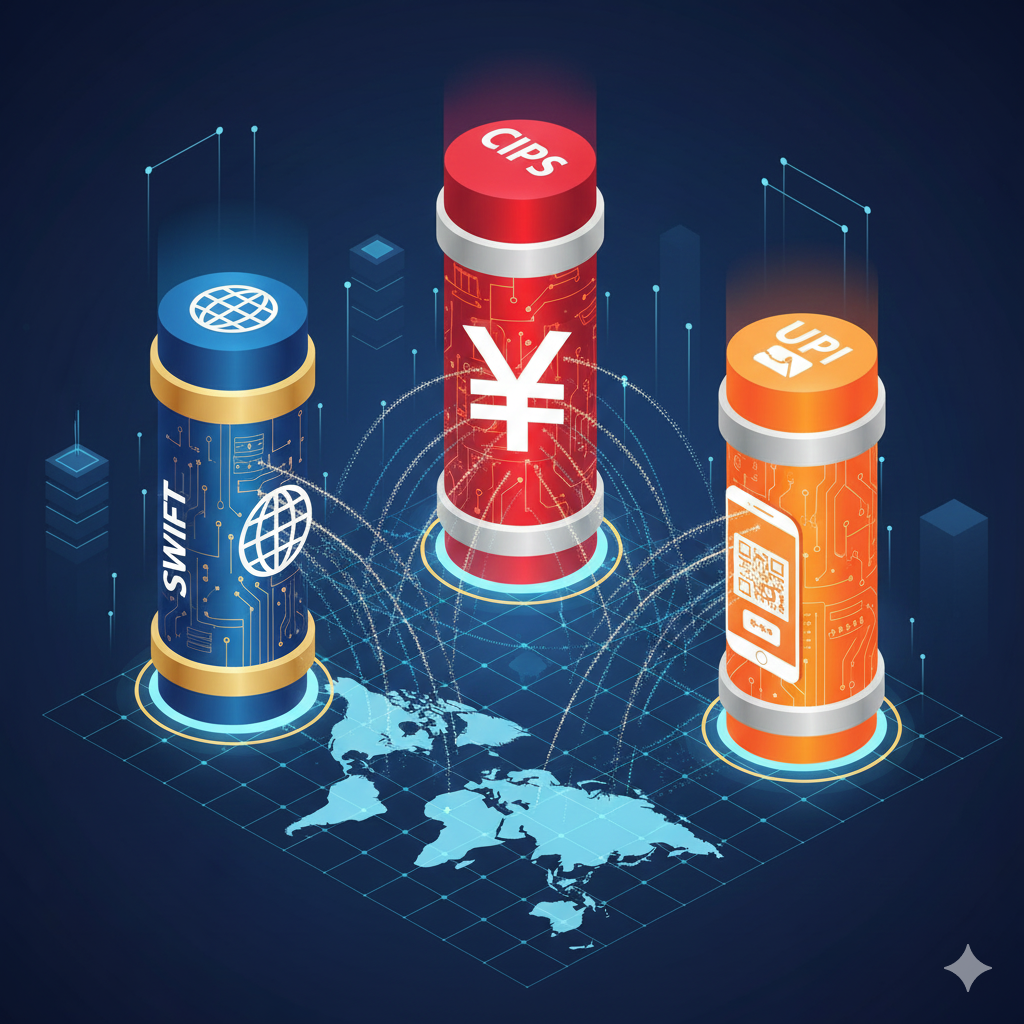
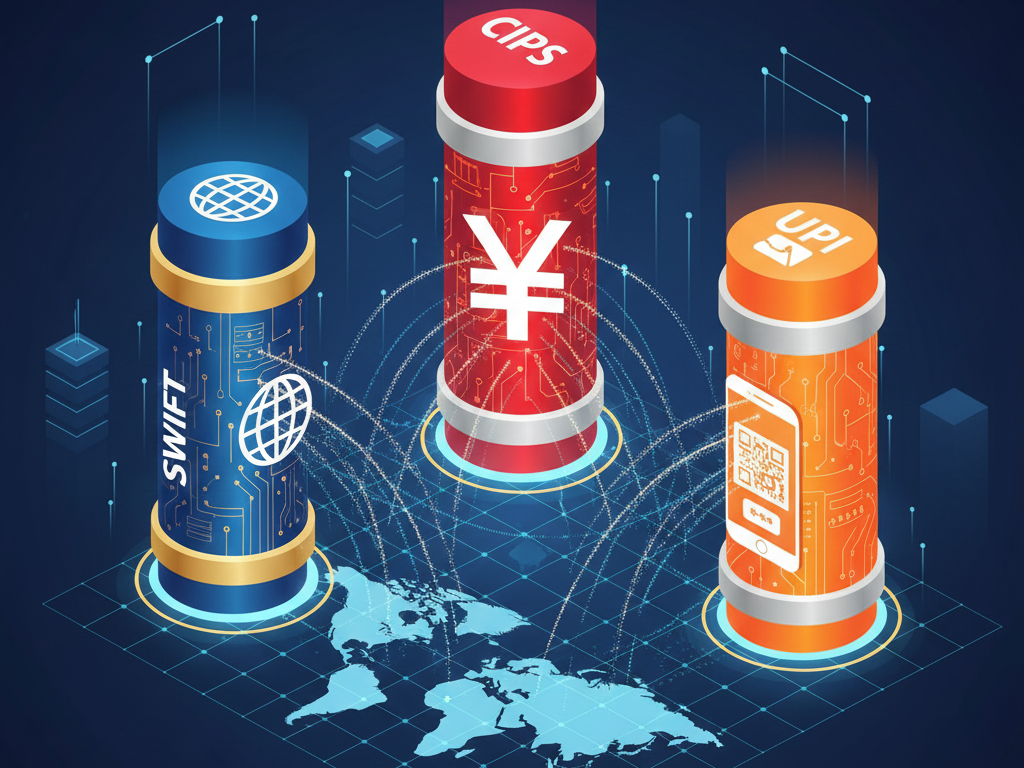
SWIFT vs CIPS vs UPI

How to pick SWIFT vs CIPS vs UPI for your business

You must understand the new ways the world moves money today. Therefore, you should learn about the battle between SWIFT, CIPS, and UPI. Truly, the old ways of sending cash across borders are changing very fast. Consequently, you can stay ahead by knowing which system works best for your global trade.

Many people think that all international bank transfers are exactly the same. But, the reality is that each system has its own rules and goals in 2026. Always remember, a fast payment system is a strong signal for any search engine. This ensures that your brand stays reliable and your global partners stay happy. This approach requires you to look at speed, cost, and political safety. It helps you build a much more resilient financial plan for the long term. It makes your daily international sales feel much more secure and very effective.

SWIFT vs CIPS vs UPI

Phase 1: The Global Standard of SWIFT

First, you must look at SWIFT because it is the biggest network today. Why has it been the leader of global finance for so many decades? Clearly, it connects over 11,000 banks in almost every country on earth. Therefore, most businesses still rely on it for large, secure transfers every day.

Why SWIFT Stays at the Top of Finance

Here are several reasons why SWIFT remains a powerhouse in 2026:

  • Massive Reach: You can send money to almost any corner of the globe.
  • High Security: It uses the best tech to keep your data and cash very safe.
  • New Speed: The gpi system now makes many transfers happen in minutes.
  • Global Trust: Banks everywhere know and use this system without any doubt.
  • Shared Standards: It uses a common language that all bank systems understand.
  • Transparency: You can track your money like a package in the mail today.
  • Search Engine Data: Stable SWIFT flows help your business earn trust scores.

Truly, SWIFT is a very solid choice for most of your corporate needs. But, you must also consider the fees and the time it takes to clear. This keeps your costs in check and prevents any delays in your supply chain. It creates a very professional and high standard for your global trade.


Phase 2: The Rising Power of CIPS in China

So, what happens when a nation wants its own way to move money? Truly, China created CIPS to help the yuan become a global currency fast. Consequently, you should watch this system if you do a lot of business in Asia. It acts as an alternative path that does not always rely on Western banks.

How CIPS Changes the Payment Game

Here is how CIPS works differently from the old systems:

  1. Direct Yuan Trade: It allows you to pay for goods in yuan without a middle step.
  2. Fast Clearing: It offers real-time settlement for many types of trade deals.
  3. Extended Hours: It stays open longer to match the working day in many zones.
  4. Lower Costs: Using CIPS can be cheaper for firms that trade with China today.
  5. Independent Path: It provides a safety net if other networks face political noise.
  6. Direct Access: More banks in Europe and Africa are joining the system right now.
  7. Trust Levels: Using local systems improves your search engine authority in Asia.

Furthermore, this improves your search engine performance by showing your reach in the East. It makes your company look very modern and ready for 2026 global shifts. This ensures that you have a backup plan for your most important trade routes. It creates a very fast and clear path for your international growth.


Phase 3: The Rapid Growth of UPI and QR Payments

The third phase involves a much newer and faster way to pay for things. Clearly, India’s UPI is changing how people and small firms send money today. Therefore, the link between UPI and other nations is a huge trend to watch.

Why UPI Is the Future of Small Cross-Border Payments

Firstly, UPI is very fast and works on your mobile phone in seconds. This allows you to pay for a meal or a small service with just a QR code. Secondly, it is very cheap because it skips many of the old bank fees.

Furthermore, many nations are now linking their own systems to the UPI network. Also, it allows for instant currency swaps at the moment of the sale today. Lastly, remember that fast mobile payments help your search engine trust and local SEO. Truly, UPI is the best tool for the small, daily needs of your global team. It allows you to move small amounts of cash without any of the old bank stress. This is why so many travelers and small shops love it in 2026.


Phase 4: Comparing the Three Systems for Your Business

The fourth phase is where you pick the right tool for your specific goal. Clearly, one system might be better for a factory order while another fits a small fee. Therefore, you must compare speed, cost, and reach for every single payment.

A Quick Look at the Payment Leaders

Firstly, use SWIFT for large, high-value deals with new partners in the West. This helps you stay secure and follows all the global banking rules today. Secondly, use CIPS if you are buying bulk goods from a supplier in China.

Furthermore, use UPI or its partners for quick travel costs or small digital tasks. Also, check the exchange rates for each system to see which one saves you the most. Lastly, check your search engine ranking to see how payment speed helps your traffic. Truly, a mix of these systems is your best tool for global success in 2026. It turns a complex task into a series of smart, fast wins for your brand. This ensures your business stays connected while the world changes its money rules.


Best Practices: Staying Safe in a Multi-System World

Finalizing your finance plan requires you to stay alert and very flexible. It needs you to know which rules apply to each system you choose to use. Clearly, you must follow all the laws to keep your accounts open and healthy. Therefore, follow these simple tips to keep your global payments safe and fast.

Simple Tips for Global Financial Success

Firstly, always verify the bank details of your partners before you hit send. This helps you avoid fraud and keeps your cash moving in the right direction. Secondly, keep your records clean so you can prove where your money came from.

Furthermore, use transition words in your invoices to make them easy for banks to read. Also, check the news for any new trade rules that might affect your chosen system. Lastly, check your search engine data to see if global fans trust your secure store. Truly, the world of finance is a journey that leads to a much better brand. It builds a path of wealth that lets your whole team grow very fast. This secures your future in the digital world for a long time.


Frequently Asked Questions (FAQs)

Q1: Is SWIFT the same thing as a bank transfer?

SWIFT is the messaging network that banks use to send the instructions for a transfer.

Q2: Can I use UPI in every country today?

Not yet, but many nations like Singapore and the UAE now accept UPI-style payments.

Q3: Why did China create CIPS?

China wanted a system that helps more people use the yuan for global trade and deals.

Q4: Which system is the cheapest for small amounts?

UPI is usually the cheapest because it was built for small, fast mobile transactions.

Q5: Does my choice of payment system affect my SEO?

Indirectly, yes. Faster and more reliable payments lead to better user trust and site authority.

Also Read: How EU–US trade tensions create new payment risks

How to Build a SaaS Subscription-First Payment Model?

How to Build a SaaS Subscription-First Payment Model?

SaaS businesses thrive on recurring revenue. Therefore, they need special payment systems. They cannot just use a simple “buy now” button. Instead, they need systems built for subscriptions. This means taking money again and again, over time. Truly, the way a SaaS business handles these payments is key to its success. It impacts how customers pay. It also affects how much money the business makes.

Many SaaS companies pick the wrong payment setup at first. They might use basic gateways. These gateways are not made for subscriptions. Consequently, this often leads to big problems later. It causes bad customer experiences. Moreover, it makes managing money very hard. Always remember, a “subscription-first” payment model is vital for SaaS. By choosing the right gateway integrations, businesses can grow easily. They can also keep customers happy. This means steady income and faster growth.

How to Build a SaaS Subscription-First Payment Model?

The SaaS Challenge: Recurring Revenue is Different

First, let’s understand the core challenge for SaaS businesses. Their income comes from subscriptions. Customers pay regularly. This could be monthly, yearly, or for special usage. This is very different from a shop where customers buy things once. Clearly, this difference means SaaS needs special payment tools. These tools must handle ongoing payments. Therefore, standard payment setups are often not enough.

Why Standard Gateways Don’t Fully Fit SaaS Needs

Most traditional payment gateways are built for one-time sales. They are good for a single purchase. However, they struggle with the complex world of subscriptions.

Here are some key limits of basic gateways for SaaS:

  • Recurring Billing: They do not easily set up payments to happen automatically every month or year. Thus, this requires manual work.
  • Failed Payment Retries: If a payment fails (e.g., card expires), they do not automatically try again. Consequently, this means lost customers.
  • Proration: If a customer changes their plan mid-month, figuring out the correct partial charge is hard. Therefore, this requires complex math.
  • Upgrade/Downgrade: Changing subscription levels is messy. It means canceling the old plan and starting a new one.
  • Customer Portals: Customers cannot easily manage their own subscriptions (change card, upgrade) without help.
  • Analytics: Tracking metrics like churn and lifetime value (LTV) is difficult. This is because data is not set up for subscriptions.

A “subscription-first” approach solves these problems. It uses integrations made for recurring payments. Moreover, it supports the unique needs of a SaaS business model. This helps manage customer relationships. Furthermore, it also secures future income.


What is a “Subscription-First” Model? Your Growth Blueprint

So, what exactly is a “subscription-first” model for payment gateways? It means choosing and setting up payment systems with recurring revenue as the main focus. It is not an afterthought. Instead, it is the core of your payment strategy. Truly, this approach ensures all aspects of subscription billing are handled smoothly.

Building Your Payment System for Recurring Success

Here are the key parts of a subscription-first model:

  1. Specialized Gateway/Processor: You pick a payment gateway. This gateway is designed for subscriptions. Examples include Stripe Billing, PayPal recurring payments, or Spreedly. These systems have features for ongoing payments.
  2. Automated Recurring Billing: The system automatically charges customers on their chosen schedule. You set it once, and it runs itself. This prevents missed payments.
  3. Dunning Management: This is a smart system for failed payments. If a card expires, it automatically tries to charge again. Furthermore, it sends emails to customers to update their info. This helps reduce “involuntary churn.”
  4. Flexible Plan Management: It lets customers easily upgrade or downgrade their plans. It also handles the math for partial payments (proration) correctly. This makes changing plans simple.
  5. Self-Service Customer Portal: Customers get their own page. There, they can change their payment method. They can also view invoices. They can even upgrade or cancel their own subscriptions. This reduces support tickets.
  6. Subscription Analytics: The system tracks important numbers. These include monthly recurring revenue (MRR). It also tracks customer churn rate. This helps you understand your business health.
  7. Integration with CRM/ERP: It links with your customer relationship management (CRM) software. It also links with your enterprise resource planning (ERP) system. This gives a full view of each customer.

Truly, a subscription-first model is crucial for SaaS. It takes away payment headaches. It lets businesses focus on building great products and keeping customers happy.


Key Integrations: Choosing the Right Tools for Your Stack

Building a strong subscription-first model needs the right tools. It means choosing the best payment gateways. It also means linking them with other key business systems. Clearly, these integrations must work together seamlessly. Therefore, careful selection of your payment stack is vital for long-term success.

Your Essential Payment Stack Components

Firstly, select a primary payment gateway that specializes in recurring payments. Look for features like strong API documentation, global reach, multi-currency support, and robust dunning management. Companies like Stripe, Braintree, and Adyen are popular choices. This is because of their comprehensive subscription features. This ensures smooth, ongoing transactions.

Secondly, integrate with a subscription management platform if your gateway is basic. Some gateways offer full subscription features. However, others focus only on processing. Tools like Chargebee, Recurly, or Zuora handle complex logic. They manage plans, trials, upgrades, and billing. They sit between your app and the gateway. Furthermore, connect to your CRM system (e.g., Salesforce, HubSpot). This links payment data with customer profiles. Sales and support teams then have a full view of each customer. This helps personalize interactions.

Additionally, integrate with your accounting software (e.g., QuickBooks, Xero). This automatically pushes payment and invoice data. It greatly simplifies financial reconciliation. Moreover, it saves hours of manual work. Lastly, consider analytics tools that pull data from your payment stack. They provide deep insights into MRR, churn, LTV, and customer behavior. Truly, by carefully integrating these key tools, SaaS businesses build a powerful, automated payment ecosystem. This ecosystem supports growth and operational efficiency.


Security and Compliance: Protecting Your Subscribers and Business

Handling recurring payments means managing sensitive customer data. Therefore, security and compliance must be top priorities. A breach of trust can destroy a SaaS business. Clearly, choosing integrations that meet strict industry standards is non-negotiable. Truly, protecting your subscribers’ data is as important as your product itself.

Safeguarding Data and Meeting Industry Standards

Firstly, ensure all your payment gateways and subscription platforms are PCI DSS compliant. PCI DSS is a set of rules for handling credit card data. This protects cardholder information. Never store sensitive card data on your own servers. Instead, let your integrated platforms handle it securely.

Secondly, implement strong fraud detection tools. Recurring payments can be targeted by fraudsters. Your integrations should offer features to spot suspicious activity. This includes velocity checks, IP analysis, and device fingerprinting. This protects your revenue. Furthermore, comply with global data privacy regulations like GDPR and CCPA. This is especially important if you have international subscribers. Ensure your payment stack handles data consent, storage, and access requests correctly.

Additionally, use tokenization for card data. When a customer enters their card, the gateway converts it into a unique, random string of numbers (a token). This token is used for future payments. The actual card number is never stored by you. This greatly reduces risk. Truly, by focusing on robust security features and strict compliance, SaaS businesses build trust. They also protect themselves from legal and financial risks.


Optimizing for Growth: Reducing Churn and Boosting LTV

A subscription-first model is not just about taking payments. Instead, it is a powerful tool for optimizing growth. It helps reduce churn (customers leaving) and boosts LTV (lifetime value of a customer). Clearly, every SaaS business knows that keeping existing customers is often cheaper than finding new ones. Therefore, smart payment integrations play a huge role in customer retention.

Strategies to Keep Customers and Maximize Value

Firstly, effective dunning management is critical for reducing involuntary churn. If a card expires or a payment fails, your system must automatically try again. It must also send clear, friendly emails to the customer. This helps recover lost revenue. Moreover, it keeps customers active. Secondly, provide a seamless self-service customer portal. When customers can easily update their payment info, change plans, or view bills, they feel in control. This leads to higher satisfaction. It also reduces frustration.

Furthermore, use flexible billing options. Offer monthly, yearly, or usage-based plans. Let customers choose. This caters to different needs and budgets. It can attract more subscribers. Also, track and analyze your subscription metrics closely. Look at churn rates for different plans. See where payments fail most often. Use these insights to improve your product or payment process. Truly, by using your gateway integrations strategically, SaaS businesses can actively work to reduce churn. They can also increase the lifetime value of each subscriber.


Best Practices: Implementing Your Subscription-First Model

Implementing a successful subscription-first model requires careful planning and execution. It is not a one-time setup. Instead, it is an ongoing process of choosing the right tools, integrating them well, and continually optimizing. Clearly, a well-thought-out strategy will lead to long-term success. Therefore, following these best practices is essential for any SaaS business.

Your Blueprint for Subscription Payment Success

Firstly, start with a clear plan. Understand your pricing models. Know your customer segments. List all the features you need (e.g., trials, coupons, prorating). This helps you pick the right tools from the start. Secondly, choose scalable integrations. Your payment stack must grow with your business. Pick gateways and platforms that can handle more transactions. They must also handle more subscribers without major overhauls. Cloud-based solutions are often best.

Furthermore, test everything thoroughly. Test all payment flows. Test upgrades, downgrades, cancellations, and failed payments. Make sure dunning emails are sent correctly. This ensures a smooth experience for your customers. Also, monitor your metrics constantly. Keep a close eye on MRR, churn, payment success rates, and customer LTV. Use this data to find problems and make improvements. Lastly, gather customer feedback. Ask subscribers about their payment experience. What is easy? What is hard? Use their input to refine your process. Truly, by following these best practices, SaaS businesses can build a robust, customer-centric subscription payment system. This system will support continuous growth and strong customer relationships.


Frequently Asked Questions (FAQs)

Q1: What is “dunning management” in simple terms?

Dunning management is the process of automatically trying to collect money when a recurring payment fails. Examples are an expired credit card. It includes retrying the card. It also includes sending automated emails to the customer. These emails ask them to update their payment information. It helps prevent losing subscribers due to payment issues.

Q2: Why can’t I just use PayPal buttons for my SaaS subscriptions?

Basic PayPal buttons are fine for single payments. However, they lack the advanced features needed for a true SaaS subscription model. They do not easily handle automatic retries for failed payments. They also do not handle prorated billing, customer self-service portals, or detailed subscription analytics. You need a more robust, specialized system.

Q3: What is involuntary churn, and how do gateway integrations help reduce it?

Involuntary churn happens when a customer leaves not by choice. This is because their payment failed. Examples are an expired card or insufficient funds. Smart gateway integrations reduce it through automated dunning management. This system automatically attempts to recover failed payments. It also notifies customers to update their details, saving the subscription.

Q4: Should I build my own subscription billing system or use an off-the-shelf solution?

For most SaaS businesses, using an off-the-shelf solution (like Stripe Billing or Chargebee) is much better. Building your own is very complex and costly. It is also hard to maintain for security and compliance. Specialized solutions are already built to handle all the complexities of recurring billing.

Q5: What is “tokenization” and why is it important for payment security in SaaS?

Tokenization replaces sensitive credit card numbers with a unique, encrypted, random string of characters (a “token”). This token is then used for all future payments. It is important because your business never actually stores the real credit card number on its servers. This greatly reduces your risk in case of a data breach.


Also Read: Why Should You Merge All Payment Gateways Into One View