Event-Driven Payment System: What You Need Full Guide

Event-Driven Payment System: What You Need Full Guide

Payments are getting faster. Customer expectations are rising. Traditional payment architectures are struggling to keep up. Event-driven payment systems offer a powerful solution. They are changing how fintech companies build and scale.

What Is an Event-Driven System?

An event-driven system reacts to events in real time. An event is any change in state — a payment initiated, a fraud alert triggered, or a balance updated. When an event occurs, the system responds immediately. There is no waiting for batch processing or scheduled jobs.

Furthermore, event-driven systems are asynchronous. Different services communicate through events, not direct calls. This makes them loosely coupled. Therefore, one service failing does not bring down the entire system.

Event-Driven Payment System: What You Need Full Guide

How Traditional Payment Systems Work

Legacy payment systems use synchronous, request-response models. A payment request goes in. The system processes it step by step. The response comes back only after all steps complete. This works for low-volume transactions. However, it breaks under high load.

Additionally, traditional systems are monolithic. All payment logic lives in one large codebase. Updating one part risks breaking others. Scaling requires scaling the entire monolith. Consequently, costs rise sharply as transaction volumes grow.

The Event-Driven Approach to Payments

In an event-driven payment system, every action publishes an event to a message broker. Popular brokers include Apache Kafka, RabbitMQ, and AWS Event Bridge. Downstream services subscribe to relevant events and act on them independently.

For example, when a user initiates a payment, the system publishes a Payment Initiated event. The fraud detection service subscribes and checks the transaction. Simultaneously, the ledger service records the pending transaction. Both happen in parallel.

Key Benefits of Event-Driven Payment Systems

Real-time processing: Payments complete in milliseconds, not seconds.

Scalability: Individual services scale independently based on load.

Resilience: Service failures do not cascade through the system.

Auditability: Every event is logged, creating a complete payment trail.

Flexibility: New services plug in without changing existing ones.

Core Components of the Architecture

A strong event-driven payment system needs several core parts. First, the event producer captures and publishes payment events. Second, the message broker routes events to the right consumers. Third, event consumers process events and trigger downstream actions.

Additionally, an event store keeps a historical record of all events. This enables event sourcing — the ability to replay events to rebuild state. Therefore, recovery from failures becomes much simpler and more reliable.

Real-World Use Cases in Fintech

Buy Now Pay Later (BNPL): Events trigger credit checks, disbursements, and repayment reminders.

Cross-border payments: Events coordinate currency conversion, compliance checks, and settlement.

Digital wallets: Events sync balances across multiple accounts in real time.

Fraud detection: Events stream transaction data to ML models for instant scoring.

Subscription billing: Events trigger invoices, payment retries, and dunning workflows.

Challenges to Consider

Event-driven systems introduce new complexity. Event ordering can be tricky. If events arrive out of sequence, the system may process them incorrectly. Consequently, engineers must design for idempotency — processing the same event twice without side effects.

Moreover, debugging distributed event flows is harder than tracing monolithic code. Teams need robust observability tools. Distributed tracing tools like Jaeger or Zipkin help. Additionally, structured logging and centralized monitoring are essential.

Regulatory and Compliance Considerations

Fintech companies operate under strict regulations. Event-driven architectures must comply with PCI-DSS, PSD2, and regional payment laws. All events containing payment data must be encrypted in transit and at rest. Furthermore, audit trails must be immutable and accessible for regulators.

Interestingly, event sourcing actually helps compliance. Since every state change is captured as an event, regulators can see exactly what happened and when. Therefore, event-driven systems can be a compliance advantage.

How to Start Building an Event-Driven Payment System

i. Map your existing payment workflows and identify key events.

ii. Choose a message broker that fits your scale requirements.

iii. Define a clear event schema with versioning support.

iv. Start with a single payment flow, then expand gradually.

v. Invest in observability from day one.

The Future of Event-Driven Fintech

Event-driven architecture is becoming the standard for modern fintech. As real-time payment networks like FedNow and Open Banking expand, the need for event-driven systems grows. Companies that adopt this architecture now will be better positioned to serve future payment demands.

Moreover, AI is integrating with event-driven systems to create smarter payment intelligence. Events feed AI models that predict fraud, optimize routing, and personalize financial products. Consequently, event-driven payments are not just an architectural choice — they are a strategic one.

Final Thoughts

Event-driven payment systems represent the next major step in fintech evolution. They enable speed, scale, and resilience that legacy systems simply cannot match. For fintech companies aiming to compete in 2026 and beyond, event-driven architecture is no longer optional. It is the foundation of modern payment infrastructure.

Read More:

Reduce Payment Failures With These Simple Fixes

How Smart Payment Routing Logic Really Works: Complete Guide

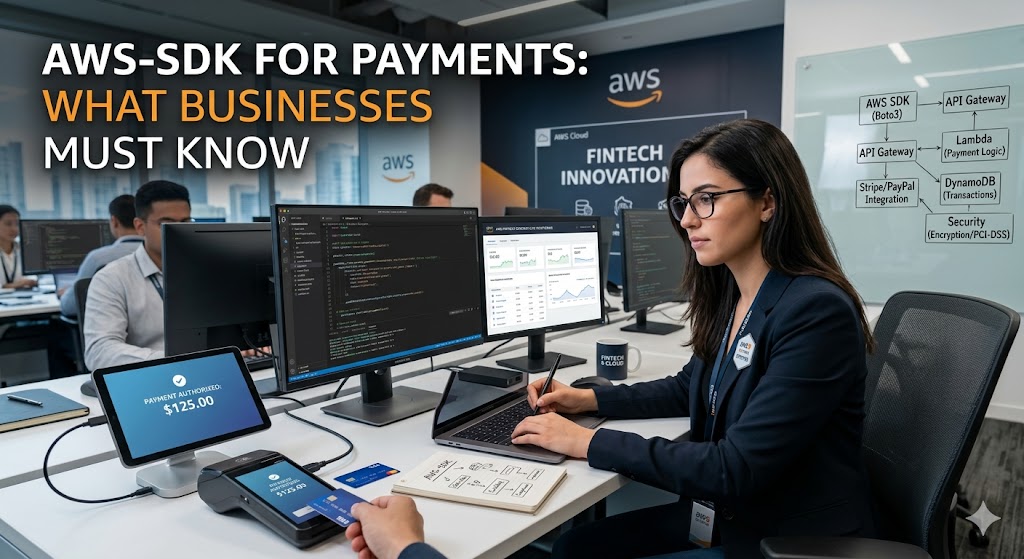
AWS-SDK for Payments: What Businesses Must Know Full Guide

AWS-SDK for Payments: What Businesses Must Know

AWS-SDK for Payments: What Businesses Must Know Full Guide

Introduction: A Decision That Shapes Your Stack

Every business that handles payments online faces the same fork in the road. Do you integrate directly through an API — or do you reach for an SDK to speed up development? The choice sounds technical. However, it has massive implications for cost, flexibility, speed, and long-term scalability. In 2026, the answer depends heavily on your use case, your team, and your cloud infrastructure.

This guide breaks down both options clearly. It also explores how tools like the AWS Software Development Kit, the Amazon SDK, and the AWS SDK for Java fit into modern payment architectures. By the end, you will know exactly which path suits your business.

AWS-SDK for Payments: What Businesses Must Know

What Is an API in Payment Integrations?

An API — Application Programming Interface — is a set of rules for how two systems talk to each other. In payments, a payment API lets your application communicate directly with a payment processor like Stripe, PayPal, or AWS Payment Cryptography. Your app sends HTTP requests. The payment service responds with data or transaction results.

Strengths of API-First Integration

  • Works with any programming language that sends HTTP requests.
  • Full control over request structure and data handling.
  • No dependency on a third-party library for updates.
  • Ideal for teams with strong backend engineering skills.

Drawbacks of Pure API Integration

APIs require you to handle authentication, error management, retries, and data serialization yourself. That means more code to write and more surface area for bugs. Moreover, as payment APIs evolve, your team must track every version change manually. That overhead adds up quickly in fast-moving businesses.

What Is an SDK? AWS SDK Explained

An SDK — Software Development Kit — is a prebuilt toolkit. It wraps API calls into easy-to-use functions in your preferred language. The AWS Software Development Kit, for example, provides libraries for Java, Python, JavaScript, Go, and more. Developers call simple methods instead of manually crafting HTTP requests.

The aws-sdk handles authentication signing, retries, pagination, and error parsing automatically. Furthermore, SDK in AWS integrations stay in sync with service updates — Amazon maintains the SDK so you do not have to track API changes manually.

AWS SDK for Java: A Closer Look

The AWS SDK Java (version 2.x) is the go-to choice for enterprises running Java-based microservices. The Java AWS SDK uses asynchronous non-blocking I/O by default, which means payment requests do not block your application threads while waiting for a response.

Using the sdks aws ecosystem, Java teams gain type-safe clients, built-in retry logic, and CloudWatch-compatible logging. Consequently, debugging payment failures becomes far simpler than tracing raw HTTP logs.

API vs SDK: Head-to-Head Comparison

Factor Direct API AWS SDK / Amazon SDK
Setup Speed Slower (manual config) Faster (prebuilt clients)
Language Flexibility Any HTTP-capable language Supported languages only
Error Handling Manual Built-in retry & exceptions
Maintenance Your team tracks changes Amazon maintains SDK
Authentication Manual signing required Auto-handled (IAM / SigV4)
Best For Lightweight, custom integrations AWS-native, enterprise apps
Learning Curve Lower for simple calls Moderate, docs are strong
Debugging Raw HTTP logs Structured SDK logs

When Should Businesses Choose Direct API?

Direct API integration works best in specific scenarios. First, choose API if you are not building on AWS infrastructure. Payment providers like Stripe and Adyen offer well-documented REST APIs that work equally well on any cloud. Second, API integration suits teams building lightweight payment microservices where an SDK would add unnecessary overhead.

⚠️ Watch Out: Direct API means you own error handling, rate limit backoff, and version migration. Ensure your team has the bandwidth before choosing this path.

Additionally, startups with small engineering teams often prefer APIs for simple use cases. A single developer can integrate a payment API in a weekend. However, that same developer will spend significantly more time managing it at scale.

When Should Businesses Choose AWS SDK?

The Amazon SDK is the clear winner for businesses already operating on AWS. If your infrastructure uses EC2, Lambda, S3, or RDS, the AWS SDK integrates payment workflows into that ecosystem seamlessly. Moreover, the aws sdk api pattern — combining AWS service APIs accessed via the SDK — delivers the best of both worlds: AWS’s managed infrastructure with SDK developer ergonomics.

Similarly, the AWS SDK Java is the right call for enterprises running Spring Boot or Jakarta EE microservices. The Java AWS SDK supports reactive programming models, which means payment processing scales without threading bottlenecks under high transaction volumes.

✅ Rule of Thumb: If your stack is on AWS and your team uses Java, Python, or Node.js — use the AWS SDK. It will save hundreds of engineering hours annually.

AWS API SDK: The Hybrid Approach

Many large businesses use what practitioners call the AWS API SDK pattern. They access AWS-managed payment APIs — such as AWS Payment Cryptography or Amazon Pay — through SDK clients in their preferred language. This pattern gives teams the declarative simplicity of the SDK while retaining access to the full power of AWS payment APIs.

Furthermore, the SDKs AWS provides are maintained by Amazon’s engineers. That means security patches, new region support, and API version upgrades arrive automatically. Your team adopts them on their own schedule without rewriting integration code.

Cost Considerations in 2026

API integrations have no licensing cost — you pay only for API call volume. SDK usage also carries no extra cost on AWS beyond standard service pricing. However, consider the hidden cost: developer time. Teams that use sdks aws consistently report 30–50% faster integration timelines compared to raw API builds. At senior developer hourly rates, that time saving translates directly into budget efficiency.

Security: API vs SDK in Payment Contexts

Security is non-negotiable in payment systems. Direct API calls require manual implementation of AWS Signature Version 4 (SigV4) authentication. One mistake in signing logic exposes your payment endpoints. The aws-sdk handles SigV4 automatically using IAM roles, eliminating that entire class of vulnerability.

Additionally, the SDK enforces TLS by default. It validates certificates and rejects insecure connections without any developer configuration. For PCI-DSS compliance — mandatory for payment businesses — those automatic protections reduce your compliance surface significantly.

Practical Recommendation for 2026

Most businesses in 2026 will benefit most from the SDK approach. Cloud-native development is now the default. AWS infrastructure underpins a massive share of global payment systems. The AWS Software Development Kit — whether you use the Java AWS SDK, Python Boto3, or the JavaScript aws-sdk — reduces development friction, improves reliability, and simplifies security management.

Nevertheless, pure API integration remains valid for edge cases: non-AWS deployments, ultra-lightweight services, or multi-cloud environments where vendor lock-in is a concern. Evaluate your infrastructure, team size, and growth trajectory before deciding. Then commit — and build with confidence.

Conclusion

The API vs SDK debate is ultimately a question of context. For AWS-native businesses, the Amazon SDK and its language-specific variants (especially the AWS SDK for Java) are the smartest choice. They accelerate development, improve security posture, and reduce long-term maintenance costs. For non-AWS deployments or minimal integrations, direct API remains a clean and effective option. Either way, choose deliberately — your payment stack is too important to leave to defaults.

Read More:

From Gateways to Payment Orchestration in Easy Steps

Why Indian fintechs Lead in API First Tech

UPI Complete Guide: Choosing the Right Payment App

Why Indian fintechs Lead in API First Tech

Why Indian fintechs Lead in API First Tech

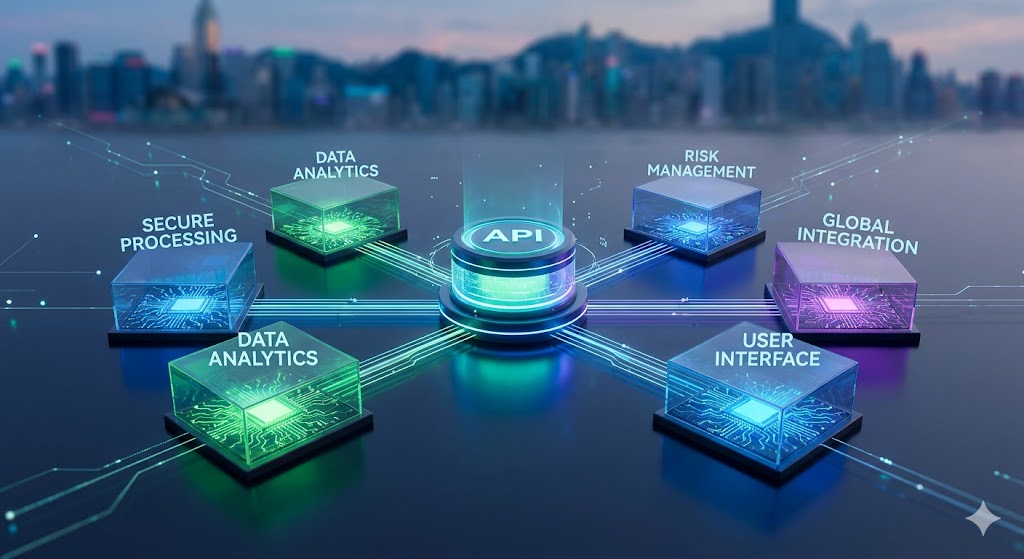
The world of finance is moving very fast. Every business needs a way to take money from customers
easily. In the past, companies used big, heavy systems. These systems were often hard to change or
update. However, a new trend is taking over the industry right now. This trend is called the API-first
gateway. It is a smart way to build a payment system. You can add or remove parts like Lego blocks.
Consequently, many fintechs are moving toward this style to stay ahead. They want to be fast and
flexible in a busy market.

Understanding the Modular Shift

Building a payment stack used to be a very long job. Developers had to talk to banks for months. They
had to write a lot of complex code. Furthermore, the old systems were not flexible at all. If you wanted
a new feature, you had to rebuild the whole thing. Therefore, growth was slow and very expensive for
startups. Now, the modular approach changes everything. By using APIs, a company connects
different services very quickly. They can pick the best tools for security and tax. This makes the whole
process much smoother for everyone involved.


API-first design is the core of this movement. It means that the API is built before the rest of the app.
Because the API is the foundation, every part talks to it easily. This makes the whole stack stable and
clean. In addition, developers love working with these systems. The documentation is usually very
clear and easy to read. It allows them to focus on making a good product. They do not have to spend
time fixing old, broken code. Thus, the speed of innovation increases for every team that uses this
method.

Why Indian fintechs Lead in API First Tech

Customization and Business Growth

No two businesses are exactly the same today. A small shop has different needs than a big airline.
Because of this, a simple gateway is no longer enough. Modular stacks allow businesses to build what
they need. For instance, a luxury brand might want a fancy checkout page. Meanwhile, a subscription
service needs strong billing tools. By choosing modular parts, both brands can win. Furthermore, they
only pay for the features they use. This helps them keep their costs low and their profits high.


Testing new ideas is also much safer with this setup. If a new payment method is popular, you add it in
hours. You do not need to wait for months for an update. Therefore, being first to the market is easier
for agile teams. This flexibility is a huge advantage in our world. Customer tastes change overnight, and businesses must keep up. In short, modular stacks give companies the power to adapt. They can
survive in any economic climate because they are not stuck with old tech.

Security in the Digital Age

Safety is the most important thing for money online. Every customer wants to know that their data is
safe. In a modular stack, security is handled by a specific piece. This piece is often called a vault
service. Because this part is separate, it is updated very often. Consequently, the risk of a data breach
is much lower. Furthermore, these services help companies meet strict global rules. They do this
without adding stress to the main business operations.


Encryption is used at every single step. When a user enters a card number, it is turned into a code.
This code moves through the system instead of the real data. Therefore, even if a hacker sees it, they
cannot use it. Additionally, many API gateways include built-in AI tools. These tools look for strange
patterns in real time. They stop bad transactions before they even happen. Thus, both the shop and
the buyer stay safe. Security is no longer a worry for the business owner.

Global Reach and Integration

Selling products to people in other countries is a big goal. However, different countries use different
ways to pay. In India, people love UPI, but in the US, cards are common. A modular payment stack
handles these differences with ease. You can just plug in a local provider for each new region.
Because the main API stays the same, your code does not change. This saves a lot of time and
money for growing brands. It allows them to enter new markets in days, not years.

Managing multiple currencies is also a big challenge. A good modular stack includes a tool for real-
time exchange. This means customers see prices in their own local money. Seeing a familiar currency builds a lot of trust. Furthermore, it helps businesses avoid hidden fees from banks. Therefore, the
profit for every sale stays predictable and healthy. In conclusion, APIs are the bridge to the global
economy. They make it possible for any brand to sell to the entire world.

The Cost Benefits of Modular Systems


Money is a concern for every business owner. Big legacy systems often have high setup fees. On the
other hand, API gateways follow a pay-as-you-go model. This means you only spend money when you
make a sale. For a small startup, this is a life-saving benefit. It allows them to grow at their own pace.
Furthermore, there are no hardware costs to worry about. The whole process is lean and efficient from
the very first day.


Maintenance is another area where businesses save. In an old system, you need a large team for the
servers. With a cloud-based gateway, the provider handles the work. They make sure the system is
always online and fast. Therefore, your own tech team can work on new features. This shift from fixing
to creating is what drives growth. In short, modular systems are the best way to run a financial
operation. They offer the best value for every dollar spent by the company.

The Future of Financial Technology

We are just at the start of this big change. In the coming years, we will see more automation. AI
agents might buy things for us using these APIs. Furthermore, the use of blockchain will grow within
these stacks. This will bring even more speed to every transaction. Because the systems are modular,
they are ready for this. They can be updated without any trouble at all. Therefore, the future of money
is flexible and very exciting for everyone.


Every brand will eventually use some form of fintech. Whether you sell shoes or food, you will have
your own tools. Modular stacks make this dream possible for everyone. It is the best time in history to
build a new product. If you start with an API-first mindset, you are building for the future. In conclusion,
modular payment stacks are the biggest shift in finance. They will change how we think about money
forever.

Frequently Asked Questions

1 What is an API-first gateway?

It is a payment system built around an API for easy integration.

2 Is it safe for small businesses?

Yes, it provides high-level security that was once only for
banks.

3 Can I add new payment methods?

Yes, the modular design makes it easy to add or remove
methods quickly.

4 How much does it cost?

Most providers use a pay-per-transaction model, which is very
affordable.

5 Do I need a large tech team?

No, because the API provider handles most of the complex maintenance.

Read More:

UPI Complete Guide: Choosing the Right Payment App

Everything You Need to Know About Payment Gateway Before Launching Your Subscription Box

Regulatory Sandboxes for Fintechs: Opportunities & Risks in India