How the new digital payments landscape is ending US dollar dominance?

How the new digital payments landscape is ending US dollar dominance?

In 2026, the world of digital payments is no longer a unipolar system centered on the US dollar. For decades, the global financial plumbing relied almost exclusively on Western-led rails like SWIFT. However, we are now witnessing a “multipolarization” of money movement. Emerging economies are building their own sovereign digital bridges, allowing them to bypass traditional bottlenecks and sanctions. This shift is not just about technology; it is a fundamental rebalancing of global economic power.

How the new digital payments landscape is ending US dollar dominance?

The Rise of Sovereign Digital Rails

The first pillar of this shift is the explosive growth of domestic real-time payment systems. India’s upi has become the global gold standard, recently smashing records with over 21 billion transactions in a single month. Specifically, countries are no longer waiting for international permission to modernize. They are exporting their own stacks—like India’s UPI or Brazil’s Pix—to neighboring nations. Furthermore, these regional networks are now linking directly to one another. Consequently, a merchant in Singapore can accept a payment from an Indian tourist without the money ever touching a US-based clearinghouse.

CBDCs: The New Financial Architecture

Central Bank Digital Currencies (CBDCs) are the “secret weapon” in the quest for financial sovereignty. In 2026, the BRICS bloc is moving toward a unified CBDC framework. Specifically, this allows nations to settle massive trade deals in their own local digital currencies. Projects like mBridge—which connects China, the UAE, Thailand, and Saudi Arabia—demonstrate that cross-border payments can be instant and cheap. By using blockchain-based settlement, these nations reduce their reliance on the US dollar as an intermediary. Therefore, the “dollar trap” is slowly being dismantled by code and cryptography.

The Fragmentation of Global Trust

The multipolarization of digital payments is also a response to the “weaponization” of finance. When major economies are cut off from Western systems, they don’t stop trading; they build better alternatives. Specifically, we are seeing the emergence of parallel systems that prioritize autonomy over universal interoperability. This creates a “mosaic” of regional standards. While this adds complexity for global corporations, it provides a safety net for emerging markets. Your strategy must now account for this divided landscape where local trust anchors are becoming as important as global ones.

Impact on Global Trade and MSMEs

For small and medium enterprises (MSMEs), this shift is a massive win. Traditional cross-border trade was once too expensive for tiny firms due to high bank fees. Now, sovereign digital payments corridors are lowering these costs by up to 70%. Specifically, instant settlement allows a small artisan in Nairobi to sell directly to a buyer in Mumbai with near-zero friction. Furthermore, these systems are “sanction-resistant” by design, ensuring that trade can continue even during geopolitical storms. This levels the playing field for the Global South in a way never seen before.

2026: A Defining Year for Monetary Sovereignty

As India hosts the 2026 BRICS summit, the focus is squarely on “sovereign rails.” The goal is a world where no single nation can “turn off” another’s economy. Specifically, the integration of national systems into open-source protocols ensures that each country maintains its own digital node. You will find that this move toward decentralization makes the global financial system more resilient. It is a transition from a world of “financial hegemony” to a world of “financial choice.” Indeed, the right technical lead today prepares your business for a world where the dollar is just one of many options.


FAQs

1 Is the US dollar losing its value?

Specifically, no. The dollar remains a strong store of value, but it is losing its absolute monopoly as the only way to pay for international goods.

2 What is the benefit of a multipolar system?

Indeed, it leads to lower transaction fees, faster settlements, and less risk for countries that want to avoid external political pressure.

3 Will I need different apps to pay in different countries?

The goal of systems like upi is interoperability, meaning your home app should eventually work across many different national networks.

4 Are these new systems as secure as traditional banks?

Yes, most use advanced tokenization and blockchain tech, which often makes them more secure against modern AI-powered fraud.

5 How can my business prepare for this?

First, ensure your payment gateway supports international “account-to-account” (A2A) transfers and sovereign digital wallets.


Read More:

Why a global UPI network is the new South-South trade rail?

How CBDCs protect national trade in a world of sanctions?

How A Strong Payment Infrastructure Builds Global Soft Power

How CBDCs protect national trade in a world of sanctions?

How CBDCs protect national trade in a world of sanctions?

The global financial map is shifting as physical cash turns into digital code. Central Bank Digital Currencies are no longer a future dream but a present reality. Specifically, the race to build a digital currency is a high-stakes game of power. Nations are moving away from old systems to gain a strategic edge. Therefore, understanding the rise of CBDCs is vital for any global observer. This change will redefine how countries trade and interact for decades. You will see a clear shift in influence by following this deep and technical trend.

China’s Lead and the Digital Yuan Push

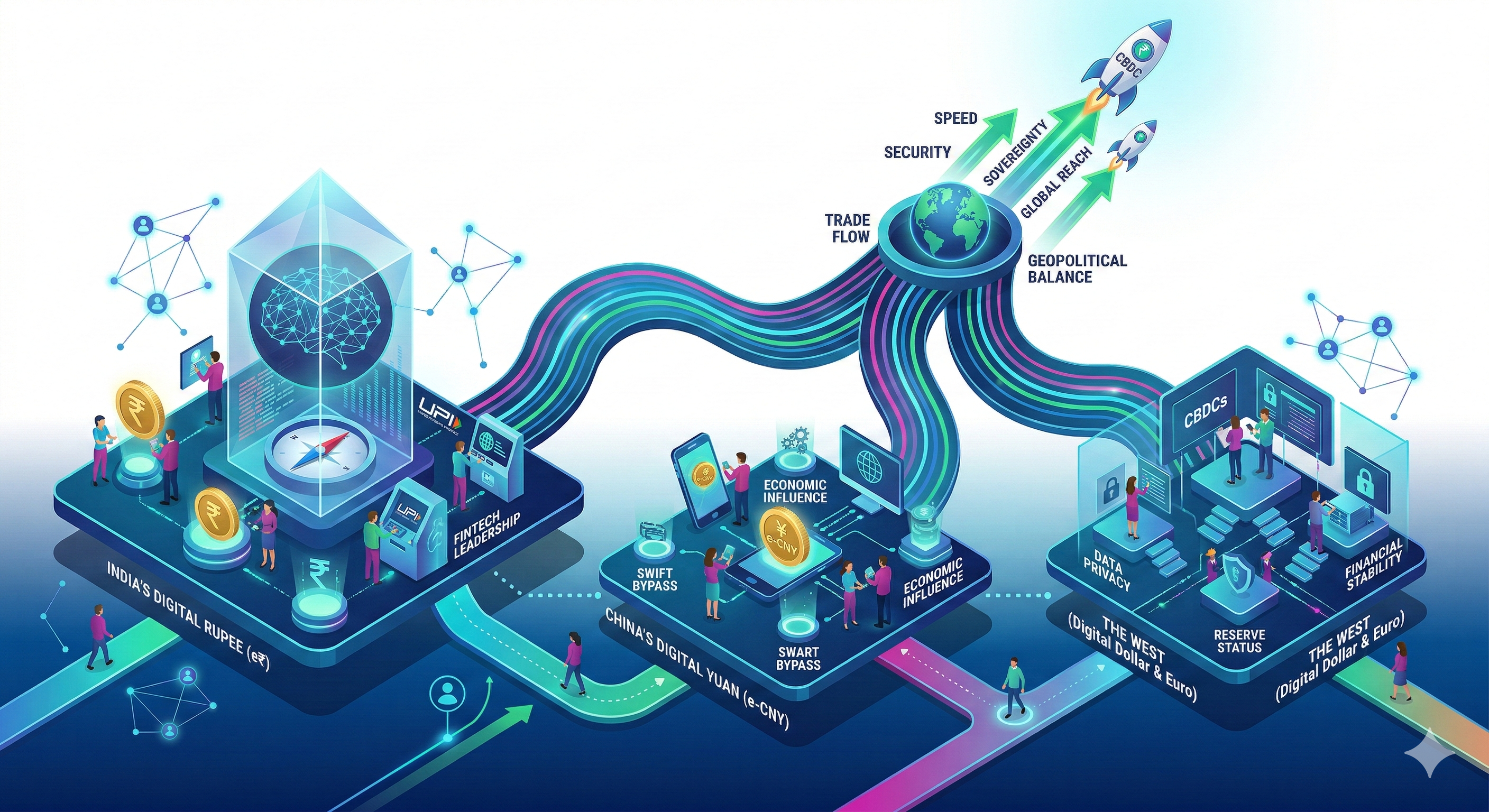
China is currently leading the race with its digital yuan, also known as the e-CNY. Specifically, the goal is to create a model for CBDCs that rivals the US dollar. By moving first, China can set the rules for how digital money flows across borders. Furthermore, this system allows them to bypass traditional Western banking networks like SWIFT. You might see a future where regional trade is settled entirely in digital yuan. This puts their economic growth on a very fast and independent path. Similarly, it acts as a tool of soft power to bring partners into their digital sphere.

India’s Digital Rupee and the UPI Success

India is taking a very smart and calculated path with its Digital Rupee. Building on the massive success of UPI, India seeks a strategy for CBDCs that balances innovation with safety. The Digital Rupee aims to reduce the high cost of printing and managing physical cash. Specifically, it offers a secure way for millions to join the formal economy instantly. Furthermore, India’s tech strength ensures that their system is both scalable and highly efficient. You should know that this move strengthens India’s spot as a global fintech leader. It ensures that the nation stays sovereign in a world of digital assets.

The West and the Struggle for the Digital Dollar

The West, led by the US and the Eurozone, is moving with more caution. There is a deep worry about how a shift toward CBDCs might affect privacy and bank stability. However, the risk of doing nothing is far too high for these major powers. If the US dollar loses its digital edge, it could lose its status as the world’s reserve currency. Therefore, the Federal Reserve and the ECB are testing systems that protect user data while staying fast. Specifically, they want a digital dollar that remains the gold standard for global trade. This journey is key to maintaining Western influence in the coming years.

The Impact on Global Trade and Sanctions

The rise of digital money changes how nations use economic pressure. In the past, blocking a country from global banks was a final and heavy blow. Now, a multi-polar world of CBDCs makes those blocks less effective. If two nations use a shared digital ledger, a third party cannot easily stop the flow. Furthermore, this leads to faster and cheaper cross-border payments for everyone. You will find that these tools reduce the friction of old money rules. Consequently, it sparks a new era of trade where speed is the ultimate advantage. This shift turns digital code into a real shield against foreign pressure.


FAQs

1 What exactly is a CBDC?

It is a digital form of a country’s national currency, issued and backed by the central bank.

2 How does it differ from Bitcoin?

Specifically, CBDCs are centralized and stable, while Bitcoin is private and its value changes often.

3 Can these digital coins replace the US dollar?

Indeed, if enough nations use different CBDCs for trade, the dollar’s global power could shrink.

4 Is my privacy safe with a digital rupee?

Central banks are building CBDCs that aim to balance your privacy with the need to stop financial crime.

5 Why is the race for these tools so fast?

Nations want to reduce their reliance on foreign systems and lead the future of global finance.


Read More:

How A Strong Payment Infrastructure Builds Global Soft Power
How a Trade Agreement Protects Your Brand in New Markets

Data Sovereignty for Payment Providers: A Complete Guide

Why scaling like BRICS nations is the new global goal?

Why scaling like BRICS nations is the new global goal?

The world of money is changing very fast. Many nations want to build their own systems, free from old ways. However, the path to a new global order is complex and full of big choices. Because of this, staying ahead means looking toward fresh tech and strong partnerships. Specifically, BRICS and digital payments are now a key topic for leaders worldwide. This offers a clear map for new trade, faster work, and a very modern way to pay. This move is not just about tools for a few banks. In fact, it is a smart strategy for many lands to gain more power. Consequently, understanding this impact helps you see why it matters.

Why scaling like BRICS nations is the new global goal?

The Current Landscape: Visa and Mastercard’s Dominance

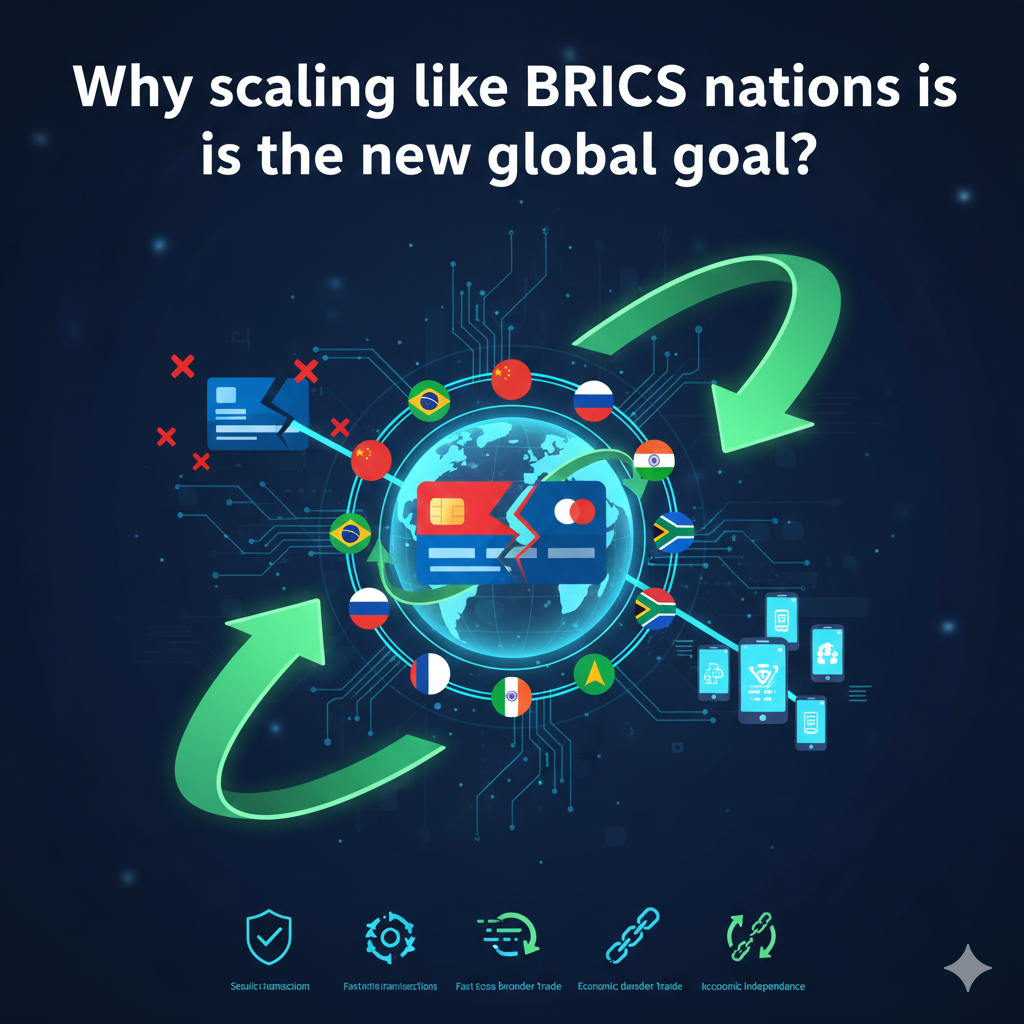
For a long time, two names have ruled how the world pays. Visa and Mastercard have built vast networks across the globe. They process billions of deals every single day with ease. These systems are reliable and trusted by many people everywhere. However, this power also means control rests in just a few hands. Some nations worry about this strong hold on their money flows. They feel that vital services should not be tied to just one or two firms. Furthermore, geopolitical events can sometimes affect these global payment channels. This makes some countries very eager to find new ways to pay. Therefore, the search for an independent path grows stronger.

The BRICS Alliance: A Push for Economic Independence

BRICS is a group of five big nations: Brazil, Russia, India, China, and South Africa. These countries represent a huge part of the world’s people and wealth. They often work together to boost their trade and influence. A key goal for BRICS is to create more economic freedom for its members. They want to reduce their reliance on systems built and run by other blocs. This desire extends to how money moves between them. The idea of a shared payment system is very appealing. It would help them trade more easily without outside interference. Consequently, BRICS and digital payments are a natural fit for their goals. This alliance seeks to build a new financial backbone.

The Rise of Digital Payments and Central Bank Digital Currencies (CBDCs)

Digital payments are quickly changing how we use money. Apps on phones, online wallets, and instant transfers are common now. This shift makes it easier to imagine new global systems. A big part of this trend is the rise of Central Bank Digital Currencies (CBDCs). Many BRICS nations, like China and India, are actively working on their own CBDCs. These are digital forms of a country’s money, issued by its central bank. If BRICS countries can link their CBDCs, it would create a powerful new network. This would allow fast, cheap, and direct payments between their economies. Such a system could bypass older networks entirely. Thus, BRICS and digital payments could form a new standard.

Challenges to Building a Unified BRICS Payment System

Creating a brand new global payment system is not easy. First, there are many technical hurdles to overcome. Each country has its own rules, tech, and banking laws. Making these all work together perfectly takes huge effort. Furthermore, building trust among member states is vital. They must agree on how data is shared and how disputes are handled. There are also security concerns; any new system must be very safe from cyber-attacks. Finally, getting people and businesses to adopt a new method takes time. They are used to the ease of Visa and Mastercard. Despite these challenges, the motivation for a BRICS digital payment alternative is very high.

Potential Impact: A New Global Financial Order?

If BRICS succeeds in creating its own payment system, the impact could be huge. It would give these nations more control over their own money flows. They could reduce fees and speed up cross-border trade. It might also encourage other developing countries to join or adopt the system. This could lead to a more diverse and multi-polar global financial world. Visa and Mastercard would still be very important. However, they would face a serious new competitor. This competition could even push existing systems to innovate more. Consequently, BRICS and digital payments could reshape how we think about international finance. The shift could truly impact global power dynamics.

Conclusion: The Road Ahead

The idea of an alternative to Visa and Mastercard from the BRICS bloc is gaining traction. The rise of digital payments and CBDCs makes this vision more possible than ever. While big challenges remain, the desire for economic independence is a strong driving force. This development is worth watching closely. It could signal a major shift in how global money moves and who controls it. The future of international payments might be far more diverse than it is today.


FAQs

1 What is BRICS?

It’s a group of major emerging economies: Brazil, Russia, India, China, South Africa.

2 Why do BRICS nations want a new payment system?

They want more economic independence and less reliance on existing global payment networks.

3 What are CBDCs?

Central Bank Digital Currencies are digital forms of a country’s national money, issued by its central bank.

4 Could a BRICS system replace Visa/Mastercard?

It might not replace them entirely but could emerge as a significant alternative, especially for cross-border transactions among BRICS and allied nations.

5 What are the biggest challenges?

Technical integration, regulatory harmonization, security, and user adoption across diverse nations.


Read More:

AI in Payments: A New Geopolitical Battleground

Will scaling past EU bars unlock your total ROI?

Why stablecoins for scaling trade are the future now?