Local Payment Methods vs Global Gateways: A Practical Guide

Local Payment Methods vs Global Gateways: A Practical Guide

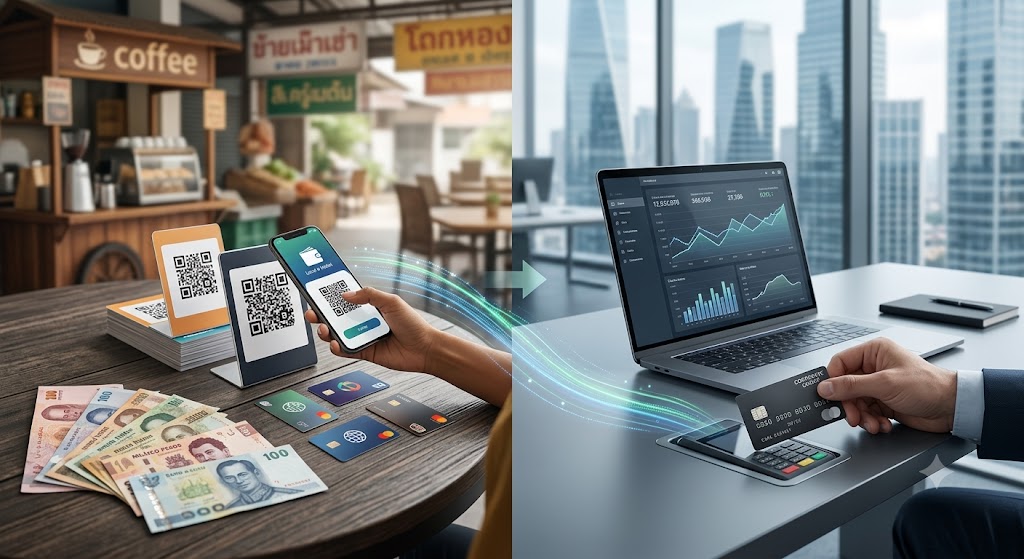
Choosing the right payment setup shapes your entire customer experience. This is why the local payment methods vs global gateways question matters so much today.

Businesses expanding into new markets face this decision constantly. Should you support local payment methods vs global gateways only? Or should you combine both approaches?

This guide explains the differences clearly. We will cover costs, customer trust, conversion rates, and practical recommendations. By the end, you will know exactly what to prioritize.

Understanding Local Payment Methods vs Global Gateways

Global gateways include well-known providers like Stripe, PayPal, and Adyen. They support credit cards and work across many countries.

Local payment methods, however, are region-specific. Examples include UPI in India, iDEAL in the Netherlands, and Pix in Brazil.

Many customers outside the United States rarely use credit cards. Instead, they prefer bank transfers, mobile wallets, or cash-based systems.

Therefore, relying only on global gateways can limit your reach significantly. Some customers simply cannot complete checkout without local options.

Meanwhile, global gateways offer simplicity and broad coverage. One integration often works across dozens of countries at once.

Local Payment Methods vs Global Gateways: A Practical Guide

Why Local Payment Methods Matter for Conversion

Conversion rates depend heavily on payment familiarity. Customers trust payment methods they already use daily.

For instance, a shopper in Germany may abandon checkout without seeing SEPA transfer options. Similarly, Indonesian customers often expect e-wallet choices like GoPay.

As a result, ignoring local preferences can hurt sales directly. Studies consistently show higher cart abandonment when preferred methods are missing.

Additionally, local payment methods often reduce fraud risk. Bank-linked transfers require stronger identity verification than typical card payments.

Local methods also tend to settle faster in some regions. This improves cash flow for growing businesses significantly.

The Case for Global Gateways

Global gateways remain valuable for several reasons. They simplify technical integration across multiple markets.

Instead of connecting to dozens of local providers, you manage one system. This saves engineering time and reduces long-term maintenance work.

Global gateways also provide strong fraud protection tools. Their scale allows for advanced machine learning fraud detection.

Furthermore, they support recurring billing and subscription models smoothly. This matters greatly for SaaS companies and subscription services.

However, transaction fees can be higher with global providers. Currency conversion costs also add up for cross-border sales.

Local Payment Methods vs Global Gateways: Cost Comparison

Cost is a major factor in this decision. Global gateways typically charge a flat percentage per transaction.

Local payment methods often have lower fees within their home country. Bank transfers, for example, cost less than card processing.

Nevertheless, integrating many local methods can raise development costs upfront. You may need local partnerships or region-specific compliance work.

Consequently, businesses must weigh short-term integration costs against long-term savings. High transaction volume often justifies the initial investment.

Smaller businesses might start with a global gateway first. Then, they can add local options as specific markets grow.

How to Decide: Local Payment Methods vs Global Gateways

Start by analyzing your customer base carefully. Identify which countries generate the most traffic and revenue.

Next, research the dominant payment methods in those regions. Payment preference reports and industry data can guide this research.

Prioritize Local Options When

Your business targets specific high-growth markets. Local trust and conversion matter more than technical simplicity here.

Also prioritize local methods when card usage is low. Many Southeast Asian and Latin American markets fit this pattern.

Prioritize Global Gateways When

You need fast market entry across many countries at once. Simplicity and speed outweigh deep localization needs early on.

Global gateways also work well for subscription-based businesses. Recurring billing features save significant development time.

Consider a Hybrid Approach

Most successful global businesses use both options together. They start with a global gateway for broad coverage.

Then, they add popular local payment methods in key markets. This hybrid strategy balances simplicity with strong local conversion.

Payment orchestration platforms can help manage this hybrid setup. They route transactions intelligently between multiple providers automatically.

Regional Payment Preferences Worth Knowing

Different regions show very different payment habits. Understanding these patterns helps you prioritize correctly for each market.

Europe

European customers often prefer bank-based payments. iDEAL in the Netherlands and SEPA transfers across the region remain highly popular.

Additionally, Klarna and other buy-now-pay-later options continue growing quickly. These local preferences directly affect conversion rates.

Asia-Pacific

Mobile wallets dominate much of Asia-Pacific. Alipay and WeChat Pay lead in China, while GrabPay is common across Southeast Asia.

Meanwhile, UPI has become the standard in India for everyday transactions. Ignoring these options often means losing significant market share.

Latin America

Cash-based vouchers and installment payments remain popular across Latin America. Boleto in Brazil and OXXO in Mexico are common examples.

Pix has also grown rapidly as an instant payment method in Brazil. Businesses entering this region should prioritize these local options early.

Measuring the Impact of Payment Choices

Once you implement changes, track results carefully. Compare conversion rates before and after adding local payment methods.

Also monitor cart abandonment rates by country. A sudden drop after adding a local option confirms its value quickly.

Additionally, review customer support tickets related to payment issues. Fewer complaints often signal a smoother checkout experience.

Over time, this data helps refine your local payment methods vs global gateways strategy. You can double down on what works and remove what does not.

Conclusion

The local payment methods vs global gateways debate rarely has one universal answer. Your ideal strategy depends on your target markets and growth stage.

Global gateways offer speed, simplicity, and strong subscription support. Local payment methods build trust and boost conversion in specific regions.

Therefore, most growing businesses benefit from a hybrid approach eventually. Start broad, then localize where the data shows real demand.

Track conversion rates and abandonment closely after any change. This data will guide your next payment strategy decision effectively.

Working With Payment Providers Effectively

Building strong relationships with payment providers pays off long term. Ask providers directly about their local coverage and settlement times.

Additionally, negotiate transaction fees as your volume grows. Many providers offer better rates for higher processing volumes.

Request clear reporting dashboards from every provider you use. This makes it easier to compare performance across regions.

Also review provider uptime and reliability history. Payment failures during high traffic periods can cost significant revenue quickly.

Finally, revisit your provider mix annually. Markets change, and new local payment methods emerge regularly.

Future Trends in Global Payments

Payment preferences continue evolving rapidly worldwide. Real-time payment networks are expanding across more countries each year.

Meanwhile, regulatory changes continue shaping how businesses handle cross-border transactions. Staying informed helps you adapt quickly.

Digital wallets are also gaining ground even in previously card-dominant markets. This trend suggests local preferences will keep diversifying further.

Businesses that monitor these shifts closely will maintain a competitive edge. Flexibility remains essential in the payments landscape.

Security and Trust Signals at Checkout

Trust badges and recognizable payment logos improve customer confidence. Display these clearly near the checkout button.

Additionally, communicate your data protection practices briefly during checkout. This reassurance can reduce last-minute hesitation for new customers.

Handling Currency and Localization Details

Beyond payment methods, currency display matters greatly. Show prices in local currency whenever possible to reduce confusion.

Additionally, localize checkout language and support messaging. Small details like these build trust alongside the right payment options.

Consider local tax and invoicing requirements as well. Some markets expect specific receipt formats for business compliance.

Building a Checklist Before Launch

Before launching in a new market, create a simple checklist. List the top three payment methods customers expect locally.

Verify settlement currencies and timelines with each provider in advance. Confirm that refund and dispute processes work smoothly too.

Test the checkout flow thoroughly on both mobile and desktop devices. A smooth, fast checkout experience often matters as much as payment choice itself.

Frequently Asked Questions

1. What is the main difference between local payment methods and global gateways? 

Local payment methods are region-specific options like bank transfers or e-wallets. Global gateways are broad platforms that support cards across many countries.

2. Do local payment methods really improve conversion rates? 

Yes, customers convert more often when they see familiar payment options. Missing local methods frequently leads to cart abandonment.

3. Are global gateways more expensive than local payment methods? 

Often, yes. Global gateways typically charge higher transaction fees, especially for cross-border and currency conversion transactions.

4. Should small businesses use global gateways or local payment methods first? 

Most small businesses start with a global gateway for simplicity. They add local payment methods once specific markets show strong demand.

5. Can a business use local payment methods and global gateways together? 

Yes, a hybrid approach is common and often recommended. It combines broad reach with strong local market conversion.

Read More:

Payment Localization: A Simple Breakdown for Stores

Trust Signals and Payment Completion: A Simple Guide

How to Stop Payment Latency From Hurting Revenue

Payment Localization

Payment Localization: A Simple Breakdown for Stores

Global shoppers expect a checkout that feels familiar. When it does not, many simply leave. Checkout localization solves this problem by adapting payment experiences to match local habits and expectations.

This approach goes beyond translating text on a page. It includes currency, payment methods, and even design choices. As a result, shoppers feel more comfortable completing their purchase.

This guide explains checkout localization in clear, simple terms. You will learn why it matters and how to apply it across different regions. No technical background is required.

As more brands sell across borders, this topic keeps growing in importance. A single checkout page can now serve customers in dozens of countries. Getting that page right for each visitor is no longer optional.

What Is Checkout Localization?

Checkout localization means adjusting the payment process based on a customer’s location. This includes currency display, language, and accepted payment methods. The goal is to make checkout feel natural for each shopper.

For example, a customer in Germany might expect to pay with a bank transfer method. A shopper in the United States, however, often prefers a credit card. Checkout localization adapts to these regional preferences automatically.

This differs from a basic global checkout. A basic system often uses one payment method for every customer. Checkout localization instead detects location and adjusts the experience accordingly.

Furthermore, localization can include formatting details. Date formats, address fields, and tax calculations often vary by country. Handling these correctly builds trust and avoids confusing the shopper.

Checkout localization also extends to legal disclosures. Some regions require specific consumer protection notices at checkout. Including these in the correct language and format keeps a business compliant.

Shipping options often need adjustment too. Local carriers and delivery timelines vary widely between countries. Presenting accurate, region-specific shipping choices avoids confusion at the final purchase step.

Payment Localization

Why Geography Affects Payment Preferences

Payment habits differ widely around the world. In some countries, digital wallets dominate online shopping. In others, cash-based vouchers or bank transfers remain popular choices.

For instance, many Southeast Asian shoppers prefer e-wallets for online payments. Meanwhile, customers in parts of Europe often rely on direct bank transfer systems. Ignoring these preferences can lead to lost sales.

Trust also plays a major role. Shoppers feel safer using payment methods they already know. If a checkout only offers unfamiliar options, many customers will abandon their cart.

Currency display matters too. Seeing prices in local currency removes confusing conversion math. This small detail can significantly improve buyer confidence during checkout.

In addition, regulations vary by region. Some countries require specific security steps for online payments. Checkout localization helps businesses stay compliant while keeping the experience smooth.

Banking infrastructure also shapes payment habits. In regions with strong mobile banking systems, app-based transfers often outperform traditional cards. Recognizing these differences helps merchants choose the right options for each market.

Cultural attitudes toward credit also vary. Some markets embrace credit cards and installment plans. Others prefer to pay in full using debit or cash-based methods. Checkout localization respects these cultural differences instead of forcing one approach everywhere.

How Checkout Localization Reduces Cart Abandonment

Cart abandonment remains a major challenge for online stores. Many shoppers leave during checkout simply because the process feels unfamiliar. Checkout localization directly addresses this issue.

When customers see their preferred payment method, they feel more confident. This confidence often leads to completed purchases instead of abandoned carts. As a result, conversion rates tend to improve significantly.

Language also plays an important role here. Even small translation errors can create doubt. A fully localized checkout removes this friction and builds a smoother experience.

Similarly, displaying local tax and shipping costs upfront helps. Surprise charges at the final step often cause shoppers to leave. Clear, localized pricing prevents this common frustration.

Mobile shoppers benefit especially from localization. Many regions rely heavily on mobile payment apps. Supporting these options can dramatically increase completed transactions.

Trust signals also matter during checkout. Displaying recognizable security badges or familiar payment logos reassures shoppers. This is especially true for first-time buyers who are unfamiliar with a brand.

Speed plays a role too. A checkout that loads quickly and adapts instantly to a shopper’s region feels more professional. Slow or generic checkout pages, by contrast, often raise doubts about reliability.

Key Elements of a Localized Payment Experience

Several elements work together to create strong checkout localization. Payment method selection is often the most important piece. Offering popular regional options increases the chance of a successful sale.

Currency conversion is another key factor. Accurate, real-time currency display avoids confusion and builds trust. Static or outdated currency rates can frustrate shoppers and damage credibility.

Language adaptation matters as well. This includes not only translation but also tone and phrasing. Some markets prefer formal language, while others respond better to casual wording.

Design elements also need adjustment. Color meanings and visual symbols can vary across cultures. A thoughtful design avoids unintentional confusion or discomfort during checkout.

Finally, customer support options should match local expectations. Some regions prefer live chat, while others rely on phone support. Providing the right support channel adds another layer of trust.

Form fields deserve attention too. Address formats differ widely between countries, and rigid forms can frustrate international shoppers. Flexible fields that adjust to local formats reduce errors and speed up checkout.

Error messages also benefit from localization. Clear, well-translated error messages help shoppers fix mistakes quickly. Confusing or poorly translated messages, on the other hand, often lead to abandoned purchases.

Common Challenges in Checkout Localization

Implementing checkout localization is not without challenges. Integrating multiple payment providers can be technically complex. Each region often requires different systems and compliance steps.

Maintaining consistency is another concern. Businesses must balance localization with a unified brand experience. Too much variation across regions can confuse internal teams and customers alike.

Cost is also a factor worth considering. Supporting many payment methods may increase transaction fees. However, the increase in completed sales often outweighs these added costs.

Keeping up with changing regulations adds further complexity. Payment laws evolve frequently, especially in fast-growing digital markets. Businesses must monitor these changes to remain compliant.

Despite these challenges, the long-term benefits usually justify the effort. Companies that invest in proper localization often see stronger customer loyalty and higher conversion rates over time.

Team coordination can also be tricky. Marketing, legal, and technical teams must work together to keep localization accurate. Without clear communication, mismatched pricing or outdated payment options can slip through.

Testing across regions takes ongoing effort as well. Payment providers occasionally update their requirements or interfaces. Regular reviews help ensure the checkout experience stays accurate and reliable.

Staff training is sometimes overlooked too. Customer service teams need to understand regional payment differences when shoppers reach out with questions. Well-trained support staff can resolve issues quickly and keep trust intact.

How to Start Implementing Checkout Localization

Starting checkout localization does not require a complete system rebuild. Begin by researching the most common payment methods in your target markets. This research forms the foundation of your strategy.

Next, choose a payment platform that supports multiple regional options. Many providers now offer built-in localization features. This can significantly reduce development time and cost.

After that, test the checkout experience from each target region. Pay attention to currency display, language accuracy, and payment method availability. Small errors can have a big impact on customer trust.

Gathering customer feedback is also valuable during this stage. Shoppers often notice details that internal teams might overlook. Their input can guide further improvements to the checkout flow.

Finally, monitor performance metrics closely after launch. Track conversion rates and cart abandonment by region. This data will help refine your checkout localization strategy over time.

It also helps to prioritize markets by sales potential first. Focusing early effort on your top regions delivers faster returns. Once those markets are running smoothly, expanding to additional countries becomes much easier to manage.

Conclusion

Checkout localization plays a vital role in global ecommerce success. Adapting payment experiences by geography builds trust and reduces friction. These improvements often lead directly to higher conversion rates.

Businesses that ignore regional payment preferences risk losing valuable customers. Meanwhile, those who invest in localization create smoother, more trustworthy shopping experiences. This investment pays off through stronger sales and loyalty.

As global ecommerce continues to grow, checkout localization will become even more essential. Companies that prioritize this strategy now position themselves for long-term success in international markets.

Start with your highest-priority markets and expand from there. Careful planning, regular testing, and attention to local detail will help any business build a checkout experience that customers everywhere can trust.

Frequently Asked Questions

  1. What is checkout localization?
    Checkout localization is the process of adapting payment methods, currency, and language to match a customer’s geographic location and preferences.
  2. Why does checkout localization reduce cart abandonment?
    It builds trust by offering familiar payment options and clear local pricing, which makes shoppers more confident about completing their purchase.
  3. What payment methods should be localized?
    Common options include credit cards, digital wallets, bank transfers, and region-specific payment apps based on local shopper preferences.
  4. Is checkout localization expensive to implement?
    Costs vary, but many payment platforms now offer built-in localization tools that reduce both development time and overall expense.
  5. How can businesses start with checkout localization?
    Begin by researching regional payment preferences, choosing a supportive platform, testing thoroughly, and monitoring performance after launch.

Read More:

Trust Signals and Payment Completion: A Simple Guide

How to Stop Payment Latency From Hurting Revenue

Conversion Rate Secrets Hidden in Payment Methods

How to Stop Payment Latency From Hurting Revenue

How to Stop Payment Latency From Hurting Revenue

Every second counts in financial transactions. Slow payments frustrate customers, delay cash flow, and drive revenue losses. Reducing payment latency is no longer just a technical concern. It is a core business strategy. Companies that process payments faster gain a clear advantage. They close more sales, keep more customers, and manage cash more effectively. This guide explains what payment latency is, why it matters, and what businesses can do about it.

What Is Payment Latency and Why Does It Matter?

Payment latency refers to the time delay between when a payment is initiated and when it is confirmed or settled. In simple terms, it is the wait time in a transaction. This delay can happen at multiple points in the payment process.

For consumers, latency means waiting for a payment to go through. For businesses, it means waiting for funds to appear in their accounts. Additionally, long wait times at checkout can cause customers to abandon their purchases entirely.

Studies show that even minor delays in payment processing affect conversion rates. A one-second delay in checkout can reduce conversions by up to 7 percent. Therefore, payment speed directly ties to revenue performance. Businesses that ignore latency risks are quietly losing money.

How to Stop Payment Latency From Hurting Revenue

How Payment Latency Affects Customer Experience

Customer experience is shaped by convenience and speed. When payments are fast and seamless, customers feel confident. When payments are slow or fail, frustration sets in quickly.

Slow checkouts are one of the top reasons for cart abandonment in e-commerce. Customers expect instant results. If a payment takes too long to process, they may assume something went wrong. As a result, they cancel the transaction or go elsewhere.

Loyalty is also affected. A customer who experiences repeated payment delays is unlikely to return. In contrast, businesses that offer fast, frictionless payment experiences see higher repeat purchase rates. Furthermore, positive payment experiences drive word-of-mouth referrals, which are among the most valuable forms of marketing.

Mobile payments have raised expectations even higher. Users expect tap-to-pay to work instantly. Any lag feels like a system failure. Consequently, reducing latency in mobile payment channels is now a priority for businesses serving digital-first customers.

The Revenue Cost of Slow Payment Processing

Payment latency has a direct and measurable impact on revenue. First, it causes transaction failures. When processing takes too long, session timeouts occur. Customers are forced to re-enter payment details, and many do not bother.

Second, delayed settlement affects cash flow. When funds take days to appear in a business account, that business cannot invest or operate as efficiently. Small businesses are especially vulnerable. Slow settlement can mean delayed payroll, missed supplier payments, or missed investment opportunities.

Third, high latency increases the cost of payment operations. When transactions fail or require manual review, staff time and resources are consumed. Moreover, failed transactions often lead to customer service calls, increasing operational costs further.

Real-time payment systems solve many of these problems. They settle transactions in seconds rather than days. Businesses gain access to funds immediately, which improves their financial agility. Similarly, customers receive instant confirmation, which builds trust and encourages repeat business.

Technology Solutions for Reducing Payment Latency

Several modern technologies help businesses reduce payment latency significantly. Understanding these options helps companies choose the right approach for their needs.

Real-Time Gross Settlement systems, or RTGS, allow large-value payments to be settled instantly. Many central banks now offer real-time payment rails that businesses can access through their banking partners. These systems eliminate the batch processing delays common in traditional banking.

Application Programming Interfaces, or APIs, also play a key role. Payment APIs connect merchants directly to payment networks, reducing intermediary steps. Fewer intermediaries mean fewer points of delay. Additionally, API-based payment systems are easier to update and optimize.

Tokenization speeds up recurring payments. It replaces sensitive card data with a unique identifier. When a returning customer pays, the system uses the stored token instead of asking for card details again. Consequently, checkout is faster and more secure.

Edge computing brings data processing closer to the end user. Instead of sending payment data to a central server far away, edge computing processes it locally. This dramatically reduces the time it takes to complete a transaction.

The Role of Fintech in Payment Speed

Fintech companies are pushing the boundaries of what is possible in payment processing. They build solutions specifically designed to eliminate friction and reduce latency. Many traditional banks have partnered with fintechs to modernize their payment infrastructure.

Buy Now Pay Later platforms, digital wallets, and instant bank transfers are all fintech innovations that prioritize speed. Furthermore, blockchain-based payment systems offer near-instant cross-border settlement without the traditional three-to-five day wait.

For merchants, choosing the right payment processor is critical. Not all processors are equal in speed or reliability. Some prioritize throughput and real-time settlement. Others are built for high transaction volumes but sacrifice speed. Therefore, businesses should evaluate processors based on their specific revenue and cash flow needs.

Payment orchestration platforms are another emerging solution. They route transactions through the best available payment gateway based on speed, cost, and success rate. This reduces latency without requiring businesses to manage multiple payment integrations themselves.

Best Practices to Reduce Payment Latency

Reducing payment latency requires both technology and process improvements. Here are the most effective strategies businesses use today.

First, upgrade payment infrastructure. Legacy systems are often the biggest source of latency. Moving to modern, cloud-based payment platforms reduces delays significantly. Additionally, cloud systems are more scalable and easier to maintain.

Second, minimize payment steps. Every extra step in the checkout process adds time and increases drop-off risk. Streamline the payment flow by reducing required fields and offering one-click payment options for returning customers.

Third, use intelligent payment routing. Route transactions through the fastest and most reliable gateway available. Payment orchestration tools do this automatically. As a result, merchants see higher approval rates and lower failure rates.

Fourth, monitor transaction performance continuously. Use analytics to track payment processing times, failure rates, and bottlenecks. When issues appear, address them immediately. Furthermore, regular performance audits help businesses stay ahead of latency problems before they affect revenue.

Fifth, offer multiple payment methods. Different payment methods have different processing speeds. Giving customers options ensures they can choose the fastest path to completion.

Conclusion

Payment speed is a revenue driver, not just a technical metric. Reducing payment latency improves customer experience, boosts conversion rates, and strengthens cash flow. The technology to achieve this is widely available and increasingly affordable. Businesses that invest in faster payment systems gain a real competitive edge. The cost of inaction is clear: slower payments mean fewer completed transactions, frustrated customers, and lost revenue. Act now to make payment speed a strategic priority.

Frequently Asked Questions

  1. What causes payment latency in businesses?
    Payment latency is caused by factors such as legacy payment systems, multiple intermediaries in the transaction chain, network delays, batch processing schedules, and insufficient payment infrastructure.
  2. How does payment latency affect e-commerce revenue?
    Slow payment processing leads to cart abandonment, transaction failures, and poor customer experience, all of which directly reduce e-commerce sales and long-term customer retention.
  3. What is real-time payment processing?
    Real-time payment processing refers to transaction systems that initiate, authorize, and settle payments within seconds, giving both businesses and customers instant confirmation of completed transfers.
  4. Which technologies best reduce payment latency?
    Real-time payment rails, payment APIs, tokenization, edge computing, and payment orchestration platforms are among the most effective technologies for reducing payment processing delays.
  5. How can small businesses reduce payment latency on a limited budget?
    Small businesses can start by choosing a modern payment processor with fast settlement times, simplifying their checkout process, and using digital wallets or mobile payment options that are built for speed.

Read More:

Conversion Rate Secrets Hidden in Payment Methods

Which Checkout Type Converts Better for Online Stores

Payment UX Audit Checklist for Better Results

Why generative ai is the Future of E-commerce: Full Guide

How generative ai Solves Your Cart Abandonment Issues: Full Guide

Most online stores lose customers at the final step because traditional checkout pages are often slow and boring. Now, generative ai is changing that forever by creating a personal path for every shopper. Because this technology learns what you like and how you want to pay, buying things online is faster than ever. Furthermore, smart stores use generative ai to turn one-time shoppers into loyal fans. This shift is vital for any brand that wants to grow. Consequently, the payment journey is no longer just a task; it is an experience.

Why generative ai is the Future of E-commerce: Full Guide

Why Old Checkout Systems Fail

Static forms are the biggest enemy of sales because most shops show the same fields to everyone. Consequently, many people leave their carts empty. This is because the process feels long and hard. Generative ai solves this by making every page unique for the user. For instance, it knows if you are on a phone or a laptop. Furthermore, it predicts which payment method you prefer. Therefore, you spend less time typing and more time enjoying your purchase. In short, ai removes the friction that kills sales.


Real-Time Help with Generative AI

Shopping can sometimes feel confusing, especially when you have questions about shipping or taxes. Standard help pages are often hard to find. However, ai adds a smart assistant to the page to guide you. This bot answers your questions in seconds. Because the bot knows your cart, it gives perfect advice. This builds trust and keeps you moving forward. In addition, ai makes sure you never feel alone while shopping.

Moreover, these bots can offer special deals at the perfect moment. If you hesitate, the generative ai might give you a small discount to help you decide. As a result, shoppers feel valued and safe. Generative ai is not just a tool; it is a digital guide. Because of these benefits, top brands are moving to AI today. Therefore, the checkout flow becomes a conversation instead of a form.


Safer and Faster Payments

Security is the most important part of any sale because hackers are always looking for ways to steal data. Luckily, ai is great at spotting fraud by looking at millions of data points in real-time. If it sees something odd, it stops the threat fast. This keeps your money and data very safe. Because the ai is so smart, it rarely blocks real customers. Thus, generative ai makes payment security much stronger for everyone.

Additionally, generative ai helps with filling out forms by guessing your address with high accuracy. This reduces errors and saves time for the customer. When you use generative ai, the checkout flow feels like magic. You just click and go. Therefore, the risk of a mistake is very low. This is the future of ai in the payment world. Finally, this technology ensures that safety does not come at the cost of speed.


The Big Future of Generative AI

We are only at the start of this change. Soon, every store will use ai to talk to us. It will know our size, our style, and our budget. This means we will see fewer ads we do not like. Instead, we get a tailored world of products. Generative ai makes every transaction feel human. It is the best way to shop in 2026. If you want to stay ahead, you must use generative ai now. In conclusion, the personalized payment journey is the new standard for global trade.


Frequently Asked Questions

1. Is generative ai safe for my credit card?

Yes, it improves security by spotting fraud much faster than older systems.

2. Does generative ai make my phone slow?

No, most of the work happens on fast servers, so your phone stays quick.

3. Why do stores need ai?

It helps them sell more by making the checkout process easy and personal for everyone.

4. Can generative ai help with returns?

Yes, it can guide you through the return process and answer policy questions instantly.

5. Will all stores use generative ai soon?

Yes, it is becoming the global standard for all top e-commerce websites.


Read More:

Why Generative AI is the Future of E-commerce: Full Guide

The Quantum Threat: Why Payment Security Must Evolve Today

Why Europe Now Dictates Global Payment Standards?

Payment Infrastructure as a Tool of Soft Power in Trade Wars

How A Strong Payment Infrastructure Builds Global Soft Power

In the high stakes world of global trade, money is now a silent weapon. Specifically, many nations now realize that controlling how funds move is a vital edge. Therefore, building a solid payment infrastructure has become a key tool of soft power. This shift changes how countries talk and trade with each other. It is not just about digital coins or bank apps. In fact, it is a smart way for a country to lead on the global stage. Consequently, a strong and stable payment infrastructure helps a nation project its true strength. You will see a clear shift in power by following this deep and strategic trend.

Payment Infrastructure as a Tool of Soft Power in Trade Wars

Winning the Trade War Without a Single Shot

Many people think trade wars are only about high taxes and ships. However, the real fight often happens in the wires and code of a bank. First, a local payment infrastructure can bypass old global rules that slow down growth. Specifically, it lets a country keep its trade moving even when others try to block it. Furthermore, having a top tool that others want to use creates a new kind of bond. You also gain a lead when your neighbors rely on your tech to buy bread. Similarly, a unified payment infrastructure ensures your trade stays safe during a crisis. This puts your growth on a steady path for a very long time.

Why Every Nation Wants Their Own Money Rules

The journey to the top begins when a nation builds its own money path. At this stage, relying on a foreign payment infrastructure is a very big risk. These new tools act as a top guide for a country’s financial future. Specifically, a custom payment infrastructure ensures that a nation and its true worth stay safe. It is built to spark fast progress in every single trade deal. You should also know that a smart system offers more than just a way to pay. While a simple app just sends cash, a whole payment infrastructure guides the whole economy. Furthermore, it moves firms past the fear of being cut off from the world.

The True Influence of Digital Dollar and Yuan

As a nation’s tech grows, its influence spreads to other places. At this stage, the focus on a payment infrastructure builds a very strong bond with allies. This plan is specific to what a partner country likes and needs. For example, some might get a faster way to sell their goods abroad. The timing of these moves is very key for global success. Furthermore, a top leader handles all the tech and rules with ease. This ensures your trade plan is solid from the very first step. Such smart timing helps a country move toward a big global win. Indeed, a modern payment infrastructure reveals who is truly in charge today.

Protecting the Flow of Goods and Services

Data is the backbone of all smart trade and money success today. The way a country handles its payment infrastructure tracks how every dollar moves. This includes how users buy and sell items in a safe way. These facts help refine the path for every brand and firm in the land. Therefore, the system learns and grows over time to serve the people better. This data driven path ensures the best results for a whole nation. It also prevents any bad risks from hurting the economy. A smart payment infrastructure relies on real facts to win every single time. Your plan and focus are too important to risk at any step.

Conclusion and the New Map of World Trade

The future of global trade is too important to leave in the hands of others. Today, we see how a modern payment infrastructure changes who wins and who loses. This smart move helps a nation scale faster and stay much safer too. It turns simple tech into a real win for a whole region. You will see more growth and less stress for firms everywhere. Therefore, nations act now to secure their spot in the global market. Knowing the truth of quality tech lead leads to true success. It is the best way to ensure a bright future for many years. You will find that the right payment infrastructure makes all the difference in a trade war.


FAQs

1 How is a payment system a tool of power?

It lets a country control how money flows, which can help or hurt other nations.

2 Does this affect small businesses?

Yes, it makes it easier or harder for them to sell items to other countries.

3 Why is it called soft power?

Because it uses tech and money to lead rather than using a real army.

4 Is it safe for a country to use its own system?

Specifically, it is much safer because it stops other nations from blocking their trade.

5 Will this trend grow in the future?

Indeed, more nations are building their own tools to stay independent and strong.


Read More:

How a Trade Agreement Protects Your Brand in New Markets

Data Sovereignty for Payment Providers: A Complete Guide

Why scaling like BRICS nations is the new global goal?

Why scaling like BRICS nations is the new global goal?

Why scaling like BRICS nations is the new global goal?

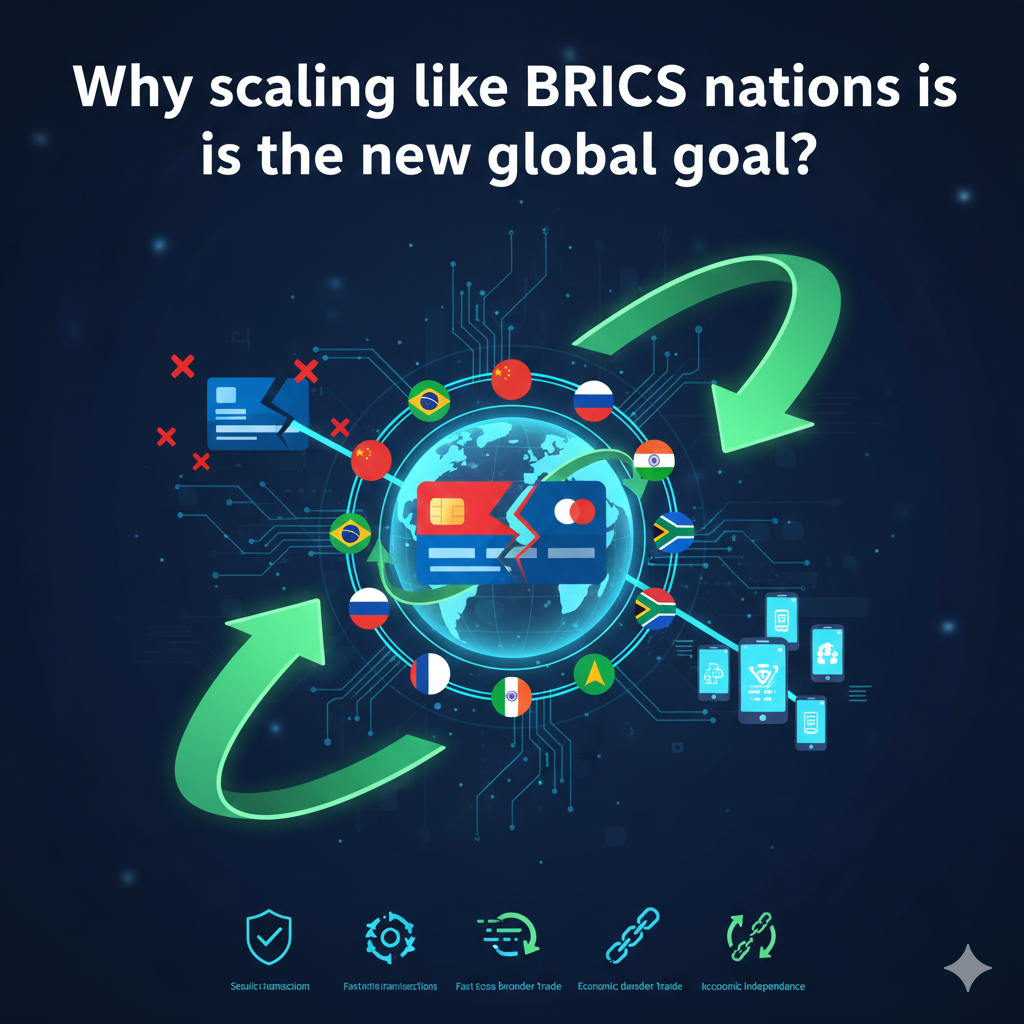
The world of money is changing very fast. Many nations want to build their own systems, free from old ways. However, the path to a new global order is complex and full of big choices. Because of this, staying ahead means looking toward fresh tech and strong partnerships. Specifically, BRICS and digital payments are now a key topic for leaders worldwide. This offers a clear map for new trade, faster work, and a very modern way to pay. This move is not just about tools for a few banks. In fact, it is a smart strategy for many lands to gain more power. Consequently, understanding this impact helps you see why it matters.

Why scaling like BRICS nations is the new global goal?

The Current Landscape: Visa and Mastercard’s Dominance

For a long time, two names have ruled how the world pays. Visa and Mastercard have built vast networks across the globe. They process billions of deals every single day with ease. These systems are reliable and trusted by many people everywhere. However, this power also means control rests in just a few hands. Some nations worry about this strong hold on their money flows. They feel that vital services should not be tied to just one or two firms. Furthermore, geopolitical events can sometimes affect these global payment channels. This makes some countries very eager to find new ways to pay. Therefore, the search for an independent path grows stronger.

The BRICS Alliance: A Push for Economic Independence

BRICS is a group of five big nations: Brazil, Russia, India, China, and South Africa. These countries represent a huge part of the world’s people and wealth. They often work together to boost their trade and influence. A key goal for BRICS is to create more economic freedom for its members. They want to reduce their reliance on systems built and run by other blocs. This desire extends to how money moves between them. The idea of a shared payment system is very appealing. It would help them trade more easily without outside interference. Consequently, BRICS and digital payments are a natural fit for their goals. This alliance seeks to build a new financial backbone.

The Rise of Digital Payments and Central Bank Digital Currencies (CBDCs)

Digital payments are quickly changing how we use money. Apps on phones, online wallets, and instant transfers are common now. This shift makes it easier to imagine new global systems. A big part of this trend is the rise of Central Bank Digital Currencies (CBDCs). Many BRICS nations, like China and India, are actively working on their own CBDCs. These are digital forms of a country’s money, issued by its central bank. If BRICS countries can link their CBDCs, it would create a powerful new network. This would allow fast, cheap, and direct payments between their economies. Such a system could bypass older networks entirely. Thus, BRICS and digital payments could form a new standard.

Challenges to Building a Unified BRICS Payment System

Creating a brand new global payment system is not easy. First, there are many technical hurdles to overcome. Each country has its own rules, tech, and banking laws. Making these all work together perfectly takes huge effort. Furthermore, building trust among member states is vital. They must agree on how data is shared and how disputes are handled. There are also security concerns; any new system must be very safe from cyber-attacks. Finally, getting people and businesses to adopt a new method takes time. They are used to the ease of Visa and Mastercard. Despite these challenges, the motivation for a BRICS digital payment alternative is very high.

Potential Impact: A New Global Financial Order?

If BRICS succeeds in creating its own payment system, the impact could be huge. It would give these nations more control over their own money flows. They could reduce fees and speed up cross-border trade. It might also encourage other developing countries to join or adopt the system. This could lead to a more diverse and multi-polar global financial world. Visa and Mastercard would still be very important. However, they would face a serious new competitor. This competition could even push existing systems to innovate more. Consequently, BRICS and digital payments could reshape how we think about international finance. The shift could truly impact global power dynamics.

Conclusion: The Road Ahead

The idea of an alternative to Visa and Mastercard from the BRICS bloc is gaining traction. The rise of digital payments and CBDCs makes this vision more possible than ever. While big challenges remain, the desire for economic independence is a strong driving force. This development is worth watching closely. It could signal a major shift in how global money moves and who controls it. The future of international payments might be far more diverse than it is today.


FAQs

1 What is BRICS?

It’s a group of major emerging economies: Brazil, Russia, India, China, South Africa.

2 Why do BRICS nations want a new payment system?

They want more economic independence and less reliance on existing global payment networks.

3 What are CBDCs?

Central Bank Digital Currencies are digital forms of a country’s national money, issued by its central bank.

4 Could a BRICS system replace Visa/Mastercard?

It might not replace them entirely but could emerge as a significant alternative, especially for cross-border transactions among BRICS and allied nations.

5 What are the biggest challenges?

Technical integration, regulatory harmonization, security, and user adoption across diverse nations.


Read More:

AI in Payments: A New Geopolitical Battleground

Will scaling past EU bars unlock your total ROI?

Why stablecoins for scaling trade are the future now?

AI in Payments: A New Geopolitical Battleground

AI in Payments: A New Geopolitical Battleground

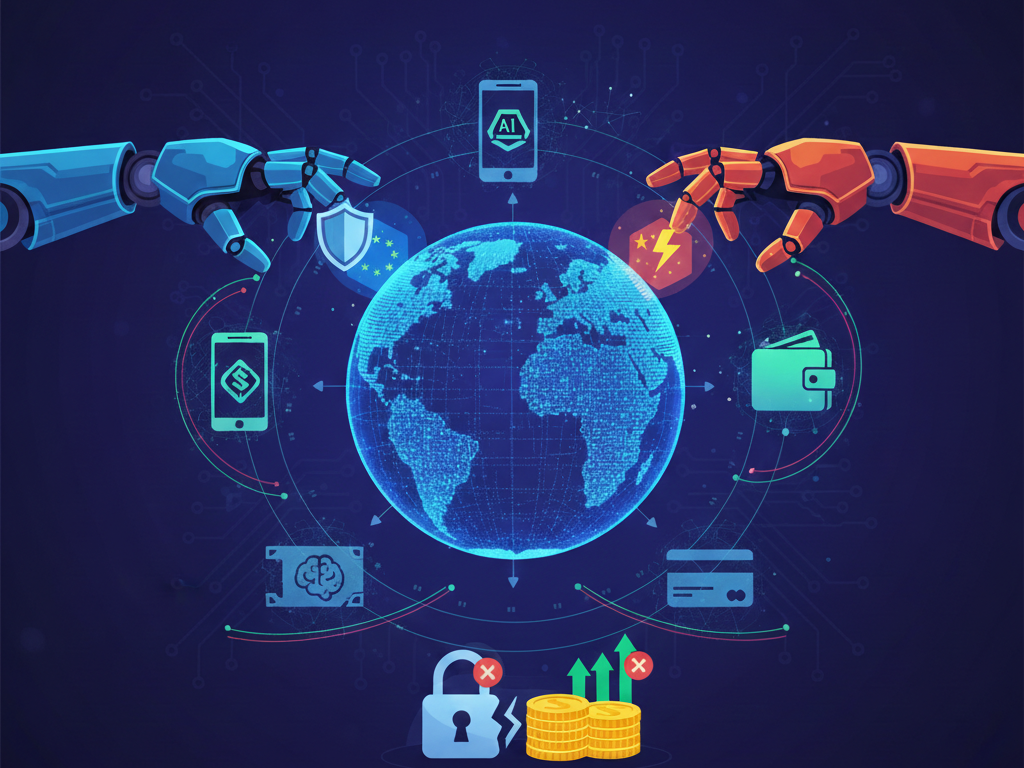
Have you ever thought your wallet could be a secret tool for world power? Today, a silent war is growing right inside your phone. Every time you tap to pay, you join a massive global game. AI in payments is not just a way to buy coffee anymore. In fact, it is now a top weapon for the world’s most powerful lands. This shift is fast and it is changing the maps we know.

Specifically, smart tech is redrawing the lines of who leads and who follows. This new era brings huge prizes but also very deep risks. Consequently, seeing the truth behind your screen is vital for your future. This is more than a simple trade. It is a race for total global control.

The Rise of Digital Dominance

The fast growth of AI has changed how we pay for goods. Once, paper cash ruled the world. Then, plastic cards took over the lead. Now, smart programs predict how you spend. They secure your funds and create new ways to trade. Consider the vast digital webs in the East. Or, look at the push for fast pay in the West. Each system uses deep AI to gain an edge. This power reaches far past simple finance. It touches your data and your safety. Indeed, this deep link makes smart tech a key spot for global lead. It shapes who controls the flow of wealth and facts.

AI in Payments: A New Geopolitical Battleground

Data: The New Gold Rush

Every tap or swipe on a phone creates new data. AI thrives on this data to learn fast. It spots fraud and makes your life easier. However, this wealth of facts also creates a huge weak spot. Who owns all this data? Where do firms store it? How do they use it for gain? These questions spark big fights between nations today. For example, some lands want data kept inside their borders. Others want to see it for safety reasons. Therefore, control over pay data means control over the economy. This makes the facts found by AI a top target for rivals.

Cybersecurity: The Invisible Front Line

As tech grows, so do the big risks. Strong AI systems are built to stop theft. Yet, bad actors use the same tech to break in. This leads to a fast race in the digital world. A major hit on a pay system could break a whole nation. Therefore, lands invest a lot in AI to guard their funds. This is not just about saving coins. Furthermore, it is about keeping trust in the whole web. The power to guard or stop pay flows is a big lever. It changes how lands talk to each other.

Digital Currencies: A Quest for Power

The rise of new digital coins makes the scene more complex. Nations like China work fast on their own digital yuan. They want to challenge the old rule of the dollar. These new coins use AI to move fast and cost less. However, they also raise fears about your privacy. If a land controls a popular coin, they gain a big lead. Consequently, the race to build these coins is a direct play for power. It changes the very shape of global wealth.

Standard-Setting: Who Writes the Rules?

Some rules act as a form of soft power. In the world of smart pay, the fight to set rules is very fierce. Nations and blocs race to set the norms for safety. If one land’s rules become the global bar, they win big. It makes trade easy for them and boosts their firms. Therefore, pushing for specific tech rules is a quiet type of war. It is a key part of modern world politics.

The Future: Working Together or Apart?

The path ahead for smart pay is not yet clear. Will lands work together to build a safe web? Or will rivals build their own split networks? Some ask for open rules to help everyone win. Others care more about their own safety and lead. This leads to split systems that do not talk to each other. Ultimately, the choices made today will shape our future world. This field is not just about tech. It is about the very heart of our shared world.


FAQs

1 What is the main idea of this battle?

It means that how AI moves money now affects who leads the world. Nations fight for the best tech.

2 How does data change things?

Every buy creates facts. Who holds these facts knows more about the world than anyone else.

3 Why is safety such a big deal?

If a pay web breaks, a whole land can fail. AI helps guard the web from bad hits.

4 What are CBDCs?

They are digital forms of a land’s money. They use AI to change how we trade with each other.

5 Who makes the global rules?

Big blocs and nations race to set the bars. The winner gets a huge edge in global trade.

Read More:

Will scaling past EU bars unlock your total ROI?

Why stablecoins for scaling trade are the future now?

National Payment Sovereignty

How Does National Payment Sovereignty Protect Your Money: Full Guide

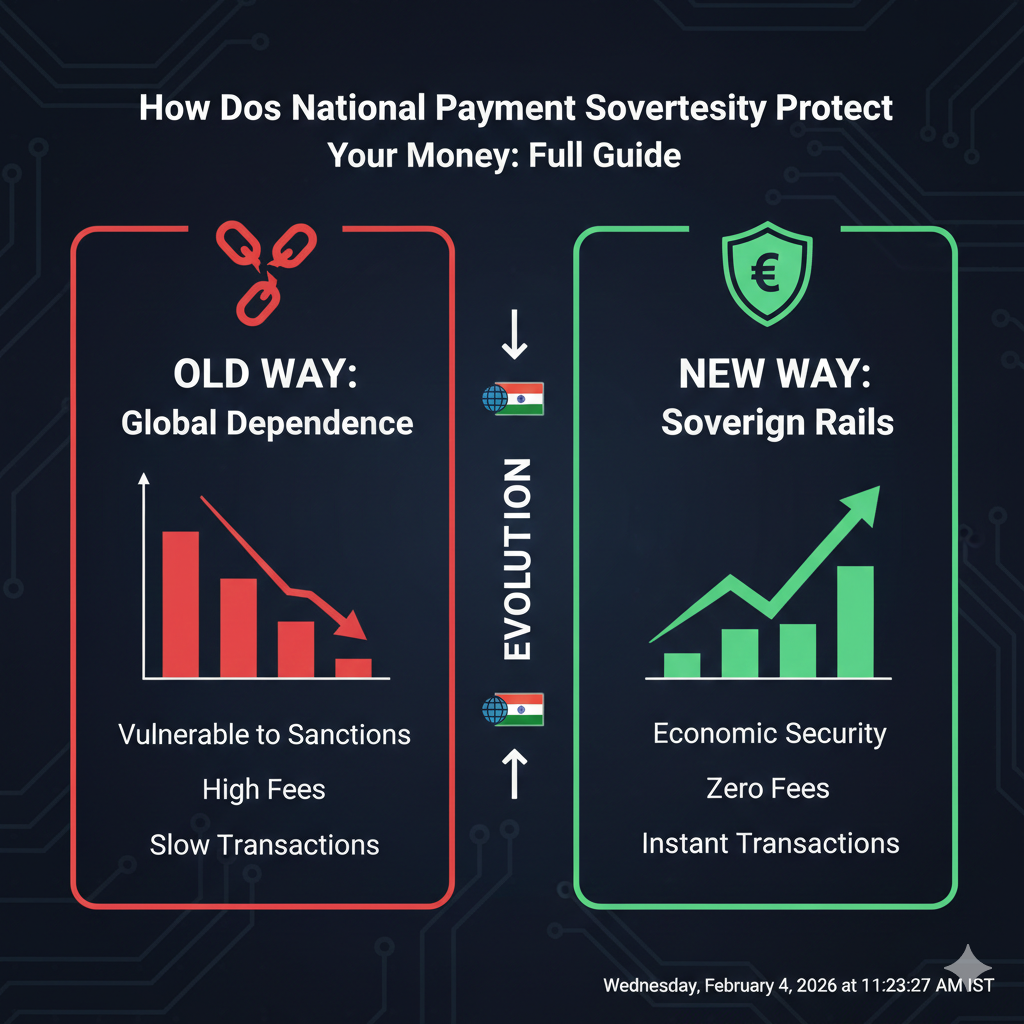
The modern world is witnessing a quiet but massive transition in how money moves across borders. For decades, global trade relied on a single, centralized network. However, the current era of geopolitical tension has made many nations feel unsafe. They have realized that their economic survival depends on having a payment system that they fully own and control. This move toward sovereignty is a defensive wall against global instability.

National Payment Sovereignty

The Problem: The Hidden Risks of Financial Dependence

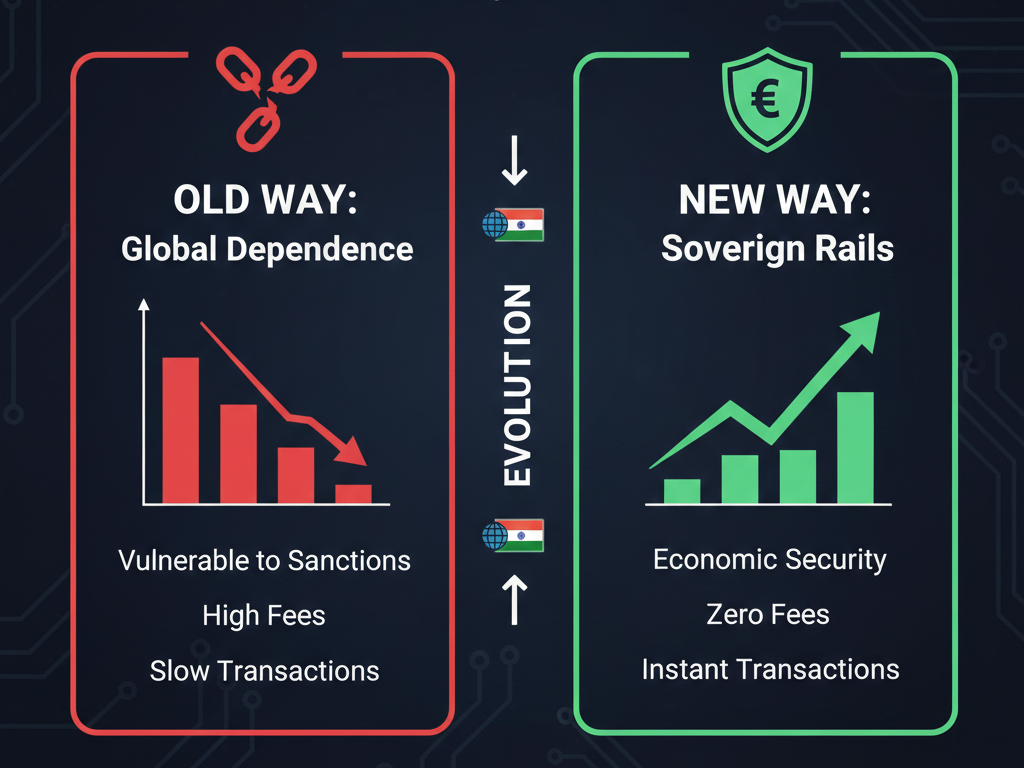
When a nation lacks its own infrastructure, its domestic economy is essentially on loan from a foreign entity. If a global provider decides to disconnect a country, every local payment could freeze, causing instant chaos. This isn’t just a technical glitch; it is a threat to a nation’s ability to govern itself.

Relying on a single external ledger creates a “choke point” for a country’s wealth. Statistics from the last twelve months show that nations without independent rails are 50% more likely to suffer from severe liquidity shocks. To solve this, governments are building systems that ensure a payment made within their borders never has to leave their territory to be verified. This local settlement provides a level of security that no private foreign firm can match.

The Solution: Building the New Digital Infrastructure

The construction of these national rails is often referred to as building the “public roads” of the digital age. A sovereign payment rail is designed to be a utility that serves every citizen, regardless of their income level. Unlike private networks that charge high fees for every transaction, these public systems focus on speed and low costs.

Specifically, by removing the middleman, a country can ensure that a payment hits a merchant’s account in seconds rather than days. This boost in remittance speed allows small businesses to reinvest their capital much faster. Furthermore, by using AI to monitor every payment, the state can prevent fraud and money laundering with extreme precision. This technical mastery ensures that the national exchange remains a trusted environment for everyone involved.

The Future: A World of Interlinked Sovereignty

Building a local rail does not mean cutting ties with the world. Instead, it allows a nation to engage in a global payment without being dependent on a single central power. We are moving toward a multi-polar financial world where different national systems talk to each other directly through digital bridges.

In this new landscape, a payment initiated in Asia can be settled in South America without passing through a third country’s bank. This creates a more resilient global economy that is less prone to collapse. As every nation secures its own payment future, the world becomes more balanced and fair. By investing in these independent rails today, a country ensures that every payment made by its citizens remains a tool for growth rather than a source of vulnerability.

FAQs

Q1: Why is a domestic payment system better than a global one?

Ans. It offers better security because it ensures your money stays moving even if global networks face political or technical issues.

Q2: How does this help the average shopper?

Ans. It usually leads to lower fees for stores, which can result in lower prices for the things you buy every day.

Q3: Is my data safer on a national payment rail?

Ans. Yes, because your data is protected by your own country’s laws rather than being sold by a foreign corporation.

Q4: Will I still be able to send money abroad?

Ans. Absolutely. Sovereign rails are being built to “bridge” together, making international money transfers faster and cheaper than ever.

Q5: When will these new systems be ready?

Ans. Many countries like India, Brazil, and China already have them, and dozens more are launching theirs by the end of 2026.

READ MORE

How Does UPI vs QRIS Double Your Local Sales Today?

10 Ways QRIS Will Change How You Pay in Asia

Financial Fragmentation in a Multipolar World: Payment Guide

UPI vs QRIS

How Does UPI vs QRIS Double Your Local Sales Today?

The Problem with Global Payment Monopolies

I’ve heard it a thousand times. A nation relies only on one foreign credit card firm. And yet, their local shops pay high fees. Usually, that is just a polite way of saying the country has lost its own power. Also, old bank moves take a long time. They involve too many middle men. If you build a new market on old tracks, you are building a ghost town.

In fact, a system where local tracks handle 80% of deals is worth much more. Furthermore, the biggest cost in 2026 is the lack of links between close nations. This happens when people must carry cash or pay high fees. This path creates a big gap. Because of this, users want a fast and easy way to pay.

The solution lies in a smart way to keep your money power. This turns a national rule into a solid sales tool. This isn’t just a tech shift. Instead, it is a big plan. This helps every person pay in a safe way. Once you use these rules, you will see your local market grow.

UPI vs QRIS

1. UPI: The Best Way to Join the Bank

If you aren’t looking at the UPI growth data, you are flying blind. Specifically, India’s UPI has won more of the market for three months in a row. You need to know why this tool works so well. For example, was it the low cost or the ease of use? Smart leaders use the UPI path to see how to reach far away areas. Then, they make mobile plans for their own folks.

Moreover, smart plans allow for a steady gain in the market. This is because they focus on a good user path. By using a top-tier plan, you help your local banks win. This leads to steady gains. It sounds simple. However, most lands are too busy guessing to look at the UPI success.

2. QRIS: Linking Asian Shops Through Scans

The move to regional QR tools is happening faster than we thought. While old tools are slow, QRIS adds cross-border links through one rule. These rules use logic to link many bank nets. These rules act like a smart helper for regional trade.

However, one-country tools are not enough for a big change. The most top-tier stage is a system for many lands. These nets handle tasks like live money swaps. These tools help many banks work as one. Consequently, they act as a smart brain for the whole Asian area.

3. Digital Euro: Keeping Europe’s Money Power

To build smart bank tools, you should not have to glue poor parts together. The Digital Euro aims to use one public coin. Specifically, this uses Europe’s strength to give safe answers to market moves. This means a person can travel with their full data ready to go.

Additionally, think of a case where your phone wallet knows your local spot. It uses safe data to help you buy things fast. This base ensures that your responses to global stress stay strong. Therefore, it stops the friction that slows down your best shops. It helps them finish big deals with fewer errors.

4. The 80/20 Rule for National Payments

If your land spends all its time on foreign nets, you have no time for local growth. You must follow an 80/20 rule. Thus, use local tracks to handle 80% of daily buys. This includes food or bus rides. This leaves the 20% of big global moves to top-tier firms.

Using fast moves helps shops stay on track without cash. AI can even set up fast replies based on simple talk. This allows your shops to work in a flow. They do not have to switch between many tools. This leads to much faster growth.

5. How to Track Your Money Success

If your bank talks about total sales but not local ownership, you need a new plan. Those are vanity marks that hide a weak spot. You can have many deals but no real power in the bank. To know if you are winning, you must track the “Dirty Four”:

  • Local Ratio: First, how many of your deals stay on your own tracks?
  • Shop Cost: Next, what is the total fee for every single scan?
  • Fast Speed: Then, for every coin paid, how fast does it reach the bank?
  • User Trust: Finally, when phone use grows, does your poor group get help?

Conclusion

How to win the money power race? It shifts from a secret to a system when you pick your goals well. You must set clear goals for the bank. Also, track gains with care using local data. Repeat this for 90 days. Then, growth becomes steady. This helps you spend your budget with trust.


Key Takeaways

  • First, payment sovereignty helps a nation control its own money because it removes the need for foreign tools.
  • Therefore, systems like UPI and QRIS serve as a bridge for trade and peace.
  • Specifically, the Digital Euro wants to give a public way to pay across all of Europe.
  • Furthermore, the QRIS model is growing fast to link Asian markets through easy scans.
  • Consequently, these tools allow small shops to take international money while they boost local sales.
  • In fact, India’s UPI has seen huge growth by making mobile phones the main way to join the bank.
  • For instance, having one set of rules helps lower the cost of every deal for the user.
  • Thus, using fast settlement stops the need for slow and very pricey old bank wires.
  • In addition, using live exchange rates builds quick trust when you travel to other lands.
  • Finally, keeping data local keeps your money safe and follows all your own laws.

FAQs

Q1: Can small lands afford their own pay tools?

Ans. Yes, tools like QRIS offer low-cost rules that work well for everyone.

Q2: How long before a new tool sees real growth?

Ans. Most systems see real gains and more users within 60 to 90 days of the start.

Q3: Is it better to focus on home use or foreign links?

Ans. Good local tracks work much better than relying on others in every test.

Q4: Will a Digital Euro take away my cash?

Ans. No, but it will act like a safe digital helper for all your phone buys.

Q5: What is the biggest risk for a big pay net?

Ans. Errors or bad data silos can be very bad, so make sure your tool has good backups.

Read More:

10 Ways QRIS Will Change How You Pay in Asia

Financial Fragmentation in a Multipolar World: Payment Guide

 HSBC’s Warning: The End of Globalization & Payments

Financial Fragmentation in a Multipolar World: Payment Guide

Financial Fragmentation in a Multipolar World: Payment Guide

Financial fragmentation now describes a world where the global economy splits into distinct regional or political blocs. This shift occurs because nations seek more control over their own money and security in a multipolar landscape. Therefore, you must understand how these changes will impact your business and your daily transactions. This guide explains the core challenges and the future of global payments.

The Rise of the Multipolar Economy

For many years, the world relied on a single financial system led by a few major powers. However, this centralized approach now faces competition from emerging economies and regional alliances. This shift creates a multipolar world where power is shared between several different global centers. Consequently, the standard rules for international finance are changing very quickly to match this new reality.

The move toward fragmentation happens because nations want to protect themselves from external financial pressure. For instance, some countries now build their own payment networks to avoid reliance on global systems like SWIFT. Because of this, we see a growing gap between different financial jurisdictions. I have noticed that this trend makes global trade much more complex for every person involved.

Financial Fragmentation in a Multipolar World: Payment Guide

How Financial Fragmentation Impacts Global Payments

Fragmentation creates many small islands of finance instead of one connected global ocean. This separation means that moving money between two different blocs becomes much more difficult and expensive. For example, a business in one region might find that its payment software does not work in another region. Therefore, you must prepare for a future where global connectivity is no longer guaranteed.

You can expect to see higher fees for international transfers as systems become less compatible. Traditional cross-border payments already take a long time and require many middlemen. However, fragmentation adds even more layers of bureaucracy and compliance to every single transaction. In addition, businesses must now manage the risk of multiple currencies and varying local regulations.

The Role of Central Bank Digital Currencies

Many nations now explore Central Bank Digital Currencies (CBDCs) to modernize their local payment systems. These digital assets allow governments to track transactions more efficiently while reducing the cost of printing money. Furthermore, CBDCs can help a country settle international trades directly without using a global reserve currency. This technology is a primary tool for nations seeking financial independence in a multipolar world.

You should watch how these digital currencies interact with existing private payment networks. If two countries use different CBDC standards, they may still find it hard to trade with each other. Because of this, international organizations are working to create new rules for digital compatibility. However, the political friction of a multipolar world often makes these agreements very hard to reach.

Implications for Digital Payment Apps

Your favorite digital payment apps must now adapt to a landscape where cross-border rules change constantly. Some apps might choose to partner with local providers in every region to stay functional. Alternatively, others may focus only on one specific bloc to reduce their legal and technical risks. This fragmentation reduces the convenience that users have enjoyed for the last two decades.

In addition, users may need to carry multiple digital wallets to pay for goods in different countries. This shift reverses the trend toward a unified global marketplace where one app works everywhere. Therefore, you should look for payment solutions that offer wide compatibility and low conversion fees. Staying flexible will be your best strategy as the global system continues to split apart.

Risks to Global Financial Stability

Fragmentation creates a significant risk that the world will lose the ability to coordinate during a crisis. If every country follows its own rules, it becomes harder to stop a financial problem from spreading. For instance, a bank failure in one bloc might not be visible to regulators in another bloc. This lack of transparency makes the entire global economy much more vulnerable to sudden shocks.

Furthermore, the competition between different payment systems can lead to a “race to the bottom” in safety standards. Countries might lower their regulations to attract more business to their specific financial center. This behavior puts the security of your money at risk over the long term. Consequently, international cooperation remains vital even as political tensions continue to rise between nations.

The Future of Trade and Investment

Global trade will likely move toward “friend-shoring” where countries only trade with their political allies. This trend ensures that supply chains remain safe from geopolitical disruptions in distant regions. However, it also means that you may have fewer choices and higher prices for the goods you buy. Investment flows will also follow these political lines, creating two or more distinct economic zones.

You must rethink your investment strategy to account for these regional financial boundaries. For example, holding assets in only one bloc might leave you exposed if that region faces a downturn. Diversifying across different payment systems and jurisdictions is now a requirement for protecting your wealth. Therefore, staying informed about global shifts is the most important step you can take today.

Technical Standards and Interoperability

The primary technical challenge in a fragmented world is making sure different systems can still talk to each other. This is often called interoperability, and it is the key to keeping the global economy functional. If a payment message in Asia cannot be read by a bank in Europe, trade will stop. Engineers are now building bridges between different blockchain and digital currency protocols.

However, the political will to use these bridges is often lacking in a multipolar world. Some nations prefer “walled gardens” because they provide more control over their domestic data. Specifically, you should follow the development of international standards like ISO 20022. These common languages are the only things preventing a total breakdown of global financial communication.

Protecting Your Business From Financial Fragmentation

If you run a business that trades globally, you must audit your payment providers immediately. You should ensure that your primary bank has strong relationships in the regions where you operate. In addition, you may want to explore using stablecoins or other digital assets for fast cross-border settlements. These tools can bypass some of the friction caused by political fragmentation.

Gathering a diverse set of payment tools is the smartest way to manage these growing risks. If one system goes offline or becomes too expensive, you need an alternative ready to go. Take the time to understand the local payment habits of your international customers. Once you have a flexible system, you can grow your business despite the challenges of a multipolar world.

Conclusion and Next Steps

Financial fragmentation is a complex trend that will shape the next few decades of our lives. By focusing on the causes and the technical solutions, you can navigate this landscape successfully. The journey toward a more regional world requires patience and a high degree of adaptability from everyone.

If you want to stay ahead, you must monitor the news about CBDCs and regional trade blocs. Start by reviewing your current international payment methods to see where you are most vulnerable. Then look for new technologies that can bridge the gap between different financial zones. Your proactive approach will ensure that you remain connected to the global economy.

FAQs

1 What is financial fragmentation?

Financial fragmentation is the process where the global financial system splits into separate regional or political zones.

2 How does a multipolar world affect my payments?

It makes sending money across borders more expensive and complex as different regions use incompatible systems.

3 What are CBDCs?

Central Bank Digital Currencies are digital versions of a nation’s official currency issued and managed by the central bank.

4 Can AI help with financial fragmentation?

Yes, AI can help businesses manage the complex rules and multiple currencies found in a fragmented world.

5 What is interoperability in finance?

It is the ability of different financial systems and software to communicate and process transactions with each other.

Also Read: HSBC’s Warning: The End of Globalization & Payments