How Does Reliable Payment Tech Drive Gamer Trust

How Does Reliable Payments Tech Drive Gamer Trust? Ultimate Guide

Payments for Gaming Platforms: Handling Microtransactions at Scale

Introduction

Gaming platforms live and die by their payment systems. A single failed transaction can push a player away for good. As games grow, so does the volume of microtransactions. Players buy skins, coins, boosts, and battle passes, often within seconds of deciding to spend. This creates unique pressure on payment infrastructure. Speed, reliability, and security all matter at once. In this guide, we explore how payments for gaming platforms work when microtransactions happen at scale. You will learn what makes gaming payments different, the biggest challenges operators face, and practical steps to build a system that can handle millions of small transactions without breaking down. By the end, you will have a clear framework for evaluating your own payment stack against the demands of modern, high-volume gaming.

What Makes Gaming Microtransactions Different with Payments

Microtransactions are small in value but massive in volume. A single popular game can process millions of purchases each day. Each purchase might be worth only a dollar or two. However, the total transaction count creates real strain on payment systems. Traditional payment setups, built for larger and less frequent purchases, often struggle here.

Speed is another defining factor. Players expect instant delivery after payment. A delay of even a few seconds can feel broken, especially during active gameplay. As a result, payment systems for games must process approvals almost instantly. This is different from e-commerce, where a short delay before shipping confirmation is normal and expected.

Fraud risk also looks different in gaming. Stolen cards are often tested through small in-game purchases before being used for larger crimes elsewhere. Consequently, gaming platforms become an early target for fraud testing. This means fraud detection must work in real time, without slowing down legitimate players.

Finally, global reach adds complexity. Gaming audiences span nearly every country. Each region has different preferred payment methods, currencies, and regulations. A platform built only for credit cards will lose players in markets where mobile wallets or prepaid vouchers dominate.

Player behavior also differs from typical online shopping. Purchases often happen impulsively, driven by in-game moments such as reaching a difficult level or unlocking a limited-time offer. This means checkout friction has an outsized effect on revenue. Every extra step in the payment flow risks losing a sale that would have closed instantly with a smoother process. As a result, gaming platforms tend to invest heavily in one-click or saved-payment experiences that other industries adopt more slowly.

Core Challenges in Scaling Gaming Payments

The first major challenge is transaction cost. Processing fees that seem small on a single purchase add up quickly across millions of microtransactions. Platforms need pricing models that remain profitable even on very small purchase amounts. Otherwise, popular low-cost items can quietly erode margins.

The second challenge is infrastructure load. Payment systems must handle sudden spikes, such as when a new game update launches. Traffic can jump within minutes, and any slowdown directly costs revenue. Therefore, scalable, cloud-based payment infrastructure is essential rather than optional.

Chargebacks present a third challenge. Because microtransactions are low value, some players dispute charges casually, assuming the amount is too small to matter. However, chargeback fees are often flat, regardless of the purchase size. A high volume of small disputes can quickly damage profitability and merchant standing with payment processors.

Regulatory compliance adds a fourth layer of difficulty. Rules around in-game purchases, loot boxes, and payments involving minors vary by country. Some regions require clear spending limits or parental controls. Platforms operating globally must track and apply these rules correctly, or risk fines and platform bans.

Currency handling introduces a fifth challenge that is easy to overlook. Displaying prices in a player’s local currency improves trust and conversion. However, currency conversion also introduces rounding issues and exchange rate risk. Platforms must decide whether to absorb small fluctuations or pass them along, and that decision affects both margins and player perception of fairness.

How to Build a Payments System That Scales

Start with a payment provider built for high transaction volume. Look for partners with proven experience in gaming, not just general e-commerce. These providers understand microtransaction pricing and can offer better rates at scale.

Next, prioritize multiple payment methods from day one. Credit cards remain important, but mobile wallets, carrier billing, and prepaid options often drive higher conversion in specific regions. Offering local payment methods can increase completed purchases significantly, especially in markets where card ownership is low.

Implement real-time fraud detection that uses behavioral signals, not just static rules. For example, a system might flag rapid, repeated small purchases from a new account as suspicious. Modern fraud tools use machine learning to catch these patterns without blocking genuine players. Balance is key here. Overly strict fraud rules frustrate real customers, while weak rules invite abuse.

Additionally, build a smart retry system for failed payments. Many failures happen due to temporary issues, such as a bank’s fraud check or a network hiccup. Automatically retrying a failed charge, with proper safeguards, can recover a meaningful share of lost revenue without extra effort from the player.

Finally, invest in clear reporting and reconciliation tools. At scale, manual tracking of transactions becomes impossible. Automated dashboards that show revenue, chargeback rates, and regional performance help teams spot problems early and react quickly.

It also helps to separate your payment logic from your core game code. Keeping these systems modular means you can update payment providers, add new methods, or adjust pricing without touching gameplay systems. This separation reduces risk and speeds up future changes, since payment teams can iterate independently from game development teams.

Best Practices for Reliability and Trust on Payments

Reliability builds player trust, and trust drives spending. Aim for near-perfect uptime on your payment system, since even brief outages during peak hours can cause significant revenue loss and player frustration.

Transparency also matters greatly. Clearly show players what they are buying and the exact price before confirming. Hidden fees or confusing currency conversions create frustration and increase support tickets. Similarly, send instant purchase confirmations so players know their transaction succeeded.

Security should never be an afterthought. Use tokenization to avoid storing raw card data directly. This reduces your compliance burden and protects players if a breach ever occurs elsewhere in your systems. Regular security audits are equally important, especially as your platform integrates new payment partners over time.

Consider offering spending controls, particularly for platforms with younger audiences. Features like daily spending caps or parental approval steps build long-term trust with both players and regulators. This proactive approach can also reduce chargeback disputes tied to unauthorized purchases by minors.

Lastly, monitor performance across regions separately. A payment method that works well in one country may perform poorly elsewhere. Regular regional reviews help you adjust your payment mix and maintain strong conversion rates everywhere you operate.

It is also wise to run periodic load tests that simulate peak traffic before major releases. Simulated stress testing reveals weak points in your payment stack while the stakes are still low. Fixing a bottleneck during a test costs far less, in both money and reputation, than discovering it during a live launch with thousands of players trying to spend at once.

How Does Reliable Payment Tech Drive Gamer Trust

Conclusion

Handling microtransactions at scale requires more than a standard payment setup. Gaming platforms need speed, global payment options, strong fraud protection, and reliable infrastructure working together. By choosing the right partners and building smart, automated systems, you can support massive transaction volumes without sacrificing player trust. As your platform grows, these foundations will keep payments smooth, secure, and profitable. Build your authority with Digital Payment Guru and turn your payment infrastructure into a genuine competitive advantage.

Frequently Asked Questions

1. What is a microtransaction in gaming?

A microtransaction is a small in-game purchase, such as buying virtual currency, cosmetic items, or extra content, usually for a low price.

2. Why do gaming platforms face more fraud attempts than other industries?

Stolen payment cards are often tested through small gaming purchases before being used elsewhere, making games an early fraud target.

3. How can gaming platforms reduce chargeback rates?

Clear pricing, instant confirmations, and spending controls all help reduce disputes caused by confusion or unauthorized purchases.

4. Do gaming platforms need to support multiple payment methods?

Yes. Supporting local wallets, carrier billing, and prepaid options improves conversion rates in regions with low card ownership.

5. What role does infrastructure play in payment scalability?

Cloud-based, scalable infrastructure ensures payment systems handle sudden traffic spikes, such as new game launches, without downtime.

Also Read:

How Do SaaS Leaders Plan Payment Strategies? Ultimate Guide

How Do EdTech Start-ups Simplify Payments? Ultimate Guide

Headless Commerce Payments Best Practices: Complete Guide

Headless Commerce Payments Best Practices: Complete Guide

Shopping has changed. Customers buy on websites, apps, smart TVs, voice assistants, and even in-store kiosks. Traditional ecommerce platforms struggle to keep up. Headless commerce solves this problem. It separates the front end from the back end, giving brands the freedom to build any experience they want.

When you add headless payments to the mix, checkout becomes just as flexible as the rest of the store. The result is a faster, smoother, more customizable buying journey.

What Is Headless Commerce?

Traditional ecommerce platforms bundle everything together. The storefront, the cart, the checkout, and the back-end logic all live in one system. Changing one part often breaks another.

Headless commerce breaks this bundle apart. The front end, what customers see, connects to the back end through APIs. Developers can build any front-end experience without touching the commerce engine underneath.

Therefore, brands gain creative freedom. They can design unique storefronts for every channel. They can update the look without disrupting business logic. This separation is the core of headless architecture.

Headless Commerce Payments Best Practices: Complete Guide

Why Payments Needed to Go Headless Too?

For years, checkout was the last thing brands customised. Payment forms were rigid. Styling was limited. Adding new payment methods took months of development work. This mattered because checkout is where buyers convert or abandon. A clunky payment experience kills sales. Even a one-second delay raises cart abandonment rates significantly.

Consequently, headless payments emerged as a natural extension of headless commerce. By decoupling the payment layer, brands control every pixel of the checkout experience. The also integrate new payment methods in days, not months.

How Headless Payments Work?

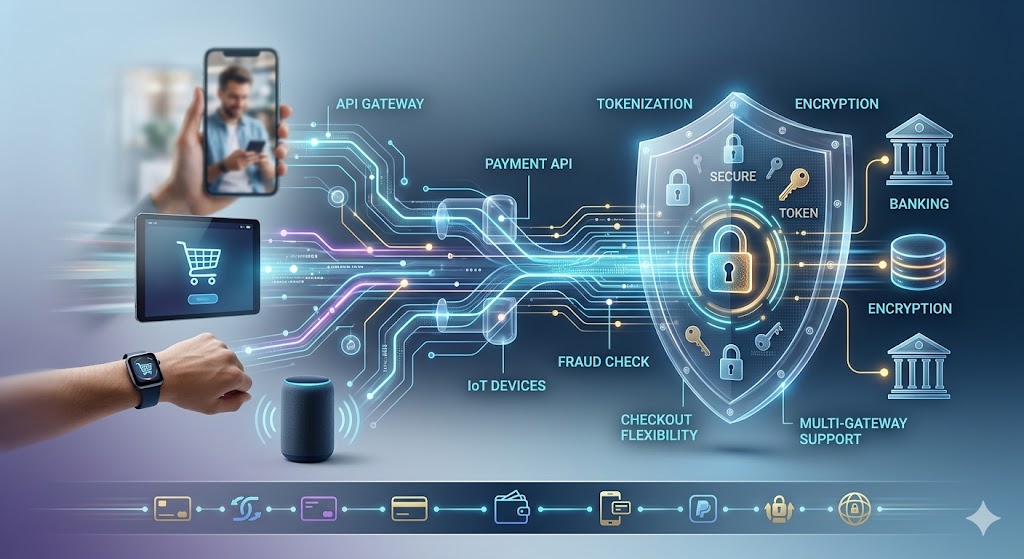
Headless payment solutions expose payment functionality through APIs. The brand builds its own checkout UI. The payment processor handles the sensitive data underneath.

Tokenisation keeps cardholder data secure. The front end never actually sees raw card numbers. Instead, it passes a token to the payment processor, which completes the transaction.

Additionally, webhooks notify the front end when a payment succeeds or fails. This allows real-time feedback without a page refresh. The result feels fast and modern to the customer.

Key Benefits of Decoupling Checkout

First, speed improves dramatically. Custom-built checkout pages load faster than bloated, all-in-one platform templates. Faster pages mean higher conversion rates.

Second, localisation becomes easy. Different markets want different payment methods. Brazil favours Boleto. Germany prefers SEPA. The Netherlands uses iDEAL. Headless architecture lets you plug in local methods for each region.

Third, A/B testing checkout flows becomes straightforward. You can test button colours, form layouts, and step sequences without touching the payment engine. Data drives optimisation.

Furthermore, brand consistency extends all the way through checkout. No more jarring redirects to generic payment pages. The customer stays in your branded environment from browse to buy.

Popular Headless Payment Providers

Stripe leads the field. Its Payment Intents API gives developers granular control over the payment flow. Stripe Elements provides pre-built, customisable UI components.

Adyen serves enterprise brands. It supports over 200 payment methods and provides deep reporting tools. Its Checkout API enables fully custom experiences. Braintree, owned by PayPal, focuses on flexibility and developer experience. It supports cards, PayPal, Venmo, and local payment methods through a single integration.

Moreover, newer players like Primer and Gr4vy act as payment orchestration layers. They sit above multiple payment processors, routing transactions to the best provider for each situation.

Composable Commerce: The Bigger Picture

Headless commerce and headless payments are part of a larger movement called composable commerce. Instead of one monolithic platform, composable commerce assembles best-of-breed solutions.

A brand might use Contentful for content management, Commerce tools for commerce logic, Stripe for payments, and Algolia for search. Each piece excels at its function. APIs connect them all.

This approach follows the MACH architecture principles: Microservices, API-first, Cloud-native, and Headless. MACH brands move faster, innovate more, and adapt to market changes without major re-platforming projects.

However, composable commerce also adds complexity. More vendors mean more integrations to maintain. Strong engineering teams and clear governance are therefore essential.

Challenges of Going Headless

Headless is powerful but not simple. Building a custom front end requires skilled developers. Maintaining API integrations demands ongoing effort. Costs can rise quickly without careful planning.

Security is another concern. More API connections create more potential attack surfaces. Each integration point needs proper authentication, encryption, and monitoring.

PCI DSS compliance also needs attention. Payment card industry standards govern how cardholder data is handled. Headless architectures must still meet these requirements, even when data never touches the front end directly.

Despite these challenges, the benefits typically outweigh the costs for brands at scale. Smaller brands may prefer managed headless solutions that reduce engineering overhead.

Conversion Optimisation Through Headless Checkout

One-page checkout reduces friction. Progressive disclosure only shows form fields when needed. Auto-fill speeds up the process for returning customers.

Buy Now Pay Later (BNPL) options like Klarna and Afterpay increase average order values. Adding them to headless checkout is a simple API call. The brand does not need to manage credit risk.

Express checkout options also matter greatly. Apple Pay, Google Pay, and PayPal Express let customers skip form filling entirely. Conversion rates rise sharply when fewer steps stand between desire and purchase.

Additionally, smart payment routing improves authorisation rates. Sending a transaction to the processor most likely to approve it reduces false declines. Every false decline is a lost sale.

Subscription and Recurring Payments in Headless Architecture

Subscription commerce is booming. Software, groceries, beauty products, and media all use recurring billing models. Headless architecture supports subscriptions elegantly.

Payment processors like Stripe Billing and Recurly handle the subscription logic. The headless front end simply calls the API to create, update, or cancel subscriptions.

Dunning management, the process of retrying failed payments, happens automatically in the background. Customers see a smooth experience. Finance teams see fewer failed charges.

Furthermore, subscription analytics feed back into the front-end experience. Churn prediction data can trigger personalised retention offers at exactly the right moment.

The Future of Headless Commerce and Payments

Embedded finance is the next frontier. Soon, brands will offer banking, insurance, and credit products directly within their own platforms. Headless architecture makes this possible without rebuilding from scratch.

Artificial intelligence will personalise checkout in real time. Dynamic payment method presentation will show each customer the option they are most likely to use. Fraud scoring will happen invisibly in milliseconds.

Cryptocurrency and digital wallets continue to grow. Headless payment layers can integrate these new methods without disrupting existing checkout flows.

Ultimately, the brands that invest in headless commerce and payments today are building the infrastructure for tomorrow’s retail landscape.

Conclusion

Headless commerce and payments give brands something traditional platforms never could: true flexibility. Every channel, every market, and every customer segment gets an experience built specifically for it.

The technical investment is real. However, the commercial return is compelling. Faster checkout, higher conversion, and seamless localisation all flow from a well-executed headless strategy.

Start small if needed. Decouple one part of your stack. Learn. Then expand. The journey to composable commerce is worth every step.

Read More:

Fintech Relies on Microservices-Based Infrastructure Now

Event-Driven Payment System: What You Need Full Guide

Reduce Payment Failures With These Simple Fixes

Why Indian fintechs Lead in API First Tech

Why Indian fintechs Lead in API First Tech

The world of finance is moving very fast. Every business needs a way to take money from customers
easily. In the past, companies used big, heavy systems. These systems were often hard to change or
update. However, a new trend is taking over the industry right now. This trend is called the API-first
gateway. It is a smart way to build a payment system. You can add or remove parts like Lego blocks.
Consequently, many fintechs are moving toward this style to stay ahead. They want to be fast and
flexible in a busy market.

Understanding the Modular Shift

Building a payment stack used to be a very long job. Developers had to talk to banks for months. They
had to write a lot of complex code. Furthermore, the old systems were not flexible at all. If you wanted
a new feature, you had to rebuild the whole thing. Therefore, growth was slow and very expensive for
startups. Now, the modular approach changes everything. By using APIs, a company connects
different services very quickly. They can pick the best tools for security and tax. This makes the whole
process much smoother for everyone involved.


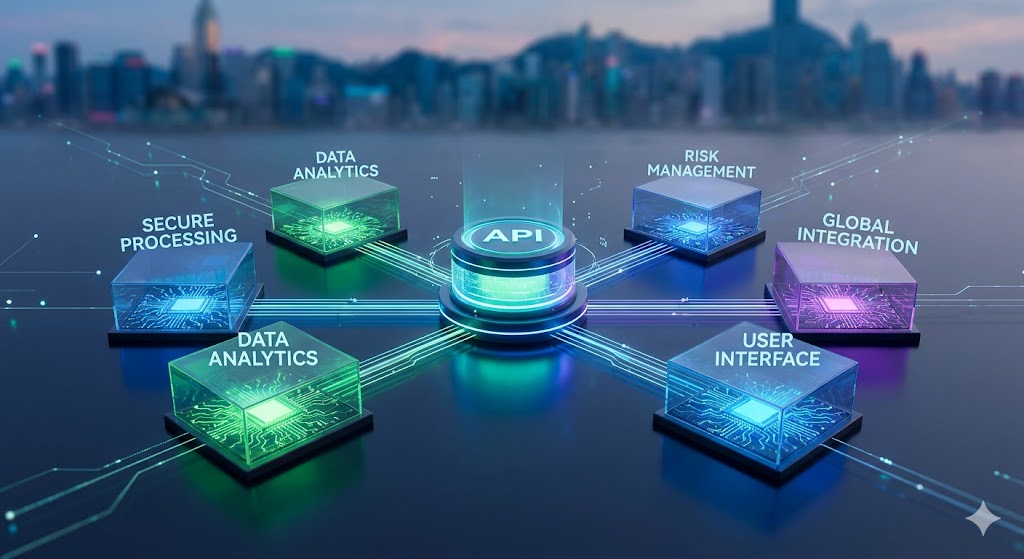
API-first design is the core of this movement. It means that the API is built before the rest of the app.
Because the API is the foundation, every part talks to it easily. This makes the whole stack stable and
clean. In addition, developers love working with these systems. The documentation is usually very
clear and easy to read. It allows them to focus on making a good product. They do not have to spend
time fixing old, broken code. Thus, the speed of innovation increases for every team that uses this
method.

Why Indian fintechs Lead in API First Tech

Customization and Business Growth

No two businesses are exactly the same today. A small shop has different needs than a big airline.
Because of this, a simple gateway is no longer enough. Modular stacks allow businesses to build what
they need. For instance, a luxury brand might want a fancy checkout page. Meanwhile, a subscription
service needs strong billing tools. By choosing modular parts, both brands can win. Furthermore, they
only pay for the features they use. This helps them keep their costs low and their profits high.


Testing new ideas is also much safer with this setup. If a new payment method is popular, you add it in
hours. You do not need to wait for months for an update. Therefore, being first to the market is easier
for agile teams. This flexibility is a huge advantage in our world. Customer tastes change overnight, and businesses must keep up. In short, modular stacks give companies the power to adapt. They can
survive in any economic climate because they are not stuck with old tech.

Security in the Digital Age

Safety is the most important thing for money online. Every customer wants to know that their data is
safe. In a modular stack, security is handled by a specific piece. This piece is often called a vault
service. Because this part is separate, it is updated very often. Consequently, the risk of a data breach
is much lower. Furthermore, these services help companies meet strict global rules. They do this
without adding stress to the main business operations.


Encryption is used at every single step. When a user enters a card number, it is turned into a code.
This code moves through the system instead of the real data. Therefore, even if a hacker sees it, they
cannot use it. Additionally, many API gateways include built-in AI tools. These tools look for strange
patterns in real time. They stop bad transactions before they even happen. Thus, both the shop and
the buyer stay safe. Security is no longer a worry for the business owner.

Global Reach and Integration

Selling products to people in other countries is a big goal. However, different countries use different
ways to pay. In India, people love UPI, but in the US, cards are common. A modular payment stack
handles these differences with ease. You can just plug in a local provider for each new region.
Because the main API stays the same, your code does not change. This saves a lot of time and
money for growing brands. It allows them to enter new markets in days, not years.

Managing multiple currencies is also a big challenge. A good modular stack includes a tool for real-
time exchange. This means customers see prices in their own local money. Seeing a familiar currency builds a lot of trust. Furthermore, it helps businesses avoid hidden fees from banks. Therefore, the
profit for every sale stays predictable and healthy. In conclusion, APIs are the bridge to the global
economy. They make it possible for any brand to sell to the entire world.

The Cost Benefits of Modular Systems


Money is a concern for every business owner. Big legacy systems often have high setup fees. On the
other hand, API gateways follow a pay-as-you-go model. This means you only spend money when you
make a sale. For a small startup, this is a life-saving benefit. It allows them to grow at their own pace.
Furthermore, there are no hardware costs to worry about. The whole process is lean and efficient from
the very first day.


Maintenance is another area where businesses save. In an old system, you need a large team for the
servers. With a cloud-based gateway, the provider handles the work. They make sure the system is
always online and fast. Therefore, your own tech team can work on new features. This shift from fixing
to creating is what drives growth. In short, modular systems are the best way to run a financial
operation. They offer the best value for every dollar spent by the company.

The Future of Financial Technology

We are just at the start of this big change. In the coming years, we will see more automation. AI
agents might buy things for us using these APIs. Furthermore, the use of blockchain will grow within
these stacks. This will bring even more speed to every transaction. Because the systems are modular,
they are ready for this. They can be updated without any trouble at all. Therefore, the future of money
is flexible and very exciting for everyone.


Every brand will eventually use some form of fintech. Whether you sell shoes or food, you will have
your own tools. Modular stacks make this dream possible for everyone. It is the best time in history to
build a new product. If you start with an API-first mindset, you are building for the future. In conclusion,
modular payment stacks are the biggest shift in finance. They will change how we think about money
forever.

Frequently Asked Questions

1 What is an API-first gateway?

It is a payment system built around an API for easy integration.

2 Is it safe for small businesses?

Yes, it provides high-level security that was once only for
banks.

3 Can I add new payment methods?

Yes, the modular design makes it easy to add or remove
methods quickly.

4 How much does it cost?

Most providers use a pay-per-transaction model, which is very
affordable.

5 Do I need a large tech team?

No, because the API provider handles most of the complex maintenance.

Read More:

UPI Complete Guide: Choosing the Right Payment App

Everything You Need to Know About Payment Gateway Before Launching Your Subscription Box

Regulatory Sandboxes for Fintechs: Opportunities & Risks in India


Â