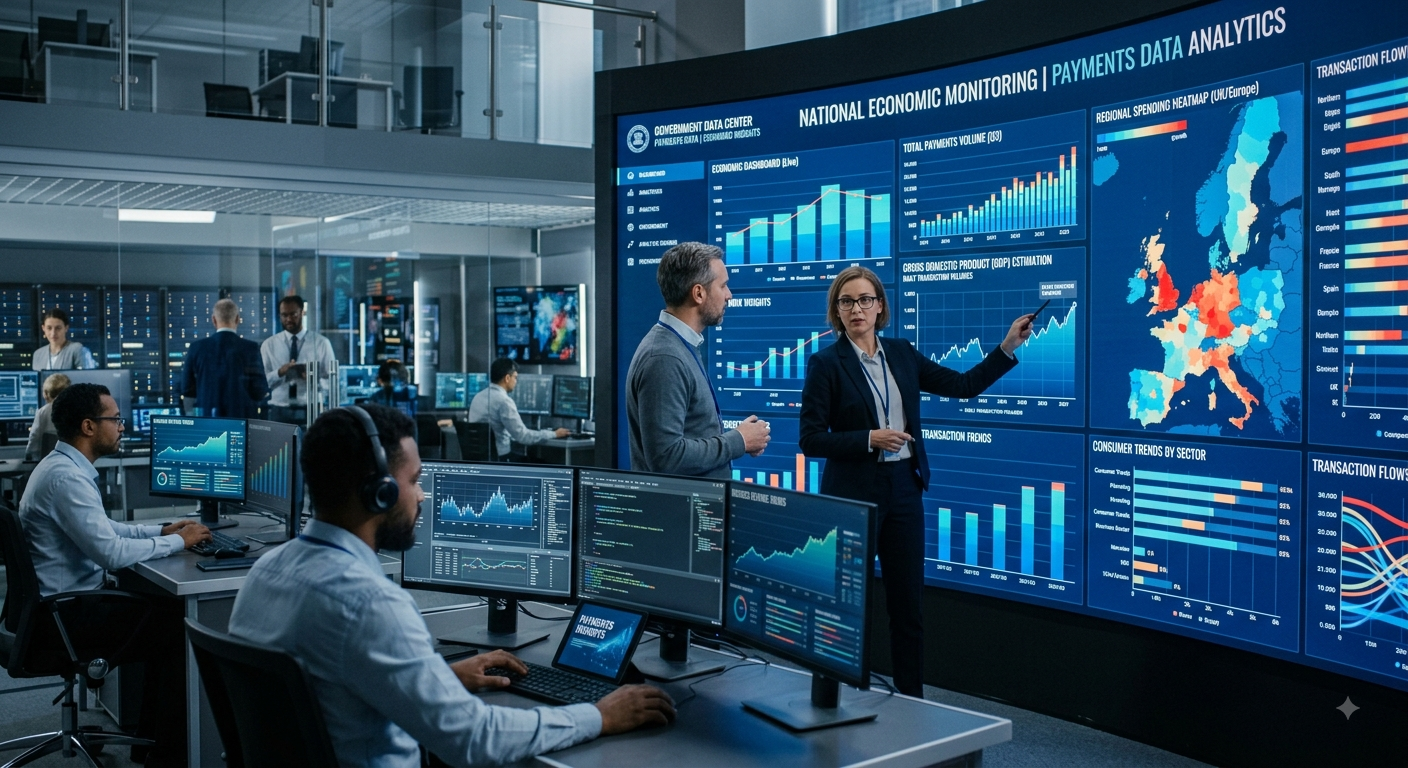
How Governments Are Using Payments Data For Economic Monitoring
Governments have always needed accurate information to make good decisions. Traditionally, economic reports arrived weeks or months after events happened. This delay made it hard to respond quickly to problems.
Today, payments data is changing that reality. As digital transactions grow, governments can now track economic activity almost in real time. This article explores how payments data supports economic monitoring and why it matters for policy makers, businesses, and everyday citizens.
What Is Payments Data And Why It Matters
Payments data includes information generated whenever money moves electronically. This covers card transactions, bank transfers, mobile payments, and digital wallets. Each transaction leaves a digital trail that reveals patterns in spending and saving.
Unlike traditional economic surveys, payments data updates constantly. Consequently, it offers a faster and more accurate picture of economic activity. Governments increasingly rely on this information to guide important decisions.
From Delayed Reports To Real-Time Insight
Older economic indicators, such as quarterly GDP reports, take time to compile. By the time officials see the numbers, conditions may have already changed. Payments data closes this gap significantly.
For example, a sudden drop in retail transactions can signal an economic slowdown within days. This allows policy makers to respond faster than ever before. Speed matters, especially during periods of economic uncertainty.
How Governments Use Payments Data In Practice
Several government functions now depend heavily on payments data analysis.
Tracking Consumer Spending Patterns
Consumer spending drives a large portion of most economies. Payments data shows exactly where and how people are spending money. This helps governments understand which sectors are thriving and which are struggling.
Additionally, spending patterns can reveal regional differences. A city experiencing rapid growth may show very different trends than a rural area. This detail supports more targeted economic policies.
Monitoring Inflation In Real Time
Traditional inflation measurements rely on periodic price surveys. Payments data offers an alternative approach by tracking transaction values across categories. This provides a faster read on rising or falling prices.
As a result, central banks can react more quickly to inflation risks. Faster reactions often lead to more stable economic outcomes for citizens.
Supporting Financial Inclusion Efforts
Governments also use payments data to measure financial inclusion. By analyzing who uses digital payments and who does not, policy makers can identify underserved communities. This insight guides programs designed to expand access to banking services.
Furthermore, this data helps track the effectiveness of financial inclusion initiatives over time. Officials can see whether new policies actually increase digital payment adoption.
Detecting Fraud And Economic Crime
Large-scale payments data also helps detect suspicious activity. Unusual transaction patterns can signal fraud, money laundering, or tax evasion. Governments use advanced analytics to flag these patterns quickly.
This protects public funds and strengthens trust in financial systems. Similarly, it helps ensure that economic policies are based on accurate, untampered data.
The Technology Behind Payments Data Monitoring
Modern payments monitoring relies on advanced technology infrastructure. Understanding these tools helps explain why this shift is happening now.
Application Programming Interfaces
APIs allow different financial systems to share data securely. Banks, payment processors, and government agencies use APIs to exchange transaction information efficiently. This connectivity makes real-time monitoring possible at scale.
Data Analytics And Machine Learning
Raw payments data alone is not very useful. Analytics tools transform this data into meaningful insights. Machine learning models can detect trends and anomalies that humans might miss.
Moreover, these models improve over time as they process more data. This means accuracy tends to increase the longer a system operates.
Data Privacy And Security Measures
Handling sensitive financial information requires strong privacy protections. Governments must balance the benefits of data access with citizens’ right to privacy. Encryption, anonymization, and strict access controls are standard practices in this space.
Benefits Of Payments Data For Economic Policy
The advantages of using payments data extend well beyond faster reporting.
Better Crisis Response
During economic shocks, timely information becomes critical. Payments data allowed some governments to respond faster during recent global disruptions. Quick access to spending trends helped shape emergency support programs.
More Targeted Policy Making
General economic policies do not always fit every region equally. Payments data allows for more localized decision making. Governments can direct resources where they are needed most, rather than applying one-size-fits-all solutions.
Improved Public Trust
Transparent, data-driven policy decisions can improve public confidence. When citizens see that decisions are based on solid evidence, trust in government institutions tends to grow. This is especially true during uncertain economic periods.
Challenges Governments Face With Payments Data
Despite its benefits, this approach comes with real challenges that deserve attention.
Data Quality And Standardization
Not all payment systems collect data the same way. Different formats and standards can make it difficult to combine information from multiple sources. Governments must invest in standardization efforts to make data truly useful.
Balancing Access With Privacy
There is an ongoing debate about how much financial data governments should access. Citizens rightly worry about surveillance and misuse of personal information. Clear regulations and oversight are essential to maintain public trust.
Technical Infrastructure Gaps
Not every country has the infrastructure needed to collect and analyze payments data effectively. Building this capacity requires investment in technology and skilled personnel. This is a significant barrier for many developing economies.
Case Examples Of Payments Data In Action
Several real-world scenarios show how valuable this data can be. Examining these examples helps clarify the practical value of payments monitoring.
Retail Sector Recovery Tracking
After major economic disruptions, governments often need to know how quickly retail activity recovers. Payments data provides daily snapshots of sales across industries. This allows officials to adjust support programs based on actual recovery speed, rather than waiting for delayed survey results.
Regional Economic Comparisons
Large countries often see uneven economic recovery across regions. By comparing payments data between cities and states, governments can identify which areas need additional support. This targeted approach tends to produce better outcomes than broad national policies applied equally everywhere.
Small Business Health Monitoring
Small businesses are often the first to feel economic pressure. Payments data can reveal declining transaction volumes among small merchants before other indicators catch up. Early detection allows governments to offer targeted relief programs sooner.
Working With The Private Sector
Governments rarely collect payments data alone. Instead, they often partner with banks, payment processors, and fintech companies. These partnerships require clear agreements about data sharing, security, and usage limits.
Successful partnerships benefit both sides. Private companies gain insight into regulatory expectations, while governments gain access to rich transaction data. Building trust between these groups takes time, but it produces stronger economic monitoring systems overall.
Additionally, some governments have created dedicated data-sharing platforms. These platforms standardize how payment providers submit information, reducing friction and improving consistency across the system.
What The Future Holds
Payments data will likely play an even bigger role in economic policy going forward. As digital payments continue to grow worldwide, the volume of available data will increase dramatically.
Governments that invest early in analytics infrastructure will likely make more informed decisions. Meanwhile, international cooperation may help standardize data practices across borders. This could lead to more accurate global economic forecasting overall.
Preparing For A Data-Driven Policy Future
Governments that want to benefit from payments data need to start building capacity now. This means training analysts, upgrading technology systems, and setting clear data governance rules.
It also means engaging citizens in the conversation. Explaining how data is used, and why, helps build public support for these initiatives. Transparency remains one of the most effective tools for maintaining trust as data-driven policy becomes more common.
Conclusion
Payments data has become a powerful tool for economic monitoring. It offers faster, more detailed insight than traditional reporting methods ever could. Governments use this information to track spending, monitor inflation, and support financial inclusion.
However, challenges around privacy, standardization, and infrastructure remain. Addressing these issues thoughtfully will determine how effectively payments data shapes future policy. As this field continues to evolve, staying informed matters for policy makers and businesses alike.
Build your authority with Digital Payment Guru and stay ahead of the trends shaping economic policy today.
Frequently Asked Questions
1. What is payments data used for in economic monitoring?
Payments data helps governments track consumer spending, monitor inflation, and detect economic trends in real time, supporting faster and more accurate policy decisions.
2. How does payments data differ from traditional economic indicators?
Unlike quarterly reports, payments data updates continuously. This allows policy makers to see economic shifts as they happen rather than weeks later.
3. Is payments data safe from privacy concerns?
Governments typically use encryption and anonymization to protect sensitive information, though privacy debates continue around how much access is appropriate.
4. Can payments data help predict economic recessions?
Yes, sudden changes in spending patterns can signal early warning signs of an economic slowdown, helping policy makers respond sooner.
5. Which government agencies typically use payments data?
Central banks, treasury departments, and statistical agencies commonly use payments data to support economic monitoring and policy planning.