Headless Commerce Payments Best Practices: Complete Guide

Headless Commerce Payments Best Practices: Complete Guide

Shopping has changed. Customers buy on websites, apps, smart TVs, voice assistants, and even in-store kiosks. Traditional ecommerce platforms struggle to keep up. Headless commerce solves this problem. It separates the front end from the back end, giving brands the freedom to build any experience they want.

When you add headless payments to the mix, checkout becomes just as flexible as the rest of the store. The result is a faster, smoother, more customizable buying journey.

What Is Headless Commerce?

Traditional ecommerce platforms bundle everything together. The storefront, the cart, the checkout, and the back-end logic all live in one system. Changing one part often breaks another.

Headless commerce breaks this bundle apart. The front end, what customers see, connects to the back end through APIs. Developers can build any front-end experience without touching the commerce engine underneath.

Therefore, brands gain creative freedom. They can design unique storefronts for every channel. They can update the look without disrupting business logic. This separation is the core of headless architecture.
Headless Commerce Payments Best Practices: Complete Guide

Why Payments Needed to Go Headless Too?

For years, checkout was the last thing brands customised. Payment forms were rigid. Styling was limited. Adding new payment methods took months of development work. This mattered because checkout is where buyers convert or abandon. A clunky payment experience kills sales. Even a one-second delay raises cart abandonment rates significantly.

Consequently, headless payments emerged as a natural extension of headless commerce. By decoupling the payment layer, brands control every pixel of the checkout experience. The also integrate new payment methods in days, not months.

How Headless Payments Work?

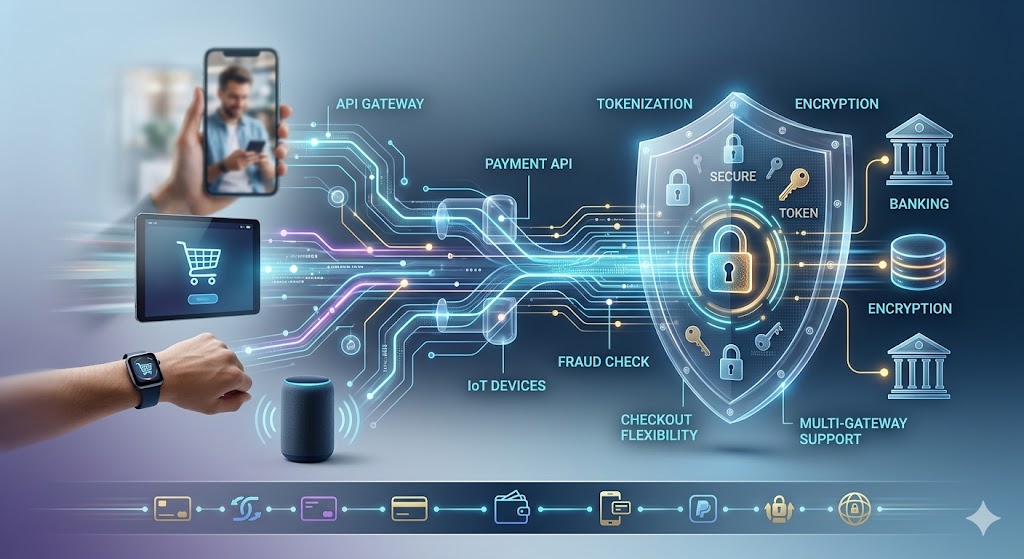
Headless payment solutions expose payment functionality through APIs. The brand builds its own checkout UI. The payment processor handles the sensitive data underneath.

Tokenisation keeps cardholder data secure. The front end never actually sees raw card numbers. Instead, it passes a token to the payment processor, which completes the transaction.

Additionally, webhooks notify the front end when a payment succeeds or fails. This allows real-time feedback without a page refresh. The result feels fast and modern to the customer.

Key Benefits of Decoupling Checkout

First, speed improves dramatically. Custom-built checkout pages load faster than bloated, all-in-one platform templates. Faster pages mean higher conversion rates.

Second, localisation becomes easy. Different markets want different payment methods. Brazil favours Boleto. Germany prefers SEPA. The Netherlands uses iDEAL. Headless architecture lets you plug in local methods for each region.

Third, A/B testing checkout flows becomes straightforward. You can test button colours, form layouts, and step sequences without touching the payment engine. Data drives optimisation.

Furthermore, brand consistency extends all the way through checkout. No more jarring redirects to generic payment pages. The customer stays in your branded environment from browse to buy.

Popular Headless Payment Providers

Stripe leads the field. Its Payment Intents API gives developers granular control over the payment flow. Stripe Elements provides pre-built, customisable UI components.

Adyen serves enterprise brands. It supports over 200 payment methods and provides deep reporting tools. Its Checkout API enables fully custom experiences. Braintree, owned by PayPal, focuses on flexibility and developer experience. It supports cards, PayPal, Venmo, and local payment methods through a single integration.

Moreover, newer players like Primer and Gr4vy act as payment orchestration layers. They sit above multiple payment processors, routing transactions to the best provider for each situation.

Composable Commerce: The Bigger Picture

Headless commerce and headless payments are part of a larger movement called composable commerce. Instead of one monolithic platform, composable commerce assembles best-of-breed solutions.

A brand might use Contentful for content management, Commerce tools for commerce logic, Stripe for payments, and Algolia for search. Each piece excels at its function. APIs connect them all.

This approach follows the MACH architecture principles: Microservices, API-first, Cloud-native, and Headless. MACH brands move faster, innovate more, and adapt to market changes without major re-platforming projects.

However, composable commerce also adds complexity. More vendors mean more integrations to maintain. Strong engineering teams and clear governance are therefore essential.

Challenges of Going Headless

Headless is powerful but not simple. Building a custom front end requires skilled developers. Maintaining API integrations demands ongoing effort. Costs can rise quickly without careful planning.

Security is another concern. More API connections create more potential attack surfaces. Each integration point needs proper authentication, encryption, and monitoring.

PCI DSS compliance also needs attention. Payment card industry standards govern how cardholder data is handled. Headless architectures must still meet these requirements, even when data never touches the front end directly.

Despite these challenges, the benefits typically outweigh the costs for brands at scale. Smaller brands may prefer managed headless solutions that reduce engineering overhead.

Conversion Optimisation Through Headless Checkout

One-page checkout reduces friction. Progressive disclosure only shows form fields when needed. Auto-fill speeds up the process for returning customers.

Buy Now Pay Later (BNPL) options like Klarna and Afterpay increase average order values. Adding them to headless checkout is a simple API call. The brand does not need to manage credit risk.

Express checkout options also matter greatly. Apple Pay, Google Pay, and PayPal Express let customers skip form filling entirely. Conversion rates rise sharply when fewer steps stand between desire and purchase.

Additionally, smart payment routing improves authorisation rates. Sending a transaction to the processor most likely to approve it reduces false declines. Every false decline is a lost sale.

Subscription and Recurring Payments in Headless Architecture

Subscription commerce is booming. Software, groceries, beauty products, and media all use recurring billing models. Headless architecture supports subscriptions elegantly.

Payment processors like Stripe Billing and Recurly handle the subscription logic. The headless front end simply calls the API to create, update, or cancel subscriptions.

Dunning management, the process of retrying failed payments, happens automatically in the background. Customers see a smooth experience. Finance teams see fewer failed charges.

Furthermore, subscription analytics feed back into the front-end experience. Churn prediction data can trigger personalised retention offers at exactly the right moment.

The Future of Headless Commerce and Payments

Embedded finance is the next frontier. Soon, brands will offer banking, insurance, and credit products directly within their own platforms. Headless architecture makes this possible without rebuilding from scratch.

Artificial intelligence will personalise checkout in real time. Dynamic payment method presentation will show each customer the option they are most likely to use. Fraud scoring will happen invisibly in milliseconds.

Cryptocurrency and digital wallets continue to grow. Headless payment layers can integrate these new methods without disrupting existing checkout flows.

Ultimately, the brands that invest in headless commerce and payments today are building the infrastructure for tomorrow’s retail landscape.

Conclusion

Headless commerce and payments give brands something traditional platforms never could: true flexibility. Every channel, every market, and every customer segment gets an experience built specifically for it.

The technical investment is real. However, the commercial return is compelling. Faster checkout, higher conversion, and seamless localisation all flow from a well-executed headless strategy.

Start small if needed. Decouple one part of your stack. Learn. Then expand. The journey to composable commerce is worth every step.

Read More:

Fintech Relies on Microservices-Based Infrastructure Now
Event-Driven Payment System: What You Need Full Guide

Reduce Payment Failures With These Simple Fixes

Financial Fragmentation in a Multipolar World: Payment Guide

Financial Fragmentation in a Multipolar World: Payment Guide

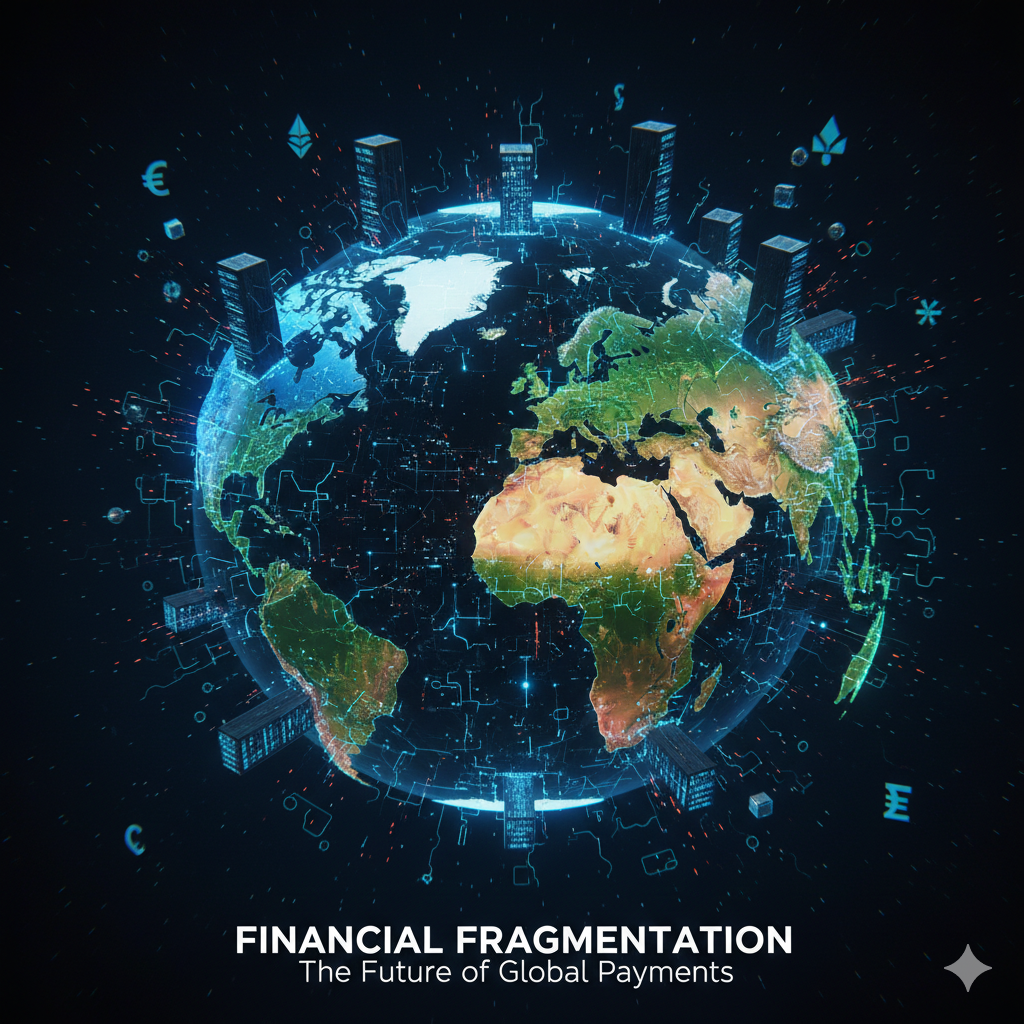
Financial fragmentation now describes a world where the global economy splits into distinct regional or political blocs. This shift occurs because nations seek more control over their own money and security in a multipolar landscape. Therefore, you must understand how these changes will impact your business and your daily transactions. This guide explains the core challenges and the future of global payments.

The Rise of the Multipolar Economy

For many years, the world relied on a single financial system led by a few major powers. However, this centralized approach now faces competition from emerging economies and regional alliances. This shift creates a multipolar world where power is shared between several different global centers. Consequently, the standard rules for international finance are changing very quickly to match this new reality.

The move toward fragmentation happens because nations want to protect themselves from external financial pressure. For instance, some countries now build their own payment networks to avoid reliance on global systems like SWIFT. Because of this, we see a growing gap between different financial jurisdictions. I have noticed that this trend makes global trade much more complex for every person involved.

Financial Fragmentation in a Multipolar World: Payment Guide

How Financial Fragmentation Impacts Global Payments

Fragmentation creates many small islands of finance instead of one connected global ocean. This separation means that moving money between two different blocs becomes much more difficult and expensive. For example, a business in one region might find that its payment software does not work in another region. Therefore, you must prepare for a future where global connectivity is no longer guaranteed.

You can expect to see higher fees for international transfers as systems become less compatible. Traditional cross-border payments already take a long time and require many middlemen. However, fragmentation adds even more layers of bureaucracy and compliance to every single transaction. In addition, businesses must now manage the risk of multiple currencies and varying local regulations.

The Role of Central Bank Digital Currencies

Many nations now explore Central Bank Digital Currencies (CBDCs) to modernize their local payment systems. These digital assets allow governments to track transactions more efficiently while reducing the cost of printing money. Furthermore, CBDCs can help a country settle international trades directly without using a global reserve currency. This technology is a primary tool for nations seeking financial independence in a multipolar world.

You should watch how these digital currencies interact with existing private payment networks. If two countries use different CBDC standards, they may still find it hard to trade with each other. Because of this, international organizations are working to create new rules for digital compatibility. However, the political friction of a multipolar world often makes these agreements very hard to reach.

Implications for Digital Payment Apps

Your favorite digital payment apps must now adapt to a landscape where cross-border rules change constantly. Some apps might choose to partner with local providers in every region to stay functional. Alternatively, others may focus only on one specific bloc to reduce their legal and technical risks. This fragmentation reduces the convenience that users have enjoyed for the last two decades.

In addition, users may need to carry multiple digital wallets to pay for goods in different countries. This shift reverses the trend toward a unified global marketplace where one app works everywhere. Therefore, you should look for payment solutions that offer wide compatibility and low conversion fees. Staying flexible will be your best strategy as the global system continues to split apart.

Risks to Global Financial Stability

Fragmentation creates a significant risk that the world will lose the ability to coordinate during a crisis. If every country follows its own rules, it becomes harder to stop a financial problem from spreading. For instance, a bank failure in one bloc might not be visible to regulators in another bloc. This lack of transparency makes the entire global economy much more vulnerable to sudden shocks.

Furthermore, the competition between different payment systems can lead to a “race to the bottom” in safety standards. Countries might lower their regulations to attract more business to their specific financial center. This behavior puts the security of your money at risk over the long term. Consequently, international cooperation remains vital even as political tensions continue to rise between nations.

The Future of Trade and Investment

Global trade will likely move toward “friend-shoring” where countries only trade with their political allies. This trend ensures that supply chains remain safe from geopolitical disruptions in distant regions. However, it also means that you may have fewer choices and higher prices for the goods you buy. Investment flows will also follow these political lines, creating two or more distinct economic zones.

You must rethink your investment strategy to account for these regional financial boundaries. For example, holding assets in only one bloc might leave you exposed if that region faces a downturn. Diversifying across different payment systems and jurisdictions is now a requirement for protecting your wealth. Therefore, staying informed about global shifts is the most important step you can take today.

Technical Standards and Interoperability

The primary technical challenge in a fragmented world is making sure different systems can still talk to each other. This is often called interoperability, and it is the key to keeping the global economy functional. If a payment message in Asia cannot be read by a bank in Europe, trade will stop. Engineers are now building bridges between different blockchain and digital currency protocols.

However, the political will to use these bridges is often lacking in a multipolar world. Some nations prefer “walled gardens” because they provide more control over their domestic data. Specifically, you should follow the development of international standards like ISO 20022. These common languages are the only things preventing a total breakdown of global financial communication.

Protecting Your Business From Financial Fragmentation

If you run a business that trades globally, you must audit your payment providers immediately. You should ensure that your primary bank has strong relationships in the regions where you operate. In addition, you may want to explore using stablecoins or other digital assets for fast cross-border settlements. These tools can bypass some of the friction caused by political fragmentation.

Gathering a diverse set of payment tools is the smartest way to manage these growing risks. If one system goes offline or becomes too expensive, you need an alternative ready to go. Take the time to understand the local payment habits of your international customers. Once you have a flexible system, you can grow your business despite the challenges of a multipolar world.

Conclusion and Next Steps

Financial fragmentation is a complex trend that will shape the next few decades of our lives. By focusing on the causes and the technical solutions, you can navigate this landscape successfully. The journey toward a more regional world requires patience and a high degree of adaptability from everyone.

If you want to stay ahead, you must monitor the news about CBDCs and regional trade blocs. Start by reviewing your current international payment methods to see where you are most vulnerable. Then look for new technologies that can bridge the gap between different financial zones. Your proactive approach will ensure that you remain connected to the global economy.

FAQs

1 What is financial fragmentation?

Financial fragmentation is the process where the global financial system splits into separate regional or political zones.

2 How does a multipolar world affect my payments?

It makes sending money across borders more expensive and complex as different regions use incompatible systems.

3 What are CBDCs?

Central Bank Digital Currencies are digital versions of a nation’s official currency issued and managed by the central bank.

4 Can AI help with financial fragmentation?

Yes, AI can help businesses manage the complex rules and multiple currencies found in a fragmented world.

5 What is interoperability in finance?

It is the ability of different financial systems and software to communicate and process transactions with each other.

Also Read: HSBC’s Warning: The End of Globalization & Payments