Why Psychology of Payments Changes Conversions: Full Guide

Why Psychology of Payments Changes Conversions: Full Guide

You have a great product. Your marketing works. Visitors land on your site, add items to their cart — then vanish. Sound familiar? Cart abandonment is one of the biggest problems in e-commerce. The average abandonment rate sits around 70%. That means seven out of ten shoppers leave without buying. Understanding the psychology of payments helps you fix this. When you know why people hesitate, you can remove the friction that stops them from completing a purchase.

The Pain of Paying: Why Spending Hurts

Neuroscience shows that spending money activates the same brain regions associated with physical pain. Researchers call this the ‘pain of paying.’

This pain is strongest when payment feels direct and visible. Handing over cash hurts more than swiping a card. Seeing a total before clicking ‘Pay’ triggers more hesitation.

Therefore, smart checkout design reduces this psychological pain. The goal is to make payment feel effortless and natural — not stressful.

Why Psychology of Payments Changes Conversions: Full Guide

Key Reasons Users Drop Off at Checkout

1. Unexpected Costs

Surprise fees are the number one reason users abandon carts. Shipping charges, taxes, or handling fees that appear late in the process feel like a betrayal.

Customers set a mental budget early. When the final total exceeds that number, they feel tricked. Consequently, they leave — often never to return.

The fix is simple: show all costs upfront. Display estimated shipping and taxes on the product page. Transparency builds trust.

2. Forced Account Creation

Asking users to create an account before buying creates massive friction. Many users simply do not want to share their email or remember another password.

Research by Baymard Institute found that 24% of users abandon checkout because of forced registration. Always offer a guest checkout option.

Additionally, let users sign up after purchase. Once they have a positive experience, they are far more likely to create an account willingly.

3. Complex or Long Checkout Forms

Every extra field you add is a chance for users to give up. Long forms feel like work. They kill momentum and trigger second thoughts.

Use autofill wherever possible. Ask only for essential information. Split long forms into clear steps with progress indicators so users know where they are.

4. Security Concerns

Users worry about their financial data. A checkout page that looks outdated, lacks HTTPS, or shows unfamiliar payment logos raises red flags.

Display trust signals clearly. Use SSL certificates. Show recognised payment icons — Visa, Mastercard, PayPal. Add security badges from brands like Norton or McAfee.

Furthermore, explain how you protect customer data. A short, reassuring line near the payment field reduces anxiety significantly.

5. Slow Page Load Times

A checkout page that loads slowly destroys conversions. Google data shows that even a one-second delay reduces conversions by up to 7%.

Optimise your checkout page speed aggressively. Compress images. Use a fast hosting provider. Minimise scripts. Every millisecond counts at the payment stage.

6. Limited Payment Options

Today’s shoppers expect choice. Some prefer credit cards. Others want PayPal, Apple Pay, Google Pay, or Buy Now Pay Later options.

Offering only one or two payments methods alienates large groups of potential buyers. Expand your payment options to match your audience’s preferences.

The Role of Trust in Payment Decisions

Trust is the currency of checkout. Without it, even interested buyers will not complete a purchase. Social proof is a powerful trust builder. Display real customer reviews near the checkout.

Show how many people have bought the same product. Use testimonials from verified buyers. Moreover, money-back guarantees reduce the perceived risk of buying. When users know they can get a refund, the decision feels safer. Remove risk, and you remove hesitation.

Cognitive Load and Decision Fatigue

By the time a user reaches checkout, they have already made many decisions. They chose a product, picked a size, selected a colour. Each choice uses mental energy.

Decision fatigue sets in. At the payments stage, users are mentally tired. Any extra choice — promo code boxes, upsell popups, or confusing layout — can push them over the edge.

Simplify your checkout ruthlessly. Remove distractions. Eliminate unnecessary steps. Make the path to purchase as clear and short as possible.

The Power of Progress Indicators

People are more likely to complete a task when they can see progress. This is called the Zeigarnik Effect — unfinished tasks stay in our minds until complete.

Use a clear step indicator in your checkout. Show users exactly where they are — Step 1 of 3, for example. This reduces anxiety and increases completion rates.

Additionally, save progress automatically. If a user leaves and returns, their cart and form data should still be there. This reduces re-entry friction significantly.

Abandoned Cart Recovery Strategies

Even with a perfect checkout, some users will leave. Recovery strategies bring them back. Send abandoned cart emails within one hour of drop-off. Studies show these emails recover around 5-10% of abandoned carts. Keep the email short, friendly, and include a direct link back to the cart.

Use retargeting ads to remind users of what they left behind. Personalised ads with the exact product they viewed perform significantly better than generic promotions.

Furthermore, consider exit-intent popups. When a user moves their mouse toward the browser’s close button, trigger a popup with a small incentive — free shipping or a discount code.

Optimising Mobile Checkout

More than 60% of online shopping now happens on mobile devices. Yet mobile conversion rates lag behind desktop by a wide margin.

Mobile checkout must be frictionless. Use large, tappable buttons. Auto-detect card details using the camera. Enable one-click payments options like Apple Pay or Google Pay.

Test your checkout flow on multiple devices regularly. What works on desktop often breaks on mobile. Fix every point of friction you find.

Key Takeaways

The psychology of payments reveals that checkout drop-off is rarely about the product. It is about friction, fear, and lost trust.

Remove surprise costs. Simplify your forms. Build trust signals. Offer multiple payment methods. And keep your checkout fast, clean, and focused.

When you understand what users feel at checkout, you can design a process that feels effortless. Fewer drop-offs mean more revenue. Start optimising your checkout today.

Read More:

Headless Commerce Payments Best Practices: Complete Guide
Fintech Relies on Microservices-Based Infrastructure Now

Event-Driven Payment System: What You Need Full Guide

Headless Commerce Payments Best Practices: Complete Guide
Headless Commerce Payments Best Practices: Complete Guide

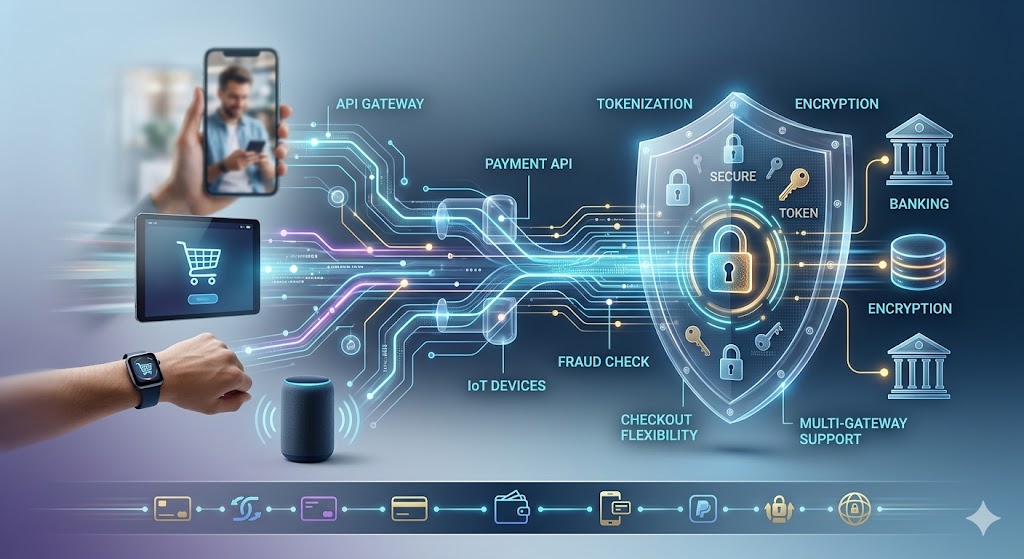
Shopping has changed. Customers buy on websites, apps, smart TVs, voice assistants, and even in-store kiosks. Traditional ecommerce platforms struggle to keep up. Headless commerce solves this problem. It separates the front end from the back end, giving brands the freedom to build any experience they want.

When you add headless payments to the mix, checkout becomes just as flexible as the rest of the store. The result is a faster, smoother, more customizable buying journey.

What Is Headless Commerce?

Traditional ecommerce platforms bundle everything together. The storefront, the cart, the checkout, and the back-end logic all live in one system. Changing one part often breaks another.

Headless commerce breaks this bundle apart. The front end, what customers see, connects to the back end through APIs. Developers can build any front-end experience without touching the commerce engine underneath.

Therefore, brands gain creative freedom. They can design unique storefronts for every channel. They can update the look without disrupting business logic. This separation is the core of headless architecture.

Headless Commerce Payments Best Practices: Complete Guide

Why Payments Needed to Go Headless Too?

For years, checkout was the last thing brands customised. Payment forms were rigid. Styling was limited. Adding new payment methods took months of development work. This mattered because checkout is where buyers convert or abandon. A clunky payment experience kills sales. Even a one-second delay raises cart abandonment rates significantly.

Consequently, headless payments emerged as a natural extension of headless commerce. By decoupling the payment layer, brands control every pixel of the checkout experience. The also integrate new payment methods in days, not months.

How Headless Payments Work?

Headless payment solutions expose payment functionality through APIs. The brand builds its own checkout UI. The payment processor handles the sensitive data underneath.

Tokenisation keeps cardholder data secure. The front end never actually sees raw card numbers. Instead, it passes a token to the payment processor, which completes the transaction.

Additionally, webhooks notify the front end when a payment succeeds or fails. This allows real-time feedback without a page refresh. The result feels fast and modern to the customer.

Key Benefits of Decoupling Checkout

First, speed improves dramatically. Custom-built checkout pages load faster than bloated, all-in-one platform templates. Faster pages mean higher conversion rates.

Second, localisation becomes easy. Different markets want different payment methods. Brazil favours Boleto. Germany prefers SEPA. The Netherlands uses iDEAL. Headless architecture lets you plug in local methods for each region.

Third, A/B testing checkout flows becomes straightforward. You can test button colours, form layouts, and step sequences without touching the payment engine. Data drives optimisation.

Furthermore, brand consistency extends all the way through checkout. No more jarring redirects to generic payment pages. The customer stays in your branded environment from browse to buy.

Popular Headless Payment Providers

Stripe leads the field. Its Payment Intents API gives developers granular control over the payment flow. Stripe Elements provides pre-built, customisable UI components.

Adyen serves enterprise brands. It supports over 200 payment methods and provides deep reporting tools. Its Checkout API enables fully custom experiences. Braintree, owned by PayPal, focuses on flexibility and developer experience. It supports cards, PayPal, Venmo, and local payment methods through a single integration.

Moreover, newer players like Primer and Gr4vy act as payment orchestration layers. They sit above multiple payment processors, routing transactions to the best provider for each situation.

Composable Commerce: The Bigger Picture

Headless commerce and headless payments are part of a larger movement called composable commerce. Instead of one monolithic platform, composable commerce assembles best-of-breed solutions.

A brand might use Contentful for content management, Commerce tools for commerce logic, Stripe for payments, and Algolia for search. Each piece excels at its function. APIs connect them all.

This approach follows the MACH architecture principles: Microservices, API-first, Cloud-native, and Headless. MACH brands move faster, innovate more, and adapt to market changes without major re-platforming projects.

However, composable commerce also adds complexity. More vendors mean more integrations to maintain. Strong engineering teams and clear governance are therefore essential.

Challenges of Going Headless

Headless is powerful but not simple. Building a custom front end requires skilled developers. Maintaining API integrations demands ongoing effort. Costs can rise quickly without careful planning.

Security is another concern. More API connections create more potential attack surfaces. Each integration point needs proper authentication, encryption, and monitoring.

PCI DSS compliance also needs attention. Payment card industry standards govern how cardholder data is handled. Headless architectures must still meet these requirements, even when data never touches the front end directly.

Despite these challenges, the benefits typically outweigh the costs for brands at scale. Smaller brands may prefer managed headless solutions that reduce engineering overhead.

Conversion Optimisation Through Headless Checkout

One-page checkout reduces friction. Progressive disclosure only shows form fields when needed. Auto-fill speeds up the process for returning customers.

Buy Now Pay Later (BNPL) options like Klarna and Afterpay increase average order values. Adding them to headless checkout is a simple API call. The brand does not need to manage credit risk.

Express checkout options also matter greatly. Apple Pay, Google Pay, and PayPal Express let customers skip form filling entirely. Conversion rates rise sharply when fewer steps stand between desire and purchase.

Additionally, smart payment routing improves authorisation rates. Sending a transaction to the processor most likely to approve it reduces false declines. Every false decline is a lost sale.

Subscription and Recurring Payments in Headless Architecture

Subscription commerce is booming. Software, groceries, beauty products, and media all use recurring billing models. Headless architecture supports subscriptions elegantly.

Payment processors like Stripe Billing and Recurly handle the subscription logic. The headless front end simply calls the API to create, update, or cancel subscriptions.

Dunning management, the process of retrying failed payments, happens automatically in the background. Customers see a smooth experience. Finance teams see fewer failed charges.

Furthermore, subscription analytics feed back into the front-end experience. Churn prediction data can trigger personalised retention offers at exactly the right moment.

The Future of Headless Commerce and Payments

Embedded finance is the next frontier. Soon, brands will offer banking, insurance, and credit products directly within their own platforms. Headless architecture makes this possible without rebuilding from scratch.

Artificial intelligence will personalise checkout in real time. Dynamic payment method presentation will show each customer the option they are most likely to use. Fraud scoring will happen invisibly in milliseconds.

Cryptocurrency and digital wallets continue to grow. Headless payment layers can integrate these new methods without disrupting existing checkout flows.

Ultimately, the brands that invest in headless commerce and payments today are building the infrastructure for tomorrow’s retail landscape.

Conclusion

Headless commerce and payments give brands something traditional platforms never could: true flexibility. Every channel, every market, and every customer segment gets an experience built specifically for it.

The technical investment is real. However, the commercial return is compelling. Faster checkout, higher conversion, and seamless localisation all flow from a well-executed headless strategy.

Start small if needed. Decouple one part of your stack. Learn. Then expand. The journey to composable commerce is worth every step.

Read More:

Fintech Relies on Microservices-Based Infrastructure Now

Event-Driven Payment System: What You Need Full Guide

Reduce Payment Failures With These Simple Fixes

From Gateways to Payment Orchestration in Easy Steps

From Gateways to Payment Orchestration in Easy Steps

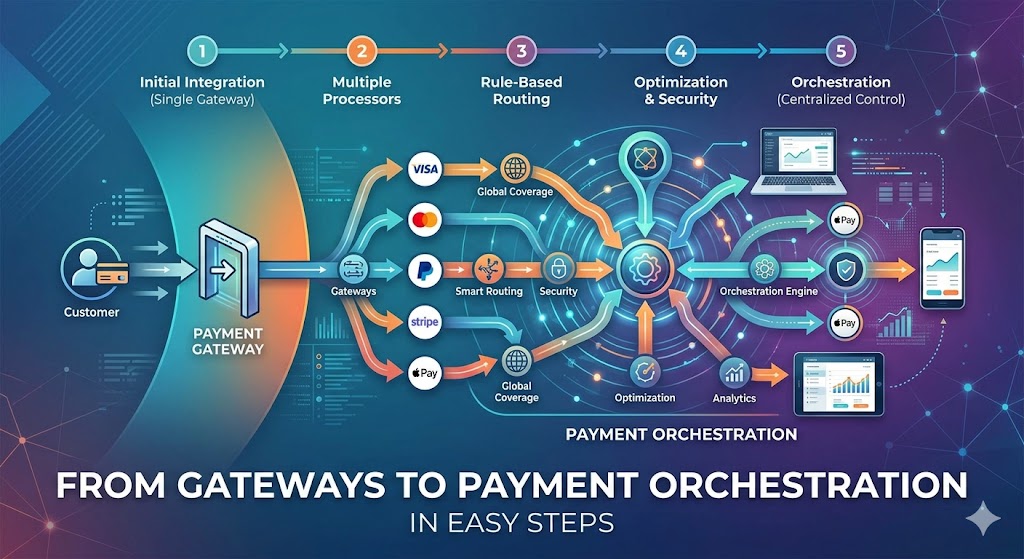
Payments have changed. The old way of connecting to a single payment gateway no longer cuts it. Today, businesses need speed, flexibility, and global reach. Therefore, payment orchestration platforms have stepped in — and they are reshaping the entire payments landscape.

In 2025, the global payment orchestration market is projected to exceed $3.5 billion. That growth tells a clear story. Merchants want smarter payment infrastructure. Traditional gateways simply cannot keep up.

What Is a Traditional Payment Gateway?

A payment gateway is a tool that connects a merchant’s checkout to a payment processor. It handles card data, checks for fraud, and passes transactions to the bank. PayPal, Stripe, and Square are well-known examples. However, they each have limits.

Most traditional gateways lock you into one provider. Consequently, if that provider has an outage, your payments stop. Additionally, their routing logic is fixed — they cannot automatically switch to a better path when needed.

For small businesses, this setup works fine. However, as businesses scale, the limitations become painful. High decline rates, single-currency restrictions, and rigid pricing structures hold merchants back.

From Gateways to Payment Orchestration in Easy Steps

What Is a Payment Orchestration Platform?

A payment orchestration platform sits on top of multiple payment service providers (PSPs), gateways, and acquirers. Instead of using one gateway, it connects to many — and intelligently routes each transaction to the best option available.

Think of it like a smart traffic system for your payments. Moreover, it watches each route, picks the fastest and cheapest, and switches automatically when conditions change. The result is higher approval rates, lower costs, and fewer failed transactions.

Leading platforms in this space include Spreedly, Primer, Gr4vy, and Payrails. Each offers smart routing, a single integration point, and real-time analytics. Furthermore, they support dozens of payment methods across multiple regions.

Key Reasons Payment Orchestration Is Winning

First, let’s talk about approval rates. Traditional gateways send each transaction down one path. If that path fails, the transaction declines. Payment orchestration platforms use intelligent retry logic. Therefore, if one gateway declines a payment, the platform automatically tries another — often without the customer even noticing.

Second, consider fees. Different gateways charge different rates for different card types, currencies, and regions. Orchestration platforms route transactions to whichever gateway offers the lowest cost for each specific payment. Consequently, merchants save significantly on processing fees at scale.

Third, look at flexibility. Merchants can add new payment methods — like Buy Now Pay Later, digital wallets, or local payment options — through one platform rather than building individual integrations. This dramatically reduces development time.

How Smart Routing Works

Smart routing is the core feature of payment orchestration. It uses rules and real-time data to decide which gateway handles each transaction. These rules can be based on currency, card type, transaction value, customer location, or historical success rates.

For example, a UK merchant processing a Euro payment from Germany might route it through a European acquirer to avoid cross-border fees. Meanwhile, a high-value transaction might go through a gateway with the best fraud detection for that amount.

Additionally, orchestration platforms offer cascade routing. If the primary gateway declines, the transaction cascades to the next best option automatically. Studies show this approach can recover 5-15% of transactions that would otherwise be lost. That is a significant revenue gain.

Better Data and Analytics

Traditional gateways provide basic reporting. However, payment orchestration platforms deliver deep, real-time analytics across all connected gateways. Merchants can see exactly which gateway performs best for which transaction type.

Furthermore, they can A/B test routing rules to continuously optimise performance. This data-driven approach helps teams make smarter decisions faster. Additionally, consolidated reporting across all PSPs saves hours of manual reconciliation work each month.

Payment orchestration also makes compliance easier. Centralised tokenisation across gateways reduces PCI scope. Moreover, unified fraud management across providers gives merchants a complete view of risk — rather than fragmented data across multiple dashboards.

Global Payments Made Simple

Expanding internationally is one of the biggest payment headaches for merchants. Different countries have different preferred payment methods, currencies, and regulations. Traditional gateways struggle here. Orchestration platforms were built for this challenge.

With a single orchestration platform, a merchant can accept Alipay in China, iDEAL in the Netherlands, UPI in India, and PIX in Brazil — all through one integration. Consequently, global expansion becomes a routing decision rather than a development project.

This is especially valuable for ecommerce brands entering new markets. Instead of spending months integrating local payment providers, they simply activate new connections within the orchestration layer.

The Cost Case for Orchestration

Some businesses hesitate over orchestration platform fees. However, the ROI is usually clear. Consider a business processing $10 million per year. Even a 0.1% improvement in approval rates recovers $10,000 in revenue. A 0.2% reduction in processing fees saves $20,000.

Moreover, reducing failed transactions improves customer experience. Fewer declined cards means fewer abandoned carts and fewer frustrated customers calling support. Therefore, the business case extends well beyond the payment team.

Additionally, reduced development costs matter. One integration replaces many. Engineering teams spend less time maintaining payment connections and more time building product.

Is Payment Orchestration Right for Your Business?

Not every business needs a full orchestration platform right away. However, if you process more than $1 million per year, operate across multiple countries, or experience a decline rate above 5%, it is worth exploring. Furthermore, if you are planning international expansion, starting with orchestration now will save a lot of pain later.

Start by auditing your current payment stack. Look at your decline rates by gateway, by card type, and by region. Additionally, calculate how much you spend on processing fees across all providers. That data will show you exactly where orchestration can help most.

The Future of Payments Is Orchestrated

Traditional payment gateways served their purpose well. However, the demands of modern commerce have outgrown them. In conclusion, payment orchestration platforms offer the intelligence, flexibility, and global reach that today’s merchants need.As payments become more complex, orchestration becomes more essential. Consequently, businesses that adopt these platforms early will process smarter, scale faster, and convert better than those that stick with legacy gateway setups. The shift is already well underway — and it is only accelerating.

Read More:

Why Indian fintechs Lead in API First Tech

UPI Complete Guide: Choosing the Right Payment App

Everything You Need to Know About Payment Gateway Before Launching Your Subscription Box