
How Do You Implement AI Dynamic Pricing Today

How Do You Implement AI Dynamic Pricing Today? Ultimate Guide

Why AI-Driven Dynamic Pricing Needs Payments

Prices no longer stay fixed for long. Demand shifts by the hour, and rivals change their offers all day. Static price lists cannot keep up with this pace. AI-driven dynamic pricing solves the problem by adjusting prices in real time.

However, a smart price means little if checkout fails to honor it. That is why payment integration matters so much. This article shows how to link pricing AI with your payment systems. It helps e-commerce brands, fintech teams, and SaaS founders. You will learn the setup, the risks, and the steps to start.

What Is AI-Driven Dynamic Pricing?

Dynamic pricing means changing prices based on market signals. Airlines and ride apps have used it for years. AI now brings the same power to any online business. The models learn from your data and improve over time.

Signals That Feed Pricing Algorithms

A good model studies many inputs at once. These include demand, stock levels, competitor prices, and seasonality. Customer behavior, such as browsing and cart activity, is reviewed as well. Some models track price elasticity, which shows how sales change when the price moves.

Payment data adds a strong extra layer of insight. It shows what customers actually pay, not just what they view. Consequently, the model learns real willingness to pay.

Dynamic Pricing vs. Rule-Based Pricing

Rule-based tools follow fixed if-then logic. A typical rule says to cut the price ten percent when stock is high. Such rules are simple but rigid. AI models test many factors together and find patterns that humans miss.

They also react faster. A rule may update once a day, while an AI model can update within minutes. That speed protects your margins and wins more sales.

Why Businesses Adopt AI-Driven Dynamic Pricing

Margins are thin in most online markets. A one percent gain in price can lift profit far more than a one percent gain in volume. Smart pricing helps you find that gain without guessing.

It also saves time. Manual price checks across thousands of products are slow and error-prone. Automated engines handle the work around the clock. Your team can then focus on strategy, not spreadsheets.

Why Payment Systems Are the Missing Link

Many pricing tools stop at the product page. The price changes, but the payment layer knows nothing about it. This gap causes real problems. Customers see one price and get charged another. Trust falls fast when that happens.

Integration closes the loop. The pricing engine sends the final price to the payment gateway. The gateway confirms the charge in real time. Then the result flows back to the model as fresh data.

Benefits of Payment Data in Pricing Models

Payment data reveals useful truths. It shows which payment methods convert best and where customers abandon checkout. Refund and chargeback patterns become visible by price band.

With these insights, you can tune prices by segment. You can offer smart rewards for cheaper payment methods. For instance, a small discount for bank transfers can cut card fees.

Fraud and Risk Signals

Payment systems already score fraud risk on every order. Sharing these scores with the pricing engine is valuable. A high-risk order may need a different checkout flow. Trusted repeat buyers, meanwhile, may deserve loyalty prices.

Keep the two goals separate, though. Pricing should never punish people unfairly. Risk data should protect revenue, not overcharge customers.

How to Integrate Dynamic Pricing With Payment Gateways

The setup needs care. Here is a simple path that many teams follow.

Step 1: Map Your Data Sources

Every system that touches price should be listed. Include your catalog, inventory, CRM, analytics, and payment gateway. Note where each one holds data and how often it updates. Clean and connected data is the base of good pricing.

Step 2: Use APIs and Webhooks

An API is a doorway between two software tools. A webhook is an alert that one system sends to another. Use both. The pricing engine calls the API to set the price. The gateway then sends webhooks when payments succeed or fail.

Most modern gateways support this pattern. Check for real-time endpoints and clear rate limits. Test how the system behaves during traffic spikes.

Step 3: Lock the Price at Checkout

Never let prices change in the middle of a payment. Create a price quote with a short expiry, such as ten minutes. The quote should be stored against the cart. The gateway must then charge exactly that amount. As a result, customers see no surprises.

Step 4: Handle Currency, Tax, and Fees

Global stores face extra layers. Prices may vary by currency and tax rule. Payment fees also differ by method. These costs should be built into the price logic from day one. Otherwise, margins can shrink without warning.

Step 5: Set Price Floors and Ceilings

Give the AI firm limits. A floor keeps you above cost. A ceiling protects your brand from extreme jumps. Add change limits per hour to stop wild swings. Guardrails keep smart tools safe.

Real-World Use Cases for Payment-Linked Pricing

Online stores use the model to adjust prices during sales and stock shortages. A fashion brand can trim prices on slow items while holding firm on best sellers. Payment data shows which discounts truly convert into paid orders.

SaaS companies apply the same idea to subscription plans and usage fees. Fintech firms use it to set fees based on transaction size and risk. Travel and event sellers raise or lower prices as seats fill. In each case, the checkout must confirm the exact price the customer saw.

Marketplaces gain too. Sellers get pricing suggestions that match demand, and the payment layer settles funds correctly. This builds trust on both sides of the platform.

Best Practices, Risks, and Compliance

Dynamic pricing can backfire without care. Customers dislike feeling tricked. Unfair practices are watched closely by regulators.

Keep Pricing Fair and Transparent

Avoid pricing based on personal traits. Sensitive data such as health or ethnicity should never be used. Explain price changes in simple terms when asked. Offer loyalty and volume rewards that customers can see. Fairness builds long-term trust.

Protect Payment Data

PCI DSS, the global card security standard, must be followed. Raw card numbers should never be stored in the pricing engine. Tokens are used instead. Encrypt data in transit and at rest. Vendor security should be reviewed often.

Test Before You Scale

Start with A/B tests on a small product group. Compare revenue, conversion, and refund rates. Each test should run for at least two full weeks. Then expand to more products. A human reviewer should stay in the loop for major changes.

Common Mistakes to Avoid

Many teams launch too fast. Some skip price limits and watch margins collapse. Others ignore taxes and fees inside the model. A few forget mobile checkout, where prices often lag. These gaps should be fixed before you scale.

Choose the Right Tools

Look for a pricing engine with open APIs and strong analytics. Confirm that it works with your payment gateway and orchestration layer. Ask how quickly it can push a new price to checkout. Request a sandbox so your team can test safely.

Measure What Matters

Track revenue per visitor, conversion rate, margin, and checkout success rate. Watch customer complaints closely. If trust metrics fall, slow down. Smart pricing should raise profit without hurting loyalty.

Conclusion: Make Pricing and Payments Work as One

AI-driven dynamic pricing helps you respond to the market in real time. Payment integration makes those prices reliable at checkout. Together, they raise revenue, cut friction, and improve decisions. However, success needs clean data, firm guardrails, and fair rules.

Start small with one product line. Pilot results should be shared with finance, product, and support teams. Connect your gateway, lock prices at checkout, and test carefully. Then scale what works. Ready to lead in payments and pricing innovation?

How Do You Implement AI Dynamic Pricing Today

Frequently Asked Questions

1. What is AI-driven dynamic pricing?

It is a method where AI changes prices automatically using live data. Live inputs include demand, stock, competitor prices, and customer behavior. Better revenue and margins are the goal.

2. How does dynamic pricing connect to a payment gateway?

The pricing engine sends the approved price through an API. The gateway charges that exact amount and returns the result. Webhooks then feed payment outcomes back to the model.

3. Is dynamic pricing legal?

It is legal in most regions when it is fair and transparent. Rules against discrimination and deceptive pricing still apply. Check local laws and get legal advice before launch.

4. Which businesses benefit most from real-time pricing?

E-commerce stores, travel firms, SaaS companies, and marketplaces gain the most. Any business with changing demand or limited stock can benefit.

5. How can I avoid upsetting customers?

Set price limits, avoid sudden large jumps, and explain your pricing logic. Reward loyal buyers. Monitor complaints and adjust quickly.

Also Read:

How Do Invisible Payments Boost Customer Joy? Ultimate Guide
How Do Modern Brands Manage B2B Payments? Ultimate Guide

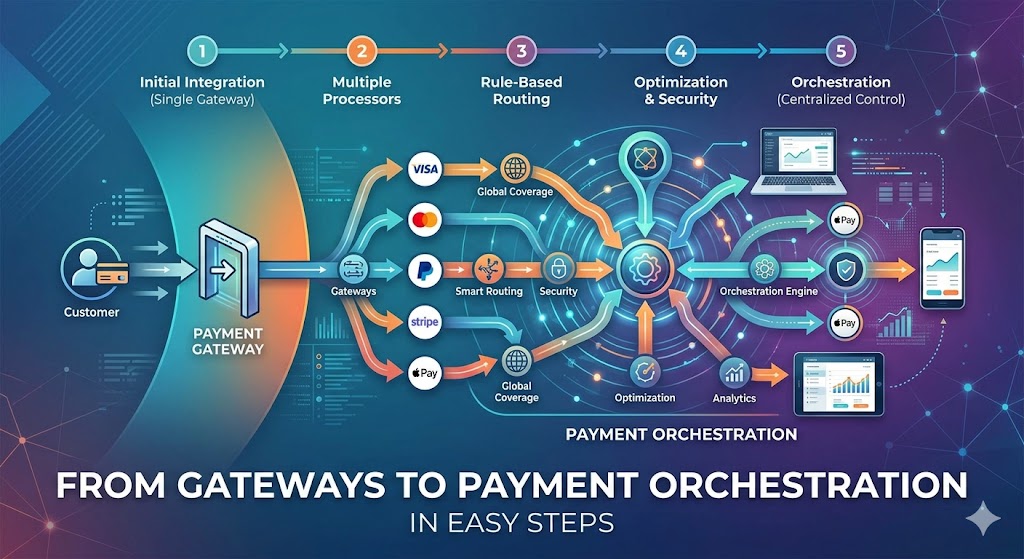
From Gateways to Payment Orchestration in Easy Steps

From Gateways to Payment Orchestration in Easy Steps

Payments have changed. The old way of connecting to a single payment gateway no longer cuts it. Today, businesses need speed, flexibility, and global reach. Therefore, payment orchestration platforms have stepped in — and they are reshaping the entire payments landscape.

In 2025, the global payment orchestration market is projected to exceed $3.5 billion. That growth tells a clear story. Merchants want smarter payment infrastructure. Traditional gateways simply cannot keep up.

What Is a Traditional Payment Gateway?

A payment gateway is a tool that connects a merchant’s checkout to a payment processor. It handles card data, checks for fraud, and passes transactions to the bank. PayPal, Stripe, and Square are well-known examples. However, they each have limits.

Most traditional gateways lock you into one provider. Consequently, if that provider has an outage, your payments stop. Additionally, their routing logic is fixed — they cannot automatically switch to a better path when needed.

For small businesses, this setup works fine. However, as businesses scale, the limitations become painful. High decline rates, single-currency restrictions, and rigid pricing structures hold merchants back.

From Gateways to Payment Orchestration in Easy Steps

What Is a Payment Orchestration Platform?

A payment orchestration platform sits on top of multiple payment service providers (PSPs), gateways, and acquirers. Instead of using one gateway, it connects to many — and intelligently routes each transaction to the best option available.

Think of it like a smart traffic system for your payments. Moreover, it watches each route, picks the fastest and cheapest, and switches automatically when conditions change. The result is higher approval rates, lower costs, and fewer failed transactions.

Leading platforms in this space include Spreedly, Primer, Gr4vy, and Payrails. Each offers smart routing, a single integration point, and real-time analytics. Furthermore, they support dozens of payment methods across multiple regions.

Key Reasons Payment Orchestration Is Winning

First, let’s talk about approval rates. Traditional gateways send each transaction down one path. If that path fails, the transaction declines. Payment orchestration platforms use intelligent retry logic. Therefore, if one gateway declines a payment, the platform automatically tries another — often without the customer even noticing.

Second, consider fees. Different gateways charge different rates for different card types, currencies, and regions. Orchestration platforms route transactions to whichever gateway offers the lowest cost for each specific payment. Consequently, merchants save significantly on processing fees at scale.

Third, look at flexibility. Merchants can add new payment methods — like Buy Now Pay Later, digital wallets, or local payment options — through one platform rather than building individual integrations. This dramatically reduces development time.

How Smart Routing Works

Smart routing is the core feature of payment orchestration. It uses rules and real-time data to decide which gateway handles each transaction. These rules can be based on currency, card type, transaction value, customer location, or historical success rates.

For example, a UK merchant processing a Euro payment from Germany might route it through a European acquirer to avoid cross-border fees. Meanwhile, a high-value transaction might go through a gateway with the best fraud detection for that amount.

Additionally, orchestration platforms offer cascade routing. If the primary gateway declines, the transaction cascades to the next best option automatically. Studies show this approach can recover 5-15% of transactions that would otherwise be lost. That is a significant revenue gain.

Better Data and Analytics

Traditional gateways provide basic reporting. However, payment orchestration platforms deliver deep, real-time analytics across all connected gateways. Merchants can see exactly which gateway performs best for which transaction type.

Furthermore, they can A/B test routing rules to continuously optimise performance. This data-driven approach helps teams make smarter decisions faster. Additionally, consolidated reporting across all PSPs saves hours of manual reconciliation work each month.

Payment orchestration also makes compliance easier. Centralised tokenisation across gateways reduces PCI scope. Moreover, unified fraud management across providers gives merchants a complete view of risk — rather than fragmented data across multiple dashboards.

Global Payments Made Simple

Expanding internationally is one of the biggest payment headaches for merchants. Different countries have different preferred payment methods, currencies, and regulations. Traditional gateways struggle here. Orchestration platforms were built for this challenge.

With a single orchestration platform, a merchant can accept Alipay in China, iDEAL in the Netherlands, UPI in India, and PIX in Brazil — all through one integration. Consequently, global expansion becomes a routing decision rather than a development project.

This is especially valuable for ecommerce brands entering new markets. Instead of spending months integrating local payment providers, they simply activate new connections within the orchestration layer.

The Cost Case for Orchestration

Some businesses hesitate over orchestration platform fees. However, the ROI is usually clear. Consider a business processing $10 million per year. Even a 0.1% improvement in approval rates recovers $10,000 in revenue. A 0.2% reduction in processing fees saves $20,000.

Moreover, reducing failed transactions improves customer experience. Fewer declined cards means fewer abandoned carts and fewer frustrated customers calling support. Therefore, the business case extends well beyond the payment team.

Additionally, reduced development costs matter. One integration replaces many. Engineering teams spend less time maintaining payment connections and more time building product.

Is Payment Orchestration Right for Your Business?

Not every business needs a full orchestration platform right away. However, if you process more than $1 million per year, operate across multiple countries, or experience a decline rate above 5%, it is worth exploring. Furthermore, if you are planning international expansion, starting with orchestration now will save a lot of pain later.

Start by auditing your current payment stack. Look at your decline rates by gateway, by card type, and by region. Additionally, calculate how much you spend on processing fees across all providers. That data will show you exactly where orchestration can help most.

The Future of Payments Is Orchestrated

Traditional payment gateways served their purpose well. However, the demands of modern commerce have outgrown them. In conclusion, payment orchestration platforms offer the intelligence, flexibility, and global reach that today’s merchants need.As payments become more complex, orchestration becomes more essential. Consequently, businesses that adopt these platforms early will process smarter, scale faster, and convert better than those that stick with legacy gateway setups. The shift is already well underway — and it is only accelerating.

Read More:

Why Indian fintechs Lead in API First Tech

UPI Complete Guide: Choosing the Right Payment App

Everything You Need to Know About Payment Gateway Before Launching Your Subscription Box

Why Should You Merge All Payment Gateways Into One View

Why Should You Merge All Payment Gateways Into One View

In the growing world of online marketplaces, sales happen fast. However, taking payment is just one part of the job. Truly, the hard part is managing the complex process of settlement and payouts. For any marketplace, giving money to many sellers, dealing with fees, and ensuring rules are followed is a huge job. Therefore, building a smart, automated settlement and payout workflow is essential. It is crucial for growing your business, keeping money accurate, and scaling well.

Many marketplaces, especially new ones, forget how complex payouts are. They often use slow, manual ways to send money. This method quickly fails when sales increase. Consequently, relying on old methods leads to errors, delays, and unhappy sellers. Clearly, a strong, smart workflow turns this problem into a major advantage. It makes sure money moves smoothly and clearly and frees up your team’s time. It also helps build trust with sellers. Ultimately, getting payouts right is key for any platform that wants to succeed in the digital market.

Why Should You Merge All Payment Gateways Into One View

The Core Challenge: Too Many Parties, Too Much Detail

First, we need to know why settlement and payout are so hard for marketplaces. Unlike a simple online shop, a marketplace involves many people in every transaction. You have the buyer, the marketplace itself, and the sellers. Consequently, this multi-party system creates many layers of complexity. It demands careful handling of money, fees, and legal rules. Clearly, ignoring these details can cause big problems, money issues, and legal trouble. Therefore, a smart workflow must solve these main issues.

The Problem of Splitting Money and Following Rules

Firstly, the main hard part is the need to split payments. A buyer’s single purchase must be divided. Some money goes to the marketplace (for fees), and the rest goes to the seller. This requires careful math and tracking. Secondly, different payout times and amounts make things harder. Some sellers want money every day. Others prefer weekly or monthly. Some only get paid after they earn a certain amount. Handling these different needs by hand is almost impossible as you grow.

Furthermore, selling globally and dealing with different money adds extra currency problems. Following many global money rules and tax laws (like KYC and AML) is also a massive task. This is true even for platforms that operate in just a few countries. Additionally, handling refunds, failed charges, and fights complicates things more. These events need changes to money that was already sent out. Lastly, ensuring clear reporting and honesty for everyone is vital. This builds trust and manages expectations. Truly, a smart system must handle all these linked issues to work well and follow the law.


Key Components: What Makes a Payout System Smart

Building a truly smart settlement and payout system for a marketplace needs several core parts to work together. It is not just about sending money. Instead, it is about having a complete system that handles payment starts, checking records, stopping fraud, following rules, and clear reports. Clearly, a full system ensures things are fast, accurate, and ready to grow. Therefore, every part must be planned and linked well.

Essential Tools for Automated and Legal Payouts

Firstly, you need a reliable payment control tool. This system manages incoming payments from buyers. It holds the funds safely. Then, it uses rules to send money out. It often works with many different payment companies, offering backup and choice. Secondly, a strong seller setup and checking system (KYC/AML) is key. This makes sure all people receiving money are real and follow financial rules. This reduces fraud and legal risks right from the start.

Furthermore, an automated fee deduction and splitting engine is very important. This part automatically figures out marketplace fees, bank costs, and other money taken out. It makes sure sellers get the correct final amount. Additionally, a flexible payout timing and method tool lets sellers pick their preferred payment schedule. They can choose how often they get paid and how (bank transfer, digital wallet). This makes sellers much happier. Lastly, complete checking and reporting tools are vital. These tools automatically match sales, check balances, and create clear statements. This gives honesty and makes accounting easier. Truly, linking these parts creates a powerful, fast, and lawful payout environment.


Security and Compliance: Safety and Rules Must Come First

In the detailed world of financial actions, following the rules and reducing risk are essential. This is even more true for marketplaces that manage many people’s money. Truly, a smart settlement and payout system must have strong steps built in. These steps must meet legal needs. They also need to stop fraud and mistakes. Clearly, failing in these areas can bring big penalties and harm your good name. Therefore, taking action early is critical.

Navigating Rules and Stopping Fraud

Firstly, Know Your Customer (KYC) and Anti-Money Laundering (AML) rules must be followed. Your system must automatically collect and check seller IDs. This often means checking documents and using databases. This is not just a law. It is crucial for stopping bad activity on your platform. Furthermore, you must use fraud detection and prevention tools that look at payout patterns. Strange amounts, timings, or bank accounts can signal fraud. These signs should trigger automatic checks or holds.

Secondly, make sure your system follows PCI DSS rules if you handle card data. Or, work only with payment processors that follow these rules. Keeping data secure is basic to building trust. Additionally, manage tax reporting duties well. Based on where you are and where your sellers are, you may need to collect tax IDs and send reports often. A smart workflow does this work automatically. This greatly reduces manual effort and risk. Truly, by adding these security and compliance steps, marketplaces can operate safely and build confidence for everyone involved.


Optimizing for Speed, Clarity, and Growth

While following rules and accuracy are basic needs, a truly smart system also focuses on speed, clarity, and growth potential. In fact, in a crowded marketplace, fast and clear payouts make sellers happy. They also bring in better sellers. Clearly, being able to grow without problems as sales increase is also key for long-term success. Therefore, always making things better in these areas is vital.

Making Things Better for Sellers and the Marketplace

Firstly, to make things faster, use instant or very quick payout options. These are good where they are allowed and cost-effective. Regular bank transfers take days. Fast options like real-time payments or digital wallets can greatly speed up the process. Furthermore, make checking records automatic. This removes slow manual checking. Fast internal work means faster money processing.

Secondly, for clarity, give sellers real-time information about their earnings, fees, and payout history. Use a special seller page for this. Clear, detailed sales reports build trust. They also lead to fewer questions for your support team. Fast messages about when money is coming also help sellers a lot. Lastly, plan your system for growth from the beginning. Pick payment partners and systems that can handle more sales and more sellers without needing big changes. Cloud systems and systems that use APIs are often best for this. Truly, by focusing on speed, clarity, and growth, marketplaces create a great experience for sellers. This helps build a loyal community that drives continuous success.


Best Practices: How to Build Your Smart System

Building a smart settlement and payout workflow is a hard job. But marketplaces can succeed by following simple best practices. Clearly, learning from others and making small changes often will make sure your system is strong and ready for the future. Therefore, a careful plan that mixes technology, process, and user experience is crucial.

A Plan for Successful Payout System Building

Firstly, pick the right payment partners. Choose companies that offer good APIs, global reach (if you need it), support for many currencies, strong security features, and great help. Do not just pick the cheapest. Reliability and features are more important. Secondly, design for easy changes. Your marketplace will change. Your payout system should be able to handle new payment types, fee changes, and new rules easily. A system built with APIs makes changes and linking new tools much simpler.

Furthermore, make things automatic whenever you can. From splitting payments and taking out fees to checking records and tax reporting, automate all repeated tasks. This reduces mistakes and cost. It lets your team focus on smart work. Also, invest in full testing and checking. Test your system well under different situations. Do this before you launch. Use tools to watch your system all the time. These tools should alert you about any issues right away. Lastly, always ask sellers for their thoughts. Their experience is most important. Use their feedback to find problems and make improvements often. Truly, by following these best practices, marketplaces can build a smart, strong, and friendly payout system that supports long-term success.


Frequently Asked Questions (FAQs)

Q1: What is the biggest challenge for marketplaces in managing payouts?

The biggest challenge is often the hard job of splitting payments accurately among many groups. This includes taking out various fees. It also means handling different payout schedules and following money rules in different places. All this must be done while growing fast.

Q2: How can a marketplace ensure compliance with KYC/AML rules for payouts?

Marketplaces ensure compliance by using automated checking systems during seller setup. These systems check and confirm seller identities. They often use document checks and database lookups. This makes sure all people receiving money are real and follow anti-money laundering laws.

Q3: What is the role of a “payment orchestration layer” in a smart payout workflow?

A payment orchestration layer works as a central manager. It smartly guides and controls money coming in and payouts going out and links to many payment companies. It handles payment splitting and fee deductions and often uses logic to pick the best payment route for speed or cost.

Q4: How can marketplaces offer faster payouts without taking on too much risk?

Marketplaces can offer faster payouts by using instant payment networks and digital wallets. They also use carefully managed reserves. While moving fast, it is vital to have strong fraud checks. You must also do KYC/AML checks. This prevents bad transactions and chargebacks.

Q5: What reporting features are essential for a smart payout workflow?

Essential reporting features include real-time dashboards for sellers to see earnings and history. You also need detailed reconciliation reports for the marketplace. These match incoming and outgoing money. Finally, you need automatic tax document creation. Clarity is the most important thing.

Also Read: How to Design Checkout Experiences That Increase Conversion

How Can Smart Payout Drive Marketplace Growth

How Can Smart Payout Drive Marketplace Growth

In the burgeoning world of online marketplaces, transactions are the lifeblood. However, simply facilitating purchases is only half the battle. Truly, the real operational challenge—and often a source of significant friction—lies in managing the complex process of settlement and payouts. For any marketplace, efficiently distributing funds to numerous sellers, service providers, or gig workers, while deducting fees, handling refunds, and ensuring compliance, is a monumental task. Therefore, building a smart, automated settlement and payout workflow is not merely a convenience; it’s a critical foundation for scalability, financial accuracy, and sustained growth.

Many marketplaces, particularly in their early stages, underestimate the complexity of payouts. They often rely on manual processes or fragmented systems, which quickly become unsustainable as transaction volumes grow. This reliance on outdated methods leads to errors, delays, frustrated sellers, and significant operational overhead. Clearly, a robust, intelligent workflow transforms this potential headache into a competitive advantage. It ensures funds flow smoothly, transparently, and compliantly, freeing up valuable resources and fostering trust within your marketplace ecosystem. Ultimately, mastering payouts is crucial for any platform aspiring to thrive in the dynamic digital economy.

How Can Smart Payout Drive Marketplace Growth

The Core Challenge: Why Payouts Are Complex for Marketplaces

To begin with, let’s understand why settlement and payout workflows are inherently complex for online marketplaces. Unlike a single-vendor e-commerce store, a marketplace involves multiple parties in every transaction: the buyer, the marketplace itself, and one or more sellers/service providers. Consequently, this multi-party dynamic introduces layers of complexity, requiring careful management of funds, fees, and regulatory obligations. Clearly, overlooking these nuances can lead to significant operational headaches, financial discrepancies, and legal risks.

The Multi-faceted Nature of Marketplace Payouts

First and foremost, the core complexity arises from the need to split payments. A single customer transaction often needs to be divided, with a portion going to the marketplace (commission, fees) and the remainder being disbursed to the relevant seller. This requires precise accounting and reconciliation. Secondly, variable payout schedules and thresholds add another layer of difficulty. Some sellers might prefer daily payouts, others weekly or monthly, while some may only be paid once a minimum balance is reached. Accommodating these diverse needs manually is nearly impossible at scale.

Furthermore, global operations and multi-currency support introduce significant foreign exchange considerations and local payment method preferences. Complying with diverse international financial regulations and tax laws (e.g., KYC, AML, 1099s) is also a massive undertaking, especially for platforms operating across borders. Additionally, handling refunds, chargebacks, and disputes adds another layer of complexity, as these events necessitate adjustments to previously settled funds. Lastly, ensuring transparency and clear reporting for both sellers and the marketplace is vital for building trust and managing expectations. Truly, a smart workflow must address all these interconnected challenges to ensure seamless and compliant operation.


Key Components of a Smart Payout Workflow

Building a truly smart settlement and payout workflow for a marketplace involves integrating several critical components. This isn’t just about sending money; instead, it’s about creating an end-to-end system that handles payment initiation, reconciliation, fraud prevention, compliance, and robust reporting. Clearly, a holistic approach ensures efficiency, accuracy, and scalability, transforming a manual burden into an automated asset. Therefore, each element must be carefully considered and integrated.

Essential Elements for Automated and Compliant Payouts

Firstly, a reliable payment orchestration layer is fundamental. This system manages incoming payments from buyers, directs funds to a holding account, and then intelligently distributes them according to predefined rules. It often integrates with multiple payment gateways and processors, offering flexibility and redundancy. Secondly, a robust seller onboarding and verification (KYC/AML) system is crucial. This ensures that all recipients are legitimate and compliant with financial regulations, minimizing fraud and legal risks from the outset.

Furthermore, an automated fee deduction and splitting engine is essential. This component automatically calculates marketplace commissions, processing fees, and any other deductions, ensuring accurate net payouts for sellers. Additionally, a flexible payout scheduling and method module allows sellers to choose their preferred payout frequency (e.g., daily, weekly, monthly) and method (e.g., bank transfer, digital wallet), enhancing satisfaction. Lastly, comprehensive reconciliation and reporting tools are vital. These tools automatically match transactions, reconcile balances, and generate detailed statements for both the marketplace and its sellers, providing transparency and simplifying accounting. Truly, integrating these components creates a powerful, efficient, and compliant payout ecosystem.


Ensuring Compliance and Mitigating Risk

In the intricate world of financial transactions, compliance and risk mitigation are non-negotiable, especially for marketplaces handling funds from numerous parties. Truly, a smart settlement and payout workflow must embed robust mechanisms to adhere to regulatory requirements and protect against financial fraud and operational errors. Clearly, a failure in these areas can lead to severe penalties, reputational damage, and loss of trust. Therefore, proactive measures are essential.

Navigating Regulatory Landscape and Protecting Against Fraud

Firstly, Know Your Customer (KYC) and Anti-Money Laundering (AML) compliance are paramount. Your workflow must include automated processes for collecting and verifying seller identities, often involving document checks and database screenings. This is not just a legal obligation; it’s a critical step in preventing illicit activities on your platform. Furthermore, implement fraud detection and prevention tools that analyze payout patterns. Unusual payout amounts, frequencies, or destination accounts can be red flags for potential fraud or account takeovers, triggering automatic holds or investigations.

Secondly, ensure your workflow adheres to Payment Card Industry Data Security Standard (PCI DSS) if you handle cardholder data, or partner with PCI-compliant payment processors. Data security is fundamental for maintaining trust. Additionally, manage tax reporting obligations effectively. Depending on your jurisdiction and seller locations, you may be required to collect tax IDs (e.g., W-9s, 1099s in the US) and submit regular reports. A smart workflow automates this data collection and reporting, significantly reducing manual effort and compliance risk. Truly, by embedding these compliance and risk mitigation measures, marketplaces can operate securely and confidently, fostering a safe environment for all participants.


Optimizing for Speed, Transparency, and Scalability

While compliance and accuracy are foundational, a truly smart settlement and payout workflow also prioritizes speed, transparency, and scalability. In fact, in a competitive marketplace environment, quick and clear payouts enhance seller satisfaction and attract more high-quality participants. Clearly, the ability to scale seamlessly with transaction volume is also essential for sustainable growth. Therefore, continuous optimization across these dimensions is vital.

Enhancing Performance for a Thriving Marketplace Ecosystem

Firstly, to enhance speed, leverage instant or near-instant payout options where available and economically viable. While traditional bank transfers can take days, options like real-time payments, digital wallets, or even crypto payouts can significantly reduce settlement times. Furthermore, automate reconciliation processes as much as possible, minimizing manual review delays. Streamlined internal workflows mean faster processing.

Secondly, for transparency, provide sellers with real-time visibility into their earnings, deductions, pending payouts, and payout history through a dedicated seller dashboard. Clear, detailed transaction statements and easy-to-understand fee breakdowns build trust and reduce support inquiries. Proactive notifications about payout statuses also greatly improve the seller experience. Lastly, design your workflow for scalability from day one. This means choosing payment partners and internal systems that can handle increasing transaction volumes and a growing number of sellers without requiring major re-architecture. Cloud-native solutions and API-first designs are often best for this. Truly, by optimizing for speed, transparency, and scalability, marketplaces can create a superior experience for their sellers, fostering a vibrant and loyal ecosystem that drives sustained growth.


Best Practices for Building Your Smart Workflow

Implementing a smart settlement and payout workflow is a complex undertaking, but by following a set of best practices, marketplaces can navigate the challenges successfully. Clearly, learning from industry leaders and focusing on iterative improvements will ensure your system is robust, efficient, and future-proof. Therefore, a strategic approach that combines technology, process, and user experience is crucial.

A Roadmap for Successful Payout System Implementation

Firstly, choose the right payment partners. Select payout providers that offer robust APIs, global coverage (if needed), multi-currency support, strong compliance features, and excellent customer support. Don’t simply opt for the cheapest option; reliability and features matter more. Secondly, design for modularity and flexibility. Your marketplace will evolve, so your payout system should be able to adapt to new payment methods, fee structures, and regulatory changes without a complete overhaul. An API-driven architecture allows for easier integration and future modifications.

Furthermore, prioritize automation wherever possible. From payment splitting and fee deductions to reconciliation and tax reporting, automate repetitive tasks to reduce manual errors and operational costs. This frees up your team to focus on strategic initiatives. Also, invest in comprehensive testing and monitoring. Thoroughly test your payout workflow under various scenarios (e.g., refunds, chargebacks, high volume) before launch. Implement continuous monitoring tools to detect and alert on any discrepancies or issues in real time. Lastly, gather continuous feedback from sellers. Their experience with payouts is crucial. Use their insights to identify pain points and make iterative improvements. Truly, by adhering to these best practices, marketplaces can build a smart, resilient, and seller-friendly settlement and payout workflow that fuels long-term success.


Frequently Asked Questions (FAQs)

Q1: What is the biggest challenge for marketplaces in managing payouts?

The biggest challenge is often the complexity of splitting payments accurately among multiple parties, deducting various fees, managing diverse payout schedules and methods, and ensuring compliance with financial regulations across different jurisdictions, all while scaling efficiently.

Q2: How can a marketplace ensure compliance with KYC/AML regulations for payouts?

Marketplaces ensure KYC/AML compliance by integrating automated verification systems during seller onboarding. These systems collect and verify seller identities, often using ID checks, database screenings, and sometimes biometric verification, to ensure all recipients are legitimate and adhere to anti-money laundering laws.

Q3: What is the role of a “payment orchestration layer” in a smart payout workflow?

A payment orchestration layer acts as a central hub that intelligently routes and manages incoming payments and subsequent payouts. It connects to multiple payment gateways, handles payment splitting, fee deduction, and often provides dynamic routing logic to optimize for cost, success rates, and specific payout rules.

Q4: How can marketplaces offer faster payouts without taking on excessive risk?

Marketplaces can offer faster payouts by leveraging instant payment networks, digital wallets, and carefully managed rolling reserves. While aiming for speed, it’s crucial to balance this with robust fraud detection, KYC/AML checks, and clear risk assessment frameworks to prevent fraudulent transactions and chargebacks.

Q5: What reporting features are essential for a smart payout workflow?

Essential reporting features include real-time dashboards for sellers showing earnings, pending payouts, and transaction history; detailed reconciliation reports for the marketplace to match incoming and outgoing funds; and automated generation of tax-related documents (e.g., 1099s) for compliance and accounting. Transparency is key.

Also Read: Payment Analytics: How to Turn Payments into Profit?