Global Payment Gateway for E-commerce Success in 2025

Global E-commerce in 2025: Why Multi-Currency Payments Are Essential

Imagine this: your online store is thriving, and customers from across the globe want to buy. But then, at checkout, they face prices in a confusing foreign currency. They see unexpected fees or struggle with complicated conversions. Suddenly, their excitement fades into frustration. Consequently, they abandon their carts, and you lose a sale. This is a common and costly problem. In today’s interconnected world, if your e-commerce site doesn’t “speak” your customer’s currency, you’re losing sales, and moreover, you’re alienating potential customers. The solution? Multi-currency payment gateway. They are the magic key to unlocking truly global sales without the usual headaches.

So, what exactly is a multi-currency payment gateway? Fundamentally, it acts as your store’s multilingual cashier. It understands what currency your customers are most comfortable with. Instead of making buyers grapple with confusing conversions, your store simply shows prices in their local money. Then, it processes payments just like a local bank would. This process plays out seamlessly.

For instance, the gateway first detects the customer’s country or currency preference. Accordingly, it displays the correct prices. Therefore, customers can pay in a currency they know and trust. Finally, the system settles these payments in your chosen currency. This simple yet powerful feature makes your store more user-friendly, trustworthy, and easy to shop at, regardless of where your buyers are located. Consequently, your global presence is solidified.

MULTI-CURRENCY PAYMENT GATEWAY

Why Every E-Commerce Business Needs a Multi-Currency Gateway in 2025

There are many compelling reasons why a multi-currency payment gateway is a non-negotiable feature for any serious e-commerce business today. First and foremost, happy customers spend more. When people see prices in a familiar currency, the act of buying feels natural, much like shopping at a local store. Research indicates that almost half of all customers will abandon their cart if a site can’t offer local payment options or currency. Thus, by providing this option, you are directly addressing a major cause of cart abandonment. Secondly, with fewer surprises at checkout, you will have happier buyers and more completed purchases. As a result, your revenue will increase, and your bounce rate will drop significantly.

Furthermore, a multi-currency gateway simplifies your financial management. It eliminates the need for you to juggle multiple foreign bank accounts or worry about exchange rate volatility. The gateway handles all the complex conversions and financial reconciliations. This frees you up to focus on growing your business instead of managing financial complexities. Fourth, by catering to global customers in their own currency, you demonstrate a high level of professionalism and customer care. This attention to detail sets you apart from competitors and furthermore, earns you customer loyalty.

Lastly, a modern multi-currency gateway can help you cut costs on transaction fees. Many traditional gateways charge high exchange rates and hidden fees. Conversely, multi-currency gateways can often save you money on these charges, thereby boosting your margins on every international sale.


What Makes a Great Multi-Currency Payment Gateway?

When you’re ready to select a multi-currency payment gateway, it’s important to know what features to look for. Otherwise, you might end up with a clunky, inefficient system. First, ensure it has a wide range of currency support. A great gateway should cover all major world currencies and also some niche ones that your customers might use.

Second, dynamic currency conversion (DCC) is a key feature. This allows buyers to choose whether to pay in their local currency or your home currency. This flexibility gives them control over the transaction and builds trust. Third, strong fraud protection is non-negotiable. Global payments come with a higher risk of fraud. Therefore, your gateway must provide robust, round-the-clock security measures to protect your business.

In addition, look for flexible payout options. You should be able to receive your earnings in your preferred currency without any hassle. This makes financial reconciliation much simpler for you. Finally, smooth integration is essential. The gateway’s APIs and plugins should work seamlessly with your existing e-commerce platform, be it Shopify, WooCommerce, or another. An easy and stable integration process makes your life much easier in the long run. Consequently, you can focus on your business rather than on technical support. By carefully considering these features, you can select a gateway that not only meets your current needs but also supports your future growth. Ultimately, a good gateway is an investment in the long-term health of your business.


Choosing Your Gateway: Key Considerations in 2025

Choosing the right payment gateway is a critical decision that can significantly impact your global e-commerce success. First and foremost, you need to understand where your customers are located. Identify the countries with the most traffic to your site and ensure that the gateway you select supports those currencies. This foundational step is paramount. Subsequently, you should scrutinize the fees and exchange rates. Transparency is key here. A reputable provider will have clear, upfront pricing without any hidden costs. Nobody likes financial surprises. Additionally, compliance is a crucial factor. Your gateway must adhere to international regulations like PCI DSS and PSD2. Compliance ensures that you are handling sensitive customer data securely and legally, thus protecting both you and your customers.

Furthermore, you should prioritize providers with a strong reputation for fraud detection and customer dispute resolution. Global transactions can be a target for fraudulent activities, so having a proactive and reliable system in place is vital for your security. Before you commit to a provider, always test the integration. A smooth and stable integration with your e-commerce platform is non-negotiable for a seamless checkout experience. Although many providers advertise easy integration, it’s always wise to test it yourself. Lastly, consider the level of customer support offered by the provider. You will likely have questions or issues down the line, so having access to knowledgeable support is essential.


The Global Gateway Market: Who’s Leading the Pack?

The market for multi-currency payment gateways is dynamic, with several key players offering robust solutions tailored to different business needs. Firstly, Stripe is a favorite among developers and startups due to its powerful, flexible APIs and excellent documentation. It’s a true globetrotter’s choice, widely known for its ability to handle international payments with ease. Many e-commerce platforms integrate with Stripe, making it a very convenient option. Secondly, PayPal is a household name that is trusted by millions of customers worldwide. Its multi-currency functionality is well-established, and its brand recognition alone can boost customer confidence at checkout. PayPal also offers strong buyer and seller protection, which is a major advantage for both parties in a transaction.

Furthermore, Razorpay has emerged as a star in the Indian market, but it also offers excellent international coverage. For businesses with a strong presence in or a focus on the South Asian market, Razorpay is an incredibly robust choice. It provides a comprehensive suite of payment solutions beyond just multi-currency.

Then, there’s Adyen, a go-to for many large, global corporations. Adyen is known for its high-volume processing capabilities and sophisticated fraud detection systems. It is also a very reliable and scalable solution for businesses experiencing rapid growth. Finally, there are specialized services like Digital Payment Guru that offer a more tailored approach. These consultancies can guide you through the complexities of the gateway jungle and provide custom integrations to ensure your multi-currency strategy is successful.


Conclusion

In 2025, if your dream is to have a truly global online store, a multi-currency payment gateway isn’t just a luxury feature; it’s an absolute necessity. It serves as the critical bridge that transforms international browsers into paying customers. It does this by breaking down barriers related to currency, language, and trust. By offering a localized payment experience, you are telling your customers, “We value your business.” This is a powerful message that resonates and builds loyalty.

Therefore, the choice is clear. If you want your business to grow beyond local borders, you must embrace a global mindset. A multi-currency payment gateway is the first and most important step in that direction. Select a gateway that fits your business needs perfectly, and watch your sales and brand recognition expand across the globe. Are you ready to unlock the world? The tools are available, the market is waiting, and the time to act is now.

FAQs

  1. What is a multi-currency payment gateway, and how does it benefit my e-commerce business?
    A multi-currency payment gateway lets your store accept payments in various currencies worldwide, improving the customer experience by showing prices in local currency and boosting global sales.
  2. How does a multi-currency payment gateway work during the checkout process?
    It detects the buyer’s currency preference, converts the amount using real-time exchange rates, processes payment securely, and settles money in your chosen currency without forced conversions.
  3. Why is offering local currency payment options important for international customers?
    Displaying prices in a customer’s own currency reduces confusion and cart abandonment while building trust and increasing conversion rates.
  4. What features should I look for when choosing a multi-currency gateway for my store?
    Look for wide currency support, dynamic currency conversion, strong fraud protection, flexible settlement options, and seamless integration with your e-commerce platform.
  5. Can I accept both domestic and international payments through the same multi-currency payment gateway?
    Yes, many gateways enable handling domestic and multi-currency transactions from one dashboard or API, simplifying payment management.

Also Read: Your Guide to Mobile App Gateway Integration

Compare Payment Gateways 2025: PayPal, Stripe, Razorpay, PayU

payment gateway picture

Running an online business in 2025 is like being a superhero in a digital universe—your payment gateway is your trusty sidekick, ensuring smooth transactions, happy customers, and a healthy bottom line. With giants like PayPal, Stripe, Razorpay, and PayU vying for your attention, choosing the right one can feel like picking a favorite Avenger. Each gateway has its superpowers, but the “best” depends on your business’s unique needs—whether it’s low fees, lightning-fast payouts, or seamless global reach.

In this fun, no-nonsense guide, we’ll dive deep into the 2025 payment gateway arena, comparing fees (including India’s pesky 18% GST), payout times, and must-have features. We’ll also spotlight why integration matters and how experts like Digital Payment Guru can make it a breeze. By the end, you’ll know exactly which gateway fuels your growth without burning a hole in your wallet. Let’s jump in!


Why Your Payment Gateway Choice Is a Game-Changer

Your payment gateway isn’t just a tool to process card swipes or UPI taps—it’s the heartbeat of your online hustle. Here’s why it’s a big deal in 2025:

  • Profit Power: Transaction fees (aka TDR) can nibble away at your margins like a sneaky squirrel. A 1% fee difference on ₹10 lakh monthly sales? That’s ₹10,000 saved yearly!
  • Cash Flow Swagger: Fast payouts keep your business humming—delays can leave you scrambling for funds.
  • Customer Wow Factor: Smooth checkouts with UPI, BNPL, or wallets boost conversions, while robust fraud protection builds trust.

India’s UPI ecosystem is a juggernaut, processing over 15 billion transactions monthly in 2025, making local gateways a must for domestic businesses. Meanwhile, global e-commerce in India is projected to hit $200 billion, so cross-border sellers need gateways with international muscle. Whether you’re a freelancer, SME, or enterprise, let’s find your payment soulmate!


Meet the Contenders: Fees, Payouts, and Features

1. PayPal: The Global Trust Titan

Fees:

  • Domestic: 2.29%–3.49% + $0.49 per transaction (roughly ₹40–50 in India, depending on payment type).
  • International: Add 1.5% cross-border fee + up to 4% currency conversion (total ~3.9%–4.5%).
  • Micropayments (under $10): 5% + $0.05.
  • No setup/monthly fees, but India’s 18% GST applies.

Payout Times:

  • Instant to your PayPal wallet—cha-ching!
  • Bank transfers: 1–3 business days (standard); instant to debit cards for a 1% fee (min $0.25, max $25).

Features That Rock:

  • Global reach: 200+ markets, 25+ currencies—perfect for borderless hustlers like exporters or freelancers.
  • Recurring billing, invoicing, and Buy Now Pay Later (BNPL) via partners like PayPal Pay Later.
  • Unmatched trust: Shoppers see the PayPal logo and feel safe, boosting conversions.
  • Easy integrations with Shopify, WooCommerce, Wix, and more, plus a slick mobile app for managing payments on the go.
  • Robust buyer/seller protection and fraud detection keep scams at bay.

Who’s It For? Businesses targeting international customers who value trust over pinching pennies on fees. Think global freelancers, Etsy sellers, or cross-border e-commerce.

Pro Tip: PayPal’s fees sting for high volumes, so pair it with a low-cost local gateway for domestic sales. Watch those currency conversion fees—they’re sneakier than a cat burglar!


2. Stripe: The Developer’s Dream Machine

Fees:

  • Domestic cards: 2.9% + $0.30 (₹2 in India).
  • International cards: Add 1% (total ~3.9%).
  • ACH/bank transfers: 0.8% (capped at $5).
  • No setup/monthly fees; high-volume businesses can negotiate custom rates.

Payout Times:

  • Standard: 2–7 business days (T+2 in India).
  • Instant payouts: 1% extra for same-day cash.

Features That Rock:

  • Developer heaven: Powerful APIs let you craft custom payment flows for subscriptions, marketplaces, or SaaS.
  • Supports 135+ currencies and 100+ payment methods (cards, Apple Pay, Klarna, Affirm).
  • Stripe Radar’s AI-powered fraud detection (0.05–0.07¢ extra per transaction) stops fraudsters cold.
  • No-code integrations with Shopify, Wix, and WooCommerce make it accessible for non-techies too.
  • Invoicing, recurring billing, and tax automation for scaling like a pro.

Who’s It For? Tech-savvy startups, SaaS platforms, or global brands needing flexibility and scalability.

Pro Tip: Stripe’s sandbox mode lets you test integrations for free—perfect for tweaking before going live. Non-coders, lean on plugins for quick setups!


3. Razorpay: India’s UPI Rockstar

Fees:

  • Domestic (UPI/RuPay debit): 0% MDR (interchange fees may apply for wallets >₹2,000).
  • Cards/net banking/wallets: 2% + 18% GST.
  • International cards: 3–4% + GST.
  • No setup/maintenance fees; volume discounts for big players.

Payout Times:

  • Standard: T+2 working days.
  • Instant settlements: 1% extra for same-day cash.

Features That Rock:

  • 100+ payment modes: UPI, cards, net banking, BNPL, EMI—everything Indian shoppers love.
  • UPI AutoPay for subscriptions and a snazzy analytics dashboard with AI insights.
  • Seamless plugins for Shopify, WooCommerce, Magento, and more.
  • RazorpayX handles vendor payouts and forex transfers like a boss.
  • PCI-DSS compliant with robust fraud protection for peace of mind.

Who’s It For? Indian SMEs, D2C brands, and edtech platforms leaning hard into UPI and subscriptions.

Pro Tip: UPI’s zero fees make Razorpay a steal for domestic sales—90% of India’s transactions are UPI in 2025!


4. PayU: The Budget-Friendly Local Hero

Fees:

  • Domestic (cards/UPI/wallets): 2% + 18% GST.
  • International/EMI/Amex: 3% + GST.
  • No setup fees; annual maintenance negotiable for high-volume merchants.

Payout Times:

  • Standard: T+2–3 working days.
  • Quick settlements: Extra fee for same-day payouts.

Features That Rock:

  • 150+ payment options: UPI, cards, wallets, BNPL, and QR codes.
  • Strong presence in India, LatAm, and Africa—great for emerging markets.
  • Recurring billing, EMI, and multi-currency support for versatile checkouts.
  • Easy integrations with WooCommerce, Magento, and PrestaShop.
  • AI-driven fraud detection keeps your transactions secure.

Who’s It For? Indian startups and SMEs looking for affordability and diverse local payment options.

Pro Tip: PayU’s low domestic fees and UPI support make it a go-to for budget-conscious retailers.


5. Bonus Contenders to Keep on Your Radar

  • CCAvenue: 2% + GST (domestic), 3–4% (international). T+2–3 payouts. 200+ payment options, dynamic routing for 99%+ success rates, and multilingual checkouts. Best for Indian enterprises needing every bank imaginable (e.g., B2B wholesale).
  • Cashfree: 1.90% + GST (0.5% UPI); T+1 or instant payouts (1% extra). 180+ modes, bulk payouts (30,000/day), and Tally integration. Ideal for marketplaces or gig platforms needing fast vendor transfers.
  • Instamojo: 2% + ₹3 + GST (passable to customers for zero cost); 5% + ₹3 for digital goods. T+3 or faster payouts. Payment links and smart pages for creators selling courses, PDFs, or services. Perfect for freelancers and solopreneurs.

Quick Comparison Chart to Seal the Deal

GatewayDomestic FeesInternational FeesPayout TimeBest For
PayPal2.29–3.49% + $0.49~4% + FX1–3 days (instant)Global trust, multi-currency
Stripe2.9% + $0.30~3.9% + FX2–7 days (instant)Scalable, dev-friendly
Razorpay2% + GST (0% UPI)3–4% + GSTT+2 (instant)Indian SMEs, UPI dominance
PayU2% + GST3% + GSTT+2–3 (quick)Budget-friendly Indian startups
CCAvenue2% + GST3–4% + GSTT+2–3 daysEnterprises, local banks
Cashfree1.90% + GST (0.5% UPI)3% + GSTT+1 (instant)Marketplaces, fast payouts
Instamojo2% + ₹3 + GST5% + ₹3 + GSTT+3 (faster opt.)Creators, zero-fee option

Note: Fees exclude GST (18% in India); FX adds 1–4%. Payouts vary by risk/volume. Check provider sites for exact rates.


How to Pick Your Payment Gateway Soulmate

Choosing the right gateway is like dating—you need chemistry and compatibility. Here’s the 2025 playbook:

  • Global Ambitions? PayPal’s trusted name and Stripe’s customization are your wingmen. Stripe shines for complex flows like SaaS or marketplaces.
  • India-First? Razorpay or PayU dominate with UPI (0–2% fees). Cashfree’s T+1 payouts are a cash-flow lifesaver.
  • Freelancer or Creator? Instamojo’s payment links and zero-fee option (pass to customers) are pure magic. PayPal for global gigs.
  • Enterprise Vibes? CCAvenue’s 200+ options and custom rates handle high-volume chaos like a pro.

2025 Trend Alert: UPI’s zero MDR makes local gateways unbeatable for India, but global sales need PayPal or Stripe’s currency chops. Test gateways in sandbox mode to avoid integration hiccups, and keep an eye on RBI’s evolving MDR policies.


Integration: Don’t Get Tangled in the Tech Web

Picking a gateway is half the battle—integrating it is where things get real. APIs range from plug-and-play (Instamojo, PayU) to dev-intensive (Stripe). If coding feels like wrestling a digital octopus, call in the pros. Digital Payment Guru specializes in payment gateway integration, making setups for PayPal, Stripe, Razorpay, or PayU smooth, secure, and tailored to your business. Their experts handle PCI compliance, API quirks, and testing, so you can focus on scaling your empire, not debugging code. With Digital Payment Guru, your gateway will be up and running faster than you can say “cha-ching”!


Final Thoughts: Your Payment Gateway, Your Superpower

In 2025, your payment gateway is your business’s secret weapon. Razorpay and Cashfree lead India’s UPI revolution, while PayPal and Stripe rule global e-commerce. Cashfree’s 1.90% fees save big for high volumes, but Stripe’s fraud-fighting AI and PayPal’s trust factor are gold. Compare fees, test payouts, and align features with your goals—whether it’s UPI dominance or multi-currency mastery.

Don’t go it alone. With Digital Payment Guru, integration becomes a stress-free superpower, letting you focus on delighting customers and boosting revenue. Ready to supercharge your 2025 growth? Pick your gateway, integrate smart, and let your business soar!

FAQs

  1. What should I prioritize when selecting a payment gateway?
    Focus on your business needs! Key factors include transaction fees (e.g., Razorpay’s 0% UPI MDR vs. PayPal’s 3.49% domestic), payout speed (Cashfree’s T+1 vs. Stripe’s 2–7 days), and features like UPI support or multi-currency options. Consider your target market—global (PayPal, Stripe) or India-first (Razorpay, PayU)—and whether you need integrations for platforms like Shopify.
  2. How do fees impact my business in 2025?
    Fees can make or break your margins. A 1% difference on ₹10 lakh monthly sales equals ₹10,000 annually. In 2025, UPI’s zero MDR (e.g., Razorpay, Cashfree) is a game-changer for India, while international transactions (e.g., PayPal’s 4%+ FX) add costs. Check volume discounts and GST (18% in India) to calculate your true cost.
  3. Which gateway offers the fastest payouts?
    Speed varies by provider. Cashfree leads with T+1 payouts (instant for 1% extra), while Razorpay and PayU offer T+2 (instant for 1% extra). PayPal gives instant wallet access, with bank transfers taking 1–3 days. Instant options are pricier but great for cash flow—choose based on your urgency.
  4. How can I integrate a payment gateway without tech headaches?
    Integration can be tricky, especially with complex APIs (e.g., Stripe). For a seamless setup, partner with experts like Digital Payment Guru, who handle PCI compliance, testing, and platform-specific plugins (Shopify, WooCommerce) tailored to your business. This saves time and ensures security.
  5. Is UPI the future for Indian businesses in 2025?
    Absolutely! With 15+ billion monthly UPI transactions, gateways like Razorpay (0% UPI MDR) and PayU (2% + GST) are unbeatable for domestic sales. However, if you’re eyeing global markets, Stripe or PayPal’s multi-currency support is essential. A hybrid approach—UPI locally, global gateways internationally—might be your winning strategy.

Also Read: Your Guide to Mobile App Gateway Integration

How to Choose the Right Payment Gateway for Your Business in 2025

If you run an online business in 2025, one thing is non-negotiable: a seamless payment experience. No matter how great your products or services are, if your customers can’t pay easily and securely, you risk losing them at the checkout page.

That’s where payment gateways come in. But with so many options available, how do you choose the right one for your business?

Let’s break it down in simple, professional, and fun-to-read terms so you can make the right decision and keep your customers smiling (and paying!).

What Is a Payment Gateway (and Why Should You Care)?

Think of a payment gateway as a digital cashier. When a customer enters their card or UPI details, the gateway makes sure the money safely travels from their bank to your business account.

Without it, your online store is just a digital window-shopping experience. With it, you can:

  • Accept payments 24/7 from anywhere in the world.
  • Protect sensitive data with advanced encryption.
  • Offer multiple payment methods like credit cards, debit cards, UPI, wallets, and BNPL (Buy Now, Pay Later).

In short: a good payment gateway = smoother sales + happier customers + fewer headaches.


Why Choosing the Right Payment Gateway in 2025 Matters

The payment industry has changed dramatically. Customers now expect:

  • Faster checkouts (nobody wants to fill endless forms).
  • More options (cards, UPI, wallets, net banking, crypto in some cases).
  • Zero payment failures (every failed attempt means lost trust).

And let’s not forget—businesses need:

  • Low transaction fees.
  • Strong fraud prevention.
  • Easy integration with websites, apps, or e-commerce platforms.

With so much at stake, choosing the right payment gateway is more than a technical decision—it’s a business growth decision.


Factors to Consider When Choosing a Payment Gateway in 2025

Here’s your friendly guide to making the best choice:

1. Transaction Fees and Pricing

Every gateway charges fees—usually a small percentage of each transaction plus a fixed amount. In 2025, fees may vary depending on:

  • Payment method (card vs. UPI vs. wallet).
  • Domestic vs. international transactions.
  • Volume of sales (higher sales can mean lower rates).

💡 Pro Tip: Don’t just go for the cheapest. Choose value over cost—better reliability and support often justify slightly higher fees.


2. Payment Methods Supported

Customers want choice. In India especially, UPI is king, but cards, wallets, and net banking still matter. International businesses may need PayPal, Apple Pay, or even crypto gateways.

If your gateway doesn’t support what your customers prefer, you’ll lose sales.


3. Security and Compliance

In 2025, cyber fraud is more sophisticated than ever. Look for gateways with:

  • PCI DSS compliance.
  • Tokenization and encryption.
  • AI-based fraud detection.

Your customers need peace of mind that their money (and data) is safe.


4. Checkout Experience

Did you know that 70% of cart abandonments happen because of complicated or slow checkouts?

A great payment gateway should:

  • Load fast.
  • Offer one-click payments for repeat customers.
  • Work smoothly on both desktop and mobile.

The smoother the checkout, the more sales you’ll close.


5. Integration and Compatibility

Your gateway should play nicely with your systems:

  • E-commerce platforms (Shopify, WooCommerce, Magento).
  • CRMs or ERPs.
  • Mobile apps.

This is where a good integration partner comes in handy. For example, Digital Payment Guru is a trusted company that helps businesses integrate payment gateways seamlessly. They handle the tech, so you can focus on sales.


6. Customer Support

Imagine your payment system goes down on a busy weekend sale. Who do you call?

Choose a provider with:

  • 24/7 support.
  • Fast issue resolution.
  • Clear communication.

Great support is the safety net your business can’t do without.


7. Scalability and Global Reach

Planning to expand globally? Choose a gateway that:

  • Supports multiple currencies.
  • Handles international regulations.
  • Offers localized payment methods.

Scaling your business is easier when your payment system grows with you.


Top Trends in Payment Gateways for 2025

Before we shortlist, let’s peek at what’s trending:

  • UPI continues to dominate in India.
  • Contactless and one-tap payments are the norm.
  • Subscription and recurring payments are growing fast.
  • AI-based fraud detection is becoming standard.
  • BNPL (Buy Now, Pay Later) is a customer favorite.

Choosing a gateway that supports these trends ensures your business stays future-ready.


How Digital Payment Guru Can Help

Here’s the thing: selecting a gateway is one part of the puzzle. Integrating it properly is the real game-changer.

That’s where Digital Payment Guru shines. They are experts in payment gateway integration, helping businesses of all sizes set up smooth, secure, and scalable systems.

Whether you’re a startup launching your first store or an enterprise managing large-scale payments, Digital Payment Guru ensures your checkout works like magic. They simplify the technical stuff, so your customers get a frictionless experience—and you get peace of mind.

If you’re serious about growth in 2025, working with specialists like them is a smart move.


Step-by-Step: How to Choose the Right Payment Gateway

Let’s put it all together:

  1. Identify customer needs. Do they prefer UPI, cards, or wallets?
  2. Evaluate pricing. Compare transaction fees across providers.
  3. Check for security. Ensure PCI DSS compliance and fraud protection.
  4. Test the checkout flow. Is it smooth, mobile-friendly, and fast?
  5. Ensure integration. Use experts like Digital Payment Guru to avoid hiccups.
  6. Check customer support. Availability matters more than you think.
  7. Think long-term. Choose a gateway that can scale with your growth.

Common Mistakes to Avoid

  • Picking the cheapest option without considering reliability.
  • Ignoring customer preferences (for example, skipping UPI in India).
  • Not testing the checkout experience before going live.
  • Failing to plan for international expansion.
  • Trying to integrate alone without expert help.

Avoid these, and you’re already ahead of most businesses.


Final Thoughts

In 2025, choosing the right payment gateway isn’t just about processing money—it’s about building trust, reducing friction, and boosting conversions.

Here’s the simple truth:

  • Customers want choice and speed.
  • Businesses need security and scalability.
  • The right gateway delivers both.

And remember: integration matters just as much as selection. That’s why companies like Digital Payment Guru are invaluable—they take the complexity out of the process so your business can focus on growth.

So, whether you’re a startup, SME, or enterprise, make 2025 the year you invest in the right payment gateway. Your checkout page is where deals are sealed—make sure it’s as smooth as possible.

Because at the end of the day, the easier it is for customers to pay, the faster your business gets paid.

FAQs

1. What is the most important factor to consider when choosing a payment gateway?

Security is paramount to protect customer data and your business from fraud. Transaction fees are also crucial as they directly impact your profitability.

2. Why is security so critical for payment gateways in 2025?

Cyber fraud is highly sophisticated, so a secure gateway with PCI DSS compliance, encryption, and AI-based fraud detection is essential to protect sensitive data, build customer trust, and safeguard your brand’s reputation.

3. How important is it for a payment gateway to support multiple payment methods?

It is extremely important. Offering a variety of payment methods like cards, UPI, and digital wallets reduces cart abandonment, increases customer convenience, and boosts sales.

4. Can I integrate a payment gateway myself, or should I use a professional service?

While simple integrations may be possible, using a professional service like Digital Payment Guru is highly recommended. They ensure proper, secure, and seamless integration, allowing you to avoid technical issues and focus on your business.

Digital Payments

The Importance of Cyber Security in Digital Payments for Safe Online Transactions

In today’s fast-evolving digital age, the role of cybersecurity in digital payments is more critical than ever before. The rapid shift towards online transactions and mobile payments has revolutionized the way we handle our finances, but with this convenience comes a heightened risk of cyber threats. The rise in cyberattacks has made it increasingly important for consumers and businesses alike to understand the significance of securing digital payment systems. This article delves into the growing need for cybersecurity in digital payments, the potential risks, and why strong security measures are vital to safeguarding personal and financial data.

The Surge of Digital Payments in India

In recent years, India has witnessed a surge in digital payments, driven by initiatives such as Digital India, the rise of mobile wallets, UPI (Unified Payments Interface), and e-commerce platforms. The ease of making payments online, whether through mobile apps, websites, or QR codes, has significantly transformed the financial landscape in the country. Today, making payments for everything from groceries to utility bills can be done with just a few taps on your smartphone. The introduction of government-backed payment systems like Bharat Interface for Money (BHIM) and Paytm has further encouraged millions of Indians to embrace digital transactions.

However, with this convenience comes an increase in the threat landscape. Cybercriminals are becoming more sophisticated in their attempts to exploit vulnerabilities in digital payment systems. From phishing attacks to data breaches, digital payments are often targeted by malicious actors. This makes cybersecurity an absolute necessity for the safety and security of our financial transactions.

Why Cybersecurity is Essential in Digital Payments

1. Protection of Sensitive Personal and Financial Information

The core reason cybersecurity is essential in digital payments is to protect sensitive personal and financial data. When we engage in digital transactions, we often share critical information like credit card numbers, bank account details, Aadhaar numbers, and social security numbers. If this data falls into the wrong hands, it can be used for identity theft, fraudulent activities, and unauthorized access to accounts, causing significant financial and emotional distress to victims.

For instance, a breach of a user’s credit card information could lead to unauthorized purchases, loss of funds, and time-consuming efforts to resolve the issue. To prevent such scenarios, robust cybersecurity mechanisms are necessary. Some of these include:

  • Encryption: This technique ensures that any data transmitted over the internet, especially personal and payment information, is converted into unreadable code. Only authorized parties with the decryption key can access the information. Without encryption, this sensitive data would be vulnerable to theft.
  • Multi-Factor Authentication (MFA): MFA adds an extra layer of security by requiring the user to verify their identity using two or more authentication factors. These can include a password, a PIN, or a biometric scan like a fingerprint or facial recognition. Even if hackers manage to obtain a user’s password, MFA helps ensure that unauthorized access is prevented.
  • Tokenization: Tokenization replaces sensitive information, such as credit card numbers, with a unique code called a token. This token has no value outside the transaction for which it was created, making it useless to anyone attempting to misuse it.

By adopting these security measures, digital payments can be much safer, reducing the risk of fraud and identity theft in India’s increasingly cashless economy.

2. Combating Cyber Threats on a Global Scale

Another significant aspect of cybersecurity in digital payments is the global nature of these transactions. Payments are not restricted to one country or region; they often involve international players, which makes them vulnerable to global cyber threats. Cyberattacks can come from any part of the world, targeting payment systems in India as well as international corporations, governments, and financial institutions.

A breach in the payment infrastructure could have far-reaching consequences, not just for individuals but for businesses and even national economies. For example, the Ransomware attack on India’s government websites in recent years highlighted how vulnerable digital systems are to global threats. Cybercriminals can exploit vulnerabilities in payment systems to steal money, disrupt business operations, or access sensitive government data.

To prevent such threats, it is essential that payment systems invest in robust cybersecurity frameworks and constantly upgrade their security protocols. Cyberattacks can be costly, not only in terms of direct financial losses but also in reputational damage. Therefore, businesses must invest in securing their payment platforms against global cyber threats.

3. Securing Payment Systems and Enhancing Trust

A key factor driving the widespread adoption of digital payments is the trust consumers place in these systems. If consumers feel that their personal or financial data is vulnerable, they will be hesitant to make digital transactions. Cybersecurity ensures that the payment systems are reliable and trustworthy, which is crucial in maintaining customer confidence.

For instance, when you make an online purchase through a platform like Amazon India or Flipkart, you need to trust that your payment details are protected. If payment systems fail to provide adequate protection against fraud or data breaches, consumers may switch to other platforms, ultimately leading to a loss of business for retailers and financial institutions.

A secure payment system encourages customers to conduct more transactions and build long-term loyalty. This is why payment platforms in India, such as Google Pay, PhonePe, and Paytm, continue to invest heavily in cybersecurity measures.

4. Preventing Payment Fraud

Fraud prevention is one of the most critical aspects of securing digital payments. Cybercriminals can attempt to gain unauthorized access to users’ accounts by using stolen login credentials, exploiting software vulnerabilities, or even manipulating users into revealing their details through phishing attacks.

In response to these risks, payment systems use advanced fraud detection algorithms that continuously monitor transaction patterns for suspicious activity. These systems can flag unusual transactions in real time and even require additional authentication to prevent fraud. Additionally, biometric authentication like fingerprint scanning or facial recognition is gaining traction in India as a means to verify a user’s identity during payments.

Incorporating such technologies helps prevent fraud and ensures that digital payments remain safe for Indian consumers and businesses alike.

Strengthening India’s Digital Payment Infrastructure

As India continues to move towards a more digital economy, the need to strengthen the security of digital payment systems is more pressing than ever. Payment systems need to embrace technologies such as blockchain, artificial intelligence, and machine learning to stay ahead of cybercriminals.

With the government’s focus on driving digital payments through initiatives like PMGDISHA (Pradhan Mantri Gramin Digital Saksharta Abhiyan) and Financial Literacy Programs, it is essential to also ensure that these platforms are fortified with state-of-the-art cybersecurity measures.

Conclusion: Safeguarding the Future of Digital Payments

The importance of cybersecurity in digital payments cannot be overstated, especially as India rapidly embraces the digital age. While digital payments offer tremendous benefits in terms of convenience and accessibility, they also expose users to significant risks, including identity theft, fraud, and cyberattacks. By implementing strong security measures such as encryption, multi-factor authentication, and tokenization, both individuals and businesses can ensure the safety of their digital transactions.

As India continues to adopt digital payment solutions across its diverse population, the government and financial institutions must work together to build secure payment systems that foster trust and confidence. With cybersecurity as a top priority, we can create a secure environment for digital transactions and safeguard the future of India’s digital economy.

Investing in robust cybersecurity infrastructure is not just an option it’s a necessity to ensure the safety, reliability, and long-term sustainability of India’s rapidly growing digital payment ecosystem.

Boosting Sales with QR Codes: Case Studies from Real Businesses

Introduction

In an era dominated by digital transformation, QR (Quick Response) codes have emerged as an innovative and powerful tool for businesses. Simple yet effective, these codes allow consumers to access information, make payments, and engage with brands seamlessly. The adoption of QR codes in India has skyrocketed, thanks to the widespread use of mobile payments and the government’s push for digital transactions. Businesses across retail and hospitality sectors are leveraging QR codes to streamline processes, enhance customer convenience, and ultimately boost sales.

This article explores the role of QR codes in driving sales, supported by real-life case studies from Indian businesses that have successfully implemented this technology. For those looking to integrate QR codes into their payment systems or marketing strategies, Digitalpaymentguru.com offers expert guidance in selecting and deploying the right solutions.

What Are QR Codes and How Do They Work?

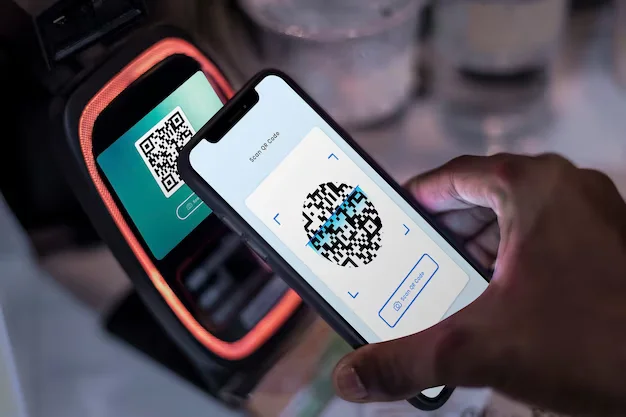
QR codes are two-dimensional barcodes that store information, such as URLs, payment links, or promotional content. Customers can quickly scan these codes using their smartphone cameras or dedicated scanning apps to access the encoded data.

The technology is simple yet highly versatile, making it applicable across various business operations, including payments, marketing, and customer engagement. In India, where digital payments like UPI dominate, QR codes have become a cornerstone of cashless transactions, empowering even small businesses to accept payments seamlessly.

By allowing users to scan codes directly from their smartphones, businesses can create seamless, contactless transactions, which significantly reduce checkout times and improve overall efficiency. With smartphones becoming ubiquitous, especially in urban and semi-urban areas of India, QR codes offer an easy, low-cost entry point for businesses of all sizes.

The Benefits of Using QR Codes for Sales

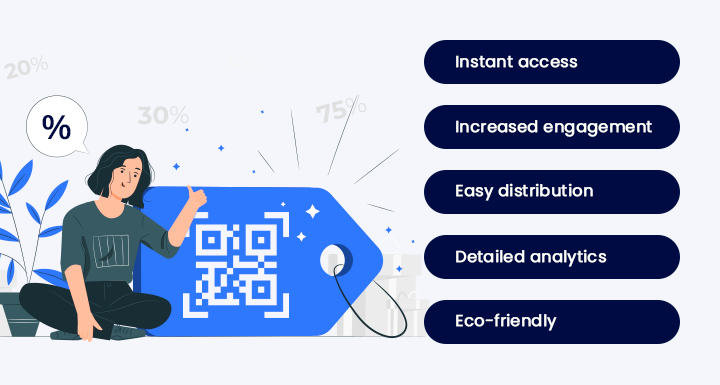
Simplified Transactions: QR codes eliminate the need for physical cash, swiping cards, or entering payment details manually. This streamlined process enhances the customer experience, particularly in high-traffic environments like retail stores and restaurants. The ease of scanning a QR code and completing a payment reduces waiting time, which leads to higher customer satisfaction.

This can be particularly beneficial in busy retail environments or during peak shopping times when long queues can turn customers away. Additionally, QR codes allow businesses to accept payments instantly, without the need for costly payment terminals or additional hardware.

Enhanced Customer Engagement: Businesses can use QR codes creatively to offer discounts, loyalty programs, and exclusive content. For example, scanning a QR code at a store could lead customers to a website offering additional discounts or promotional offers.

QR codes also provide an excellent opportunity for businesses to create unique and personalized marketing experiences for customers. By offering exclusive offers through QR codes, businesses can boost engagement and build customer loyalty. For example, customers who scan a code after making a purchase may receive discounts for their next visit, encouraging them to return and spend more.

Cost-Effectiveness: Implementing QR codes requires minimal investment compared to traditional methods like card payment terminals. This makes it a viable solution for small and medium-sized enterprises (SMEs).

For small business owners, adopting a payment solution that integrates QR codes allows them to accept cashless payments without significant upfront costs or ongoing fees. This cost-effective method makes digital payments accessible to even the smallest shops and home-based businesses.

Real-Time Analytics: By integrating QR codes with digital platforms, businesses can track customer interactions, gather data, and analyze trends to improve their marketing strategies.

Using QR codes also allows businesses to gain deeper insights into customer behavior, such as the frequency of code scans, the types of products or services being accessed, and the geographical areas where customers are engaging with the codes. These insights can guide inventory decisions, targeted promotions, and customer relationship management strategies.

Accessibility for Small Businesses: With QR codes, even small roadside vendors or kirana stores can accept digital payments, widening their customer base and boosting sales.

This is particularly impactful in rural or semi-urban areas of India, where access to traditional banking infrastructure or card payment solutions may be limited. QR codes enable these businesses to tap into the digital payment ecosystem, offering a seamless and secure payment experience for customers.

Case Studies: How Indian Businesses Are Boosting Sales with QR Codes

Case Study 1: Small Retailer Goes Digital with QR Codes

A small garment shop in Mumbai faced challenges with handling cash payments and providing change to customers. To address this, the owner integrated UPI-based QR codes into the payment system. Customers could scan the code and complete transactions instantly, reducing checkout time and enhancing their shopping experience.

The decision to move to QR codes was driven by the need to provide a faster and more efficient transaction process for customers. This shift allowed the store owner to eliminate long queues, manage payments more effectively, and offer customers a more convenient shopping experience.

Results:

Sales increased by 25% within three months as customers appreciated the convenience of QR payments.

The store attracted tech-savvy younger customers who preferred digital payments, expanding its customer base.

Operational efficiency improved as the need to manage cash was minimized, allowing staff to focus more on customer service.

How Digitalpaymentguru.com Can Help You
The shop owner consulted Digitalpaymentguru.com to identify the best QR code solution tailored to their business needs. The platform helped the owner find a payment system that integrated seamlessly with their existing POS infrastructure and ensured that customers had a smooth, secure payment experience.

Case Study 2: Restaurant Enhances Dining Experience with QR Codes

A popular family restaurant in Bengaluru introduced QR codes to streamline its operations. The codes were placed on dining tables, allowing customers to view menus, place orders, and pay bills without waiting for staff assistance. This approach helped reduce wait times, improve the customer experience, and increase order volumes, especially during peak hours.

The implementation of QR codes led to smoother customer interactions, increased order efficiency, and greater customer satisfaction, as patrons could easily browse the menu and place orders without needing to flag down a waiter.

Results:

The average table turnover rate increased by 20%, enabling the restaurant to serve more customers during peak hours.

Customers appreciated the contactless service, especially during the pandemic, as it reduced the need for physical interaction.

The restaurant experienced a 15% reduction in operational costs by digitizing menus and receipts.

How Digitalpaymentguru.com Helped:
Digitalpaymentguru.com
guided the restaurant in choosing a payment gateway that supported dynamic QR codes, ensuring secure and fast transactions, which helped improve customer satisfaction and reduce operational complexities.

Case Study 3: Kirana Store Adopts QR Codes for Customer Retention

A neighborhood Kirana store in Delhi adopted QR codes to accept digital payments and engage with customers. By printing QR codes on receipts, the store offered cashback and loyalty rewards for repeat purchases.

The store’s adoption of QR codes aligned with its goal of making payments more accessible for local customers while rewarding loyalty. This simple yet effective strategy led to increased customer retention, as customers were incentivized to return and continue shopping.

Results:

Customer retention improved by 30% as shoppers were incentivized to return through loyalty rewards.

Monthly sales increased by 18% as customers found it easier to pay digitally and were motivated by cashback offers.

The store owner gained insights into customer preferences through data analytics, allowing for personalized promotions.

How Digitalpaymentguru.com Helped:
Digitalpaymentguru.com provided a comprehensive solution by integrating the QR code payment system with a loyalty program, making it easy for the owner to track customer purchases and reward repeat customers effectively.

Case Study 4: E-commerce Brand Expands Outreach with QR Codes

A growing e-commerce brand based in Hyderabad used QR codes in its offline marketing campaigns. By placing QR codes on billboards, flyers, and product packaging, the company directed customers to its online store and exclusive offers. This approach bridged the gap between offline marketing and online sales, increasing engagement and conversion rates.

QR codes served as a direct link to the brand’s website, making it easier for potential customers to access product details, offers, and special discounts, all with a quick scan.

Results:

Website traffic surged by 40% within the first month of the campaign.

Conversion rates improved as customers accessed promotional offers directly through the QR code.

The brand strengthened its offline-to-online transition strategy, creating a seamless omnichannel experience.

Best Practices for Using QR Codes to Boost Sales

To maximize the impact of QR codes, businesses should follow these best practices:

Ensure High-Quality QR Codes: Poorly printed or low-resolution codes can be difficult to scan, frustrating customers. Always use clear, high-resolution QR codes to ensure a smooth scanning experience.

Offer Value to Customers: Provide incentives such as discounts, loyalty points, or exclusive content to encourage customers to engage with the QR codes.

Promote QR Code Usage: Educate customers about the convenience of QR codes through signage, social media, or staff assistance. Make sure that they know how to use QR codes effectively.

Optimize Placement: Place QR codes in easily visible and accessible locations, such as near cash counters, on product packaging, or on receipts, to make them convenient for customers.

Track and Analyze Data: Use analytics to monitor customer interactions and optimize strategies based on the insights. The data can help refine your marketing campaigns, improving customer engagement.

How Digitalpaymentguru.com Can Help You

Navigating the world of QR code payments can be overwhelming for businesses, especially with the wide range of solutions available in the market. Digitalpaymentguru.com specializes in helping businesses choose and implement the best QR code solutions.

Here’s how Digitalpaymentguru.com can assist:

Tailored Recommendations: Evaluate your business needs and recommend suitable QR code payment systems.

Integration Support: Provide end-to-end support in integrating QR codes with your existing payment systems and platforms.

Cost-Effective Solutions: Help you find affordable and scalable options, whether you’re a small business or a large enterprise.

Data Analytics: Assist in setting up systems to track QR code interactions, offering valuable insights that drive sales.

Conclusion

QR codes have revolutionized the way businesses interact with customers, offering a simple yet effective tool to boost sales and enhance customer engagement. Whether it’s a small Kirana store or a large restaurant chain, QR codes can streamline operations, reduce costs, and improve the customer experience.


With expert guidance from Digitalpaymentguru.com, Indian businesses can seamlessly integrate QR codes into their payment systems and marketing strategies, ensuring they stay ahead in the competitive landscape. By adopting this versatile technology, businesses can unlock new growth opportunities and pave the way for a digitally empowered future.


payment gateway

Exploring One-Click Payments: Simplifying the Checkout Experience with Integrated Payment Gateways

In the rapidly evolving e-commerce landscape, companies are constantly looking for ways to simplify cash transactions and enhance user experience as a solution to hard currency transactions has become easier, allowing consumers to make purchases with just one click. This new platform uses integrated payment gateways to provide fast and secure transactions, transforming the way consumers shop online

A one-time payment eliminates the need for users to enter their payment and shipping details for each transaction manually. By securely storing customer data, integrated payment gateways enable businesses to deliver a frictionless shopping experience, reduce cart abandonment, and increase conversion rates with just one click enabling customers to complete their purchases quickly, facilitating and encouraging repeat business.

Integrating payment gateways into the payment system is necessary to enable one-click payments. These gateways act as intermediaries between merchants and financial institutions, processing transactions securely and providing seamless communication between various stakeholders When integrated with major payment gateways such as PayPal, Stripe, or Square, businesses can offer a variety of payment options to ensure the highest level of payment security and reliability for customers.

From the user’s perspective, a one-time payment offers unmatched convenience and efficiency. Whether shopping on mobile or desktop, customers can breeze through the exit with minimal effort, resulting in a more satisfying shopping experience. Paying once does not take more time and reduces friction by eliminating the need for repeated documentation, ultimately increasing customer satisfaction and loyalty.

However, businesses need to prioritize security and compliance when implementing one-click payments. Strong security measures such as tokenization and encryption should be implemented to protect sensitive customer information and prevent unauthorized access. In addition, businesses must comply with PCI DSS and other industry regulations to ensure the integrity and confidentiality of payment information.

In conclusion, one-time payments represent a huge leap forward in e-commerce, providing a streamlined experience that benefits businesses and consumers Using an integrated payment gateway to address security, services can simplify payment processing, increase customer satisfaction and increase growth significantly in a competitive market.

Payment Gateway

Successful Payment Gateway Integration Strategies of Leading Businesses

Successful payment gateway integration is essential for today’s businesses looking to provide customers with a seamless and secure transaction experience. Companies are the first to understand the importance of efficient payment processing and implement strategies to ensure successful integration.

First, proper research and selection of the right insurer is key. Companies look for things like marketing costs, safety features, global reach and compatibility with their existing systems. Priority is given to providers known for their reliability and compliance with industry standards such as PCI DSS (Payment Card Industry Data Security Standard).

Second, leading businesses prioritize user experience (UX) throughout the integration process. The steps customers have to take to complete their transactions are reduced, making it easier to finance. Intuitive design, clear instructions, and responsive interfaces improve user satisfaction and reduce cart abandonment rates.

Additionally, customizing payment gateway integration to specific business needs is key. Leading companies use APIs (application programming interfaces) and SDKs (software development kits) provided by payment gateway providers to seamlessly integrate payment functionality into their websites or applications Optimization Branded payment pages, . multi-currency support, CRM (customer relationship management). or ERP (Enterprise Resource Planning) software and allows integration with other business processes

Additionally, ensuring a robust security infrastructure is more of a priority than payment gateway integration strategies. Leading companies use encryption protocols, tokenization, and fraud detection systems to protect sensitive customer data and prevent unauthorized transactions. Perform regular security audits and compliance audits to monitor payment compliance and the integrity of the program.

Lastly, ongoing monitoring and optimization are essential for continuous improvement. Leading businesses track transaction metrics, identify pain points, and implement refinements to enhance performance and reliability. They stay updated on emerging technologies and market trends to adapt their payment gateway integration strategies accordingly, ensuring a competitive edge in the ever-evolving digital landscape.

In conclusion, successful integration of payment gateways requires careful planning, user-centric planning, quality design, robust security measures, and continuous improvement. Businesses should be the first to prioritize these channels to deliver a seamless and secure transaction experience, thus trusting customers. Loyalty was growing and enhanced the digital economy.

Common Challenges in Payment Gateway Integration and How to Overcome

Payment gateway integration is a crucial feature of e-commerce websites since it allows businesses to execute transactions safely online. Despite its importance, integrating payment channels can pose several issues. The following are some of the most typical issues and strategies.

Integrating payment gateways needs technical competence, particularly in programming languages and systems. To address this issue, firms might hire professionals who are experienced with payment gateway API documentation, as he has been chosen.

Security Concerns: It is critical to ensure that payment transactions are secure. Businesses must follow industry standards like PCI DSS (Payment Card Industry Data Security Standard) to safeguard sensitive consumer information. Tokenization and encryption approaches can assist reduce security threats.

Compatibility Issues: Payment gateway integration may cause compatibility issues with existing software systems or eCommerce platforms. It is critical to select a payment gateway that interacts effectively with existing services or to invest in custom enhancements to address any gaps.

Regulatory compliance: Complying with regulatory regulations, such as the GDPR (General Data Protection Regulation) or local financial legislation, complicates integrating payment gateways. Companies must keep up with new rules and guarantee that their payment systems match regulatory criteria.

Connection failures: Payment gateway integrations may fail owing to network difficulties, server downtime, or insufficient funds. Implementing strong error-handling methods and retry strategies helps mitigate the impact of network outages and ensure a consistent client experience.

User Experience Optimisation: The checkout procedure has a significant impact on the user experience. Customers who get complicated or lengthy bills may be unable to complete transactions. Implementing services like auto-replenishment and guest check-in can improve payment flow, user experience, and conversion rates.

Testing and debugging: Payment gateways must be thoroughly tested to discover and resolve integration issues before they are deployed into production. Automated testing frameworks and simulation tools can improve testing efficiency and uncover potential flaws early on.

Businesses can successfully integrate a payment gateway to provide smooth and secure online transactions for their consumers by tackling these typical problems through strategic planning, teamwork, and the use of best practices.

E-commerce Platforms and Payment Gateway Integration

Integrated payment gateways are crucial for every online business because they enable seamless transactions between customers and merchants. However, it is not without its obstacles, which might jeopardize smooth operations. Here are some of the main difficulties and potential answers.

Security concerns: Security is critical while processing payments. Ensuring compliance with PCI DSS regulations and employing strong encryption mechanisms are critical steps in mitigating security concerns. Furthermore, updating security rules regularly and conducting vulnerability assessments might help to protect against cyber threats.

Compatibility concerns: Integrating payment gateways across platforms, including websites, mobile apps, and eCommerce platforms, can be difficult owing to compatibility concerns. If an API-based interface and an SDK are used, implementing payment gateway providers can ease the integration process. And ensure compatibility across platforms.

Complex documentation and regulations: Integrating payment gateways frequently necessitates dealing with complicated paperwork and regulatory requirements, particularly when operating in multiple countries. Legal experts or internationally savvy consultants who properly implement payment rules can assist in navigating complex issues and ensuring compliance with local laws.

Inefficiencies and downtime: Inefficiencies and downtime can result in revenue losses and consumer displeasure. The impact of downtime can be reduced by implementing redundant processes and failover methods. Furthermore, regular communication log monitoring and performance testing can aid in the detection and proactive resolution of any difficulties.

User Experience Challenges: A straightforward user experience is critical for increasing conversions and client retention. Optimizing invoicing, providing more payment alternatives, and integrating features like backup payment options and one-click purchases can all improve the customer experience and prevent cart abandonment.

Integration Cost and Time: Integrating payment gateways can be costly and time-consuming, particularly for specialized integrations. Using ready-made plugins or third-party integration services can shorten the integration process and lower development costs.

By addressing these difficulties and applying effective techniques, organizations may ensure greater integration of payment gateways and a seamless payment experience for their customers, resulting in increased productivity.

E-commerce Platforms and Payment Gateway Integration

In today’s dynamic business environment, e-commerce platforms play a vital role in enabling companies to reach a global audience and conduct transactions seamlessly. These platforms act as a digital marketplace where buyers and sellers meet, providing a convenient and efficient shopping experience.

The key to the success of any eCommerce business is the integration of robust payment gateways, technologies that provide secure and fast online transactions.

E-commerce platforms act as virtual storefronts for businesses, providing a user-friendly interface where customers can browse products, compare prices and buy with just a few clicks on Shopify, WooCommerce, Magento, and other popular platforms from small business startups. He offers a range of products that meet the needs of businesses up to large corporates that provide tools for inventory management, order management and customer relationship management, streamlining the entire online sales process.

However, the real magic happens when eCommerce platforms successfully integrate with payment gateways. Access gateways are technologies that authorize and process payments securely, ensuring that sensitive financial information is protected. This integration will allow customers to use multiple payment methods including credit cards, digital wallets, and other online payment methods, increasing convenience and expanding the customer base

Security is paramount in the world of e-commerce, and payment methods play an important role in this aspect. Encryption and tokenization techniques are used to protect sensitive information, ensuring trust between buyers and sellers. A smooth and secure payment process is essential to reducing cart abandonment and building loyal customers.

As the e-commerce landscape continues to evolve, the integration of advanced features such as artificial intelligence, mobile optimization and omnichannel capabilities will further enhance the overall customer experience for businesses investing in an e-commerce platform with robust and seamless payment gateway integration, they are well positioned to take advantage of the growing opportunities in the digital marketplace, drive growth and success online.