How Offline payments Secure the Local Economy ?

How Offline payments Secure the Local Economy ?

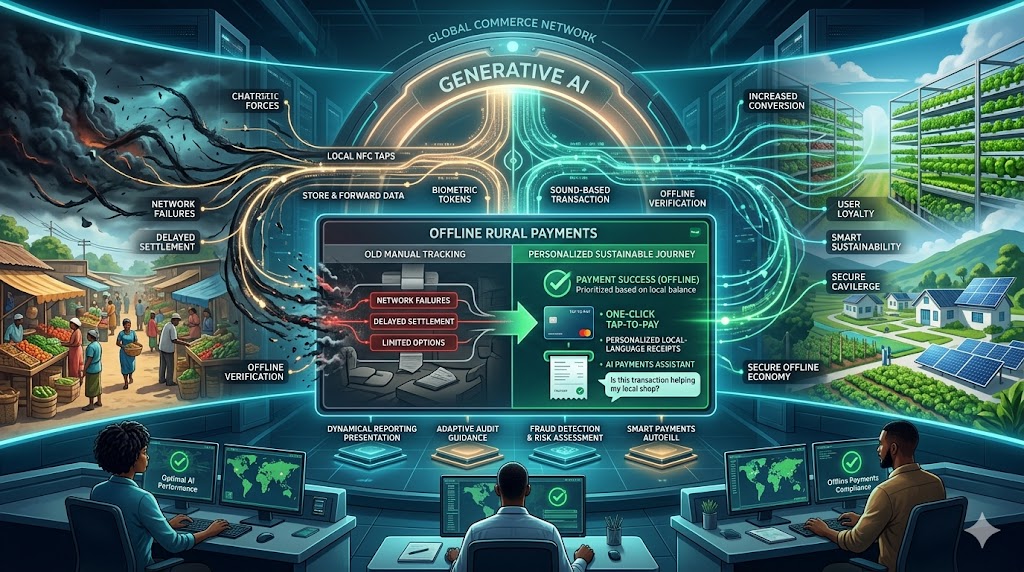
The world is moving toward digital money, but many rural areas still lack fast internet. This creates a big gap for people who want to shop and sell goods. However, new technology is now allowing payments to happen without any data connection. This shift is vital for rural commerce to grow and thrive in 2026. Because these tools are simple and fast, they bring the power of modern trade to everyone. In short, the future of global payments is becoming inclusive and offline.
How Offline payments Secure the Local Economy ?

Why Internet Gaps Slow Down Trade

In many villages, a weak signal can stop a sale in its tracks. Traditional apps often spin and fail when the network is poor. Consequently, many shopkeepers still prefer cash because it never fails. This is because standard payments rely on a constant link to a central bank. Furthermore, customers feel frustrated when they cannot finish a purchase. Therefore, rural markets need a different kind of system to handle their daily payments smoothly.

Another issue is the high cost of data for small transactions. For instance, a farmer might only want to buy a small bag of seeds. If the digital process is too hard, they will stick to physical coins. Thus, the industry is building tools that work over basic radio waves or sound. A smart payments strategy solves this by removing the need for a smartphone. This keeps the local economy moving even in the most remote locations.


Solutions for the Offline Economy

Store-and-forward tech is a vital tool for rural success. This allows a device to collect payments while offline and sync them later when a signal is found. Because this removes the wait time, it builds instant trust between the buyer and the seller. Furthermore, sound-based tech can send encrypted data through a basic phone speaker. This means you can finish your payments just by holding your phone near a small box. In short, commerce wins when the tech fits the environment.

Near-field communication (NFC) cards are also growing fast in rural zones. Instead of a complex app, users just tap a simple plastic card on a merchant’s device. Because these payments are verified locally, they happen in less than a second. Therefore, experts are building low-power networks to support these taps across whole villages. This ensures that the flow of money never stops, even during a power cut. Finally, these offline solutions ensure that digital trade is a real choice for every citizen.


Staying Safe Without the Cloud

Security is the most important part of any offline sale. People often worry if their money is safe when there is no live internet link. Luckily, new AI tools use secure hardware chips to lock every transaction. If someone tries to change the data, the chip stops the process fast. This keeps your payments and your personal balance very safe. Because the tech is so robust, it prevents double-spending without needing a server. Thus, the system stays strong and secure for every rural user.

Additionally, biometric tokens help verify identity without making the process slow. It uses a fingerprint on the card itself to prove you are the owner. When you use these tools, the checkout flow feels very smooth and private. You just tap and go. Therefore, the risk of a mistake or theft is very low. This is the future of payments in a truly connected world. Finally, safety ensures that rural families feel comfortable moving away from cash for good.


The Big Future of Inclusive Trade

We are only at the start of a massive offline shift. Soon, every small stall in the woods or mountains will accept digital money. This means we will see a huge boost in local wealth and savings. Instead of a hard process, we get a tailored world of easy trade for all. Sustainable payments make every transaction feel like a step toward a better life. It is the best way to shop in 2026. If you want to stay ahead, you must use these offline tools now. In conclusion, rural commerce is finally finding its digital voice.


Frequently Asked Questions

1. Can I really pay without any internet?

Yes, new sound-based and NFC tools allow you to finish a sale without a data link.

2. Is my balance updated instantly?

Your local balance is updated on your device, and it syncs with the bank once you find a signal.

3. Do I need an expensive phone for this?

No, many offline systems work with basic feature phones or simple tap-cards.

4. How does the shopkeeper get the money?

The merchant’s device stores the data and clears the funds when they connect to a network later.

5. Is it safer than carrying cash?

Yes, because the digital tokens are encrypted and can only be used with your fingerprint or PIN.


Read More:

Building a Better finance Future with ESG Standards

How a payment gateway Makes Virtual Shopping Seamless?

Why does E-commerce fail at the cross-border checkout?

Bharat QR Explained: Easy Steps for Business

Bharat QR: Get Started for Business Growth

India’s economy is growing very fast. Therefore, businesses must adopt quick, digital payment methods. The Bharat QR Code is a major step in this direction. It is not just another payment option. Instead, it is a single, unified QR code system. The National Payments Corporation of India (NPCI) launched it. It was made with big card networks like Visa, Mastercard, and RuPay. This system helps Indian businesses accept payments easily. Furthermore, it helps businesses grow by lowering costs and speeding up transactions. This digital solution is critical for small and large businesses alike.

Bharat QR: Get Started for Business Growth

What Makes Bharat QR Different? (Bharat QR)

The core idea behind Bharat QR is universal compatibility. Before this, merchants needed different QR codes. They needed a different code for each mobile wallet or app. This was confusing for both the merchant and the customer. However, the Bharat QR code is an interoperable payment solution. This means one single code can accept payments from many sources.

For example, a customer can use any bank’s mobile app. They can use their linked debit card, credit card, or UPI account to pay. They simply scan the single Bharat QR code. This flexibility is a huge benefit. Consequently, merchants do not miss a sale because they do not support a customer’s specific payment app. This broad acceptance is vital for a growing business. Also, it brings a seamless experience to every customer, which builds loyalty.

Low Cost, High Security: A Win for Indian Businesses (Bharat QR)

Traditional Point-of-Sale (PoS) card machines are costly. They require a hardware purchase. Also, they have maintenance fees and paper costs. The Bharat QR code changes this completely. Merchants only need a smartphone and a printed QR sticker. This dramatically lowers the setup cost. Therefore, it makes digital payment acceptance possible for even the smallest vendor. This is a massive plus for small businesses in rural or semi-urban areas.

Furthermore, security is a key advantage. Payments go straight into the merchant’s linked bank account. This reduces the risk of cash handling, theft, or loss. The customer’s card details are never shared with the merchant. Since the customer authenticates the payment with their mPIN on their own phone, the transaction is extremely secure. Consequently, this increased security builds trust in digital payments. This trust is important for expanding your customer base.

Implementing Bharat QR for Business Growth (Bharat QR)

Implementing Bharat QR is simple and fast. First, you must have a bank account. Then, you contact your bank or a supported payment service provider. They will register you as a Bharat QR merchant. You will get a unique Merchant ID. This ID is embedded in your unique QR code. You can choose a static QR code. This is a printed sticker displayed at your counter. The customer scans it and enters the amount manually. Alternatively, you can use a dynamic QR code. This code is generated on a mobile app or screen for a specific bill amount. The customer scans it, and the amount is already filled in.

For example, a restaurant owner might use a dynamic code to print on the bill. A small shop owner might use a static sticker. In turn, both methods offer fast, instant payments. Payments are often settled immediately via IMPS. This quick turnaround improves the business’s cash flow. Good cash flow is the lifeline of a growing business. Moreover, the easy implementation allows any business to quickly participate in India’s digital economy.

Boosting Customer Experience and Revenue (Bharat QR)

Offering Bharat QR directly impacts customer experience. Customers find it convenient. They do not need to look for an ATM or carry exact change. They simply scan and pay. This speed at the counter reduces waiting times. Shorter queues lead to happier customers. Happy customers are more likely to return.

Therefore, the system directly supports business growth. The use of digital records simplifies accounting and tax filing. All transactions are recorded instantly. This saves manual labor. Furthermore, the ability to accept payments from multiple card networks and UPI through one code means fewer missed sales. The shift from cash to digital records can also help a business apply for bank loans later. Banks favor businesses with clear digital transaction histories. Ultimately, adopting Bharat QR is an essential strategy for any Indian business aiming for long-term growth and better customer service.


Frequently Asked Questions (FAQs)

1. What is the main difference between Bharat QR and UPI QR codes?


Bharat QR is a unified standard. It was created by NPCI, Visa, Mastercard, and RuPay. It can accept payments made via a linked card (debit/credit) or UPI. A simple UPI QR code primarily uses only the UPI system for payment.

2. Does a merchant need a special machine to accept Bharat QR payments?

No. This is one of the biggest benefits. Merchants do not need to invest in expensive PoS machines. All you need is a smartphone and a printed sticker of your unique Bharat QR code.

3. How do payments reach the merchant’s account?

Payments made through Bharat QR are credited directly and instantly into the merchant’s registered bank account. This uses the Immediate Payment Service (IMPS) for fast fund settlement.

4. Is Bharat QR only for large stores, or can small vendors use it too?

Bharat QR is perfect for small vendors. Because it requires minimal hardware and has low setup costs, it is a highly cost-effective solution for micro and small businesses.

5. Is it safe to use Bharat QR?

Yes, it is very secure. The customer’s card or bank details are not shared with the merchant. The customer authorizes every payment using their secure mPIN on their personal mobile device.

Also Read: Blockchain: The Future of Global Payments?