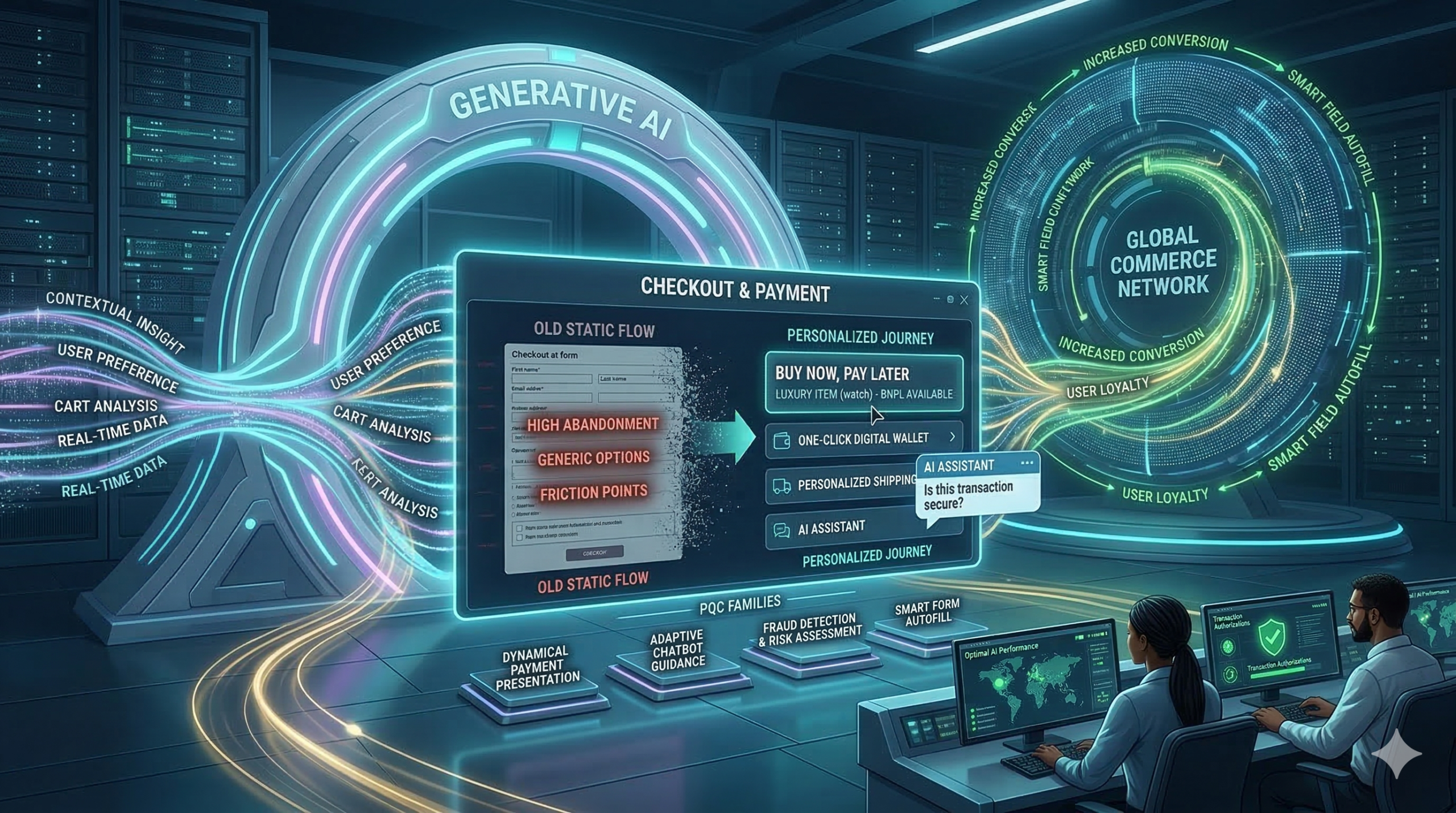
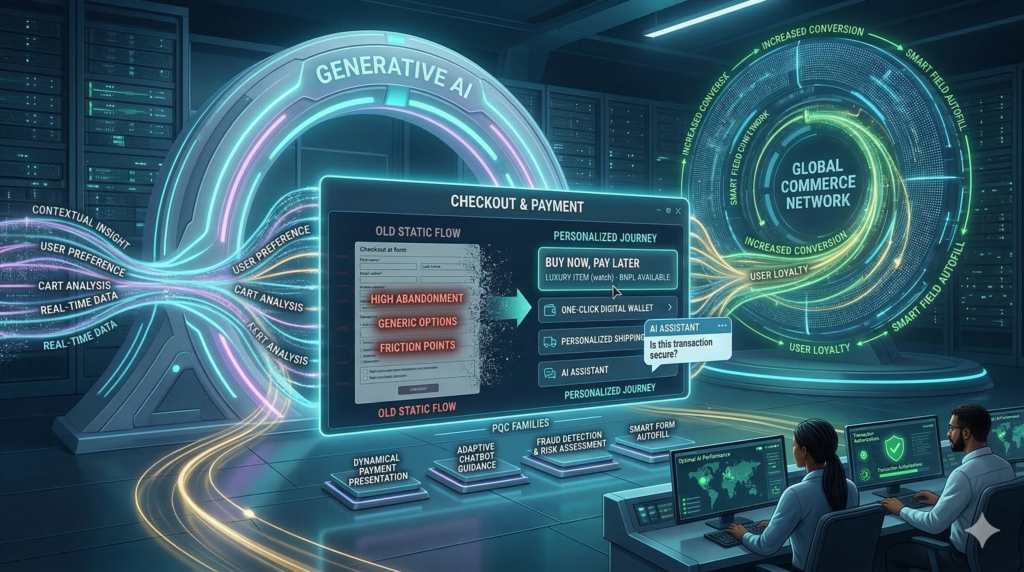
Most online stores lose customers at the final step because traditional checkout pages are often slow and boring. Now, generative ai is changing that forever by creating a personal path for every shopper. Because this technology learns what you like and how you want to pay, buying things online is faster than ever. Furthermore, smart stores use generative ai to turn one-time shoppers into loyal fans. This shift is vital for any brand that wants to grow. Consequently, the payment journey is no longer just a task; it is an experience.
Why Old Checkout Systems Fail
Static forms are the biggest enemy of sales because most shops show the same fields to everyone. Consequently, many people leave their carts empty. This is because the process feels long and hard. Generative ai solves this by making every page unique for the user. For instance, it knows if you are on a phone or a laptop. Furthermore, it predicts which payment method you prefer. Therefore, you spend less time typing and more time enjoying your purchase. In short, it removes the friction that kills sales.
Real-Time Help with Generative AI
Shopping can sometimes feel confusing, especially when you have questions about shipping or taxes. Standard help pages are often hard to find. However, generative ai adds a smart assistant to the page to guide you. This bot answers your questions in seconds. Because the bot knows your cart, it gives perfect advice. This builds trust and keeps you moving forward. In addition, it makes sure you never feel alone while shopping.
Moreover, these bots can offer special deals at the perfect moment. If you hesitate, the generative ai might give you a small discount to help you decide. As a result, shoppers feel valued and safe. It is not just a tool; it is a digital guide. Because of these benefits, top brands are moving to AI today. Therefore, the checkout flow becomes a conversation instead of a form.
Safer and Faster Payments
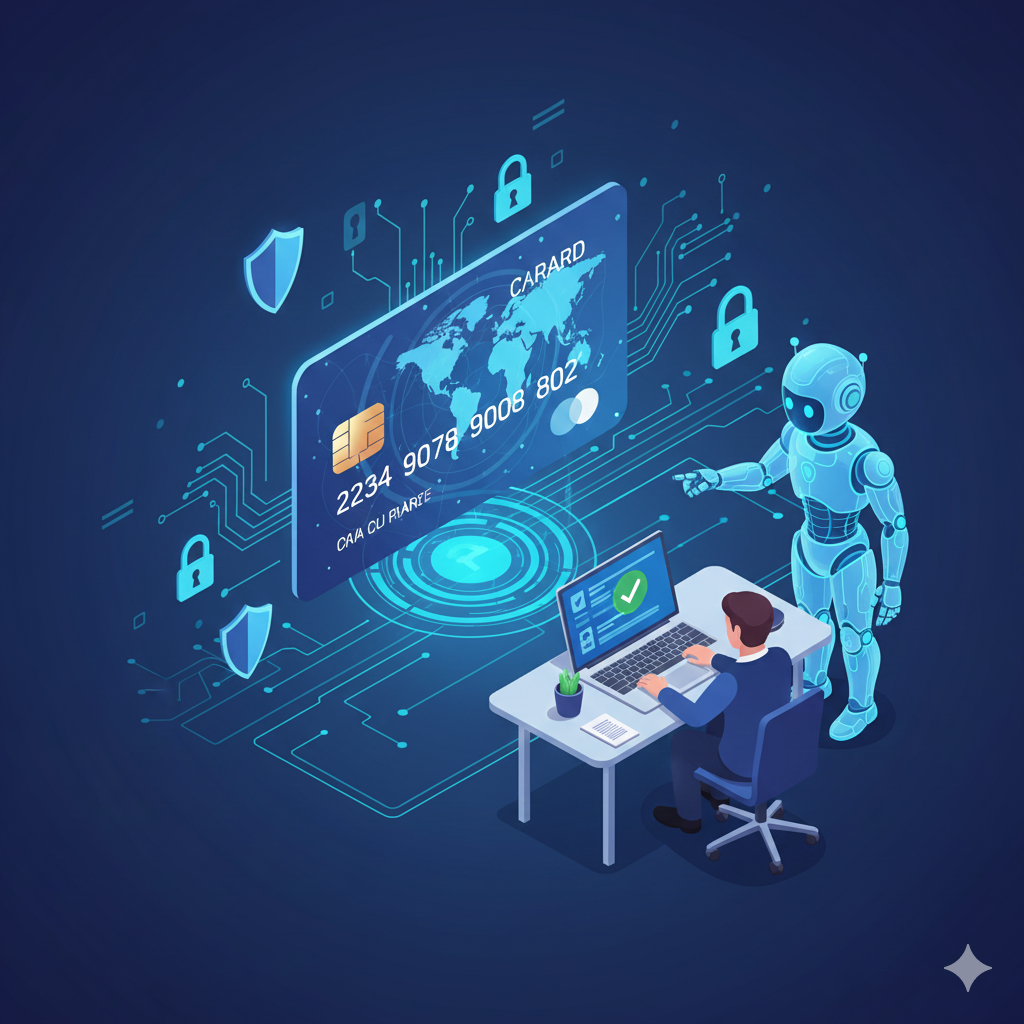
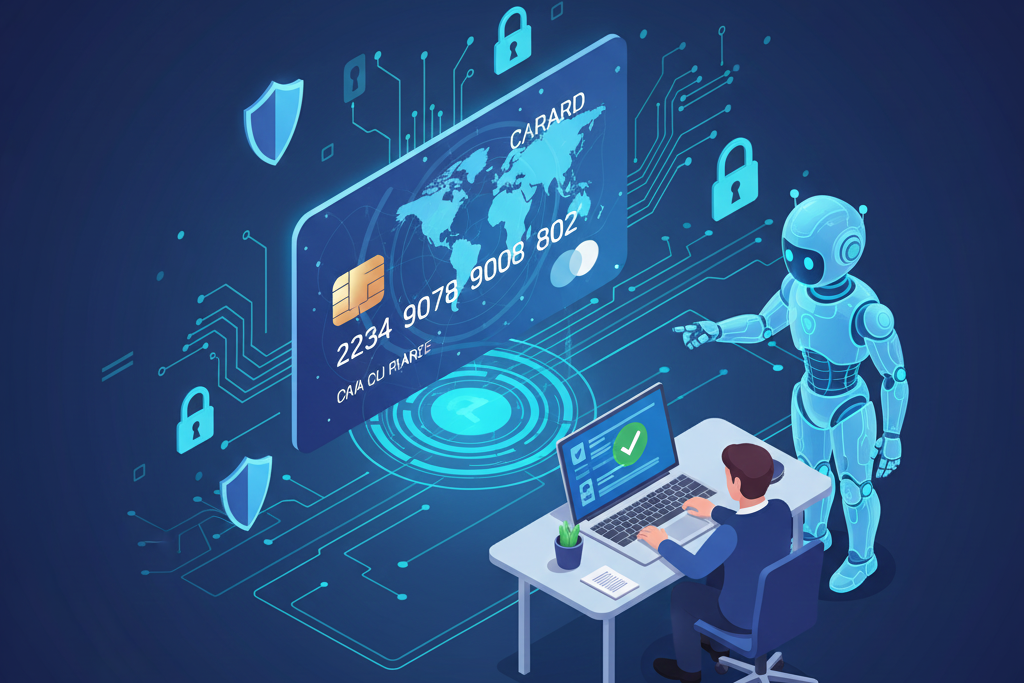
Security is the most important part of any sale because hackers are always looking for ways to steal data. Luckily, generative ai is great at spotting fraud by looking at millions of data points in real-time. If it sees something odd, it stops the threat fast. This keeps your money and data very safe. Because the generative ai is so smart, it rarely blocks real customers. Thus, it makes payment security much stronger for everyone.
Additionally, it helps with filling out forms by guessing your address with high accuracy. This reduces errors and saves time for the customer. When you use it, the checkout flow feels like magic. You just click and go. Therefore, the risk of a mistake is very low. This is the future of generative ai in the payment world. Finally, this technology ensures that safety does not come at the cost of speed.
The Big Future of Generative AI
We are only at the start of this change. Soon, every store will use generative ai to talk to us. It will know our size, our style, and our budget. This means we will see fewer ads we do not like. Instead, we get a tailored world of products. It makes every transaction feel human. It is the best way to shop in 2026. If you want to stay ahead, you must use generative ai now. In conclusion, the personalized payment journey is the new standard for global trade.
Frequently Asked Questions
1. Is generative ai safe for my credit card?
Yes, it improves security by spotting fraud much faster than older systems.
2. Does generative ai make my phone slow?
No, most of the work happens on fast servers, so your phone stays quick.
3. Why do stores need generative ai?
It helps them sell more by making the checkout process easy and personal for everyone.
4. Can generative ai help with returns?
Yes, it can guide you through the return process and answer policy questions instantly.
5. Will all stores use generative ai soon?
Yes, it is becoming the global standard for all top e-commerce websites.
I’ve heard it a thousand times. A nation relies only on one foreign credit card firm. And yet, their local shops pay high fees. Usually, that is just a polite way of saying the country has lost its own power. Also, old bank moves take a long time. They involve too many middle men. If you build a new market on old tracks, you are building a ghost town.
In fact, a system where local tracks handle 80% of deals is worth much more. Furthermore, the biggest cost in 2026 is the lack of links between close nations. This happens when people must carry cash or pay high fees. This path creates a big gap. Because of this, users want a fast and easy way to pay.
The solution lies in a smart way to keep your money power. This turns a national rule into a solid sales tool. This isn’t just a tech shift. Instead, it is a big plan. This helps every person pay in a safe way. Once you use these rules, you will see your local market grow.
1. UPI: The Best Way to Join the Bank
If you aren’t looking at the UPI growth data, you are flying blind. Specifically, India’s UPI has won more of the market for three months in a row. You need to know why this tool works so well. For example, was it the low cost or the ease of use? Smart leaders use the UPI path to see how to reach far away areas. Then, they make mobile plans for their own folks.
Moreover, smart plans allow for a steady gain in the market. This is because they focus on a good user path. By using a top-tier plan, you help your local banks win. This leads to steady gains. It sounds simple. However, most lands are too busy guessing to look at the UPI success.
2. QRIS: Linking Asian Shops Through Scans
The move to regional QR tools is happening faster than we thought. While old tools are slow, QRIS adds cross-border links through one rule. These rules use logic to link many bank nets. These rules act like a smart helper for regional trade.
However, one-country tools are not enough for a big change. The most top-tier stage is a system for many lands. These nets handle tasks like live money swaps. These tools help many banks work as one. Consequently, they act as a smart brain for the whole Asian area.
3. Digital Euro: Keeping Europe’s Money Power
To build smart bank tools, you should not have to glue poor parts together. The Digital Euro aims to use one public coin. Specifically, this uses Europe’s strength to give safe answers to market moves. This means a person can travel with their full data ready to go.
Additionally, think of a case where your phone wallet knows your local spot. It uses safe data to help you buy things fast. This base ensures that your responses to global stress stay strong. Therefore, it stops the friction that slows down your best shops. It helps them finish big deals with fewer errors.
4. The 80/20 Rule for National Payments
If your land spends all its time on foreign nets, you have no time for local growth. You must follow an 80/20 rule. Thus, use local tracks to handle 80% of daily buys. This includes food or bus rides. This leaves the 20% of big global moves to top-tier firms.
Using fast moves helps shops stay on track without cash. AI can even set up fast replies based on simple talk. This allows your shops to work in a flow. They do not have to switch between many tools. This leads to much faster growth.
5. How to Track Your Money Success
If your bank talks about total sales but not local ownership, you need a new plan. Those are vanity marks that hide a weak spot. You can have many deals but no real power in the bank. To know if you are winning, you must track the “Dirty Four”:
Local Ratio: First, how many of your deals stay on your own tracks?
Shop Cost: Next, what is the total fee for every single scan?
Fast Speed: Then, for every coin paid, how fast does it reach the bank?
User Trust: Finally, when phone use grows, does your poor group get help?
Conclusion
How to win the money power race? It shifts from a secret to a system when you pick your goals well. You must set clear goals for the bank. Also, track gains with care using local data. Repeat this for 90 days. Then, growth becomes steady. This helps you spend your budget with trust.
Key Takeaways
First, payment sovereignty helps a nation control its own money because it removes the need for foreign tools.
Therefore, systems like UPI and QRIS serve as a bridge for trade and peace.
Specifically, the Digital Euro wants to give a public way to pay across all of Europe.
Furthermore, the QRIS model is growing fast to link Asian markets through easy scans.
Consequently, these tools allow small shops to take international money while they boost local sales.
In fact, India’s UPI has seen huge growth by making mobile phones the main way to join the bank.
For instance, having one set of rules helps lower the cost of every deal for the user.
Thus, using fast settlement stops the need for slow and very pricey old bank wires.
In addition, using live exchange rates builds quick trust when you travel to other lands.
Finally, keeping data local keeps your money safe and follows all your own laws.
FAQs
Q1: Can small lands afford their own pay tools?
Ans. Yes, tools like QRIS offer low-cost rules that work well for everyone.
Q2: How long before a new tool sees real growth?
Ans. Most systems see real gains and more users within 60 to 90 days of the start.
Q3: Is it better to focus on home use or foreign links?
Ans. Good local tracks work much better than relying on others in every test.
Q4: Will a Digital Euro take away my cash?
Ans. No, but it will act like a safe digital helper for all your phone buys.
Q5: What is the biggest risk for a big pay net?
Ans. Errors or bad data silos can be very bad, so make sure your tool has good backups.
You must watch how Asia is changing the world of money today. Therefore, you should learn about Project Nexus 2026 and its big goals. Truly, moving money between nations can be very slow and very costly. Consequently, you can prepare for a future where payments are instant and very simple.
Many people think that different countries will always have different payment apps. But, the reality is that Asia is building one giant, connected network. Always remember, a fast and easy payment system is a strong signal for any search engine. This ensures that your brand stays modern and your customers stay very happy. This approach requires you to understand the power of real-time transactions. It helps you build a much more agile financial strategy for the long term. It makes your daily international sales feel much more secure and very effective.
Phase 1: The Vision Behind Project Nexus 2026
First, you must understand why a project like Nexus is so vital for Asia. Why do separate national payment systems cause so many problems? Clearly, a lack of connection costs businesses a lot of time and money. Therefore, Project Nexus aims to link all these systems into one superhighway for cash.
The Core Goals of Seamless Payments
Here are several reasons why Nexus is a game-changer for Asia:
Instant Transfers: Money moves between countries in seconds, not days.
Lower Fees: No more high costs for sending or receiving cash across borders.
Greater Access: Even small businesses can trade easily with partners afar.
Boosted Tourism: Travelers can pay with their home app in any Nexus country.
Reduced Fraud: Real-time checks make scams much harder to pull off today.
Financial Inclusion: More people get access to modern banking services.
Search Engine Value: Faster payments improve user experience, boosting SEO.
Truly, Nexus is about much more than just payments; it is about economic unity. But, you must also see how this project affects global trade. This keeps your business flexible and prevents any sudden loss of sales for you. It creates a very professional and high standard for your digital store.
Phase 2: How Nexus Connects Asian Economies
So, how does Project Nexus actually work to link up different nations? Truly, it creates a common “language” that all payment systems can understand. Consequently, you should imagine a single digital bridge connecting many banks and apps. It acts as a direct link for real-time exchange of money and data.
The Technology Behind Cross-Border Payments
Here is how Nexus makes seamless payments happen in 2026:
Standardized APIs: These are digital “plugs” that allow systems to talk to each other.
Central Clearing Hub: A main center processes transactions across different countries.
Common Rules: All participating nations agree on the same set of payment laws.
Real-Time Conversion: Money changes from one currency to another without delay.
High Security Layers: Advanced encryption protects every single transfer today.
Identity Verification: Strong checks ensure only the right person sends or gets money.
Trust Rankings: Efficient systems help your brand gain better search engine authority.
Furthermore, this improves your search engine performance by showing your global readiness. It makes your company look very smart and ready for 2026 market shifts. This ensures that your valuable time is not wasted on old, slow money transfers. It creates a very fast and clear path for your international growth.
Phase 3: Impact on Businesses and Consumers
The third phase involves looking at who wins most from this payment revolution. Clearly, both companies and everyday people will feel the positive changes. Therefore, you should prepare your own business for a new era of fast money flow.
Benefits for Your Global Business
Firstly, small online stores can now sell to customers in other Asian nations with ease. This allows you to reach millions of new buyers without high fees. Secondly, big firms can manage their payrolls and supplier payments much faster.
Furthermore, tourists can travel across Asia and pay with their home country’s mobile app. Also, people sending money home will see lower costs and faster delivery in 2026. Lastly, remember that a seamless payment experience helps your search engine authority and user speed. Truly, Nexus is a game-changer for anyone dealing with money in Asia. It allows you to expand your reach and reduce your costs very fast. This is why top merchants are already planning for this new system.
Phase 4: Challenges and the Road Ahead for 2026
The fourth phase is where you look at the hurdles that Nexus must still jump. Clearly, linking many nations is a huge task with many complex parts. Therefore, you must be aware of the ongoing challenges in 2026.
Overcoming Obstacles to Full Integration
Firstly, getting all countries to agree on one set of rules takes a lot of time and effort. This requires constant talks between many different governments and banks. Secondly, ensuring every system is secure from hackers is a never-ending job.
Furthermore, educating millions of people about using the new system is also vital. Also, the project must integrate with existing payment methods without causing chaos. Lastly, check your search engine ranking to see if modern tech adoption helps your site. Truly, Nexus is a bold vision, but it needs ongoing work to fully succeed. It turns a complex challenge into a series of smart, collaborative wins for Asia. This ensures your business stays sharp and ready for future changes.
Best Practices: Preparing Your Business for Nexus
Finalizing your plan requires you to stay informed and ready for change. It needs you to assess how instant cross-border payments will affect your operations. Clearly, adopting new payment methods can give you a huge competitive edge. Therefore, follow these simple tips to position your business for success in the Nexus era.
Simple Tips for Thriving in the New Payment Landscape
Firstly, keep an eye on which Asian countries are fully integrating with Project Nexus. This helps you target new markets for your products and services today. Secondly, talk to your bank or payment provider about upcoming Nexus features for 2026.
Furthermore, review your current international transaction fees to see where you can save money. Also, educate your customer support team about instant payment options for questions. Lastly, check your search engine data to see if offering diverse payments helps your brand. Truly, a proactive approach is a journey that leads to a much better brand. It builds a path of innovation that lets your whole team grow very fast. This secures your future in the digital world for a long time.
Frequently Asked Questions (FAQs)
Q1: What is Project Nexus 2026?
It’s an initiative to connect various national instant payment systems across Asia, making cross-border payments seamless.
Q2: Which countries are part of Project Nexus?
It aims to include many Asian countries, with early links to nations like Singapore, Thailand, and Malaysia.
Q3: Will Nexus replace existing payment methods like credit cards?
No, it aims to complement them, offering an additional, faster, and often cheaper option for real-time transfers.
Q4: How does Nexus benefit small businesses?
It lowers the cost and complexity of international transactions, making it easier to sell to customers in other Asian countries.
Q5: Does being ready for Nexus impact my website’s SEO?
Yes, offering diverse, fast, and secure payment options improves user experience and signals modernization to search engines.
Handling money online requires a very high level of trust and speed between a business and its customers. Therefore, the rise of AI agents in payment gateway support is a major milestone for the financial industry. Truly, these smart systems are now capable of solving complex transaction issues in a matter of seconds. Consequently, businesses can enjoy much higher uptime and fewer lost sales due to technical errors.
Some people feel that financial support should always be handled by a human being to ensure safety. But, the reality is that AI agents can process data and find errors much faster than any person could. Always remember, a fast and reliable payment process is a strong signal for any search engine to trust your website. This ensures that your checkout page remains smooth and secure for every single user. This approach requires a focus on integrating smart tools into your existing banking stack. It helps you build a much more resilient and profitable online store for the long term. It makes your entire payment infrastructure feel much more modern and very effective.
Phase 1: Drastically Reducing Response and Resolution Times
First, let us look at how automation changes the speed of help when a payment fails. Why is it so important for a payment gateway to respond instantly to a support ticket? Clearly, every minute of downtime can mean thousands of dollars in lost revenue for a merchant. Therefore, AI agents are used to provide immediate answers to the most common transaction questions.
How AI Speed Benefits the Payment Industry
Here are several ways that automated agents improve the support experience:
Instant Error Decoding: AI can instantly explain why a specific credit card was declined.
Real Time Status Updates: Users get immediate info on where their refund is in the banking system.
24/7 Availability: Automated agents provide support at midnight or on holidays without any delay.
Automated Ticket Routing: The AI sends complex banking issues to the right human expert instantly.
Instant Documentation: Users get links to the exact help guide they need based on their error code.
Fraud Alerts: The system can explain a security hold to a customer as soon as it happens.
Transaction Lookups: AI agents find specific payments in a massive database in less than a second.
Truly, this level of speed is essential for maintaining customer confidence in a digital world. But, you must also ensure that the AI can hand off the conversation to a human when things get too complicated. This keeps your support system balanced and prevents customer frustration during sensitive money matters. It creates a very reliable and high standard for your financial brand.
Phase 2: Improving Fraud Detection and Security Communication
So, how does artificial intelligence help keep transactions safe while also helping the customer? Truly, the secret lies in the ability of AI agents to monitor millions of data points for signs of suspicious activity. Consequently, this allows the gateway to stop fraud before it happens while explaining the situation clearly to the user. It acts as a digital bodyguard that also speaks clearly to the people it protects.
Enhancing Security Through Automated Intelligence
Here is how AI agents help manage security in payment support:
Pattern Recognition: The AI spots unusual buying habits that might suggest a stolen card.
Immediate Verification: The agent can trigger a two step check if a login looks strange.
Clear Explanations: Instead of a vague error, the AI tells the user exactly how to verify their identity.
Risk Scoring: Every transaction gets a safety score in real time to prevent chargebacks.
Bot Prevention: Automated systems can tell the difference between a real buyer and a malicious script.
Compliance Monitoring: The AI ensures every support interaction follows strict banking privacy rules.
Search Engine Trust: Secure payment paths improve your search engine reputation and site safety.
Furthermore, this improves your search engine performance by reducing the number of fraudulent links associated with your domain. It makes your brand look very secure and professional to both banks and customers. This ensures that your business stays on the right side of financial regulations while growing your audience. It creates a very safe and stable environment for your digital commerce.
Phase 3: Personalizing the Merchant Experience at Scale
The third phase looks at how gateway providers support the businesses that use their software. Clearly, a small coffee shop has different payment needs than a global software company. Therefore, AI agents use data to provide custom advice to every merchant without needing a huge team of consultants.
Tailoring Support with Intelligent Data
Firstly, the AI agent analyzes the merchant’s sales volume to suggest the best fee structure. This allows the business owner to save money without having to ask for a review. Secondly, the system suggests new payment methods, like digital wallets, based on where the customers are located.
Furthermore, it provides proactive alerts if the merchant’s refund rate starts to climb too high. Also, the tool helps the team set up their checkout page to match the latest search engine optimization trends. Lastly, remember that a personalized support experience leads to much higher merchant loyalty. Truly, AI agents allow gateway providers to act as a partner rather than just a utility. It allows them to provide high level financial coaching to thousands of businesses at once. This is why the best payment platforms are investing heavily in automation in 2026.
Phase 4: Streamlining Onboarding and Compliance Checks
The fourth phase addresses the difficult process of getting a new business approved to take payments. Clearly, the paperwork and background checks can take weeks if they are done manually. Therefore, AI agents are now used to scan documents and verify identities in a fraction of the time.
Accelerating the Path to Your First Sale
Firstly, the AI checks business licenses and IDs for authenticity as soon as they are uploaded. This makes the onboarding process feel fast and modern for the new business owner. Secondly, the system automatically flags any missing information so the merchant can fix it immediately.
Furthermore, the agent guides the user through the technical setup of their API keys and webhooks. Also, it monitors the first few transactions to ensure everything is working perfectly. Lastly, monitor your search engine ranking to ensure your new store is visible to the world. Truly, no-code AI tools make it possible for anyone to start taking payments in just a few hours. It turns a boring legal process into a smooth and helpful digital journey. This ensures your business can start making money as quickly as possible.
Best Practices: Choosing a Gateway with Smart Support
Selecting the right payment partner requires looking at how they handle their technical support. It needs a focus on finding a provider that balances automated speed with human empathy. Clearly, the best gateway for your business is one that uses AI to make your life easier. Therefore, follow these simple tips to find the perfect payment partner today.
Strategies for Selecting a Modern Payment Gateway
Firstly, look for a provider that offers an AI chat agent that can actually solve problems. This saves you from waiting in a phone queue every time a transaction fails. Secondly, ensure the platform provides detailed automated reports on your sales and refund trends.
Furthermore, check if the gateway uses AI to automatically fight false chargebacks on your behalf. This protects your revenue and keeps your merchant account in good standing. Also, use plenty of transition words in your own site copy to keep your customers informed. Lastly, keep an eye on your search engine metrics to see how your checkout speed affects your traffic. Truly, the impact of AI agents on payment support is a huge win for everyone involved in online sales. It builds a foundation of efficiency that lets you focus on your products instead of your payments. This secures your future in the global digital marketplace.
Frequently Asked Questions (FAQs)
Q1: Can an AI agent fix a declined credit card?
An AI agent cannot force a bank to accept a card, but it can tell you exactly why it was declined so you can fix the issue.
Q2: Is my financial data safe when talking to an AI agent?
Yes, reputable payment gateways use the same high level encryption for their AI support as they do for their transactions.
Q3: How does faster payment support help my search engine ranking?
Faster support leads to better user experiences and less site downtime, which are both positive factors for any search engine.
Q4: Will AI agents replace human support in payment gateways?
AI will handle the majority of simple tasks, but humans will always be needed for complex legal and financial disputes.
Q5: Do I need to pay extra for AI-powered support?
Most modern gateways include these automated tools as part of their standard service because it helps them stay competitive.
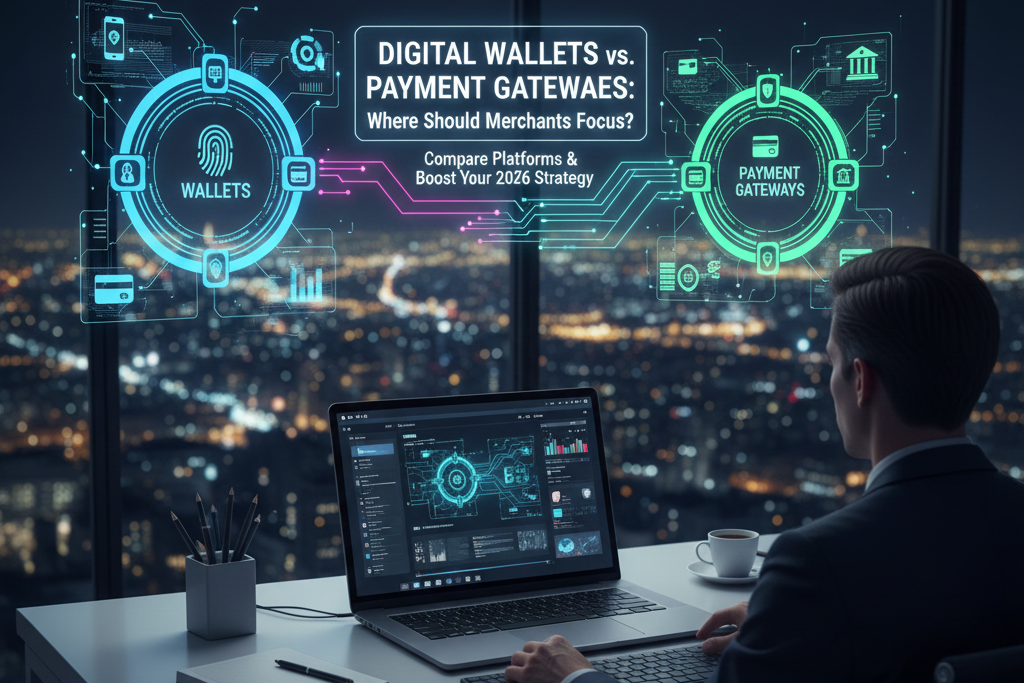
The world of online commerce is moving faster than ever as we look toward 2026. Therefore, choosing the right way to accept money is a critical decision for every business owner. Truly, the debate between digital wallets and payment gateways is becoming a central topic for growth. Consequently, understanding how these two tools work together is the best way to ensure your customers stay happy and loyal.
Some people feel that you only need one or the other to run a successful store. But, the reality is that they serve very different roles in the modern checkout process. Always remember, a smooth payment flow is a top signal for any search engine to trust your website. This ensures that you do not lose customers at the very last second of their journey. This approach requires a clear look at how data and money move through the internet. It helps you build a much more reliable and profitable checkout experience for everyone. It makes your financial strategy feel modern and very secure for the years ahead.
Phase 1: Understanding the Role of the Payment Gateway
First, let us look at the silent engine that powers every online transaction. Why is the gateway considered the foundation of any digital storefront? Clearly, it acts as the bridge between your website and the complex world of banks. Therefore, you cannot accept a single card payment without a strong gateway in place.
Key Features of a Modern Payment Gateway
Here are several things that a gateway does for your business every day:
Data Encryption: It keeps credit card numbers safe as they travel across the web.
Fraud Detection: Smart filters check for stolen cards and risky buyer behavior.
Bank Communication: It asks the customer bank if there is enough money for the buy.
Transaction Routing: It moves the money from the buyer to your merchant account.
Receipt Generation: It sends a digital proof of purchase to the buyer instantly.
Refund Management: It allows you to send money back to customers with ease.
Multi Currency Support: It helps you sell to people in different countries effortlessly.
Truly, a gateway is the invisible guard that keeps your money moving safely. But, it does not hold money itself like a wallet does for a user. This keeps the technical side of the payment separate from the user account. It creates a very stable system for handling thousands of sales every hour.
Phase 2: Why Digital Wallets Are Taking Over the User Experience
So, how do digital wallets change the way people actually buy your products? Truly, the convenience of a wallet like Apple Pay or Google Pay is hard to beat in 2026. Consequently, many shoppers now expect to finish their purchase with just a thumbprint or a face scan. It acts as a digital container for all the payment info a customer needs.
The Benefits of Supporting Digital Wallets
Here is why merchants are focusing more on wallet support this year:
Faster Checkout: Users do not have to type in long card numbers or addresses.
Higher Conversion: Fewer steps at checkout mean more people finish their orders.
Better Security: Wallets use tokens so your store never sees the real card data.
Mobile Optimization: They are built specifically for the billions of phone users.
Biometric Safety: Using a face or finger scan reduces the risk of fake orders.
Local Popularity: Different countries have specific wallets that people trust.
Loyalty Links: Many wallets automatically track rewards and coupons for the user.
Furthermore, supporting these tools can help your search engine visibility among mobile shoppers. It makes your brand look modern and very easy to work with on any device. This ensures that you are meeting your customers exactly where they want to shop. It creates a very friendly and fast environment for every new visitor.
Phase 3: The Synergy Between Wallets and Gateways
The third phase looks at why you actually need both of these tools to succeed. Clearly, it is not a matter of picking one over the other in a modern setup. Therefore, you should look for a gateway that offers deep integration with all major digital wallets.
How These Two Technologies Work Together
Firstly, the wallet provides the payment data to the checkout page. This makes the start of the process very fast for the customer. Secondly, the payment gateway takes that data and sends it to the banking networks for approval.
Furthermore, the gateway provides the security layer that protects the merchant from fraud. Also, the wallet provides the convenience that keeps the customer coming back for more. Lastly, having both ensures that your search engine ranking stays high due to low bounce rates. Truly, they are two sides of the same coin in the world of digital finance. It allows you to offer the best of both worlds: speed and safety. This is why the most successful stores in 2026 are using an all in one approach.
Phase 4: Where Should Your Business Focus for 2026?
The fourth phase is about deciding where to spend your time and budget next. Clearly, your focus should depend on who your customers are and what you sell. Therefore, you must look at your own data to see where the biggest gaps exist today.
Choosing Your Priority Based on Business Type
Firstly, focus on your gateway if you deal with very high transaction volumes. You need the most robust and cheapest processing rates possible to stay profitable. Secondly, focus on digital wallets if you sell mostly to younger people on mobile phones.
Furthermore, invest in a gateway that supports global payments if you want to grow abroad. Also, make sure your wallet options include local favorites like UPI or AliPay. Lastly, monitor your search engine performance to see how checkout speed affects your traffic. Truly, the best focus is a balanced one that prioritizes the user experience above all else. It turns your payment process into a competitive advantage for your brand. This ensures that you stay ahead of other stores that are slower to change.
Best Practices: Optimizing Your Payment Flow
Building a great payment system is a journey that requires constant testing and updates. It needs a focus on making everything as simple as possible for the buyer. Clearly, the fewer clicks a user has to make, the more money you will earn. Therefore, follow these simple habits to keep your store at the top of its game.
Strategies for Long Term Payment Success
Firstly, always offer at least two or three digital wallet options. This gives your users a choice and makes them feel more comfortable. Secondly, choose a gateway with a very high uptime and fast processing speeds.
Furthermore, keep your checkout page clean and free of any distractions. Also, test your payment flow on every possible device to ensure it never breaks. Lastly, track your search engine metrics to see if your site speed is helping your rank. Truly, a great payment setup is the backbone of a healthy digital business. It builds trust with your audience and keeps your cash flow steady. This secures your growth and makes your business much more valuable over time.
Frequently Asked Questions (FAQs)
Q1: Can I use a digital wallet without a payment gateway?
No, a wallet only stores the user data. You still need a gateway to process that data and move the money from the bank to your account.
Q2: Does checkout speed affect my search engine ranking?
Yes, search engines like Google value fast websites. A slow checkout can lead to high bounce rates, which can hurt your overall ranking.
Q3: Which digital wallets are the most popular in 2026?
Apple Pay and Google Pay remain the global leaders, but regional wallets are becoming very important for international sales.
Q4: Are digital wallets safer for merchants than credit cards?
Yes, because they often use tokenization and biometrics, which significantly reduces the risk of chargebacks and fraud.
Q5: How do I know if my gateway is too slow?
You should monitor your cart abandonment rate. If many people leave at the final step, it may be because your gateway is taking too long to load.
Digital money is changing how the world thinks about finance. Therefore, India finds itself at a very major turning point. But, the path for crypto has not been easy or simple. Truly, it is a mix of high interest and strict rules.
Some people see crypto as a great way to pay for things. But, the government has many concerns about safety and stability. Consequently, the rules stay very firm for now. Always remember, India has a very large and tech-savvy population. This ensures that the talk about crypto never really stops. It also means that the future could hold many big changes. This approach to money might look very different in a few years. It could transform how we shop and save every day.
The Current State of Crypto in the Indian Market
First, let us look at where things stand today. Why is crypto so popular yet so regulated? Clearly, millions of Indians already own some form of digital asset. Therefore, the market is already quite massive and active.
Key Factors Defining the Indian Crypto Space
Here are several things that define the current crypto scene in India:
High Tax Rates: There is a thirty percent tax on all crypto gains.
No Deductions: You cannot offset losses against your profits.
TDS Rules: A one percent tax is deducted at the source for every trade.
Banking Hurdles: Some banks are still slow to work with crypto exchanges.
High Adoption: Many young people use crypto as a long-term investment.
CBDC Launch: The RBI has started testing its own digital rupee.
Legal Gray Area: Crypto is not banned, but it is not legal tender either.
Truly, these factors make the market a bit complicated for new users. But, the interest remains very high across the country. This keeps the industry moving forward despite the tough rules.
How Cryptocurrency Payments Work Today: A Slow Shift
So, can you actually use crypto to buy a coffee in India? Not quite yet. Truly, most people use it as an investment like gold. It also serves as a way to store value over time. It acts as a digital version of a savings account for many.
Ways People Use Crypto in India Right Now
Here is how crypto moves through the Indian economy today:
Investment Portfolios: People buy and hold coins on local exchanges.
P2P Trading: Users trade directly with each other using special platforms.
Gift Cards: Some sites let you buy vouchers using digital coins.
Remittances: People send money from abroad using fast crypto networks.
Freelance Pay: Some global workers take their salary in digital assets.
Tech Testing: Developers use crypto to build new decentralized apps.
Educational Trading: Students learn how global markets work using small amounts.
Consequently, crypto is more of a tool for growth than for daily shopping. It helps people grow their wealth in a new way. This ensures they stay connected to global financial trends. It keeps the Indian tech scene very vibrant and modern.
Pillar 1: The Regulatory Framework and Tax Laws
The first pillar is all about the rules set by the government. The Ministry of Finance and the RBI watch crypto very closely. Clearly, they want to protect the rupee and stop financial crimes. Therefore, they have created a very strict tax system for everyone.
Understanding the 30 Percent Tax and 1 Percent TDS
Firstly, know the flat tax rate. If you make money from crypto, you must pay thirty percent to the state. This applies to every single profitable trade. Secondly, track the TDS on every transaction. The one percent TDS helps the government track who is buying and selling.
Furthermore, remember that losses do not help you. In normal stocks, you can use a loss to pay less tax. But, in crypto, you cannot do this at all. Also, report all holdings in your tax returns. Failing to show your crypto can lead to very big fines. Lastly, stay alert for new policy updates. The government might bring a new crypto bill to parliament soon. Truly, the tax laws are the biggest hurdle for users. They make daily payments very expensive and hard to track. This is why most people prefer to hold their assets for a long time.
Pillar 2: The Role of the RBI and the Digital Rupee (e-Rupee)
The second pillar focuses on the central bank. The Reserve Bank of India (RBI) is very cautious about private coins. Clearly, they prefer a digital currency that they can control. Therefore, they have launched the Central Bank Digital Currency (CBDC).
How the e-Rupee Differs from Private Crypto
Firstly, the e-Rupee is legal tender. It is exactly like a paper note but in digital form. You can use it to pay anyone in the country. Secondly, it has the full backing of the state. Unlike Bitcoin, the value of the e-Rupee is always stable.
Furthermore, it uses blockchain technology for safety. This makes the system very fast and very secure. Also, it helps reduce the cost of printing money. Digital notes are much cheaper to manage than paper ones. Lastly, it might replace private crypto for daily use. The RBI wants people to use the e-Rupee for shopping and bills. Truly, the e-Rupee is the official answer to the crypto craze. It offers the speed of crypto with the safety of the rupee. This will shape the road ahead for all digital payments in India.
Pillar 3: The Road Ahead – What the Future Holds
The third pillar is about looking into the future. Will India ever embrace Bitcoin for payments? Clearly, the next few years will be very important for this sector. Therefore, we must look at the likely trends and changes.
Predictions for the Indian Crypto Landscape
Firstly, expect more global cooperation on rules. India is working with the G20 to create common crypto laws. This will make the market safer for everyone. Secondly, watch for more institutional investment. If the rules get clearer, big banks might start offering crypto services.
Furthermore, look for a focus on Web3 and blockchain. India wants to be a leader in blockchain tech, even if it stays careful with coins. Also, anticipate a shift in tax policies. Many experts hope the tax rate will come down to match normal stocks. Lastly, see the rise of hybrid payment systems. We might see apps that use the e-Rupee and crypto side by side. Truly, the road ahead is full of both risks and great chances. It requires a balance between innovation and very strong safety. This ensures the Indian economy stays healthy and strong.
Best Practices: Staying Safe in the Indian Crypto Market
Using crypto in India requires a very careful approach. You must follow the laws and protect your assets. Clearly, the digital world has many scams and risks. Therefore, follow these simple steps to stay safe.
Strategies for Responsible Crypto Management
Firstly, use only registered Indian exchanges. These platforms follow the local laws and verify your identity. This makes your money much safer. Secondly, keep a detailed record of every trade. This is vital for paying your taxes correctly at the end of the year.
Furthermore, never share your private keys or passwords. Scammers often pretend to be help desk workers. Also, diversify your digital assets. Do not put all your money into just one coin or token. Lastly, only invest money you can afford to lose. Crypto prices can go up and down very fast in one day. Truly, being careful is the best way to enjoy the crypto world. It helps you learn without taking too much risk. This ensures a positive experience for every new user in India.
Frequently Asked Questions (FAQs)
Q1: Is it legal to buy Bitcoin in India right now?
Yes, it is legal to buy, sell, and hold Bitcoin in India. However, it is not considered legal tender. This means a shop can refuse to take it as payment for goods.
Q2: How much tax do I pay on crypto profits in India?
You must pay a flat thirty percent tax on all profits from digital assets. Additionally, a one percent TDS is deducted from the total value of every transaction.
Q3: Can I use crypto to pay for my mobile recharge or bills?
Directly using crypto for bills is rare due to tax and legal hurdles. However, some third-party sites allow you to buy gift cards with crypto to pay for such services.
Q4: What is the difference between Bitcoin and the e-Rupee?
Bitcoin is a private, decentralized asset with a volatile price. The e-Rupee is a digital currency issued and backed by the RBI, and its value is always stable.
Q5: Will the Indian government ban crypto in the future?
The government has not announced a ban. Instead, they are focusing on strict regulation and global cooperation to manage the risks associated with digital assets.
Every business wants loyal customers. Therefore, you must look at your checkout process. Often, the payment step is where people leave. But, a smooth experience changes everything. Truly, it makes shoppers feel safe and happy.
Some shops have very slow payment pages. Consequently, they lose money every single day. Always remember, ease of use is a competitive edge. By making payments fast, you show respect for the user. This builds a bond that lasts a long time. It also helps your brand stand out from others. This simple focus leads to much higher sales over time.
The Payment Pain Point: Why Checkouts Fail
First, let us talk about why customers quit. A hard checkout creates a lot of stress. Clearly, users want things to be simple and quick. Therefore, you must remove any barriers that slow them down.
Common Reasons for Abandoned Carts
Here are several things that push customers away from your shop:
Hidden fees that show up only at the very end.
Too many forms that ask for useless data.
A lack of local or modern payment methods.
Security pages that look old or broken.
Slow loading times on mobile phone screens.
Truly, each of these issues kills the mood to buy. But, you can fix them with a few smart changes.
What is a Seamless Payment Experience? Your Guide
So, what does a perfect payment look like? It is a process that feels invisible. Truly, it flows without any stop or hesitation. It gives the user total peace of mind. It acts as a bridge to a long-term relationship.
Key Elements of a Great Checkout Flow
Here is what makes a checkout feel effortless for everyone:
Speed. The page must load in a blink.
Clarity. All costs are shown right at the start.
Choice. People can pay with cards or digital wallets.
Safety. High trust marks are visible on every page.
Simple forms. Only ask for what is truly needed.
Consequently, when these parts work, the customer feels great. They trust your shop more than others. This trust turns into loyalty very quickly.
Pillar 1: Speed and Simplicity for Instant Trust
The first pillar is all about moving fast. A slow page makes people doubt your tech. Clearly, speed equals professional quality in the modern world. Therefore, you should optimize every single script on your site.
Making the Checkout Fast and Easy
Firstly, cut down the number of clicks. If you can use one page, do it. Secondly, use tools that save card info safely. This helps returning fans buy in one click.
Furthermore, check your mobile speed every week. Most people shop on their phones now. Also, use large buttons that are easy to tap. Lastly, avoid pop-ups during the payment step. These distract the user and cause errors. Truly, a lean and fast checkout is the best gift for a buyer. It makes the whole trip feel like a breeze.
Pillar 2: Security and Transparency for Confidence
The second pillar is about being open and safe. People fear for their data today. Clearly, you must prove that your site is a fortress. Therefore, show your security tools with clear icons and text.
Building Peace of Mind with Honest Pricing
Firstly, tell people about shipping costs early. Do not wait for the final screen. Secondly, use a well-known payment provider. This gives the user instant comfort.
Furthermore, explain how you protect their private data. A short note can make a big difference. Also, provide a clear link to your refund policy. This lowers the risk for the buyer. Lastly, send a clear email receipt right away. This confirms the deal is done safely. Truly, when people feel safe, they spend more money. They also feel good about coming back to your store.
Pillar 3: Choice and Personalization for the User
The third pillar is all about meeting specific needs. Every shopper is a bit different. Clearly, one size does not fit all in payments. Therefore, offer a mix of ways to finish the sale.
Adapting to What Your Customers Love
Firstly, offer digital wallets like Apple Pay. These are very popular and very fast. Secondly, let people buy without making an account. This is called guest checkout and it works wonders.
Furthermore, show prices in the local currency of the user. This removes the need for mental math. Also, suggest the best payment method based on their device. Lastly, offer a “buy now, pay later” option for big items. This makes your products more reachable for many people. Truly, giving choices makes the customer feel in control. It shows that you value their specific habits. This care creates a very strong sense of loyalty.
Best Practices: How to Keep Improving Every Day
Setting up a gateway is just the start. You must keep testing your checkout often. Clearly, small tweaks can lead to big wins. Therefore, make a habit of checking your data for any new friction.
Tips for Growing Your Loyalty Through Payments
Firstly, watch where people drop off in the funnel. Fix those specific pages first. Secondly, ask your best customers for feedback on the checkout. They will tell you the truth.
Furthermore, stay on top of new payment trends. If a new wallet becomes popular, add it fast. Also, run A/B tests on your button colors and text. Sometimes a green button beats a blue one. Lastly, make sure your support team can help with payment errors. A quick fix can save a sale and a friend. Truly, staying focused on the user leads to the best results. It keeps your business healthy and your fans happy.
Frequently Asked Questions (FAQs)
Q1: Why is guest checkout so important for loyalty?
It removes the biggest wall for new shoppers. Once they see how easy it is to buy from you, they will likely make an account later on.
Q2: Do security icons really help with sales?
Yes, they do. Visual marks give a sense of safety. Even if users do not click them, seeing them lowers their guard and builds instant trust.
Q3: How many payment methods should I offer?
You should offer at least three or four. Include credit cards, a major digital wallet, and perhaps a local option. This covers the needs of most shoppers.
Q4: Does page speed affect my search engine rank?
Yes, it does. Google likes fast sites. A fast checkout keeps users on your site longer. This tells search engines that your site is high quality.
Q5: Can I offer “buy now pay later” for small items?
Yes, you can. It helps people manage their cash flow. Even for smaller sales, it can make the choice to buy much easier for the user.