How CBDCs protect national trade in a world of sanctions?

How CBDCs protect national trade in a world of sanctions?

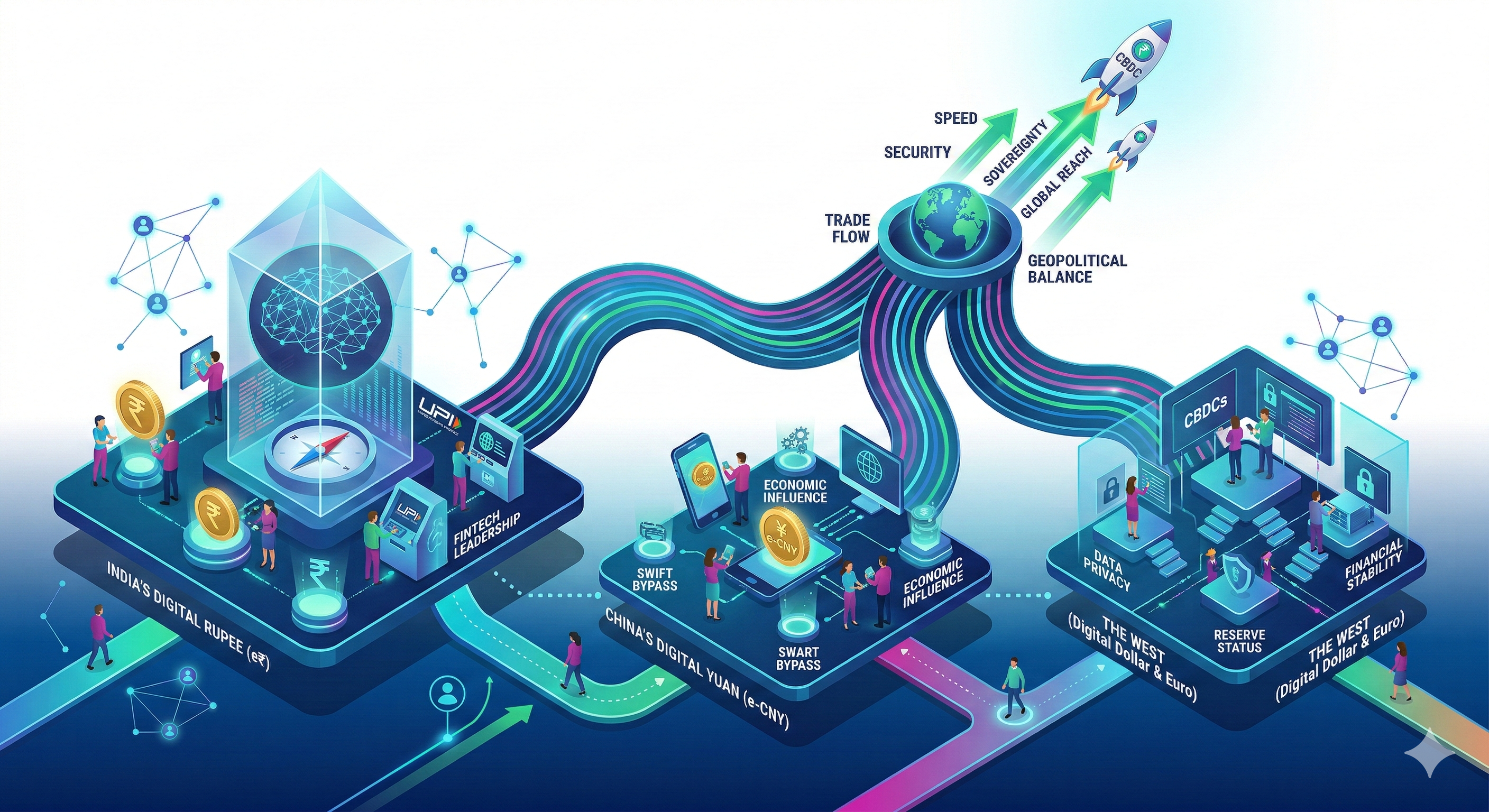
The global financial map is shifting as physical cash turns into digital code. Central Bank Digital Currencies are no longer a future dream but a present reality. Specifically, the race to build a digital currency is a high-stakes game of power. Nations are moving away from old systems to gain a strategic edge. Therefore, understanding the rise of CBDCs is vital for any global observer. This change will redefine how countries trade and interact for decades. You will see a clear shift in influence by following this deep and technical trend.

China’s Lead and the Digital Yuan Push

China is currently leading the race with its digital yuan, also known as the e-CNY. Specifically, the goal is to create a model for CBDCs that rivals the US dollar. By moving first, China can set the rules for how digital money flows across borders. Furthermore, this system allows them to bypass traditional Western banking networks like SWIFT. You might see a future where regional trade is settled entirely in digital yuan. This puts their economic growth on a very fast and independent path. Similarly, it acts as a tool of soft power to bring partners into their digital sphere.

India’s Digital Rupee and the UPI Success

India is taking a very smart and calculated path with its Digital Rupee. Building on the massive success of UPI, India seeks a strategy for CBDCs that balances innovation with safety. The Digital Rupee aims to reduce the high cost of printing and managing physical cash. Specifically, it offers a secure way for millions to join the formal economy instantly. Furthermore, India’s tech strength ensures that their system is both scalable and highly efficient. You should know that this move strengthens India’s spot as a global fintech leader. It ensures that the nation stays sovereign in a world of digital assets.

The West and the Struggle for the Digital Dollar

The West, led by the US and the Eurozone, is moving with more caution. There is a deep worry about how a shift toward CBDCs might affect privacy and bank stability. However, the risk of doing nothing is far too high for these major powers. If the US dollar loses its digital edge, it could lose its status as the world’s reserve currency. Therefore, the Federal Reserve and the ECB are testing systems that protect user data while staying fast. Specifically, they want a digital dollar that remains the gold standard for global trade. This journey is key to maintaining Western influence in the coming years.

The Impact on Global Trade and Sanctions

The rise of digital money changes how nations use economic pressure. In the past, blocking a country from global banks was a final and heavy blow. Now, a multi-polar world of CBDCs makes those blocks less effective. If two nations use a shared digital ledger, a third party cannot easily stop the flow. Furthermore, this leads to faster and cheaper cross-border payments for everyone. You will find that these tools reduce the friction of old money rules. Consequently, it sparks a new era of trade where speed is the ultimate advantage. This shift turns digital code into a real shield against foreign pressure.


FAQs

1 What exactly is a CBDC?

It is a digital form of a country’s national currency, issued and backed by the central bank.

2 How does it differ from Bitcoin?

Specifically, CBDCs are centralized and stable, while Bitcoin is private and its value changes often.

3 Can these digital coins replace the US dollar?

Indeed, if enough nations use different CBDCs for trade, the dollar’s global power could shrink.

4 Is my privacy safe with a digital rupee?

Central banks are building CBDCs that aim to balance your privacy with the need to stop financial crime.

5 Why is the race for these tools so fast?

Nations want to reduce their reliance on foreign systems and lead the future of global finance.


Read More:

How A Strong Payment Infrastructure Builds Global Soft Power

How a Trade Agreement Protects Your Brand in New Markets

Data Sovereignty for Payment Providers: A Complete Guide

How a Trade Agreement Protects Your Brand in New Markets

How a Trade Agreement Protects Your Brand in New Markets

The world of global commerce is moving at a very fast pace today. Modern firms must look toward a smart and flexible leader to stay ahead. Specifically, a trade agreement like RCEP now changes how money moves across borders. This shift offers a clear map for success and a very professional way to work. Therefore, knowing how a trade agreement affects your digital growth is a vital step for your firm. This move is not just a trend for small teams. In fact, it is a very smart investment for any brand today. Consequently, a smart choice helps you build a future proof brand name. You will see a clear gain by following this powerful and strategic lead.

How a Trade Agreement Protects Your Brand in New Markets

Breaking Down Barriers with a Regional Trade Agreement

Many firms find that turning a big plan into real work is very hard. However, a major trade agreement helps to bridge this gap between strategy and action. Traditional ways are often too expensive and slow for most small firms. Specifically, poor digital flow can hide many deep and dark costs of old manual habits. By following a solid trade agreement, countries agree to lower these hurdles. Furthermore, finding a top tool that works across many borders is rare. You also miss out on fast moves while your output stays low. Similarly, a unified trade agreement ensures your payment tech stays for the long term. This helps your growth move forward at a steady pace.

Setting a Gold Standard for Digital Payments

The journey to the top begins when you pick a dedicated tech partner. At this stage, you might wonder why a local pick often fails you globally. These new tools must act as your top guide on a steady basis. A trade agreement ensures your tech and its true worth match your global goals. They are built to spark fast progress in every single project. You should also know that an executive trade agreement offers more than a simple tax cut. While a solo human just finishes a task, these rules guide your whole path. Furthermore, they move firms past the fear of bad tech choices early. This approach starts very strong by setting a gold standard for all.

Scaling Fast with Unified Payment Rules

After you join the model, the goal shifts to gaining big wins. One of the top wins of expert help is getting dedicated guidance. The reality of a modern trade agreement then delivers a very custom plan for your firm. This path matches what you need and how you act every day. Therefore, if a project starts, you get fast and clear focus. You also gain access to a very diverse and deep skillset. This includes design, dev, and very deep digital security through smart systems. Access to these skills keeps all your users very happy and safe. It also shows you know your specific needs in a tough market.

How a Trade Agreement Drives Real Business Value

As a firm’s tech grows, a strategic lead helps you find new ways. At this stage, the focus on a trade agreement builds a very strong architecture. This plan is specific to what the modern user likes and wants. For example, some might get a faster way to find new items. The timing of these moves is very key for your success. Furthermore, the leader handles all your vendors and developers with ease. This ensures your project plan is solid from the very first step. Such smart timing helps firms move toward a big global win. Smart leaders push for more scale every single year for you. Indeed, the right trade agreement reveals who is truly ready.

Turning Insights into a Sustainable Content Edge

Data is the backbone of all smart marketing and content success today. The way you handle a trade agreement constantly tracks how every user acts with your tech. This includes how they read and share your posts or apps. These facts help refine the paths for every brand you lead. Therefore, the system learns and grows over time to serve you better. This data driven path ensures the best results for your firm. It also prevents any bad risks from hurting your brand name. Smart leadership relies on real facts to win every single time. Your plan and focus are too important to risk at any step. The core of your strategy is about long term brand health.

Joining Human Talent with Efficient Tech Systems

For the best results, smart tech joins your team in a seamless way. This link ensures all facts stay in one place for your team. Managers and teams share the same live info to move faster. This stops double work and missed ideas for new products or sales. The system provides a full view of every piece you need. Consequently, it supports personal touches at every single step of the way. Your strategy works best when you see a trade agreement joined with intelligent tools. It sets a strong base for your future success in any market. Thus, picking the right tech head is about building a real team.

Conclusion and the Path Forward for Your Firm

The future of your tech is too important to leave to chance. Today, you can gain a top expert view of how a trade agreement helps you without the huge cost. This smart move helps you scale faster and much smarter too. It turns your tech into a real win for your brand name. You will see more growth and less stress every single day. Therefore, you should act now to secure your spot in the market. Knowing the truth of quality leadership leads to true success. It is the best way to ensure your success for many years. You will find that the right leader makes all the difference.


FAQs

1 What is the main goal of a trade agreement?

It helps countries trade more easily by cutting taxes and making rules the same.

2 How does it help digital payments?

It creates a set of rules that lets apps and cards work in many countries at once.

3 Are these rules hard to follow?

No, they often make the work easier by giving you one clear path to follow.

4 Does it help small firms?

Specifically, it helps small firms reach global buyers without high costs.

5 Why is this a smart move for my brand?

It builds a strong base for your future growth and keeps your brand safe.

Read More:

Data Sovereignty for Payment Providers: A Complete Guide

Why scaling like BRICS nations is the new global goal?

AI in Payments: A New Geopolitical Battleground

$\text{AI in Payments: Smart Fraud Detection \& Personalized Checkout}$

AI in Payment: Smart Fraud Detection & Personalized Checkout

The world of payments is changing fast. Artificial Intelligence is the main reason for this big change. Old ways of checking for fraud and generic checkouts are now ending. Now, AI in payments starts a new era of safety and custom service. This shift helps both businesses and shoppers. AI does everything from protecting against smart cyber threats to making unique shopping trips. Clearly, AI in payments is not just a future idea. It is now a key part of financial systems everywhere. Therefore, all businesses must understand how AI changes payment rules. This action is crucial to stay secure and customer-focused. This technology is truly the future of smooth and safe transactions.

AI in Payments: Smart Fraud Detection & Personalized Checkout

Smart Fraud Detection: AI Keeps Your Money Safe

AI in payments helps a lot with detecting and stopping fraud. This use is truly the most important one. Old fraud systems used simple rules. Fraudsters could easily beat these simple rules. Conversely, AI uses strong learning programs to check huge amounts of data in real-time. Thus, it finds small patterns, strange actions, and odd behaviors that people or old systems would miss. For instance, AI learns a customer’s normal spending. It checks their usual buying places and devices. Therefore, if a sale looks odd—like a big buy from a new device in a different country—the AI flags it fast.

This smart fraud detection limits false positives greatly. This means your normal sales are not blocked often. This fact makes the customer feel happier. At the same time, it lowers the money lost by businesses. Because AI in payments learns from every new payment, it always gets better at being accurate. It stays ahead of new ways to commit fraud. Thus, a strong, smart guard protects every payment you make. This builds great trust and security throughout the whole payment process.


Proactive Protection: Checking Risk in Real-time

AI in payments does more than find old fraud signs. It also manages risk assessment in real-time. This quick action lets businesses judge the danger of each sale as it happens. It makes instant choices that protect everyone. AI programs review hundreds of facts right away: the sale amount, where it came from, the device used, past actions, and even how quickly the data was typed.

This real-time intelligence lets payment systems give a quick risk score to every sale. High-risk sales might face extra checks or be denied. Low-risk sales, on the other hand, move forward with no trouble. This exact checking lowers false denials. False denials upset honest customers and lose money for the business. As a result, this system is very finely tuned. It approves most good sales quickly while stopping fraud. All this is possible thanks to the smart power of AI in payments.


Personalized Checkout: Making Customers Happy

AI helps with more than just fighting fraud. It greatly improves the customer’s journey through personalized checkout. AI looks at what a customer bought before. It checks what they looked at and what payment methods they like. Then, AI quickly changes the checkout process for that person. Consider a customer who visits an online store again. AI remembers their favorite card. It fills in their address. Furthermore, it even shows them payment choices (like Buy Now, Pay Later) that they used before.

This personalized checkout makes buying easier. It makes the process faster. Also, it increases the number of finished sales greatly. For businesses, this means fewer abandoned carts and much happier customers. Furthermore, AI can smartly suggest other items to buy during checkout. These suggestions are based on that person’s history. Consequently, this simple act raises the average order value. By making the payment process feel easy and made just for them, AI in payments builds loyalty and encourages repeat business.


AI is Key to Future Payments

AI in payments is now necessary; it is not just a nice feature but also handles smart fraud detection and checks risk in real-time. It also builds highly personalized checkout experiences. AI is silently powering all modern financial dealings. For businesses, this means strong protection, lower costs, and much better customer happiness. For shoppers, it means quicker, safer, and simpler ways to pay. Since online buying will keep growing, smart AI programs will remain vital. They will be the silent helper in every successful sale, driving new ideas and securing the future of payments.


Frequently Asked Questions (FAQs)

1. How does AI improve fraud detection over traditional methods?

AI uses machine learning to check huge amounts of data for small, changing patterns. Traditional systems often miss these patterns. AI learns from new fraud attempts, making it more successful.

2. What is “real-time risk assessment” in payments?

It is the AI’s ability to instantly check the risk of each sale. It uses facts like the device, location, and history. This process lets the system make quick choices like approval or denial.

3. Can AI truly personalize the checkout experience?

Yes. AI checks a customer’s history and preferences. Then, it quickly shows their preferred payment options. It also fills in details. This makes the checkout process much faster and easier.

4. Does AI in payments only benefit large corporations?

No. Payment systems and FinTech groups are making AI tools available for all businesses. This helps small and medium-sized businesses compete fairly.

5. What are the main benefits of using AI in payments for a business?

The biggest benefits are far fewer fraud losses, higher transaction approval rates, and a happier customer base due to a smoother checkout.

Also Read: BNPL (Buy Now, Pay Later): Opportunities & Risks for Merchants