
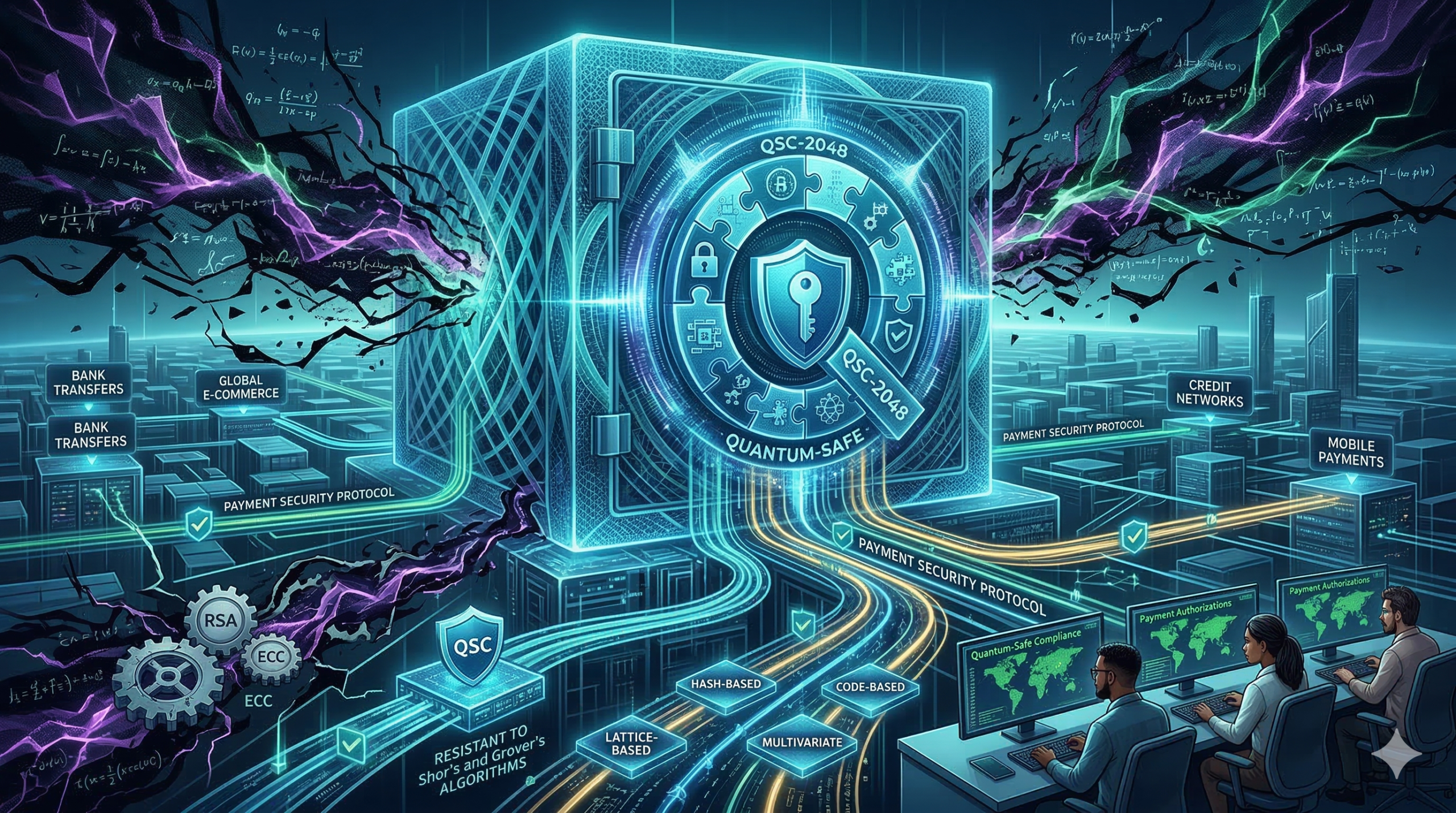
The rapid development of quantum computers creates a massive risk for global finance. Currently, most banks use encryption like RSA, which relies on math that is too hard for normal computers to solve. However, a quantum machine can crack these codes in just minutes. This is why we must adopt quantum-safe cryptography to protect payment security before these machines become common. Because the entire digital economy relies on trust, a single breach could cause a global collapse. Therefore, the race to secure our financial data is already moving at full speed.
The Rising Threat to Digital Money
A quantum computer does not work like a laptop. It uses qubits, which allow it to try millions of paths at the exact same time. This speed means that hackers could soon bypass the walls that keep our money safe. If we do not upgrade our systems, payment security will become a thing of the past. The threat is not just in the future; it is happening now through “harvesting” attacks.
Criminals are currently stealing locked data with the plan to open it later. They know that once they have a quantum machine, they can unlock years of old bank records. Consequently, we cannot wait for the technology to arrive. We must strengthen payment security today to prevent these future leaks. This proactive shift is the only way to maintain long-term consumer confidence.
What is Quantum-Safe Technology?
Quantum-safe math is designed to be so complex that even a quantum brain cannot find the answer. It uses different geometric and algebraic structures that do not have “shortcuts” for quantum algorithms. By moving to these new methods, we ensure that payment security remains intact for decades to come.
There are three main types of math that experts are testing right now:
- Lattice-based Math: This hides data in a massive, multi-dimensional grid of points.
- Code-based Math: This uses the science of error-correction to scramble and lock sensitive files.
- Hash-based Signatures: This creates a digital “fingerprint” that is almost impossible to replicate or forge.
Building a Resilient Financial Future
The move to new standards is a major task for the world’s banks. It requires a concept called “crypto-agility.” This allows a bank to update its code without needing to rebuild its entire software suite. When a system is agile, it can adopt new payment security tools as soon as they are ready. This flexibility is vital because the hackers will never stop looking for new ways to get in.
Furthermore, global groups like NIST are already picking the best math to use. Banks must follow these standards to ensure they can talk to each other safely. If one bank uses old math while another uses new math, the system breaks. Thus, unity in payment security is just as important as the technology itself. We must work together to build a wall that no computer can climb.
Conclusion
The future of our economy depends on how we handle the quantum threat. By focusing on payment security now, we can stop the “cryptographic apocalypse” before it starts. It is a slow and difficult journey, but it is necessary for a safe digital world. Companies that lead this change will be the ones that people trust with their money. Ultimately, payment security is the foundation upon which the next century of trade will be built.
Frequently Asked Questions
1. Is my bank account at risk right now?
No, powerful quantum computers do not exist yet. However, we need to upgrade now to stay safe in the future.
2. What does “Harvest Now, Decrypt Later” mean?
It means hackers steal your locked data today so they can open it in a few years with a quantum machine.
3. Will new security make my payments slower?
Some new math is slower, but experts are picking the fastest ones to keep your experience smooth.
4. Can a normal computer run quantum-safe security?
Yes, these new rules are designed to run on the phones and laptops we use today.
5. How does this affect global payment security standards?
It forces every bank to move to a new, shared language of math that quantum machines cannot understand.
Read More:
Why Europe Now Dictates Global Payment Standards?
How the new digital payments landscape is ending US dollar dominance?
Why a global UPI network is the new South-South trade rail?
