How Offline payments Secure the Local Economy ?

How Offline payments Secure the Local Economy ?

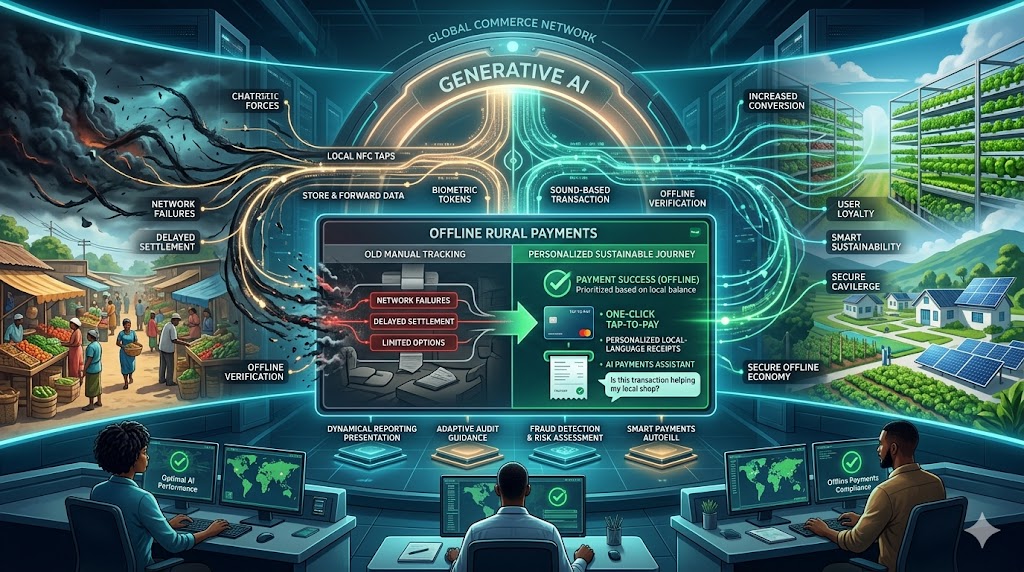
The world is moving toward digital money, but many rural areas still lack fast internet. This creates a big gap for people who want to shop and sell goods. However, new technology is now allowing payments to happen without any data connection. This shift is vital for rural commerce to grow and thrive in 2026. Because these tools are simple and fast, they bring the power of modern trade to everyone. In short, the future of global payments is becoming inclusive and offline.
How Offline payments Secure the Local Economy ?

Why Internet Gaps Slow Down Trade

In many villages, a weak signal can stop a sale in its tracks. Traditional apps often spin and fail when the network is poor. Consequently, many shopkeepers still prefer cash because it never fails. This is because standard payments rely on a constant link to a central bank. Furthermore, customers feel frustrated when they cannot finish a purchase. Therefore, rural markets need a different kind of system to handle their daily payments smoothly.

Another issue is the high cost of data for small transactions. For instance, a farmer might only want to buy a small bag of seeds. If the digital process is too hard, they will stick to physical coins. Thus, the industry is building tools that work over basic radio waves or sound. A smart payments strategy solves this by removing the need for a smartphone. This keeps the local economy moving even in the most remote locations.


Solutions for the Offline Economy

Store-and-forward tech is a vital tool for rural success. This allows a device to collect payments while offline and sync them later when a signal is found. Because this removes the wait time, it builds instant trust between the buyer and the seller. Furthermore, sound-based tech can send encrypted data through a basic phone speaker. This means you can finish your payments just by holding your phone near a small box. In short, commerce wins when the tech fits the environment.

Near-field communication (NFC) cards are also growing fast in rural zones. Instead of a complex app, users just tap a simple plastic card on a merchant’s device. Because these payments are verified locally, they happen in less than a second. Therefore, experts are building low-power networks to support these taps across whole villages. This ensures that the flow of money never stops, even during a power cut. Finally, these offline solutions ensure that digital trade is a real choice for every citizen.


Staying Safe Without the Cloud

Security is the most important part of any offline sale. People often worry if their money is safe when there is no live internet link. Luckily, new AI tools use secure hardware chips to lock every transaction. If someone tries to change the data, the chip stops the process fast. This keeps your payments and your personal balance very safe. Because the tech is so robust, it prevents double-spending without needing a server. Thus, the system stays strong and secure for every rural user.

Additionally, biometric tokens help verify identity without making the process slow. It uses a fingerprint on the card itself to prove you are the owner. When you use these tools, the checkout flow feels very smooth and private. You just tap and go. Therefore, the risk of a mistake or theft is very low. This is the future of payments in a truly connected world. Finally, safety ensures that rural families feel comfortable moving away from cash for good.


The Big Future of Inclusive Trade

We are only at the start of a massive offline shift. Soon, every small stall in the woods or mountains will accept digital money. This means we will see a huge boost in local wealth and savings. Instead of a hard process, we get a tailored world of easy trade for all. Sustainable payments make every transaction feel like a step toward a better life. It is the best way to shop in 2026. If you want to stay ahead, you must use these offline tools now. In conclusion, rural commerce is finally finding its digital voice.


Frequently Asked Questions

1. Can I really pay without any internet?

Yes, new sound-based and NFC tools allow you to finish a sale without a data link.

2. Is my balance updated instantly?

Your local balance is updated on your device, and it syncs with the bank once you find a signal.

3. Do I need an expensive phone for this?

No, many offline systems work with basic feature phones or simple tap-cards.

4. How does the shopkeeper get the money?

The merchant’s device stores the data and clears the funds when they connect to a network later.

5. Is it safer than carrying cash?

Yes, because the digital tokens are encrypted and can only be used with your fingerprint or PIN.


Read More:

Building a Better finance Future with ESG Standards
How a payment gateway Makes Virtual Shopping Seamless?

Why does E-commerce fail at the cross-border checkout?

Why does E-commerce fail at the cross-border checkout?

Why does E-commerce fail at the cross-border checkout?

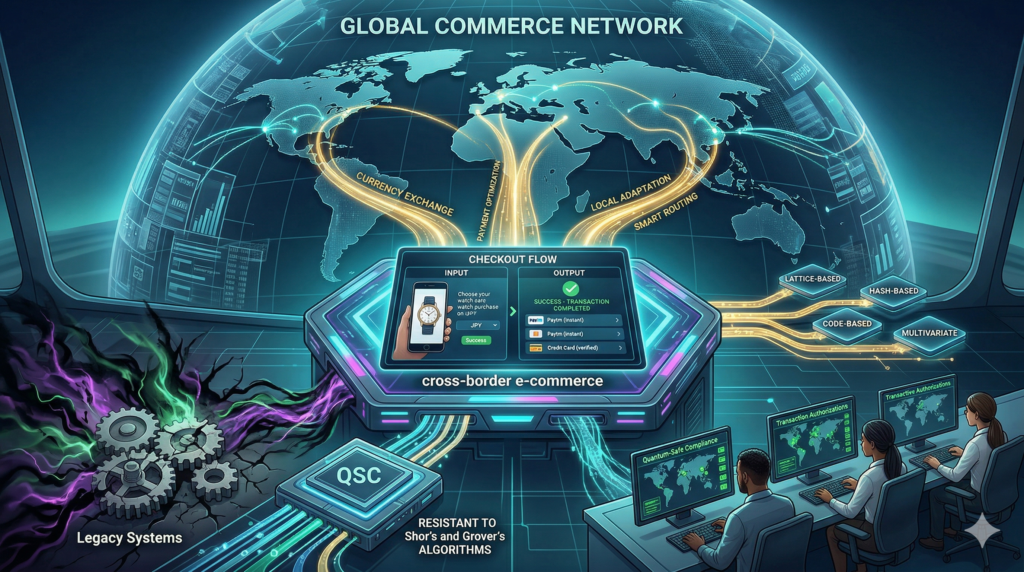
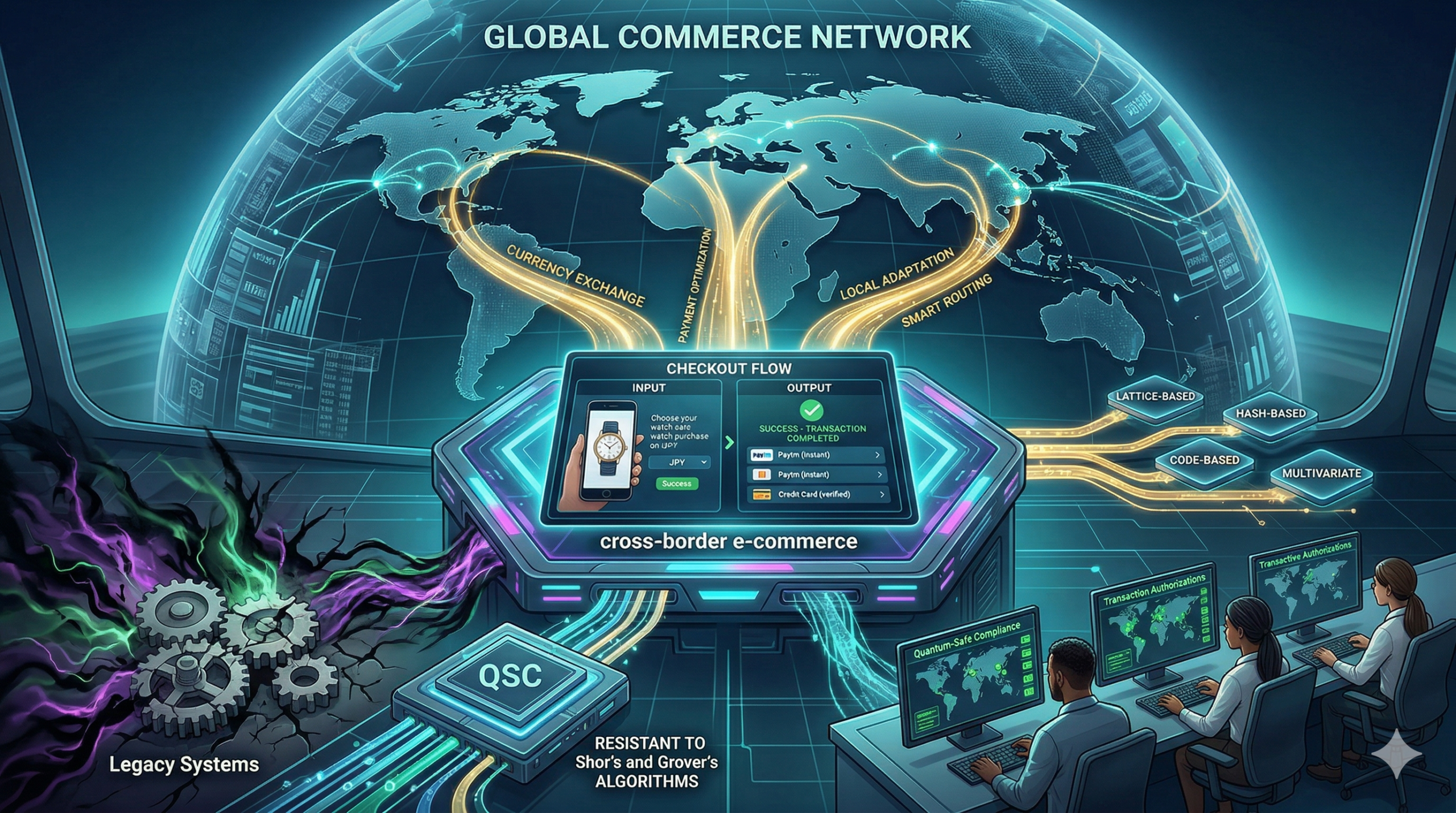
Global trade is moving faster than ever before. Most online stores now look for customers in every corner of the world. However, selling across borders brings many difficult hurdles. This is because every country has its own rules and preferred ways to pay. Therefore, businesses must find smart ways to handle these gaps. If they fail, they risk losing sales and trust. Successful e-commerce depends on a smooth and safe payment journey for everyone.


The Big Problems for Global Sellers

High fees are a major enemy of global growth. When a customer buys something from another country, banks often take a large cut. Consequently, the final price becomes too high for the shopper. This is because currency exchange rates are often unfair. Furthermore, hidden costs can surprise the customer at the final step. This leads to cart abandonment. Therefore, e-commerce firms must be very clear about all costs from the start.

Another big issue is the variety of payment habits. For instance, shoppers in Europe might prefer digital wallets. Meanwhile, customers in Asia might use QR codes or local bank transfers. If a store only offers credit cards, it will fail in these regions. Thus, a one-size-fits-all plan does not work. Every e-commerce site needs to adapt to local tastes to stay ahead.

Why does E-commerce fail at the cross-border checkout?

Solutions for a Better Payment Journey

Multi-currency pricing is a vital tool for success. Customers want to see prices in their own money. Because this removes confusion, it builds instant trust. Furthermore, using a local acquiring bank can reduce transaction fees. This means the store keeps more profit while the user pays less. In short, e-commerce wins when the math is simple for the buyer.

Smart routing is another great way to fix failures. Sometimes, a bank might block a foreign payment by mistake. However, modern systems can instantly try a different bank to finish the sale. This keeps the flow moving without any delay. Because the user does not see the struggle, the experience feels like magic. Therefore, e-commerce platforms must use these intelligent tools to prevent lost sales.


Staying Safe Against Global Fraud

Security is the most important part of any global sale. Hackers are always looking for ways to steal data across borders. Luckily, new AI tools are great at spotting fraud by looking at millions of data points. If a transaction looks odd, the system stops it fast. This keeps your money and data very safe. Because the AI is so smart, it rarely blocks real customers. Thus, e-commerce stays strong and secure for everyone.

Additionally, 3D Secure 2.0 helps verify identity without making the process slow. It uses data to prove the user is real in the background. When you use these tools, the checkout flow feels very smooth. You just click and go. Therefore, the risk of a mistake or theft is very low. This is the future of e-commerce in a connected world. Finally, safety ensures that your brand grows a good name worldwide.


The Future of Global Trade

We are only at the start of a massive shift. Soon, every store will use local solutions to talk to global fans. This means we will see faster shipping and lower fees for everyone. Instead of a hard process, we get a tailored world of products. E-commerce makes every global transaction feel like a local one. It is the best way to trade in 2026. If you want to stay ahead, you must use these solutions now. In conclusion, a better payment journey is the key to global success.


Frequently Asked Questions

1. Why do global payments often fail?

They fail because banks might flag foreign cards as high-risk or due to technical errors in legacy systems.

2. How can I reduce currency exchange fees?

You should use a local payment provider or an e-wallet that offers better rates than traditional banks.

3. What is the best payment method for Asia?

Local digital wallets and QR-based systems are the most popular choices for shoppers in that region.

4. Does 3D Secure slow down my checkout?

No, the 2.0 version is much faster and often works in the background without bothering the user.

5. Is it hard to set up multi-currency pricing?

Most modern payment gateways offer this feature as a simple setting you can turn on.


Read More:

Why Generative AI is the Future of E-commerce: Full Guide

The Quantum Threat: Why Payment Security Must Evolve Today

Why generative ai is the Future of E-commerce: Full Guide

How generative ai Solves Your Cart Abandonment Issues: Full Guide

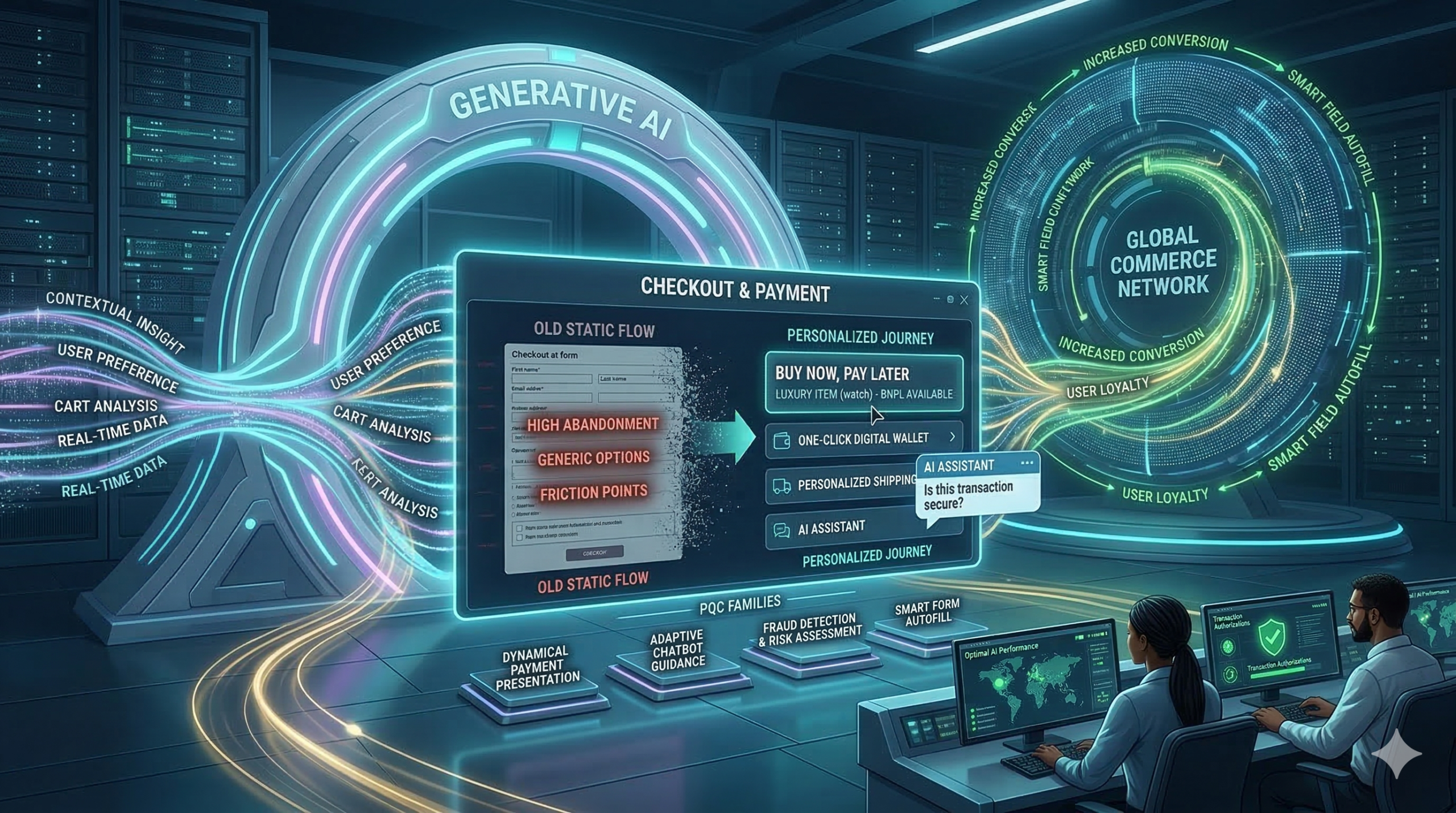
Most online stores lose customers at the final step because traditional checkout pages are often slow and boring. Now, generative ai is changing that forever by creating a personal path for every shopper. Because this technology learns what you like and how you want to pay, buying things online is faster than ever. Furthermore, smart stores use generative ai to turn one-time shoppers into loyal fans. This shift is vital for any brand that wants to grow. Consequently, the payment journey is no longer just a task; it is an experience.

Why generative ai is the Future of E-commerce: Full Guide

Why Old Checkout Systems Fail

Static forms are the biggest enemy of sales because most shops show the same fields to everyone. Consequently, many people leave their carts empty. This is because the process feels long and hard. Generative ai solves this by making every page unique for the user. For instance, it knows if you are on a phone or a laptop. Furthermore, it predicts which payment method you prefer. Therefore, you spend less time typing and more time enjoying your purchase. In short, ai removes the friction that kills sales.


Real-Time Help with Generative AI

Shopping can sometimes feel confusing, especially when you have questions about shipping or taxes. Standard help pages are often hard to find. However, ai adds a smart assistant to the page to guide you. This bot answers your questions in seconds. Because the bot knows your cart, it gives perfect advice. This builds trust and keeps you moving forward. In addition, ai makes sure you never feel alone while shopping.

Moreover, these bots can offer special deals at the perfect moment. If you hesitate, the generative ai might give you a small discount to help you decide. As a result, shoppers feel valued and safe. Generative ai is not just a tool; it is a digital guide. Because of these benefits, top brands are moving to AI today. Therefore, the checkout flow becomes a conversation instead of a form.


Safer and Faster Payments

Security is the most important part of any sale because hackers are always looking for ways to steal data. Luckily, ai is great at spotting fraud by looking at millions of data points in real-time. If it sees something odd, it stops the threat fast. This keeps your money and data very safe. Because the ai is so smart, it rarely blocks real customers. Thus, generative ai makes payment security much stronger for everyone.

Additionally, generative ai helps with filling out forms by guessing your address with high accuracy. This reduces errors and saves time for the customer. When you use generative ai, the checkout flow feels like magic. You just click and go. Therefore, the risk of a mistake is very low. This is the future of ai in the payment world. Finally, this technology ensures that safety does not come at the cost of speed.


The Big Future of Generative AI

We are only at the start of this change. Soon, every store will use ai to talk to us. It will know our size, our style, and our budget. This means we will see fewer ads we do not like. Instead, we get a tailored world of products. Generative ai makes every transaction feel human. It is the best way to shop in 2026. If you want to stay ahead, you must use generative ai now. In conclusion, the personalized payment journey is the new standard for global trade.


Frequently Asked Questions

1. Is generative ai safe for my credit card?

Yes, it improves security by spotting fraud much faster than older systems.

2. Does generative ai make my phone slow?

No, most of the work happens on fast servers, so your phone stays quick.

3. Why do stores need ai?

It helps them sell more by making the checkout process easy and personal for everyone.

4. Can generative ai help with returns?

Yes, it can guide you through the return process and answer policy questions instantly.

5. Will all stores use generative ai soon?

Yes, it is becoming the global standard for all top e-commerce websites.


Read More:

Why Generative AI is the Future of E-commerce: Full Guide

The Quantum Threat: Why Payment Security Must Evolve Today

Why Europe Now Dictates Global Payment Standards?

Why generative ai is the Future of E-commerce

Why Generative AI is the Future of E-commerce: Full Guide

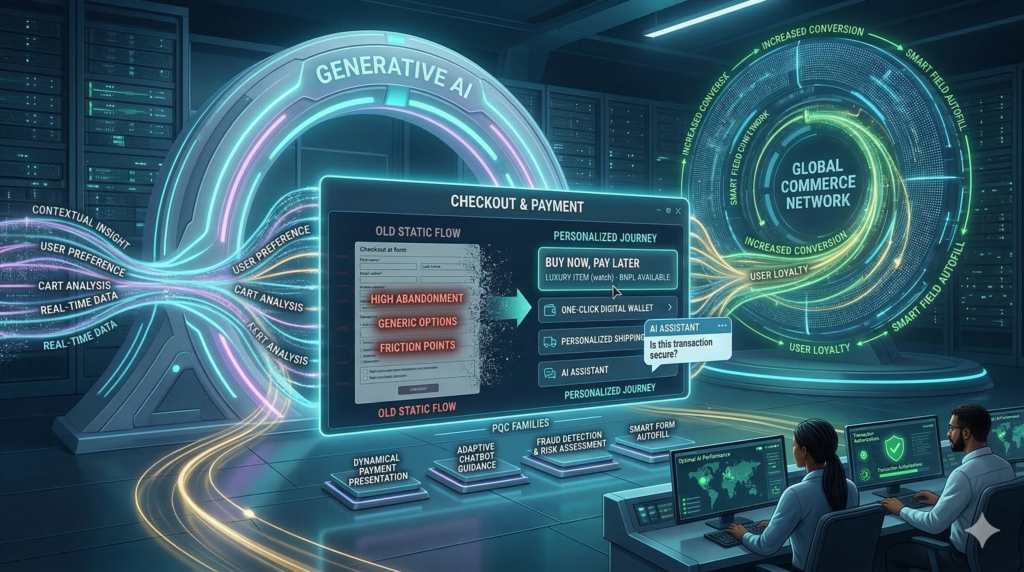
Most online stores lose customers at the final step because traditional checkout pages are often slow and boring. Now, generative ai is changing that forever by creating a personal path for every shopper. Because this technology learns what you like and how you want to pay, buying things online is faster than ever. Furthermore, smart stores use generative ai to turn one-time shoppers into loyal fans. This shift is vital for any brand that wants to grow. Consequently, the payment journey is no longer just a task; it is an experience.


Why Old Checkout Systems Fail

Static forms are the biggest enemy of sales because most shops show the same fields to everyone. Consequently, many people leave their carts empty. This is because the process feels long and hard. Generative ai solves this by making every page unique for the user. For instance, it knows if you are on a phone or a laptop. Furthermore, it predicts which payment method you prefer. Therefore, you spend less time typing and more time enjoying your purchase. In short, it removes the friction that kills sales.

Why generative ai is the Future of E-commerce

Real-Time Help with Generative AI

Shopping can sometimes feel confusing, especially when you have questions about shipping or taxes. Standard help pages are often hard to find. However, generative ai adds a smart assistant to the page to guide you. This bot answers your questions in seconds. Because the bot knows your cart, it gives perfect advice. This builds trust and keeps you moving forward. In addition, it makes sure you never feel alone while shopping.

Moreover, these bots can offer special deals at the perfect moment. If you hesitate, the generative ai might give you a small discount to help you decide. As a result, shoppers feel valued and safe. It is not just a tool; it is a digital guide. Because of these benefits, top brands are moving to AI today. Therefore, the checkout flow becomes a conversation instead of a form.


Safer and Faster Payments

Security is the most important part of any sale because hackers are always looking for ways to steal data. Luckily, generative ai is great at spotting fraud by looking at millions of data points in real-time. If it sees something odd, it stops the threat fast. This keeps your money and data very safe. Because the generative ai is so smart, it rarely blocks real customers. Thus, it makes payment security much stronger for everyone.

Additionally, it helps with filling out forms by guessing your address with high accuracy. This reduces errors and saves time for the customer. When you use it, the checkout flow feels like magic. You just click and go. Therefore, the risk of a mistake is very low. This is the future of generative ai in the payment world. Finally, this technology ensures that safety does not come at the cost of speed.


The Big Future of Generative AI

We are only at the start of this change. Soon, every store will use generative ai to talk to us. It will know our size, our style, and our budget. This means we will see fewer ads we do not like. Instead, we get a tailored world of products. It makes every transaction feel human. It is the best way to shop in 2026. If you want to stay ahead, you must use generative ai now. In conclusion, the personalized payment journey is the new standard for global trade.


Frequently Asked Questions

1. Is generative ai safe for my credit card?

Yes, it improves security by spotting fraud much faster than older systems.

2. Does generative ai make my phone slow?

No, most of the work happens on fast servers, so your phone stays quick.

3. Why do stores need generative ai?

It helps them sell more by making the checkout process easy and personal for everyone.

4. Can generative ai help with returns?

Yes, it can guide you through the return process and answer policy questions instantly.

5. Will all stores use generative ai soon?

Yes, it is becoming the global standard for all top e-commerce websites.


Read More:

The Quantum Threat: Why Payment Security Must Evolve Today

Why Europe Now Dictates Global Payment Standards?

How the new digital payments landscape is ending US dollar dominance?


The Quantum Threat: Why Payment Security Must Evolve Today

The Quantum Threat: Why Payment Security Must Evolve Today

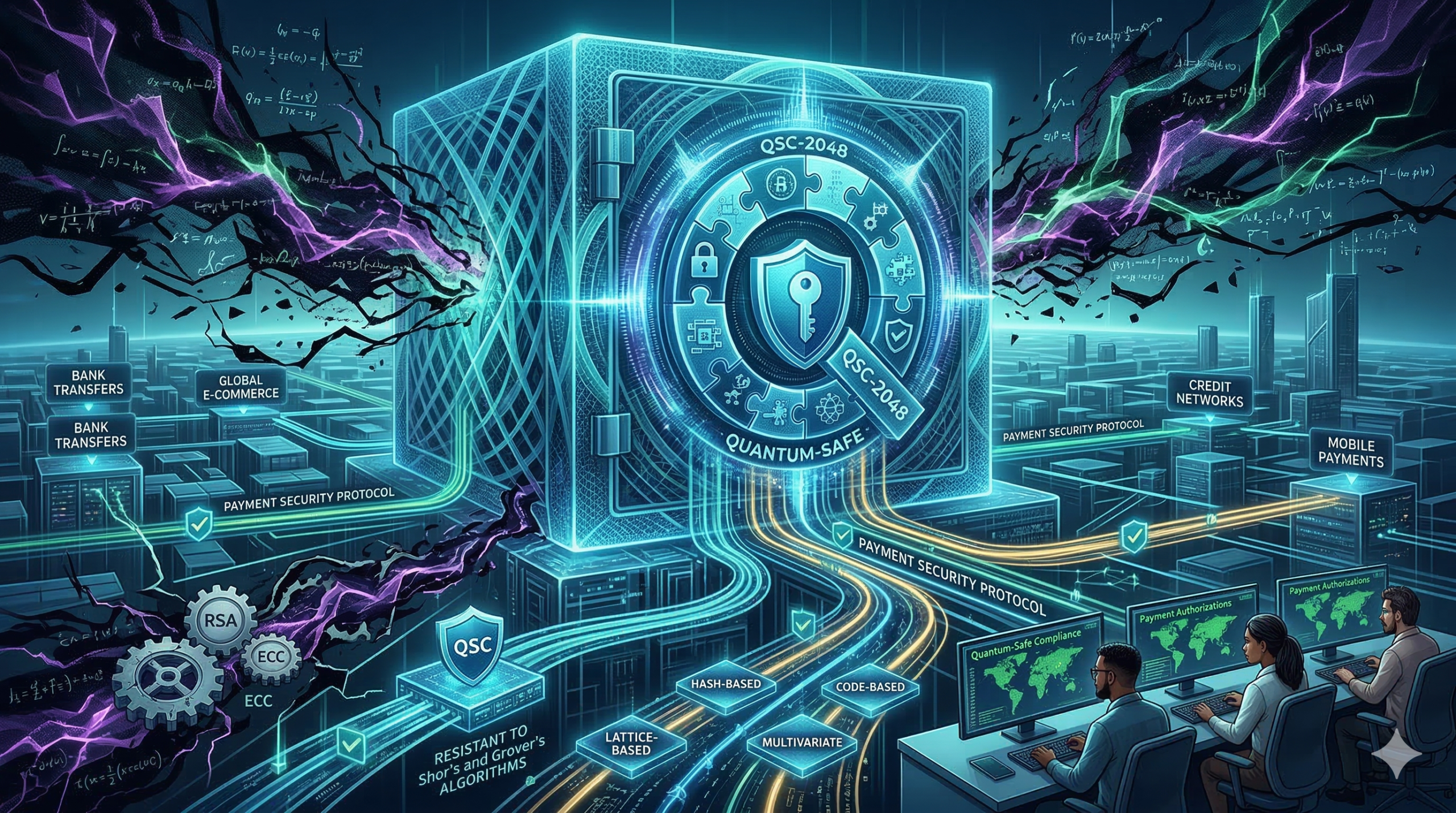
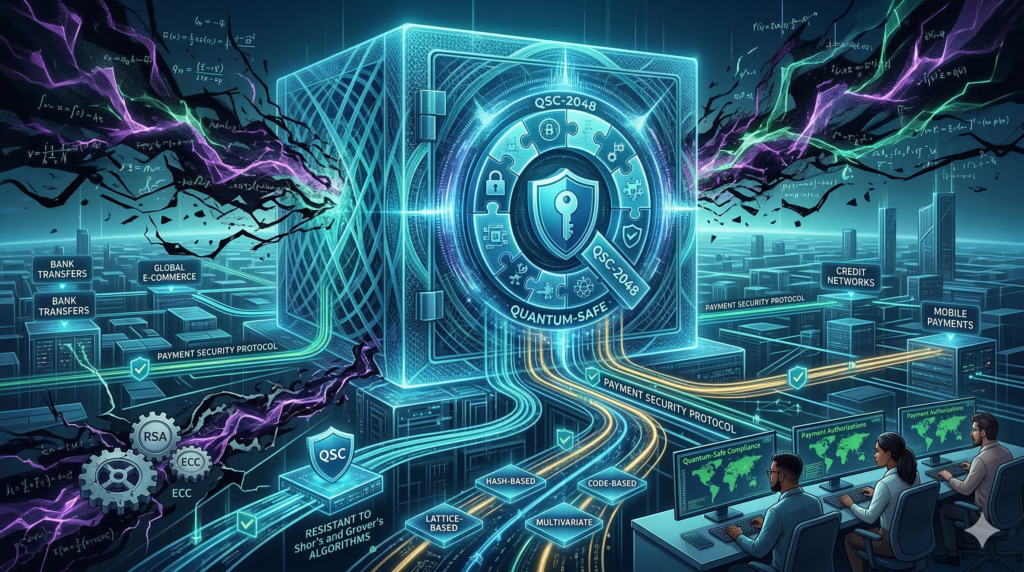
The rapid development of quantum computers creates a massive risk for global finance. Currently, most banks use encryption like RSA, which relies on math that is too hard for normal computers to solve. However, a quantum machine can crack these codes in just minutes. This is why we must adopt quantum-safe cryptography to protect payment security before these machines become common. Because the entire digital economy relies on trust, a single breach could cause a global collapse. Therefore, the race to secure our financial data is already moving at full speed.


The Rising Threat to Digital Money

A quantum computer does not work like a laptop. It uses qubits, which allow it to try millions of paths at the exact same time. This speed means that hackers could soon bypass the walls that keep our money safe. If we do not upgrade our systems, payment security will become a thing of the past. The threat is not just in the future; it is happening now through “harvesting” attacks.

Criminals are currently stealing locked data with the plan to open it later. They know that once they have a quantum machine, they can unlock years of old bank records. Consequently, we cannot wait for the technology to arrive. We must strengthen payment security today to prevent these future leaks. This proactive shift is the only way to maintain long-term consumer confidence.

The Quantum Threat: Why Payment Security Must Evolve Today

What is Quantum-Safe Technology?

Quantum-safe math is designed to be so complex that even a quantum brain cannot find the answer. It uses different geometric and algebraic structures that do not have “shortcuts” for quantum algorithms. By moving to these new methods, we ensure that payment security remains intact for decades to come.

There are three main types of math that experts are testing right now:

  • Lattice-based Math: This hides data in a massive, multi-dimensional grid of points.
  • Code-based Math: This uses the science of error-correction to scramble and lock sensitive files.
  • Hash-based Signatures: This creates a digital “fingerprint” that is almost impossible to replicate or forge.

Building a Resilient Financial Future

The move to new standards is a major task for the world’s banks. It requires a concept called “crypto-agility.” This allows a bank to update its code without needing to rebuild its entire software suite. When a system is agile, it can adopt new payment security tools as soon as they are ready. This flexibility is vital because the hackers will never stop looking for new ways to get in.

Furthermore, global groups like NIST are already picking the best math to use. Banks must follow these standards to ensure they can talk to each other safely. If one bank uses old math while another uses new math, the system breaks. Thus, unity in payment security is just as important as the technology itself. We must work together to build a wall that no computer can climb.


Conclusion

The future of our economy depends on how we handle the quantum threat. By focusing on payment security now, we can stop the “cryptographic apocalypse” before it starts. It is a slow and difficult journey, but it is necessary for a safe digital world. Companies that lead this change will be the ones that people trust with their money. Ultimately, payment security is the foundation upon which the next century of trade will be built.


Frequently Asked Questions

1. Is my bank account at risk right now?

No, powerful quantum computers do not exist yet. However, we need to upgrade now to stay safe in the future.

2. What does “Harvest Now, Decrypt Later” mean?

It means hackers steal your locked data today so they can open it in a few years with a quantum machine.

3. Will new security make my payments slower?

Some new math is slower, but experts are picking the fastest ones to keep your experience smooth.

4. Can a normal computer run quantum-safe security?

Yes, these new rules are designed to run on the phones and laptops we use today.

5. How does this affect global payment security standards?

It forces every bank to move to a new, shared language of math that quantum machines cannot understand.


Read More:

Why Europe Now Dictates Global Payment Standards?

How the new digital payments landscape is ending US dollar dominance?

Why a global UPI network is the new South-South trade rail?


Payment Infrastructure as a Tool of Soft Power in Trade Wars

How A Strong Payment Infrastructure Builds Global Soft Power

In the high stakes world of global trade, money is now a silent weapon. Specifically, many nations now realize that controlling how funds move is a vital edge. Therefore, building a solid payment infrastructure has become a key tool of soft power. This shift changes how countries talk and trade with each other. It is not just about digital coins or bank apps. In fact, it is a smart way for a country to lead on the global stage. Consequently, a strong and stable payment infrastructure helps a nation project its true strength. You will see a clear shift in power by following this deep and strategic trend.

Payment Infrastructure as a Tool of Soft Power in Trade Wars

Winning the Trade War Without a Single Shot

Many people think trade wars are only about high taxes and ships. However, the real fight often happens in the wires and code of a bank. First, a local payment infrastructure can bypass old global rules that slow down growth. Specifically, it lets a country keep its trade moving even when others try to block it. Furthermore, having a top tool that others want to use creates a new kind of bond. You also gain a lead when your neighbors rely on your tech to buy bread. Similarly, a unified payment infrastructure ensures your trade stays safe during a crisis. This puts your growth on a steady path for a very long time.

Why Every Nation Wants Their Own Money Rules

The journey to the top begins when a nation builds its own money path. At this stage, relying on a foreign payment infrastructure is a very big risk. These new tools act as a top guide for a country’s financial future. Specifically, a custom payment infrastructure ensures that a nation and its true worth stay safe. It is built to spark fast progress in every single trade deal. You should also know that a smart system offers more than just a way to pay. While a simple app just sends cash, a whole payment infrastructure guides the whole economy. Furthermore, it moves firms past the fear of being cut off from the world.

The True Influence of Digital Dollar and Yuan

As a nation’s tech grows, its influence spreads to other places. At this stage, the focus on a payment infrastructure builds a very strong bond with allies. This plan is specific to what a partner country likes and needs. For example, some might get a faster way to sell their goods abroad. The timing of these moves is very key for global success. Furthermore, a top leader handles all the tech and rules with ease. This ensures your trade plan is solid from the very first step. Such smart timing helps a country move toward a big global win. Indeed, a modern payment infrastructure reveals who is truly in charge today.

Protecting the Flow of Goods and Services

Data is the backbone of all smart trade and money success today. The way a country handles its payment infrastructure tracks how every dollar moves. This includes how users buy and sell items in a safe way. These facts help refine the path for every brand and firm in the land. Therefore, the system learns and grows over time to serve the people better. This data driven path ensures the best results for a whole nation. It also prevents any bad risks from hurting the economy. A smart payment infrastructure relies on real facts to win every single time. Your plan and focus are too important to risk at any step.

Conclusion and the New Map of World Trade

The future of global trade is too important to leave in the hands of others. Today, we see how a modern payment infrastructure changes who wins and who loses. This smart move helps a nation scale faster and stay much safer too. It turns simple tech into a real win for a whole region. You will see more growth and less stress for firms everywhere. Therefore, nations act now to secure their spot in the global market. Knowing the truth of quality tech lead leads to true success. It is the best way to ensure a bright future for many years. You will find that the right payment infrastructure makes all the difference in a trade war.


FAQs

1 How is a payment system a tool of power?

It lets a country control how money flows, which can help or hurt other nations.

2 Does this affect small businesses?

Yes, it makes it easier or harder for them to sell items to other countries.

3 Why is it called soft power?

Because it uses tech and money to lead rather than using a real army.

4 Is it safe for a country to use its own system?

Specifically, it is much safer because it stops other nations from blocking their trade.

5 Will this trend grow in the future?

Indeed, more nations are building their own tools to stay independent and strong.


Read More:

How a Trade Agreement Protects Your Brand in New Markets

Data Sovereignty for Payment Providers: A Complete Guide

Why scaling like BRICS nations is the new global goal?