Fintech Content Strategy: How to Sell Payment Gateways?

Fintech is a fast-moving industry. Therefore, selling payment gateway solutions is challenging. Businesses need reliable, secure ways to handle money. However, the market is very crowded. It is hard to stand out. Truly, content marketing becomes vital for this reason. Content marketing educates potential clients. It builds trust and also showcases your unique value.

Many fintechs focus only on product features. For instance, they talk about speed or security. But, they forget to explain why these features truly matter. Consequently, their message gets lost easily. Furthermore, their sales cycle is long. Always remember, content marketing is not just about writing blogs. Instead, it is a strategic tool. It helps you become a thought leader. By sharing valuable insights, you attract the right audience. You also build a community of loyal customers. This helps your fintech gateway solution gain market share. Moreover, it leads to sustainable growth.

Fintech Content Strategy

The Fintech Gateway Challenge: Trust, Complexity, and Competition

First, let’s understand the core challenges for fintechs. They sell payment gateway solutions. This market has high stakes. It involves sensitive financial data. Trust is paramount. Clearly, the technology is complex. Therefore, potential clients need clear, simple explanations.

Why Traditional Marketing Often Falls Short

Traditional advertising methods often do not work well for complex fintech solutions. Clients need more help. Therefore, they need a reason to trust you with their money.

Here are some key limits of old marketing for fintechs:

  • Low Trust: Financial services need high trust. Simple ads do not build this fast enough.
  • Complex Products: Gateway solutions are very technical. Thus, short ads cannot explain their value well.
  • High Competition: Many companies offer similar services. Consequently, it is hard to differentiate with basic ads.
  • Long Sales Cycle: Businesses take time to choose a gateway. They need constant, helpful information.
  • Lack of Authority: Without deep content, you seem like just another vendor. You lack authority.
  • No Education: Clients often do not know what questions to ask. Therefore, they need education first.

Content marketing addresses these gaps effectively. It educates and builds trust. It establishes your fintech as a reliable expert. This helps turn curious visitors into paying clients faster.


What is Content Marketing for Fintech Gateways? Your Trust Builder

So, what exactly is content marketing for fintechs selling gateway solutions? It is the creation and distribution of valuable, relevant, and consistent content. The goal is to attract and keep a clearly defined audience. Truly, it ultimately drives profitable customer action. For fintech, it means showing your expertise. It also means building deep trust.

Why Content is Your Fintech’s Best Sales Tool

Here is how content marketing works for fintech gateways:

  1. Educates Clients: Many clients do not understand payment processing well. Your content simplifies complex topics. It answers their common questions.
  2. Builds Trust: By consistently providing helpful, unbiased information, you become a trusted resource. Trust is crucial for financial services.
  3. Establishes Authority: When you publish expert articles and guides, you show your deep knowledge. This positions you as a thought leader.
  4. Generates Leads: Valuable content can be “gated.” Clients give their email to download a guide. This builds your lead list.
  5. Supports Sales: Your sales team can use your content. They can share it with prospects to answer questions or overcome objections.
  6. Boosts SEO: High-quality content helps your website rank higher on Google. This brings more organic traffic.
  7. Differentiates You: Your unique insights and perspective make you stand out from competitors.

Truly, content marketing transforms your fintech gateway from just a vendor to a trusted advisor. It creates a continuous stream of engaged prospects.


Pillar 1: Education-First Content – Simplify the Complex

The first pillar of content marketing for fintechs is an education-first approach. Payment gateways are complex. Potential clients are often overwhelmed by jargon and technical details. Clearly, your content must simplify these concepts. Therefore, focus on teaching, not just selling.

Breaking Down Complexity into Digestible Insights

Firstly, create beginner’s guides to core payment concepts. Explain terms like “PCI DSS compliance.” Also explain “tokenization” or “interchange fees.” Do this in plain language. This helps clients understand the basics easily. Secondly, use explainer videos and infographics. Visual content is often easier to understand than text. This is especially true for technical topics. Show how your gateway works step-by-step.

Furthermore, develop use case studies. Show real-world examples. How has your gateway helped a specific type of business? For instance, write “How an E-commerce Store Reduced Fraud by 30% with Our Gateway.” This makes the benefits tangible. Also, write comparison articles. Compare different payment gateway types or features. For example, use “Stripe vs. Your Gateway: A Detailed Comparison for SMEs.” This helps clients make informed decisions. Lastly, create webinars and online workshops. Host live sessions. Teach clients how to solve a payment-related problem. This builds a direct connection. Truly, by consistently educating your audience, your fintech gateway becomes an indispensable resource. This builds credibility long before a sales pitch.


Pillar 2: Trust-Building Content – Transparency and Security

Trust is the foundation of fintech. Therefore, the second pillar of content marketing is trust-building content. This content focuses on transparency, security, and reliability. Clients need to feel safe. They must trust their financial transactions to your solution. Clearly, demonstrating your commitment to these values is paramount.

Showcasing Reliability and Data Protection

Firstly, publish security whitepapers or detailed guides. Explain your encryption methods. Describe your fraud detection systems. Detail your compliance with industry standards like PCI DSS. This provides technical assurance. Secondly, share customer testimonials and success stories. Let your existing clients speak for your reliability. Show real results and positive experiences. This acts as social proof.

Furthermore, be transparent about pricing and fees. Create content that explains your fee structure clearly. Avoid hidden costs. This builds honesty. Also, offer “behind the scenes” content (with caution). Show your team, your security measures, or your development process. This humanizes your brand. It builds confidence. Lastly, provide expert interviews. Interview your own security officers or compliance experts. This highlights your internal knowledge. It also shows your commitment to safety. Truly, by creating content that openly addresses security concerns, your fintech gateway builds deep, unshakeable trust. This is vital for long-term client relationships.


Pillar 3: Lead Generation Content – From Reader to Prospect

The ultimate goal of content marketing is to attract leads. Therefore, the third pillar is lead generation content. This content is designed to convert interested readers into identified prospects. It moves them further down the sales funnel. Clearly, valuable content can be leveraged to capture contact information. Therefore, having a clear call to action is essential for every piece.

Converting Engagement into Qualified Leads

Firstly, create gated content. Offer high-value resources. These resources require an email address to download. Examples are industry reports, detailed playbooks, or comprehensive buyer’s guides. This captures qualified leads. Secondly, develop interactive tools like calculators or assessment quizzes. For example, use a “Payment Processing Fee Calculator.” Another idea is a “Gateway Compatibility Quiz.” These provide instant value. They also capture lead data.

Furthermore, use webinars and live Q&A sessions as lead magnets. People register with their contact information to attend. This allows for direct engagement. Also, implement case study forms. If a client wants to see a specific case study, ask for their email first. This shows their strong interest. Lastly, offer free consultations or demos. Promote these heavily within your content. For example, use “Download our guide, then book a free demo to see it in action.” Truly, by strategically using lead generation content, your fintech gateway can effectively move prospects from awareness to consideration. This fills your sales pipeline with interested, qualified individuals.


Best Practices: Implementing Your Fintech Content Strategy

Implementing a successful content marketing strategy for a fintech gateway requires a clear, consistent approach. It is not just about writing articles. It is about understanding your audience, planning your content, and measuring its impact. Clearly, a unified content plan ensures all efforts contribute to business growth. Therefore, following these best practices is essential for sustained success.

Your Blueprint for Fintech Content Success

Firstly, know your buyer persona deeply. Who are you trying to reach? What are their roles, pain points, and decision-making processes? Tailor your content to their specific needs. Secondly, create a content calendar. Plan your topics, formats (blog, video, whitepaper), and publication dates in advance. This ensures consistency. It also covers all stages of the buyer’s journey.

Furthermore, invest in SEO research. Use keywords your target audience searches for. This ensures your content is found. This happens when prospects actively look for solutions. Also, distribute your content widely. Do not just publish it on your website. Share it on social media (LinkedIn is key for B2B fintech), industry forums, and email newsletters. Lastly, measure and analyze results. Track website traffic, downloads, lead conversions, and engagement rates. Use this data to refine your strategy. See what works and what does not. Truly, by following these best practices, your fintech gateway can build a robust content marketing engine. This engine drives awareness, trust, and ultimately, sales.


Frequently Asked Questions (FAQs)

Q1: Is content marketing only for getting new clients, or does it help existing ones?

Content marketing helps both groups. It attracts new clients by educating them. It also helps existing clients by providing ongoing value, updates, and support. This strengthens loyalty. It also reduces churn.

Q2: What’s the most important type of content for a fintech selling gateway solutions?

The most important type of content is that which builds trust and simplifies complex concepts. This means educational guides, security whitepapers, and customer success stories are often most effective.

Q3: How often should a fintech publish new content?

Consistency is more important than frequency. Aim for a schedule you can maintain. This might be one in-depth blog post per week or two shorter ones. Quality always trumps quantity.

Q4: Should fintechs gate all their valuable content?

No, not all. Some content, like short blog posts or FAQs, should be freely available to attract organic traffic and build general awareness. Gate your highest value content (e.g., in-depth guides, exclusive reports) to capture leads.

Q5: How can content marketing help my sales team directly?

Content marketing provides your sales team with valuable tools. They can share relevant articles, case studies, or whitepapers with prospects to answer questions, build credibility, and move deals forward. It acts as a powerful support system for sales.

Also Read: What Makes a Lead Magnet Effective for Payment Consulting?
How to Design Checkout Experiences That Increase Conversion

How to Design Checkout Experiences That Increase Conversion

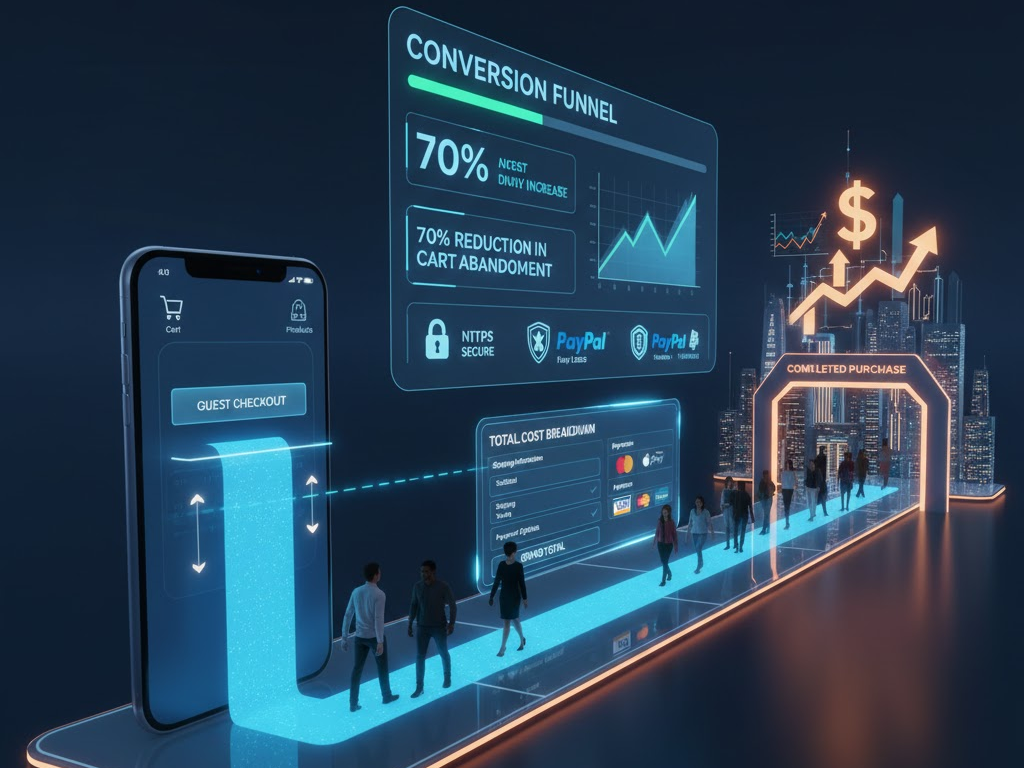
In the competitive world of e-commerce, getting a customer to add an item to their cart is a major achievement. However, the true measure of success lies in guiding that customer smoothly through the checkout process to a completed purchase. Unfortunately, high cart abandonment rates—often hovering around 70%—show that the checkout experience is a significant bottleneck. Clearly, a poorly designed checkout is simply a silent killer of sales, frustrating customers and forfeiting hard-earned revenue. Therefore, learning how to design a high-converting checkout experience is not optional; instead, it is a crucial discipline for any business focused on maximizing its conversion rate and driving substantial growth.

Many businesses spend vast amounts on traffic generation and product optimization but overlook the final, critical hurdle: the checkout page. They treat it as a necessary evil, failing to realize it is the single most important moment for trust and commitment. Consequently, any friction, confusion, or lack of security signals can cause a customer to abandon their purchase at the last second.

Always remember, the objective of the checkout experience is to be invisible—it should be so seamless and trustworthy that the customer focuses only on the value of their purchase, not the effort required to complete the transaction. By following best practices focused on simplicity, transparency, and trust, you can transform your checkout from a conversion bottleneck into a powerful sales accelerator.

How to Design Checkout Experiences That Increase Conversion

The Cart Abandonment Crisis: Understanding the Problem

To begin with, we must acknowledge the severity of the cart abandonment crisis. Statistics consistently show that a large majority of potential customers leave their carts before completing a purchase. Clearly, understanding the primary reasons why customers abandon their carts is the essential first step in designing a better, more effective checkout. Truly, a high abandonment rate signifies deep-seated problems within your purchasing funnel, demanding immediate and strategic attention. Therefore, analyzing these common pain points will inform your design decisions.

Top Reasons Why Customers Abandon Checkout

Naturally, customers abandon carts for a multitude of reasons, but several key factors repeatedly surface in research:

  1. Unexpected Costs: Hidden fees, high shipping costs, or unexpected taxes revealed late in the process often shock and deter buyers. Transparency is key.
  2. Forced Account Creation: Requiring customers to register an account before purchasing creates friction and adds unnecessary steps, leading many to drop off.
  3. Complex or Long Process: Too many steps, confusing forms, or an unclear progress indicator overwhelms the user. Simplicity is always superior.
  4. Security Concerns: A lack of visible trust badges or an insecure-feeling page makes customers nervous about entering sensitive payment information. Trust signals are non-negotiable.
  5. Lack of Payment Options: Not offering the customer’s preferred payment method can immediately stop a transaction. Flexibility is vital.

Furthermore, issues like slow page loading times, poor mobile optimization, and confusing navigation also contribute significantly to cart abandonment. Truly, by systematically addressing these pain points in your design, you can eliminate friction and create a checkout experience that systematically guides the user toward a successful conversion.


Step 1: Simplify the Process – The Power of Minimal Steps

One of the most effective strategies for reducing cart abandonment is radical simplification. Clearly, the fewer clicks and the less data entry required from the customer, the higher your conversion rate will likely be. Therefore, your design goal should be to minimize cognitive load and eliminate any non-essential steps between the shopping cart and the confirmation page. Truly, an efficient checkout process is a fast checkout process.

Optimizing Flow and Reducing Friction

Firstly, offer a guest checkout option prominently. Forcing account creation is one of the top reasons for abandonment. Allow customers to complete their purchase quickly, and then offer an easy, post-purchase option to create an account (e.g., “Save your details for next time!”). This reverses the friction point effectively.

Secondly, aim for a one-page or accordion checkout design. While a multi-step checkout with a clear progress bar can work, condensing all necessary information onto a single, vertically scrolling page often reduces the perception of effort. If using multiple steps, limit them to three or four logical phases (e.g., Shipping, Payment, Review). Furthermore, auto-fill and smart form fields are non-negotiable time-savers. Use features like address lookup tools that auto-suggest addresses after a few keystrokes. Integrate validation tools that check data accuracy in real-time. Also, automatically fill billing details with shipping information if the customer chooses that option. Truly, every keystroke saved is friction removed, smoothing the path to a higher conversion rate.


Step 2: Build Trust and Ensure Security Signals

Checkout involves customers sharing highly sensitive personal and financial information. Therefore, trust and security are foundational elements of a high-converting experience. Clearly, if a customer feels uneasy or insecure on your payment page, they will leave, regardless of how great your product is. Therefore, designing a checkout that looks secure and feels trustworthy is absolutely essential for conversion success.

Visible Indicators of Safety and Credibility

Firstly, ensure your website uses HTTPS and an SSL certificate. While standard practice, explicitly display a padlock icon and verify the secure URL (starting with https://). This basic technical requirement is a fundamental trust signal. Secondly, display recognizable trust badges and security seals prominently near the payment fields. Logos from security providers (e.g., Norton, McAfee, Trustpilot) or payment gateways (e.g., PayPal Verified) instantly reassure customers about data protection. Truly, these visual cues act as powerful psychological validators.

Furthermore, clearly communicate your refund, return, and privacy policies near the final purchase button. A link to your full policy is often necessary, but a concise summary of your guarantee can significantly boost confidence. Also, ensure your customer support information is readily accessible on the checkout page (e.g., a phone number, live chat icon, or a clear link to FAQs). This demonstrates that a real company stands behind the transaction and offers assistance if needed. Always remember, trust is earned through transparency and visible security measures. By maximizing these trust signals, you mitigate customer anxiety and successfully guide them past the final moment of hesitation.


Step 3: Optimize Payment Flexibility and Transparency

A customer is ready to buy, but if you don’t accept their preferred method of payment or surprise them with high costs, the sale is lost. Consequently, optimizing payment flexibility and transparency are two critical areas that directly impact conversion rates. Clearly, offering choice reduces friction, while clear communication prevents buyer shock. Therefore, focus on maximizing options and upfront honesty.

Offering Choice and Maintaining Price Integrity

Firstly, provide a variety of widely accepted payment methods. Beyond major credit cards (Visa, Mastercard, Amex), integrate popular digital wallets (e.g., Apple Pay, Google Pay, PayPal) and local payment options relevant to your target markets. Also, consider offering Buy Now, Pay Later (BNPL) options (e.g., Klarna, Affirm), as these have become highly popular for managing expenses and often increase the average order value. Flexibility caters to diverse customer preferences globally.

Secondly, prioritize price transparency. This is crucial. Display all costs, including shipping fees, taxes, and any other charges, as early as possible—ideally on the product page or within the shopping cart summary, not just on the final checkout page. Clearly label the different shipping options and their associated costs and delivery timelines. Furthermore, use an always-visible order summary throughout the checkout process. This summary should dynamically update as the customer adds items or selects shipping options, constantly reminding them of their total commitment. Truly, eliminating the fear of hidden fees and offering convenient payment options removes the final financial barriers, resulting in a higher likelihood of conversion.


Step 4: Ensure Flawless Mobile and Performance Optimization

In 2025, mobile devices account for the majority of e-commerce traffic. Therefore, a failure to optimize your checkout experience for mobile users is equivalent to turning away more than half of your potential sales. Clearly, a truly high-converting checkout must be flawlessly responsive, fast-loading, and intuitive on screens of all sizes. Therefore, prioritizing mobile optimization and site speed is absolutely essential for maximizing your conversion rate.

Speed, Responsiveness, and Mobile-First Design

Firstly, design your checkout process using a mobile-first philosophy. This means prioritizing large, easy-to-tap buttons, simple one-column layouts, and minimal form fields that leverage mobile keyboard features (e.g., automatic number input for card details). Test the entire flow rigorously on various mobile devices to ensure all elements are accessible and functional. Furthermore, minimize text input on mobile. Use radio buttons, dropdown menus, and address lookup tools to reduce typing, which is cumbersome on small screens.

Secondly, optimize the page loading speed relentlessly. Slow checkout pages are a primary driver of abandonment, as customers lose patience quickly. Compress images, minimize unnecessary scripts, and use efficient hosting. Aim for checkout pages that load in under two seconds. Also, ensure that all error messages are clear and immediate. If a form field is filled incorrectly, provide instant, visible feedback to the user on how to correct the error, rather than waiting for the customer to hit “submit” and then forcing them to navigate back. Truly, by ensuring a fast, responsive, and friction-free mobile experience, you capture the vast majority of today’s e-commerce traffic, significantly boosting your conversion rate.


Step 5: Leverage Data and Post-Purchase Opportunities

A high-converting checkout is not a set-it-and-forget-it asset; instead, it is a constantly evolving system driven by data and continuous testing. Furthermore, the checkout is not truly over until the customer receives their product and is encouraged to return. Clearly, leveraging post-purchase moments for customer engagement is a smart strategy to build loyalty and increase the Customer Lifetime Value (CLV). Therefore, focus on data analysis and strategic follow-up.

A/B Testing, Analytics, and Post-Purchase Nurturing

Firstly, use analytics to identify specific drop-off points. Tools like Google Analytics, heat maps, and session recordings can show exactly where users hesitate, click away, or abandon forms. Pinpoint the problematic step or field—is it shipping calculation, the credit card field, or the final button? This data should directly inform your optimization efforts. Secondly, conduct rigorous A/B testing. Test everything: the number of steps, the wording on buttons (e.g., “Buy Now” vs. “Place Order”), the placement of trust badges, and the presence of guest checkout. Small changes based on data can lead to massive conversion uplifts.

Furthermore, optimize the confirmation page and email as marketing opportunities. The confirmation page should reassure the customer, display their order summary clearly, and offer immediate next steps (e.g., track order, download app). The confirmation email should be prompt, reiterating trust signals and providing essential details. Lastly, implement cart abandonment recovery emails. These automated emails, sent within hours of abandonment, can successfully bring back a significant portion of lost customers by offering a gentle reminder or sometimes a small incentive. Truly, by viewing checkout as a system of continuous improvement and leveraging the post-purchase experience, you not only increase conversions today but also secure customer loyalty for tomorrow.


Frequently Asked Questions (FAQs)

Q1: What is the single most effective way to immediately reduce cart abandonment?

The single most effective way to immediately reduce cart abandonment is offering a clear, prominent guest checkout option. Removing the friction and requirement of forced account creation allows the customer to complete their purchase quickly, which directly addresses one of the top reasons for drop-off.

Q2: How many steps should an optimal checkout process have?

While there is no fixed number, the optimal checkout process should minimize the perceived effort. Ideally, aim for a single-page checkout or a maximum of three to four highly consolidated steps (e.g., Shipping, Payment, Review). The key is clear progress indicators and minimal form fields.

Q3: Why is mobile optimization more critical than desktop optimization for checkout?

Mobile devices now account for the majority of e-commerce traffic. If your checkout is slow, requires tedious typing, or has small buttons on mobile, you risk losing the largest segment of your potential customers. A mobile-first, fast-loading, responsive design is essential for modern conversion rates.

Q4: How important are trust badges on the checkout page?

Trust badges are extremely important. They act as visible, psychological validators that reassure customers your site is secure enough to handle their sensitive financial information. Placing well-known security seals and payment gateway logos near the payment fields significantly boosts customer confidence and reduces security-related abandonment.

Q5: What should I A/B test first on my checkout page?

Start by A/B testing elements related to friction and anxiety. This includes testing: the presence/placement of trust badges, offering or removing guest checkout, the wording of the final purchase button CTA, and the layout (one-page vs. multi-step). Use analytics to guide your choices and maximize impact.

Also Read: How Can Smart Payout Drive Marketplace Growth

How Can Smart Payout Drive Marketplace Growth

How Can Smart Payout Drive Marketplace Growth

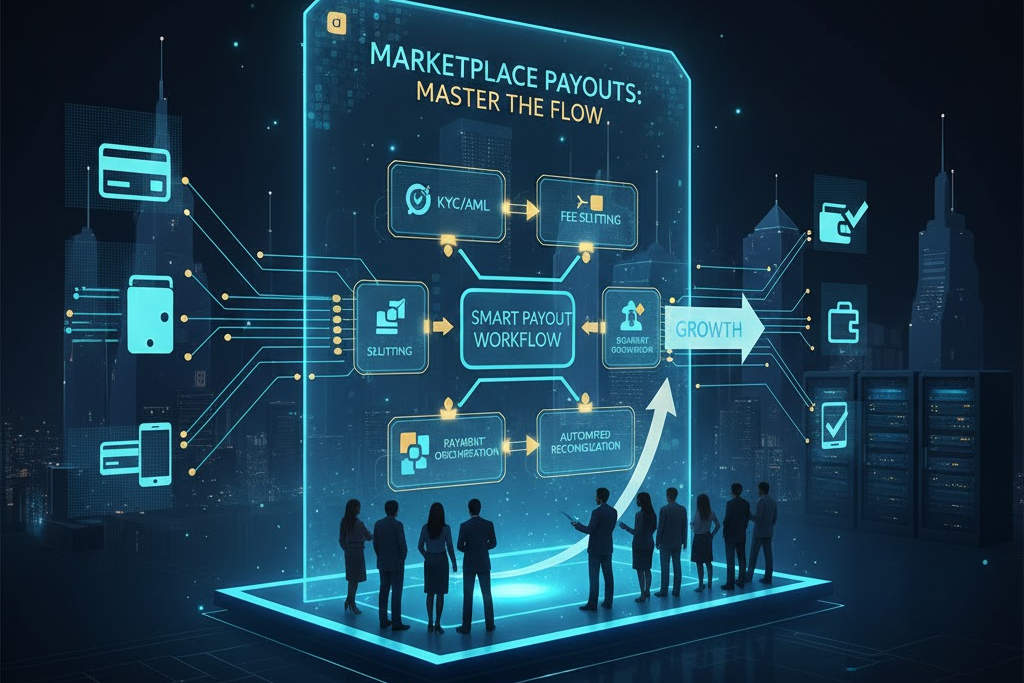
In the burgeoning world of online marketplaces, transactions are the lifeblood. However, simply facilitating purchases is only half the battle. Truly, the real operational challenge—and often a source of significant friction—lies in managing the complex process of settlement and payouts. For any marketplace, efficiently distributing funds to numerous sellers, service providers, or gig workers, while deducting fees, handling refunds, and ensuring compliance, is a monumental task. Therefore, building a smart, automated settlement and payout workflow is not merely a convenience; it’s a critical foundation for scalability, financial accuracy, and sustained growth.

Many marketplaces, particularly in their early stages, underestimate the complexity of payouts. They often rely on manual processes or fragmented systems, which quickly become unsustainable as transaction volumes grow. This reliance on outdated methods leads to errors, delays, frustrated sellers, and significant operational overhead. Clearly, a robust, intelligent workflow transforms this potential headache into a competitive advantage. It ensures funds flow smoothly, transparently, and compliantly, freeing up valuable resources and fostering trust within your marketplace ecosystem. Ultimately, mastering payouts is crucial for any platform aspiring to thrive in the dynamic digital economy.

How Can Smart Payout Drive Marketplace Growth

The Core Challenge: Why Payouts Are Complex for Marketplaces

To begin with, let’s understand why settlement and payout workflows are inherently complex for online marketplaces. Unlike a single-vendor e-commerce store, a marketplace involves multiple parties in every transaction: the buyer, the marketplace itself, and one or more sellers/service providers. Consequently, this multi-party dynamic introduces layers of complexity, requiring careful management of funds, fees, and regulatory obligations. Clearly, overlooking these nuances can lead to significant operational headaches, financial discrepancies, and legal risks.

The Multi-faceted Nature of Marketplace Payouts

First and foremost, the core complexity arises from the need to split payments. A single customer transaction often needs to be divided, with a portion going to the marketplace (commission, fees) and the remainder being disbursed to the relevant seller. This requires precise accounting and reconciliation. Secondly, variable payout schedules and thresholds add another layer of difficulty. Some sellers might prefer daily payouts, others weekly or monthly, while some may only be paid once a minimum balance is reached. Accommodating these diverse needs manually is nearly impossible at scale.

Furthermore, global operations and multi-currency support introduce significant foreign exchange considerations and local payment method preferences. Complying with diverse international financial regulations and tax laws (e.g., KYC, AML, 1099s) is also a massive undertaking, especially for platforms operating across borders. Additionally, handling refunds, chargebacks, and disputes adds another layer of complexity, as these events necessitate adjustments to previously settled funds. Lastly, ensuring transparency and clear reporting for both sellers and the marketplace is vital for building trust and managing expectations. Truly, a smart workflow must address all these interconnected challenges to ensure seamless and compliant operation.


Key Components of a Smart Payout Workflow

Building a truly smart settlement and payout workflow for a marketplace involves integrating several critical components. This isn’t just about sending money; instead, it’s about creating an end-to-end system that handles payment initiation, reconciliation, fraud prevention, compliance, and robust reporting. Clearly, a holistic approach ensures efficiency, accuracy, and scalability, transforming a manual burden into an automated asset. Therefore, each element must be carefully considered and integrated.

Essential Elements for Automated and Compliant Payouts

Firstly, a reliable payment orchestration layer is fundamental. This system manages incoming payments from buyers, directs funds to a holding account, and then intelligently distributes them according to predefined rules. It often integrates with multiple payment gateways and processors, offering flexibility and redundancy. Secondly, a robust seller onboarding and verification (KYC/AML) system is crucial. This ensures that all recipients are legitimate and compliant with financial regulations, minimizing fraud and legal risks from the outset.

Furthermore, an automated fee deduction and splitting engine is essential. This component automatically calculates marketplace commissions, processing fees, and any other deductions, ensuring accurate net payouts for sellers. Additionally, a flexible payout scheduling and method module allows sellers to choose their preferred payout frequency (e.g., daily, weekly, monthly) and method (e.g., bank transfer, digital wallet), enhancing satisfaction. Lastly, comprehensive reconciliation and reporting tools are vital. These tools automatically match transactions, reconcile balances, and generate detailed statements for both the marketplace and its sellers, providing transparency and simplifying accounting. Truly, integrating these components creates a powerful, efficient, and compliant payout ecosystem.


Ensuring Compliance and Mitigating Risk

In the intricate world of financial transactions, compliance and risk mitigation are non-negotiable, especially for marketplaces handling funds from numerous parties. Truly, a smart settlement and payout workflow must embed robust mechanisms to adhere to regulatory requirements and protect against financial fraud and operational errors. Clearly, a failure in these areas can lead to severe penalties, reputational damage, and loss of trust. Therefore, proactive measures are essential.

Navigating Regulatory Landscape and Protecting Against Fraud

Firstly, Know Your Customer (KYC) and Anti-Money Laundering (AML) compliance are paramount. Your workflow must include automated processes for collecting and verifying seller identities, often involving document checks and database screenings. This is not just a legal obligation; it’s a critical step in preventing illicit activities on your platform. Furthermore, implement fraud detection and prevention tools that analyze payout patterns. Unusual payout amounts, frequencies, or destination accounts can be red flags for potential fraud or account takeovers, triggering automatic holds or investigations.

Secondly, ensure your workflow adheres to Payment Card Industry Data Security Standard (PCI DSS) if you handle cardholder data, or partner with PCI-compliant payment processors. Data security is fundamental for maintaining trust. Additionally, manage tax reporting obligations effectively. Depending on your jurisdiction and seller locations, you may be required to collect tax IDs (e.g., W-9s, 1099s in the US) and submit regular reports. A smart workflow automates this data collection and reporting, significantly reducing manual effort and compliance risk. Truly, by embedding these compliance and risk mitigation measures, marketplaces can operate securely and confidently, fostering a safe environment for all participants.


Optimizing for Speed, Transparency, and Scalability

While compliance and accuracy are foundational, a truly smart settlement and payout workflow also prioritizes speed, transparency, and scalability. In fact, in a competitive marketplace environment, quick and clear payouts enhance seller satisfaction and attract more high-quality participants. Clearly, the ability to scale seamlessly with transaction volume is also essential for sustainable growth. Therefore, continuous optimization across these dimensions is vital.

Enhancing Performance for a Thriving Marketplace Ecosystem

Firstly, to enhance speed, leverage instant or near-instant payout options where available and economically viable. While traditional bank transfers can take days, options like real-time payments, digital wallets, or even crypto payouts can significantly reduce settlement times. Furthermore, automate reconciliation processes as much as possible, minimizing manual review delays. Streamlined internal workflows mean faster processing.

Secondly, for transparency, provide sellers with real-time visibility into their earnings, deductions, pending payouts, and payout history through a dedicated seller dashboard. Clear, detailed transaction statements and easy-to-understand fee breakdowns build trust and reduce support inquiries. Proactive notifications about payout statuses also greatly improve the seller experience. Lastly, design your workflow for scalability from day one. This means choosing payment partners and internal systems that can handle increasing transaction volumes and a growing number of sellers without requiring major re-architecture. Cloud-native solutions and API-first designs are often best for this. Truly, by optimizing for speed, transparency, and scalability, marketplaces can create a superior experience for their sellers, fostering a vibrant and loyal ecosystem that drives sustained growth.


Best Practices for Building Your Smart Workflow

Implementing a smart settlement and payout workflow is a complex undertaking, but by following a set of best practices, marketplaces can navigate the challenges successfully. Clearly, learning from industry leaders and focusing on iterative improvements will ensure your system is robust, efficient, and future-proof. Therefore, a strategic approach that combines technology, process, and user experience is crucial.

A Roadmap for Successful Payout System Implementation

Firstly, choose the right payment partners. Select payout providers that offer robust APIs, global coverage (if needed), multi-currency support, strong compliance features, and excellent customer support. Don’t simply opt for the cheapest option; reliability and features matter more. Secondly, design for modularity and flexibility. Your marketplace will evolve, so your payout system should be able to adapt to new payment methods, fee structures, and regulatory changes without a complete overhaul. An API-driven architecture allows for easier integration and future modifications.

Furthermore, prioritize automation wherever possible. From payment splitting and fee deductions to reconciliation and tax reporting, automate repetitive tasks to reduce manual errors and operational costs. This frees up your team to focus on strategic initiatives. Also, invest in comprehensive testing and monitoring. Thoroughly test your payout workflow under various scenarios (e.g., refunds, chargebacks, high volume) before launch. Implement continuous monitoring tools to detect and alert on any discrepancies or issues in real time. Lastly, gather continuous feedback from sellers. Their experience with payouts is crucial. Use their insights to identify pain points and make iterative improvements. Truly, by adhering to these best practices, marketplaces can build a smart, resilient, and seller-friendly settlement and payout workflow that fuels long-term success.


Frequently Asked Questions (FAQs)

Q1: What is the biggest challenge for marketplaces in managing payouts?

The biggest challenge is often the complexity of splitting payments accurately among multiple parties, deducting various fees, managing diverse payout schedules and methods, and ensuring compliance with financial regulations across different jurisdictions, all while scaling efficiently.

Q2: How can a marketplace ensure compliance with KYC/AML regulations for payouts?

Marketplaces ensure KYC/AML compliance by integrating automated verification systems during seller onboarding. These systems collect and verify seller identities, often using ID checks, database screenings, and sometimes biometric verification, to ensure all recipients are legitimate and adhere to anti-money laundering laws.

Q3: What is the role of a “payment orchestration layer” in a smart payout workflow?

A payment orchestration layer acts as a central hub that intelligently routes and manages incoming payments and subsequent payouts. It connects to multiple payment gateways, handles payment splitting, fee deduction, and often provides dynamic routing logic to optimize for cost, success rates, and specific payout rules.

Q4: How can marketplaces offer faster payouts without taking on excessive risk?

Marketplaces can offer faster payouts by leveraging instant payment networks, digital wallets, and carefully managed rolling reserves. While aiming for speed, it’s crucial to balance this with robust fraud detection, KYC/AML checks, and clear risk assessment frameworks to prevent fraudulent transactions and chargebacks.

Q5: What reporting features are essential for a smart payout workflow?

Essential reporting features include real-time dashboards for sellers showing earnings, pending payouts, and transaction history; detailed reconciliation reports for the marketplace to match incoming and outgoing funds; and automated generation of tax-related documents (e.g., 1099s) for compliance and accounting. Transparency is key.

Also Read: Payment Analytics: How to Turn Payments into Profit?

Payment Analytics: How to Turn Payments into Profit?

Payment Analytics: How to Turn Payments into Profit?

In today’s fast-paced digital economy, every transaction tells a story. Indeed, raw payment data, often overlooked, holds an extraordinary wealth of information just waiting to be uncovered. Therefore, payment analytics emerges as a critical discipline, transforming this vast stream of transaction data into actionable growth insights. Truly, it allows businesses to move beyond simple reporting, delving deep into customer behavior, operational efficiency, and revenue opportunities. Clearly, by harnessing the power of these insights, companies can make smarter decisions, optimize their payment strategies, and ultimately drive sustainable growth. Furthermore, ignoring this valuable data means leaving money and opportunities on the table.

Many businesses view payment data merely as a record of financial exchange. However, this perspective severely limits its potential. In reality, payment analytics provides a 360-degree view of your customer’s purchasing journey, from initial interest to successful checkout. This comprehensive understanding enables businesses to identify trends, predict future behaviors, and proactively address challenges. Always remember, the goal is not just to process payments, but to learn from them. This strategic approach turns every swipe, click, or tap into a valuable piece of intelligence, guiding future business decisions with precision and foresight.

Payment Analytics: How to Turn Payments into Profit?

The Foundation of Payment Analytics: What It Is and Why It Matters

To begin with, let’s clearly define what payment analytics actually entails. Simply put, payment analytics is the process of collecting, processing, and analyzing data generated from every financial transaction a business handles. This data includes information such as transaction amounts, payment methods, customer locations, timestamps, and even fraud attempts. Consequently, by applying various analytical techniques, businesses can uncover patterns, correlations, and anomalies that are invisible to the naked eye. This deeper understanding is paramount for making data-driven decisions that impact the bottom line.

Why Payment Analytics is Indispensable for Modern Businesses

Naturally, the importance of payment analytics cannot be overstated in the current competitive landscape. Firstly, it offers an unparalleled view into revenue optimization. By understanding which payment methods are preferred, where conversion rates drop, or how different pricing strategies impact sales, businesses can fine-tune their offerings. Secondly, it plays a vital role in fraud detection and prevention. Analyzing transaction patterns helps identify suspicious activities in real time, significantly reducing financial losses and protecting customer trust. Clearly, a robust analytics system can be your first line of defense.

Furthermore, payment analytics dramatically enhances customer experience. By knowing customer preferences and pain points in the payment journey, companies can streamline checkout processes, offer preferred payment options, and provide a seamless experience. This leads to higher customer satisfaction and loyalty. Lastly, it drives operational efficiency. Identifying bottlenecks in payment processing, understanding chargeback reasons, or optimizing vendor relationships can lead to substantial cost savings. Therefore, payment analytics moves beyond mere financial reporting, becoming a strategic tool for continuous improvement and growth.


Key Metrics and Dimensions in Payment Analytics

To truly extract value from your payment data, you must focus on the right metrics and dimensions. Indeed, simply collecting data is not enough; you need to know what questions to ask. Consequently, identifying key performance indicators (KPIs) relevant to payments allows you to measure success, pinpoint areas for improvement, and track progress over time. Therefore, a clear understanding of these metrics is fundamental to any effective payment analytics strategy.

Essential Metrics for Deeper Insights

First, consider conversion rates at various stages of the payment funnel. How many customers initiate a checkout versus how many complete it? Tracking this helps identify drop-off points. Next, examine average transaction value (ATV), which provides insights into customer spending habits. A rising ATV suggests effective upselling or a higher perceived product value. Furthermore, payment method breakdown is crucial. Understanding which payment types (credit card, digital wallet, bank transfer) are most popular among different customer segments enables you to optimize your offerings.

Moreover, chargeback rates are critical for assessing fraud and customer dissatisfaction. A high chargeback rate indicates underlying issues that need immediate attention. You should also track payment success rates, identifying any recurring errors or declines that might be deterring customers. Additionally, transaction volume and frequency over time can reveal seasonal trends and peak periods, informing staffing and inventory decisions. Finally, customer lifetime value (CLV), when viewed through the lens of payment data, offers insights into the long-term profitability of different customer segments. Truly, a holistic view of these metrics empowers businesses to make informed, impactful decisions.


Leveraging Payment Analytics for Revenue Optimization

One of the most immediate and impactful benefits of payment analytics is its ability to directly influence revenue. By scrutinizing transaction data, businesses can uncover opportunities to increase sales, improve conversion rates, and enhance profitability. Clearly, a deeper understanding of payment trends allows for targeted strategies that resonate with customer preferences and overcome potential hurdles in the buying journey. Therefore, every business aiming for growth must prioritize this area.

Strategies for Boosting Your Top Line

Firstly, use payment analytics to optimize your payment mix. By identifying the most preferred payment methods for different demographics or regions, you can ensure these options are prominently displayed and seamlessly integrated. For example, if mobile wallet usage is surging in a particular market, prioritizing that option can significantly boost conversions. Secondly, analyze data to identify and mitigate conversion bottlenecks. Perhaps a specific payment gateway consistently experiences higher failure rates, or customers abandon carts at the final payment step. Pinpointing these issues allows for targeted improvements, such as switching providers or simplifying the checkout flow.

Furthermore, payment analytics assists in dynamic pricing and promotions. Understanding how different price points or discount structures impact payment behavior and overall revenue enables businesses to tailor offers more effectively. For instance, you might discover that a specific payment method user responds better to loyalty rewards. Also, analyze subscription payment data to reduce churn. Identifying patterns in failed recurring payments, such as expired cards, allows for proactive communication and retries, thereby preserving recurring revenue. Ultimately, this strategic application of payment data ensures you’re not just processing transactions, but actively growing your revenue streams.


Enhancing Security and Fraud Prevention with Payment Analytics

In the digital landscape, where cyber threats are constantly evolving, safeguarding transactions against fraud is paramount. Payment analytics plays an indispensable role in strengthening security measures and proactively detecting suspicious activities. Consequently, by analyzing payment data patterns, businesses can build more robust fraud prevention systems, protect their financial integrity, and maintain customer trust. Clearly, neglecting this aspect can lead to significant financial losses and reputational damage.

Building Robust Fraud Detection Systems

Firstly, payment analytics enables the identification of unusual transaction patterns. Fraudulent activities often deviate significantly from normal purchasing behavior. For example, multiple small purchases from different geographic locations in a short period, or unusually high-value transactions from new customers, can be red flags. By establishing baselines of normal behavior, analytics systems can flag these anomalies for further investigation. This real-time detection is crucial for mitigating damage.

Secondly, you can use payment data to enrich fraud models. Integrating data points like IP addresses, device fingerprints, shipping addresses, and customer transaction history provides a more comprehensive picture for machine learning-based fraud detection algorithms. These algorithms learn from past fraudulent and legitimate transactions to predict future risks with high accuracy. Furthermore, analytics helps in reducing false positives. While aggressive fraud detection can block legitimate transactions, payment analytics refines the rules, ensuring that valid customers can complete their purchases without unnecessary friction, thereby improving the customer experience. Ultimately, leveraging payment analytics for fraud prevention transforms your security from a reactive measure into a proactive, intelligent defense mechanism.


Driving Operational Efficiency and Customer Experience

Beyond revenue and security, payment analytics offers profound benefits for streamlining operations and elevating the customer experience. In fact, by understanding the intricate details of how payments flow through your systems and how customers interact with them, businesses can identify inefficiencies and pinpoint areas for service improvement. Truly, an optimized payment journey directly translates into higher customer satisfaction and loyalty.

Streamlining Processes and Delighting Customers

Firstly, payment analytics helps in optimizing payment gateway performance. By monitoring success rates and latency across different providers, businesses can identify underperforming gateways or regions where specific providers excel. This allows for intelligent routing of transactions, ensuring higher success rates and faster processing times. Furthermore, analyzing transaction failure reasons—such as insufficient funds, incorrect card details, or technical errors—enables proactive communication with customers or internal system adjustments, thereby reducing abandoned carts.

Secondly, analytics provides insights into customer payment preferences, which is vital for enhancing the user experience. For instance, if a significant portion of your mobile users prefers digital wallets, making those options easily accessible and intuitive can significantly improve checkout speed and convenience. Conversely, if a particular region heavily relies on bank transfers, ensuring that option is robustly supported is crucial. Moreover, understanding chargeback reasons goes beyond fraud; it can reveal issues with product delivery, unclear billing, or poor customer service, prompting improvements across various operational touchpoints. In sum, payment analytics empowers businesses to fine-tune every aspect of their payment infrastructure, leading to smoother operations and a superior experience for every customer.


Frequently Asked Questions (FAQs)

Q1: What kind of data is included in payment analytics?

Payment analytics includes a wide range of transaction data, such as transaction amounts, timestamps, payment methods used (credit card, digital wallet, bank transfer), customer location, currency, device used for payment, success/failure status, and details related to chargebacks or refunds. It can also incorporate demographic and behavioral data if available.

Q2: How can payment analytics help reduce cart abandonment?

Payment analytics helps reduce cart abandonment by identifying common drop-off points and reasons for transaction failures. By analyzing data on where customers leave the checkout process, which payment methods fail most often, or what technical errors occur, businesses can pinpoint issues and make targeted improvements to streamline the payment flow and improve success rates.

Q3: Is payment analytics only useful for large enterprises?

Absolutely not! While large enterprises often have vast amounts of data, payment analytics is equally beneficial for small and medium-sized businesses (SMBs). Even with smaller transaction volumes, SMBs can gain valuable insights into customer preferences, identify fraud patterns, optimize payment costs, and improve their overall operational efficiency, leading to significant growth.

Q4: How does payment analytics contribute to better customer experience?

Payment analytics enhances customer experience by allowing businesses to understand and cater to customer preferences. By knowing which payment methods are preferred, which parts of the checkout process cause friction, or why transactions fail, companies can optimize their payment offerings, simplify the checkout flow, and provide proactive support, leading to smoother, more satisfying interactions.

Q5: What’s the difference between payment analytics and general financial reporting?

General financial reporting typically focuses on historical data to track overall financial health (e.g., total revenue, expenses, profits). Payment analytics, however, delves much deeper into the details of payment transactions to uncover actionable insights, predict future trends, optimize processes, and identify specific opportunities for growth, fraud prevention, and customer experience improvement.

Also Read: Why Digital Payments Fail in Tier-2 & Tier-3 Cities

MDR Changes 2025: Merchants Must Know Guide

MDR Changes 2025: Merchants Must Know Guide

The world of digital payments is constantly evolving. Every year brings new technologies, new consumer habits, and, crucially, new regulations. For businesses, understanding these changes is not just important; it is essential for managing costs and maintaining profitability. Specifically, the Merchant Discount Rate (MDR) has always been a critical factor in the cost of accepting digital payments. This fee directly impacts a merchant’s bottom line. Recently, 2025 brought about significant shifts in both MDR structures and the landscape of “Zero MDR” policies. These changes have reshaped how merchants, payment processors, and even customers interact with digital transactions. Today, we will break down what exactly changed and what it means for your business.

MDR Changes 2025: Merchants Must Know Guide

Understanding the Merchant Discount Rate (MDR)

Before discussing the changes, we should revisit what MDR actually is. The Merchant Discount Rate is the fee charged to a merchant by their bank or payment service provider for processing customer payments made through debit cards, credit cards, or other digital methods. This fee is usually a percentage of the transaction value. Additionally, it often includes a small fixed per-transaction fee. The MDR is not a single fee; instead, it is typically a blend of three main components:

  1. Interchange Fee: This is the largest component, paid by the acquiring bank (merchant’s bank) to the issuing bank (customer’s bank).
  2. Scheme Fee: This fee is paid to the card networks (like Visa or Mastercard) for using their infrastructure.
  3. Acquirer Markup: This is the fee charged by the merchant’s bank or payment processor for their services.

Therefore, understanding these components is crucial to grasping why changes to MDR policies have such a wide-reaching impact on businesses.

The Rise and Fall of Zero MDR Policies

The concept of “Zero MDR” gained significant attention in previous years, especially in markets aiming to boost digital payments. Specifically, a Zero MDR policy meant that merchants would not be charged any fees for processing payments through certain digital channels, particularly debit card or UPI transactions. The government or regulatory bodies often absorbed these costs.

Consequently, the goal was to incentivize merchants to adopt digital payment methods, thereby promoting a cashless economy. While beneficial for merchants in the short term, this policy put immense pressure on payment service providers and banks. Therefore, maintaining the underlying infrastructure and services without a direct revenue stream became unsustainable. These pressures naturally led to policy re-evaluations, culminating in the significant shifts seen in 2025 regarding MDR.

Key Changes to MDR Policies in 2025

The year 2025 brought a series of calculated adjustments to MDR policies, moving away from a blanket Zero MDR approach in many regions. Specifically, these changes typically included:

  • Tiered MDR Structures: Many regions reintroduced or refined tiered MDR structures. These structures differentiate fees based on transaction value, merchant type (e.g., small business vs. large enterprise), and the payment method used (e.g., credit card, debit card, QR code). Therefore, this aims for a fairer distribution of costs.
  • Revised Interchange Caps: Governments and regulatory bodies often reviewed and adjusted interchange fees. This component of the MDR is a major driver of overall cost. New caps might aim to reduce overall costs for merchants while still allowing issuing banks to recover some operational expenses.
  • Emphasis on Digital Infrastructure Costs: The new policies often acknowledge the increasing investment required for secure digital payment infrastructure. Therefore, the revised MDR structures now attempt to ensure payment processors and banks can cover these operational and technological costs.

These changes reflect a balancing act: promoting digital payments while ensuring the sustainability of the payment ecosystem, affecting every aspect of MDR.

Impact on Merchants: Navigating New Costs

For merchants, the changes to MDR policies in 2025 mean a direct reassessment of their payment processing costs. Businesses that previously benefited from Zero MDR policies now face new fees for certain transactions. Therefore, this requires a careful review of their pricing strategies. Small and medium-sized enterprises (SMEs) are particularly affected, as even minor increases in transaction costs can significantly impact their margins. Consequently, merchants must:

  • Review Payment Mix: Analyze which payment methods their customers use most frequently and understand the associated new MDRs.
  • Negotiate with Providers: Engage with their payment service providers to understand the updated fee structures and potentially negotiate better rates based on their transaction volume.
  • Explore Cost-Saving Measures: Consider implementing technologies that optimize payment routing or reduce chargebacks, which indirectly lowers overall payment costs.

Ultimately, proactive management of these new MDR costs is crucial for maintaining profitability in the digital age.

Impact on Payment Service Providers and Banks

The shifts in MDR policies in 2025 have profound implications for payment service providers (PSPs) and banks. For these entities, the reintroduction or adjustment of MDR fees often means a return to a more sustainable revenue model. Previously, Zero MDR policies strained their ability to invest in technology, security, and customer service. Therefore, the new policies generally aim to provide a more predictable revenue stream. Consequently, PSPs and banks can now:

  • Invest in Innovation: Allocate more resources to developing advanced payment technologies, enhancing security features, and improving user experience.
  • Expand Digital Infrastructure: Further build out the networks and systems necessary to support a growing volume of digital transactions.
  • Offer Differentiated Services: Compete on value-added services rather than just trying to absorb costs, which benefits merchants with more choices.

However, they must also effectively communicate these changes to merchants and offer competitive pricing, especially concerning MDR.

The Broader Economic Context and Digital Adoption

The 2025 changes to MDR policies are not isolated; instead, they reflect broader economic trends and the maturing of digital payment ecosystems. As more economies transition towards digital transactions, the initial incentives like Zero MDR become less necessary. The focus shifts to building a self-sustaining and robust payment infrastructure. Therefore, these policy adjustments indicate a move towards greater market efficiency. They ensure that all participants—merchants, consumers, and payment providers—contribute to the cost of maintaining a secure and efficient digital payment network. Consequently, while some merchants may see increased costs, the long-term goal is a more stable and innovative digital payment landscape, driven by fair MDR structures.

Conclusion

The year 2025 marked a pivotal moment in the evolution of MDR and Zero MDR policies, fundamentally altering the economics of digital payments. While the departure from universal Zero MDR might initially present challenges for some merchants, these changes are generally aimed at fostering a more sustainable and equitable digital payment ecosystem. Therefore, businesses must thoroughly understand these new MDR structures. They must also proactively adapt their strategies to manage costs effectively. Ultimately, the ongoing evolution of payment regulations, including adjustments to the Merchant Discount Rate, is a constant reminder that staying informed and agile is paramount for success in the ever-changing digital economy.


Frequently Asked Questions (FAQs)

1. What is the Merchant Discount Rate (MDR)?

The MDR is the fee charged to a merchant by their bank or payment service provider for processing customer payments made through digital methods like debit or credit cards. It is typically a percentage of the transaction value and includes components like interchange fees and scheme fees.

2. Why did “Zero MDR” policies change in 2025?

Zero MDR policies often proved unsustainable for payment service providers and banks, as they absorbed the costs of processing transactions and maintaining infrastructure without direct revenue. The changes in 2025 generally reflect a move towards fairer cost distribution to ensure the long-term viability and innovation of the digital payment ecosystem.

3. What are “tiered MDR structures”?

Tiered MDR structures are new or refined fee models that charge different rates based on factors like transaction value, the type of merchant (e.g., small business vs. large corporate), and the specific payment instrument used (e.g., credit card, debit card, UPI). This aims for a more nuanced and equitable fee system.

4. How do the 2025 MDR changes impact small businesses?

Small businesses that previously benefited from Zero MDR for certain transactions might now face new or increased fees. This requires them to carefully review their payment mix and potentially negotiate new terms with their payment providers to manage these updated costs and maintain profit margins.

5. How can merchants prepare for and manage new MDR costs?

Merchants can prepare by reviewing their current payment processing statements, understanding the new MDR breakdown for different transaction types, and engaging with their payment service providers. They should also explore options for optimizing their payment mix and potentially leveraging new technologies to reduce overall payment-related expenses.

Also Read: Bharat QR: Get Started for Business Growth

Blockchain: The Future of Global Payments?

Blockchain: The Future of Global Payments?

Is Blockchain a Revolution or Hype in Cross-Border Payments?

The world of global commerce depends entirely on the smooth movement of money. However, cross-border payments have long been plagued by high fees, frustrating delays, and a significant lack of transparency. Traditional systems, which rely on a complex network of correspondent banks, are slow and expensive. Therefore, they directly impact a business’s cash flow and profit margins. Naturally, a better solution is needed. Suddenly, blockchain technology arrived, promising to fix these exact pain points. Today, we investigate if this technology represents a true revolution or if it is merely overhyped. We must examine the core benefits to understand the future of international finance.

Blockchain: The Future of Global Payments?

Understanding the Pain Points of Traditional Systems

Before discussing the solution, we should clearly understand the problem. Traditional cross-border payments, especially using the decades-old SWIFT network, involve many intermediaries. Specifically, a payment may pass through three or four banks before reaching its final destination. Therefore, each intermediary adds a fee, which quickly drives up the total cost. Furthermore, transactions often take three to five business days to settle. This delay is due to differing banking hours, time zones, and necessary manual compliance checks.

Consequently, businesses suffer from poor liquidity management and unpredictability. Moreover, tracking the payment’s exact location during this process can feel like operating in a black box, which creates uncertainty. Evidently, these legacy systems are inefficient and costly. This is where the decentralized ledger technology of blockchain steps in.

The Core Promise: Speed and Cost Reduction

The biggest appeal of blockchain in finance is its ability to bypass intermediaries. Since a blockchain is a distributed ledger, transactions move directly from the sender to the receiver on a peer-to-peer network. Therefore, this model radically simplifies the payment chain. Consequently, the transaction processing time drops from days to mere minutes or even seconds. This speed is a game-changer for international trade. Likewise, eliminating multiple correspondent banks removes the associated layering of fees. This reduction in cost is significant. For example, some blockchain-based solutions are reducing the total transaction costs by up to 80%. Clearly, the promise of near-instant and low-cost cross-border payments is highly appealing to businesses of all sizes, making it a powerful feature of the technology.

Enhanced Transparency and Security with Blockchain

In addition to speed and lower costs, blockchain delivers enhanced transparency and security. Because a transaction is recorded on a shared, immutable ledger, every authorized participant can see the payment’s status in real time. This end-to-end visibility is a stark contrast to the opaque nature of traditional systems. Therefore, this transparency significantly improves reconciliation and reduces disputes. Furthermore, the very nature of a blockchain—using cryptographic security—makes transactions highly tamper-proof. Once a block is added, it cannot be altered. Consequently, this decentralized security minimizes the risk of fraud and cyberattacks. As a result, companies gain a much higher degree of confidence in their cross-border payments. Ultimately, this trust is essential for global commerce.

Stablecoins and Liquidity Management

The volatility of cryptocurrencies is often cited as a challenge when discussing blockchain payments. However, stablecoins are solving this problem. Stablecoins are digital currencies pegged to fiat currencies like the US dollar. Therefore, they offer the speed and transparency of blockchain without the price swings of traditional crypto assets. Consequently, stablecoins are becoming the preferred rail for many modern cross-border payments. Furthermore, blockchain technology can also improve liquidity management. Banks and financial institutions often have to pre-fund accounts in various currencies across the globe to facilitate transfers. Now, blockchain’s real-time settlement capabilities and tokenized assets can reduce the need for large, trapped liquidity pools. Therefore, capital is deployed more efficiently across international markets. This optimization helps everyone.

The Role of Smart Contracts in Cross-Border Payments

The power of blockchain extends beyond simple money transfer; moreover, it introduces programmable money through smart contracts. Specifically, a smart contract is a self-executing agreement where the terms of the agreement are directly written into code. Consequently, these contracts automatically trigger a payment when certain predefined conditions are met. For example, a contract could release funds to a supplier immediately upon receiving confirmation of delivery from a logistics partner’s system. Therefore, this automation eliminates manual intervention and dramatically reduces operational risks. Furthermore, using smart contracts ensures compliance checks and regulatory reporting can be built directly into the transaction logic. Ultimately, smart contracts revolutionize the entire trade finance process, making the execution of cross-border payments faster, more reliable, and completely automated.

The Lingering Challenges: Regulation and Interoperability

Despite the numerous benefits, mass adoption of blockchain in finance is not without hurdles. Firstly, regulatory uncertainty remains a significant challenge. Different countries have varying rules regarding digital assets and distributed ledger technology. Therefore, navigating this fragmented legal landscape is complex for global financial institutions. Secondly, interoperability is a concern. Many different blockchain networks and private ledger systems exist, and they do not always communicate seamlessly with one another. Consequently, achieving a truly unified global system for cross-border payments requires significant standardization. Finally, integrating this new technology with older, legacy banking systems (the “core banking software”) requires a substantial investment in infrastructure and technical expertise. Therefore, the transition requires careful planning and a phased approach.

Hype or Revolution: The Verdict on Blockchain

When we look at the evidence, the impact of blockchain on cross-border payments is clearly more than just hype; moreover, it is a proven technology driving a revolution. While legacy systems like SWIFT are working to modernize, the core architectural advantages of decentralization, immutability, and real-time settlement offered by blockchain are fundamentally superior for global money movement. Solutions built on distributed ledger technology are already live, offering significant cuts in cost and time to businesses worldwide.

The challenges related to regulation and scalability are being actively addressed by global consortia and technology developers. Therefore, blockchain is not just a passing trend. Instead, it is the underlying technology that will redefine how money flows globally, ensuring a faster, cheaper, and more transparent future for cross-border payments.


Frequently Asked Questions (FAQs)

1. How does blockchain make cross-border payments faster?

Blockchain makes payments faster by eliminating the need for multiple intermediaries like correspondent banks. The payment is processed directly on a decentralized, peer-to-peer network. This allows for near-instant or real-time settlement, cutting transaction time from days to minutes.

2. Is using blockchain for international payments expensive?

No, in fact, it is typically much cheaper than traditional banking methods. Blockchain removes the layers of fees charged by multiple correspondent banks. The reduction in intermediaries can lead to cost savings of up to 80% on some cross-border payments.

3. What is the role of stablecoins in this process?

Stablecoins are digital currencies pegged to a stable asset, like the US dollar. They are used to leverage the speed and security of blockchain for payments without the price volatility associated with cryptocurrencies like Bitcoin, making them ideal rails for stable international value transfer.

4. What are the main challenges for widespread blockchain adoption in payments?

The main challenges include regulatory uncertainty, as rules vary significantly between countries. Additionally, there are issues with the interoperability of different blockchain platforms and the high initial cost and technical complexity of integrating this new technology with older banking infrastructure.

5. How does blockchain improve transparency and security?

Transparency is improved because all authorized network members can view the transaction on the immutable shared ledger in real-time. Security is enhanced through cryptographic encryption and the fact that once a transaction is recorded in a block, it cannot be altered or deleted.

Also Read: Biometric Payments in 2025: Speed, Security, and Simplicity

Biometric Payments in 2025: Speed, Security, and Simplicity

Biometric Payments in 2025: Speed, Security, and Simplicity

Remember struggling with countless PINs and passwords? How about waiting for those annoying One-Time Passwords (OTPs) via SMS? For years, these methods have been our digital guards. They protected our money and kept our accounts safe. However, these systems have their flaws. They can be slow. They can be stolen through phishing. Plus, they add friction to every transaction. Now, a new era is dawning. Biometric payments are here. This technology uses unique body traits to confirm your identity. It offers a faster, safer, and much more seamless way to pay. This shift marks a major step forward. It moves us far beyond the limits of old-school passwords and OTPs.

Biometric Payments in 2025: Speed, Security, and Simplicity

What Are Biometric Payments?

Biometric payments use your unique biological or behavioral features. These features confirm who you are during a transaction. Instead of typing a code, you simply use a part of your body. This makes payments both personal and secure.

Common types of biometric authentication include:

  • Fingerprint Recognition: This is the most common form. You simply touch a sensor with your finger. Your unique fingerprint pattern confirms your identity.
  • Facial Recognition: Your smartphone or a payment terminal scans your face. It uses distinct features to verify who you are. Apple’s Face ID is a prime example.
  • Iris/Retina Scans: These methods scan the unique patterns in your eye. They offer a very high level of security.
  • Voice Recognition: Your unique voice pattern can also verify your identity. This is used in some payment systems.
  • Behavioral Biometrics: This newer method looks at how you type, swipe, or walk. It creates a “behavioral profile” to confirm you are truly you.

Each method relies on features that are nearly impossible to copy or guess. This makes biometric authentication very strong.


Solving the OTP Headache: Speed and Convenience

Think about the delays caused by OTPs. You might wait for the SMS. Sometimes it never arrives. This stops the transaction. Biometric payments solve this problem completely. They offer instant authentication. There is no need to wait for a code. Your fingerprint or face scan happens in milliseconds.

This speed greatly improves the user experience. It makes checkout processes faster. It cuts down on abandoned carts in online shopping. For physical stores, it means quicker lines. Also, for mobile payments, it offers unmatched ease. You tap, you scan, you pay. This simple action shows how biometric authentication makes transactions smooth. It moves us far beyond the friction of old methods.


Enhanced Security: Far Beyond Passwords

One of the biggest benefits of biometric payments is their superior security. Passwords can be weak. They can be forgotten. OTPs can be intercepted or phished. However, your fingerprint or face is much harder to steal or fake. Each biometric trait is unique to you.

Furthermore, many biometric systems use liveness detection. This means they check if the biometric input is from a live person. They can tell the difference between a real finger and a photo. This makes faking them very hard. Also, biometric data is usually encrypted and stored securely. It is not easily exposed like a password list. This strong security reduces fraud significantly. It gives users peace of mind. Therefore, biometric authentication offers a robust defense against modern cyber threats. It truly protects your financial data.


Challenges and the Road Ahead

Despite the clear benefits, biometric payments face some challenges.

  • Privacy Concerns: Some people worry about how their biometric data is stored and used. Clear rules and strong encryption are vital.
  • Accuracy: While highly accurate, no system is perfect. Extreme conditions (like a cut finger) can affect scans.
  • Cost of Implementation: Setting up biometric readers for all payment terminals can be expensive for businesses.
  • Standardization: Different systems may use different biometric types. A unified standard is still developing.

However, these challenges are being addressed. Technology is improving fast. Consumer trust is growing. As these systems become more common, biometric authentication will become the norm. It will make payments simpler and safer for everyone.


The Future is Touch and Face

The future of payments is clear. It moves towards simpler, more secure methods. Biometric payments lead this change. They offer a powerful upgrade from OTPs and passwords. Imagine a world where paying is as easy as a glance or a touch. This world is quickly becoming real. For consumers, it means unmatched convenience and peace of mind. For businesses, it means faster transactions and less fraud. So, get ready to embrace your unique identity. Your fingerprint, face, or voice is truly your next payment method.


Frequently Asked Questions (FAQs)

1. Are biometric payments more secure than OTPs?

Yes, generally. Biometrics are unique to you and harder to steal or fake than OTPs. Many systems also use “liveness detection” to prevent spoofing.

2. What happens if a biometric scan fails (e.g., wet finger)?

Most biometric payment systems have backup methods. These include PINs, passwords, or a temporary OTP. This ensures you can still complete your transaction.

3. Is my biometric data stored somewhere centrally?

Typically, your biometric data is encrypted and stored locally on your device (like your smartphone). It is not usually stored on a central server. This design protects your privacy.

4. Can my biometrics be stolen and used for fraud?

While no system is 100% foolproof, biometric data is very hard to steal and use. Modern systems use advanced encryption and liveness detection. This makes them much more secure than passwords.

5. What is “behavioral biometrics”?

Behavioral biometrics analyzes how you interact with devices. It looks at your unique typing rhythm, swipe patterns, or even how you hold your phone. This creates a unique profile to confirm your identity.

Also Read: AI in Payment: Smart Fraud Detection & Personalized Checkout

$\text{AI in Payments: Smart Fraud Detection \& Personalized Checkout}$

AI in Payment: Smart Fraud Detection & Personalized Checkout

The world of payments is changing fast. Artificial Intelligence is the main reason for this big change. Old ways of checking for fraud and generic checkouts are now ending. Now, AI in payments starts a new era of safety and custom service. This shift helps both businesses and shoppers. AI does everything from protecting against smart cyber threats to making unique shopping trips. Clearly, AI in payments is not just a future idea. It is now a key part of financial systems everywhere. Therefore, all businesses must understand how AI changes payment rules. This action is crucial to stay secure and customer-focused. This technology is truly the future of smooth and safe transactions.

AI in Payments: Smart Fraud Detection & Personalized Checkout

Smart Fraud Detection: AI Keeps Your Money Safe

AI in payments helps a lot with detecting and stopping fraud. This use is truly the most important one. Old fraud systems used simple rules. Fraudsters could easily beat these simple rules. Conversely, AI uses strong learning programs to check huge amounts of data in real-time. Thus, it finds small patterns, strange actions, and odd behaviors that people or old systems would miss. For instance, AI learns a customer’s normal spending. It checks their usual buying places and devices. Therefore, if a sale looks odd—like a big buy from a new device in a different country—the AI flags it fast.

This smart fraud detection limits false positives greatly. This means your normal sales are not blocked often. This fact makes the customer feel happier. At the same time, it lowers the money lost by businesses. Because AI in payments learns from every new payment, it always gets better at being accurate. It stays ahead of new ways to commit fraud. Thus, a strong, smart guard protects every payment you make. This builds great trust and security throughout the whole payment process.


Proactive Protection: Checking Risk in Real-time

AI in payments does more than find old fraud signs. It also manages risk assessment in real-time. This quick action lets businesses judge the danger of each sale as it happens. It makes instant choices that protect everyone. AI programs review hundreds of facts right away: the sale amount, where it came from, the device used, past actions, and even how quickly the data was typed.

This real-time intelligence lets payment systems give a quick risk score to every sale. High-risk sales might face extra checks or be denied. Low-risk sales, on the other hand, move forward with no trouble. This exact checking lowers false denials. False denials upset honest customers and lose money for the business. As a result, this system is very finely tuned. It approves most good sales quickly while stopping fraud. All this is possible thanks to the smart power of AI in payments.


Personalized Checkout: Making Customers Happy

AI helps with more than just fighting fraud. It greatly improves the customer’s journey through personalized checkout. AI looks at what a customer bought before. It checks what they looked at and what payment methods they like. Then, AI quickly changes the checkout process for that person. Consider a customer who visits an online store again. AI remembers their favorite card. It fills in their address. Furthermore, it even shows them payment choices (like Buy Now, Pay Later) that they used before.

This personalized checkout makes buying easier. It makes the process faster. Also, it increases the number of finished sales greatly. For businesses, this means fewer abandoned carts and much happier customers. Furthermore, AI can smartly suggest other items to buy during checkout. These suggestions are based on that person’s history. Consequently, this simple act raises the average order value. By making the payment process feel easy and made just for them, AI in payments builds loyalty and encourages repeat business.


AI is Key to Future Payments

AI in payments is now necessary; it is not just a nice feature but also handles smart fraud detection and checks risk in real-time. It also builds highly personalized checkout experiences. AI is silently powering all modern financial dealings. For businesses, this means strong protection, lower costs, and much better customer happiness. For shoppers, it means quicker, safer, and simpler ways to pay. Since online buying will keep growing, smart AI programs will remain vital. They will be the silent helper in every successful sale, driving new ideas and securing the future of payments.


Frequently Asked Questions (FAQs)

1. How does AI improve fraud detection over traditional methods?

AI uses machine learning to check huge amounts of data for small, changing patterns. Traditional systems often miss these patterns. AI learns from new fraud attempts, making it more successful.

2. What is “real-time risk assessment” in payments?

It is the AI’s ability to instantly check the risk of each sale. It uses facts like the device, location, and history. This process lets the system make quick choices like approval or denial.

3. Can AI truly personalize the checkout experience?

Yes. AI checks a customer’s history and preferences. Then, it quickly shows their preferred payment options. It also fills in details. This makes the checkout process much faster and easier.

4. Does AI in payments only benefit large corporations?

No. Payment systems and FinTech groups are making AI tools available for all businesses. This helps small and medium-sized businesses compete fairly.

5. What are the main benefits of using AI in payments for a business?

The biggest benefits are far fewer fraud losses, higher transaction approval rates, and a happier customer base due to a smoother checkout.

Also Read: BNPL (Buy Now, Pay Later): Opportunities & Risks for Merchants


BNPL (Buy Now, Pay Later)

BNPL (Buy Now, Pay Later): Opportunities & Risks for Merchants

Buy Now, Pay Later, often called BNPL, represents a major shift in consumer payment habits. This flexible option allows shoppers to purchase goods immediately and then pay for them over a set period, generally in interest-free installments. Essentially, BNPL services provide a short-term, instant loan at the point of sale. Consequently, this model has rapidly grown into a preferred payment method for millions of shoppers globally. Because of this widespread adoption, merchants must truly understand its profound effect on their business strategy.

We can clearly see that BNPL is more than just a passing trend; it is fast becoming an essential element of modern retail. Therefore, let’s explore the key opportunities and important risks this model presents for your business. It is vital to use the BNPL focus keyword in every paragraph to boost SEO.

Image Of BNPL (Buy Now, Pay Later)

Major Opportunities for Merchants with BNPL

BNPL gives merchants powerful tools to boost sales and enhance the customer experience. Firstly, implementing a BNPL solution frequently leads to a significant increase in average order value, or AOV. Since shoppers do not need to pay the full amount upfront, they are more willing to purchase higher-priced items. Furthermore, conversion rates often improve, because the psychological barrier of a large one-time payment simply disappears. This encourages customers to complete their purchases rather than abandoning their carts. Consequently, BNPL can be a very powerful engine for revenue growth.

Moreover, offering BNPL helps to attract a newer, younger, and more digitally native customer base, which are key target demographics today. This payment flexibility, therefore, fosters higher customer loyalty and repeat business over time. Therefore, businesses effectively increase their reach to customers who may avoid traditional credit cards. In addition, merchants receive the full purchase amount upfront from the BNPL provider, which means their cash flow remains healthy and predictable. This is a very compelling reason to offer a BNPL option. Consequently, you can use BNPL to expand your market and make your products accessible to a much broader audience.

The Clear Competitive Advantage of BNPL

The retail landscape is undeniably competitive, and offering BNPL can provide a real edge. Since many customers now actively seek out BNPL options, having this choice can easily differentiate your business from rivals. Consequently, this leads to an improved customer experience, which is always a crucial factor in building a strong brand reputation. Furthermore, integrating BNPL services typically involves seamless, user-friendly checkout flows.

Also, this reduction in purchase friction makes the entire buying process much more enjoyable and fast. Therefore, the simple presence of a BNPL option at checkout acts as a direct, strong incentive for customers to choose your store. This is a clear marketing benefit. Finally, by using BNPL, you position your brand as forward-thinking and committed to customer convenience.

In addition, BNPL providers often have large, active user bases that merchants can potentially tap into through partnership arrangements. Consequently, this can open up new marketing channels and expose your products to a ready-made audience. Therefore, the strategic partnership with a reputable BNPL provider is a major opportunity for market expansion and customer acquisition. Ultimately, BNPL is not just a payment method; it is a full-fledged marketing and customer retention strategy that supports business growth. We can see that merchants who embrace BNPL early gain a distinct advantage in this fast-evolving retail environment.

Understanding the Financial Risks of BNPL for Merchants

Despite the numerous benefits, merchants must carefully consider the financial risks associated with offering BNPL. Most importantly, the primary financial risk is the transaction fees charged by BNPL providers. These fees, which are often significantly higher than traditional credit card processing fees, can cut into profit margins, especially for businesses operating with already tight margins. Therefore, a careful cost-benefit analysis is absolutely necessary to ensure profitability. For example, a high volume of low-value BNPL transactions might not be financially sustainable due to these fixed fees.

Moreover, there is the risk of increased returns and chargebacks. Because the customer receives the goods before paying the full cost, they might be more likely to return items. Although BNPL providers typically handle the credit risk, the merchant often manages the administrative burden and costs related to returns and refunds. Therefore, the potential for a higher return rate must be factored into the overall cost of accepting BNPL. Furthermore, while the BNPL provider assumes the consumer’s non-payment risk, merchants still need to understand their specific contractual obligations regarding disputes and fraud. Clearly, the financial structure of BNPL needs careful evaluation by any merchant considering its adoption.

Operational and Reputational Challenges with BNPL

Beyond the financial concerns, BNPL introduces several operational complexities and reputational risks. Firstly, integrating and managing multiple BNPL providers can complicate a merchant’s back-end systems. Since each provider has different technical requirements, managing the integration can require significant IT investment and ongoing maintenance. Furthermore, the reconciliation of payments and tracking of customer transactions across different BNPL platforms can add complexity to the accounting process. Therefore, streamlining your operations is a crucial step before offering BNPL.

Secondly, and perhaps more importantly, the merchant’s brand reputation can be indirectly affected by the customer experience with the BNPL service itself. For example, if a customer has a poor experience with a BNPL provider’s collections process or faces unexpected fees, their negative feelings may easily extend to the merchant. Consequently, the merchant, though not directly responsible for the financing, can still suffer a loss of customer trust and loyalty. Therefore, choosing a BNPL partner with an ethical and transparent approach to consumer lending is paramount for protecting your brand. Thus, merchants must exercise great diligence when selecting BNPL partners to mitigate these risks.

Navigating the Regulatory and Compliance Landscape

The regulatory environment around BNPL is rapidly changing, which presents an ongoing risk for merchants. Since BNPL products resemble traditional credit, governments and financial regulators worldwide are increasingly scrutinizing them. Therefore, new regulations could be introduced at any time, which might require merchants to quickly update their systems or change their operational processes. Furthermore, compliance with evolving consumer protection laws, particularly concerning advertising and disclosure, is a continuous necessity. Merchants, although not the primary lenders, must ensure their marketing materials correctly and transparently represent the BNPL offering.

Moreover, there is the risk of data security and privacy. Because BNPL involves handling sensitive financial and personal customer data, merchants must ensure their integration points and data handling practices fully comply with all relevant data protection standards. Therefore, maintaining robust cybersecurity measures is not optional; it is absolutely required. For example, a data breach involving a BNPL partner could still damage the merchant’s brand and lead to significant legal liabilities. Consequently, merchants must stay informed about all regulatory changes and constantly review their compliance framework when offering BNPL. It is a critical aspect of managing the overall risk of BNPL.

Conclusion: Strategically Adopting BNPL

Buy Now, Pay Later is a true double-edged sword for merchants. On one hand, it offers a powerful path to increased sales, higher AOV, and expanded customer reach. On the other hand, it brings the distinct challenges of higher transaction fees, operational complexity, and potential reputational risks. Therefore, successful BNPL adoption demands a strategic, informed approach. Merchants must complete a careful cost analysis, choose trustworthy partners with ethical practices, and remain vigilant about the ever-changing regulatory landscape.

Ultimately, when implemented thoughtfully and strategically, BNPL can be a transformative payment option that drives significant growth. The key is to fully leverage the opportunities while proactively managing the inherent risks. This balanced approach will ensure the long-term success of incorporating BNPL into your payment options.


Frequently Asked Questions (FAQs)

1. What is the biggest advantage of BNPL for an e-commerce merchant?

The biggest advantage is the increase in average order value (AOV) and conversion rates. Customers are more likely to buy higher-priced items and complete their purchase when they can split the cost over time. BNPL makes purchasing feel more manageable.

2. How do merchants get paid when a customer uses BNPL?

The merchant generally receives the full amount of the purchase upfront from the BNPL provider, minus the provider’s transaction fee. This allows the merchant to maintain healthy cash flow, as the BNPL provider assumes the risk of the customer not making their installment payments.

3. What is the main financial risk of offering BNPL?

The main financial risk is the higher transaction fees charged by BNPL providers compared to traditional credit card processing fees. These higher costs can potentially reduce the merchant’s profit margins, especially on low-value sales.

4. Can a customer’s bad experience with a BNPL provider affect the merchant?

Yes, it can. If a customer has an issue with the BNPL provider’s service, collections, or fees, they may associate that negative experience with the merchant, leading to a loss of loyalty and potential reputational damage.

5. How can merchants mitigate the risk of high return rates with BNPL?

Merchants can mitigate this risk by clearly communicating their return policy, ensuring their refund process is seamless and fast, and analyzing data to see if BNPL transactions correlate with a higher return volume for specific product categories.

Also Read: UPI Global Unlocked: Is Your Payment Flow Ready?


UPI Global

UPI Global Unlocked: Is Your Payment Flow Ready?

The evolution of India’s payment ecosystem is marked by fast innovation. The launch of the Unified Payments Interface (UPI) was a landmark event. Now, the landscape for businesses is changing dramatically with the expansion of UPI 2.0 features and the global reach of UPI Global. It is vital for companies to understand these shifts. They must prepare to utilize the full power of this payments system. The ongoing evolution of UPI is cementing its place as one of the world’s most innovative payment platforms. It is succeeding both domestically and internationally.

UPI Global

UPI 2.0: Deepening the Domestic Digital Experience

The first version of UPI focused on speed and convenience. It made payments instant and interoperable. Then, UPI 2.0 launched with more powerful tools for both consumers and businesses. It especially supported higher-value transactions and complex financial commitments. These advanced features streamline operations effectively. Furthermore, they foster greater financial inclusion in the domestic market. Businesses must integrate these features quickly to stay ahead of their competition. The new features help manage money better.

Key Features of UPI 2.0 and How They Help

A very significant feature is the One-Time Mandate. This lets a customer pre-authorize a future payment. The funds are blocked in their account and then debited on a specific future date or upon delivery. Consequently, this feature is perfect for e-commerce. Payment can be mandated when the order is placed but deducted only when the product ships. Another important change is the ability to link Overdraft Accounts to a UPI ID. This grants customers a short-term line of credit for their transactions. Therefore, payments to businesses are less likely to fail because of insufficient account balance. This ensures smoother transactions for everyone.

Moreover, UPI 2.0 introduced the Invoice in the Inbox feature. This allows the customer to view a detailed digital invoice right along with the collect request in their payment app. This increases transaction transparency and builds trust. Security can be enhanced further. You can integrate Signed Intent and QR Codes. These codes verify the authenticity of both the merchant and the transaction securely. Ultimately, these UPI 2.0 features simplify all transactions for individuals and businesses. They combine convenience with robust safety for all users. Businesses must train their teams to use these new tools.


The Global Game-Changer: Preparing for UPI Global

While UPI 2.0 focused on enhancing the domestic experience, UPI Global is about expanding the system’s success onto the world stage. NPCI International Payments Limited (NIPL) is actively forging partnerships with various countries and payment networks. Their goal is to enable seamless, real-time cross-border transactions. This expansion often happens by linking UPI with a foreign country’s fast payment system, like PayNow in Singapore. For this reason, it fundamentally changes how international commerce is conducted today.

The Impact of Cross-Border UPI Transactions

The main benefit of UPI Global is the drastic reduction in the friction and cost of cross-border payments. Traditional international transfers, which often rely on slow, expensive intermediary banks, now face a real challenger. Consequently, this opens up massive opportunities for all businesses. This is especially true for MSMEs that previously found international expansion too complex or costly. Furthermore, this is particularly impactful for the remittance market. It allows Indian expatriates to send money home instantly and cheaply.

For e-commerce, the potential of UPI Global is truly enormous. International merchants can easily cater to the vast Indian consumer base. Also, Indian businesses can sell globally without complicated payment gateways. Therefore, businesses must prepare for these changes. They should ensure their payment processing systems can handle foreign exchange conversions and cross-border settlement with ease. This global reach, however, requires a new mindset for Indian businesses looking to expand their market footprint quickly.

Key Countries Adopting UPI Global

UPI Global has already made significant strides in several key markets. Singapore, for example, linked its PayNow system with UPI. This created a seamless channel for instant cross-border transfers between the two nations. Similarly, countries like the UAE, France (for tourist payments), Nepal, and Bhutan have adopted or are piloting UPI integration. Thus, these countries become much more accessible markets for Indian businesses. Businesses should prioritize technical integration with these countries first. Furthermore, they should closely monitor new partnership announcements by NIPL. This will help them identify the next big market opportunity quickly.


Business Strategy: Integrating the New UPI Ecosystem

To truly maximize the benefits of these advancements, businesses must develop a clear strategic roadmap. This roadmap should focus on integrating UPI 2.0 and preparing for UPI Global. Merely accepting UPI payments is no longer enough for growth. Active integration of its newest features is essential for optimizing cash flow, enhancing customer experience, and improving security across the board.

1. Optimize for UPI 2.0 Features for Better Cash Flow

First of all, integrate the One-Time Mandate feature for any subscription, installment, or post-delivery payment models your business uses. This feature dramatically improves payment success rates. It also provides predictable revenue streams, which is great for planning. Second, leverage the Invoice in the Inbox feature to provide rich context for every single transaction. This simple step builds customer trust effectively. Also, it significantly reduces payment-related queries or disputes for your support team. Finally, you can ensure security and customer confidence. You can do this by mandating the use of Signed QR codes at your Point of Sale (POS) terminals. This proactive step helps your business remain competitive by embracing the latest domestic payment technology.

2. Prepare for Seamless UPI Global Adoption

Businesses that deal with international customers or suppliers should immediately start planning for UPI Global. This preparation involves two main areas: technical preparedness and operational readiness. Technically, you should partner with a payment gateway that supports UPI‘s cross-border linkages. This gateway should also manage multiple currencies and Foreign Exchange (FX) rates in real-time. Operationally, you must update your accounting and reconciliation systems. They need to handle the increased volume of international, real-time transactions. This adoption is a critical step for any business with serious international ambitions for the future.

3. Focus on Seamless Reconciliation and Audit Trails

The real-time nature of UPI can sometimes complicate traditional accounting practices. Therefore, the implementation of robust, automated reconciliation systems is completely non-negotiable for serious businesses. Manual reconciliation of thousands of small, instant transactions is highly inefficient. It is also very prone to errors. By investing in technology that seamlessly matches UPI transaction data with sales and inventory data, your business gains superior visibility and control over its cash flow. This operational efficiency is the true long-term benefit of mastering the entire UPI ecosystem correctly. It saves time and money for the accounting department.


Overcoming Potential Challenges in the New UPI Era

While the rise of UPI is exciting, businesses must be aware of certain operational and security challenges. They can overcome these challenges with careful planning and smart technology investments.

Managing High Transaction Volumes

The sheer volume of UPI transactions is constantly growing. This places high demands on a business’s IT infrastructure. Businesses must make sure their payment gateways and server capacity can handle peak transaction loads. Furthermore, robust backup systems must be in place to prevent service interruptions. You can maintain reliable payment processing by scaling your infrastructure properly. In turn, this keeps customers happy and transactions flowing smoothly every time.

Security and Fraud Mitigation

The security features in UPI 2.0, like Signed QR, are powerful tools. However, businesses must remain vigilant against fraud. This involves training staff to recognize social engineering tactics. It also means educating customers about transaction security best practices. Since transactions are instant, recovery from fraud is difficult. Therefore, your business should invest in advanced fraud detection algorithms. These algorithms can analyze transaction patterns in real-time. This helps stop fraudulent activities before they can cause financial loss to your business.

Regulatory Compliance Across Borders

The expansion of UPI Global means dealing with multiple international regulations. This includes local Anti-Money Laundering (AML) and Know Your Customer (KYC) laws. Furthermore, data privacy laws vary significantly from country to country. Your business must ensure that its data handling and compliance procedures meet the requirements of every jurisdiction where you use UPI Global. Since regulations change frequently, you should consult with legal and compliance experts regularly. This essential step prevents costly legal issues down the road.


Conclusion: The Future is Real-Time and Global with UPI

The combination of UPI 2.0’s enhanced features and the expansive vision of UPI Global signals a future where digital payments are not just convenient. They are also powerful strategic tools for commerce. Businesses that embrace the One-Time Mandate, leverage the transparent invoicing features, and strategically prepare for cross-border payment flows will be perfectly positioned for impressive growth. The time to upgrade and strategize is definitely now. You can ensure your business thrives in this real-time, global payments era by taking action today. The ongoing success of UPI is a clear signal that the future of finance is open, fast, and highly inclusive for everyone.


FAQs About UPI 2.0 and UPI Global

1. How does the One-Time Mandate in UPI 2.0 benefit subscription-based businesses?

The One-Time Mandate allows a customer to pre-authorize a recurring or future payment. For subscription businesses, this secures the commitment from the customer upfront. This reduces failed payments significantly and improves predictable revenue. The money is blocked and debited automatically on the due date.

2. What security features were enhanced in UPI 2.0 for merchants?

UPI 2.0 introduced Signed Intent and QR Codes. These codes digitally sign the transaction, verifying the authenticity of the merchant to the customer’s payment app. This enhanced security measure minimizes the risk of fraudulent QR codes. It successfully builds greater trust in the payment process for all users.

3. What is the biggest advantage of UPI Global for small e-commerce businesses?

The biggest advantage is the ease of cross-border commerce. UPI Global significantly reduces the cost and complexity of accepting payments from international customers in countries like Singapore or the UAE. This allows small e-commerce businesses to easily access a much larger, global customer base for faster growth.

4. How will UPI Global affect Indian businesses with international suppliers?

UPI Global will enable much faster and cheaper payments to international suppliers in countries where UPI has established linkages. Consequently, this will significantly reduce transaction fees and settlement times. These reductions are compared to traditional banking channels. It greatly improves the business’s overall supply chain efficiency.

5. What is the immediate first step a business should take to prepare for UPI 2.0’s benefits?

The immediate first step is to work with your bank or Payment Service Provider (PSP) right away. You must ensure your payment integration supports the new UPI 2.0 APIs. This is especially important for the One-Time Mandate feature if your business model involves future or recurring payments to customers.

Also Read: How to Stop Chargebacks and Disputes from Cutting Your Profits