Invisible Payments: The Rise of Pay Without Checkout Experiences
Introduction
Imagine leaving a store without scanning a single item. No line, no card swipe, no waiting. This is the idea behind invisible payments. These systems let customers pay without checkout, using sensors, apps, or stored payment details. Furthermore, this trend is growing fast across retail, transportation, and food service. Businesses are adopting invisible payments to reduce friction and boost customer satisfaction. In this article, we explore how invisible payments work. We will also look at their benefits, challenges, and future potential. Whether you run a store or simply enjoy smoother shopping, this guide has useful insights for you.
Main Section 1: What Are Invisible Payments?
Invisible payments remove the traditional checkout step entirely. Customers link their payment method to an app or account beforehand. Then, sensors or scanners detect what they take or use. Payment happens automatically in the background. As a result, there is no register, no line, and no manual transaction.
This concept already exists in several familiar forms. Ride-sharing apps charge riders automatically after each trip. Similarly, some grocery stores use camera systems to track purchases. Toll roads have used similar technology for years through automatic vehicle scanning. Each example shares one goal: removing friction from the payment moment.
Invisible payments rely on a mix of technologies. These include mobile apps, RFID tags, computer vision, and secure cloud accounts. Consequently, the customer experience feels almost magical. However, strong technology and data security work behind the scenes to make it possible.
Main Section 2: Why Invisible Payments Are Growing So Quickly
Consumer expectations have shifted dramatically in recent years. People want speed and simplicity in every transaction. Long checkout lines feel outdated compared to instant digital experiences. Therefore, businesses are racing to remove this pain point.
Mobile technology has also matured significantly. Most customers now carry smartphones with secure payment apps installed. This makes background payments easier to implement safely. Meanwhile, advances in computer vision and sensor technology have dropped in cost. This allows more businesses to afford invisible payment systems.
Additionally, the pandemic accelerated contactless payment adoption worldwide. Many customers now prefer minimal physical interaction during purchases. Invisible payments take this preference one step further. There is no card tap and no manual entry required at all.
Retailers also benefit financially from faster transactions. Shorter wait times often lead to higher customer satisfaction scores. In turn, satisfied customers tend to spend more and return more often. This creates a strong business case for adopting invisible payment technology.
Main Section 3: Real-World Examples of Pay Without Checkout
Several industries already use invisible payment models successfully. Cashierless convenience stores let shoppers grab items and simply walk out. Cameras and weight sensors track every item automatically. Payment then processes through the customer’s linked account.
Ride-hailing and food delivery apps offer another clear example. Users never exchange cash or cards during their trip or order. Instead, payment happens instantly once the service is complete. This model has become the standard across most delivery platforms today.
Public transportation systems have also embraced invisible payments. Contactless transit cards and tap-to-ride systems reduce boarding delays. Some cities are even testing facial recognition for fare collection. Similarly, smart parking systems now charge drivers automatically upon exit.
Hotels and gyms are exploring similar technology too. Guests can access rooms and pay for extra services without visiting a front desk. As these examples show, invisible payments extend far beyond retail stores.
Main Section 4: Challenges and Considerations for Businesses
Despite clear benefits, invisible payments come with real challenges. Security remains the top concern for most businesses and customers. Storing payment details requires strong encryption and fraud protection systems. Without proper safeguards, businesses risk data breaches and customer trust loss.
Privacy is another important consideration. Camera-based tracking systems collect detailed shopper behavior data. Consequently, businesses must clearly explain how this data gets used. Transparent privacy policies help build customer confidence in these systems.
Implementation costs can also be significant. Sensors, cameras, and software integration require upfront investment. Smaller businesses may need to start with simpler versions of this technology. For example, app-based payment systems cost less than full computer vision setups.
Employee training matters as well. Staff need to understand new systems and assist customers during the transition period. Meanwhile, businesses should plan for occasional technical issues. Backup payment options should always remain available for reliability.
Finally, customer education plays a key role in adoption. Some shoppers may feel hesitant about automatic payments at first. Clear signage and simple onboarding can ease this concern effectively.
Conclusion
Invisible payments are reshaping how customers experience transactions everywhere. From cashierless stores to automatic ride payments, checkout-free experiences are becoming common. Businesses that adopt this technology thoughtfully can boost speed and satisfaction. However, success requires strong security, clear privacy practices, and proper customer education. As technology continues advancing, invisible payments will likely become the new standard. Companies that prepare today will lead this shift tomorrow.
Frequently Asked Questions
1. What are invisible payments?
Invisible payments let customers complete purchases without a traditional checkout. Sensors or apps handle the transaction automatically in the background.
2. Are invisible payments safe to use?
Yes, when businesses use strong encryption and fraud protection. Security measures protect customer data throughout every transaction.
3. Which industries use invisible payments today?
Retail, transportation, food delivery, and hospitality industries already use invisible payment systems successfully.
4. Do invisible payments require a smartphone?
Most invisible payment systems use a smartphone app or linked account. However, some use cameras or sensors instead.
5. Will invisible payments replace traditional checkout completely?
Not entirely, but adoption is growing quickly. Many businesses will likely offer both options for years to come.
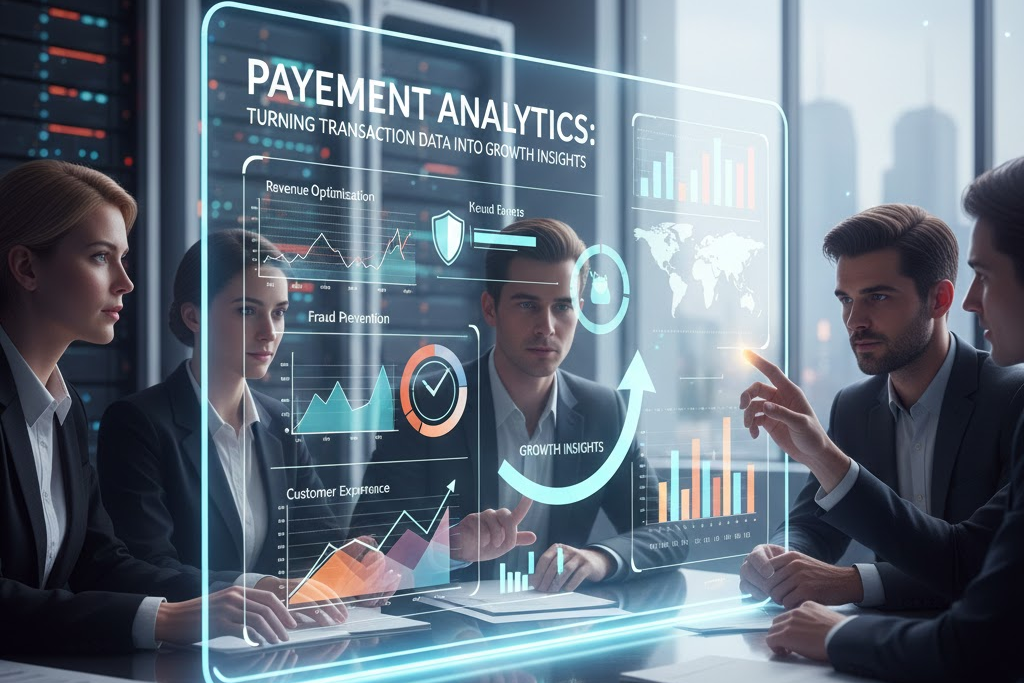
In today’s fast-paced digital economy, every transaction tells a story. Indeed, raw payment data, often overlooked, holds an extraordinary wealth of information just waiting to be uncovered. Therefore, payment analytics emerges as a critical discipline, transforming this vast stream of transaction data into actionable growth insights. Truly, it allows businesses to move beyond simple reporting, delving deep into customer behavior, operational efficiency, and revenue opportunities. Clearly, by harnessing the power of these insights, companies can make smarter decisions, optimize their payment strategies, and ultimately drive sustainable growth. Furthermore, ignoring this valuable data means leaving money and opportunities on the table.
Many businesses view payment data merely as a record of financial exchange. However, this perspective severely limits its potential. In reality, payment analytics provides a 360-degree view of your customer’s purchasing journey, from initial interest to successful checkout. This comprehensive understanding enables businesses to identify trends, predict future behaviors, and proactively address challenges. Always remember, the goal is not just to process payments, but to learn from them. This strategic approach turns every swipe, click, or tap into a valuable piece of intelligence, guiding future business decisions with precision and foresight.
The Foundation of Payment Analytics: What It Is and Why It Matters
To begin with, let’s clearly define what payment analytics actually entails. Simply put, payment analytics is the process of collecting, processing, and analyzing data generated from every financial transaction a business handles. This data includes information such as transaction amounts, payment methods, customer locations, timestamps, and even fraud attempts. Consequently, by applying various analytical techniques, businesses can uncover patterns, correlations, and anomalies that are invisible to the naked eye. This deeper understanding is paramount for making data-driven decisions that impact the bottom line.
Why Payment Analytics is Indispensable for Modern Businesses
Naturally, the importance of payment analytics cannot be overstated in the current competitive landscape. Firstly, it offers an unparalleled view into revenue optimization. By understanding which payment methods are preferred, where conversion rates drop, or how different pricing strategies impact sales, businesses can fine-tune their offerings. Secondly, it plays a vital role in fraud detection and prevention. Analyzing transaction patterns helps identify suspicious activities in real time, significantly reducing financial losses and protecting customer trust. Clearly, a robust analytics system can be your first line of defense.
Furthermore, payment analytics dramatically enhances customer experience. By knowing customer preferences and pain points in the payment journey, companies can streamline checkout processes, offer preferred payment options, and provide a seamless experience. This leads to higher customer satisfaction and loyalty. Lastly, it drives operational efficiency. Identifying bottlenecks in payment processing, understanding chargeback reasons, or optimizing vendor relationships can lead to substantial cost savings. Therefore, payment analytics moves beyond mere financial reporting, becoming a strategic tool for continuous improvement and growth.
Key Metrics and Dimensions in Payment Analytics
To truly extract value from your payment data, you must focus on the right metrics and dimensions. Indeed, simply collecting data is not enough; you need to know what questions to ask. Consequently, identifying key performance indicators (KPIs) relevant to payments allows you to measure success, pinpoint areas for improvement, and track progress over time. Therefore, a clear understanding of these metrics is fundamental to any effective payment analytics strategy.
Essential Metrics for Deeper Insights
First, consider conversion rates at various stages of the payment funnel. How many customers initiate a checkout versus how many complete it? Tracking this helps identify drop-off points. Next, examine average transaction value (ATV), which provides insights into customer spending habits. A rising ATV suggests effective upselling or a higher perceived product value. Furthermore, payment method breakdown is crucial. Understanding which payment types (credit card, digital wallet, bank transfer) are most popular among different customer segments enables you to optimize your offerings.
Moreover, chargeback rates are critical for assessing fraud and customer dissatisfaction. A high chargeback rate indicates underlying issues that need immediate attention. You should also track payment success rates, identifying any recurring errors or declines that might be deterring customers. Additionally, transaction volume and frequency over time can reveal seasonal trends and peak periods, informing staffing and inventory decisions. Finally, customer lifetime value (CLV), when viewed through the lens of payment data, offers insights into the long-term profitability of different customer segments. Truly, a holistic view of these metrics empowers businesses to make informed, impactful decisions.
Leveraging Payment Analytics for Revenue Optimization
One of the most immediate and impactful benefits of payment analytics is its ability to directly influence revenue. By scrutinizing transaction data, businesses can uncover opportunities to increase sales, improve conversion rates, and enhance profitability. Clearly, a deeper understanding of payment trends allows for targeted strategies that resonate with customer preferences and overcome potential hurdles in the buying journey. Therefore, every business aiming for growth must prioritize this area.
Strategies for Boosting Your Top Line
Firstly, use payment analytics to optimize your payment mix. By identifying the most preferred payment methods for different demographics or regions, you can ensure these options are prominently displayed and seamlessly integrated. For example, if mobile wallet usage is surging in a particular market, prioritizing that option can significantly boost conversions. Secondly, analyze data to identify and mitigate conversion bottlenecks. Perhaps a specific payment gateway consistently experiences higher failure rates, or customers abandon carts at the final payment step. Pinpointing these issues allows for targeted improvements, such as switching providers or simplifying the checkout flow.
Furthermore, payment analytics assists in dynamic pricing and promotions. Understanding how different price points or discount structures impact payment behavior and overall revenue enables businesses to tailor offers more effectively. For instance, you might discover that a specific payment method user responds better to loyalty rewards. Also, analyze subscription payment data to reduce churn. Identifying patterns in failed recurring payments, such as expired cards, allows for proactive communication and retries, thereby preserving recurring revenue. Ultimately, this strategic application of payment data ensures you’re not just processing transactions, but actively growing your revenue streams.
Enhancing Security and Fraud Prevention with Payment Analytics
In the digital landscape, where cyber threats are constantly evolving, safeguarding transactions against fraud is paramount. Payment analytics plays an indispensable role in strengthening security measures and proactively detecting suspicious activities. Consequently, by analyzing payment data patterns, businesses can build more robust fraud prevention systems, protect their financial integrity, and maintain customer trust. Clearly, neglecting this aspect can lead to significant financial losses and reputational damage.
Building Robust Fraud Detection Systems
Firstly, payment analytics enables the identification of unusual transaction patterns. Fraudulent activities often deviate significantly from normal purchasing behavior. For example, multiple small purchases from different geographic locations in a short period, or unusually high-value transactions from new customers, can be red flags. By establishing baselines of normal behavior, analytics systems can flag these anomalies for further investigation. This real-time detection is crucial for mitigating damage.
Secondly, you can use payment data to enrich fraud models. Integrating data points like IP addresses, device fingerprints, shipping addresses, and customer transaction history provides a more comprehensive picture for machine learning-based fraud detection algorithms. These algorithms learn from past fraudulent and legitimate transactions to predict future risks with high accuracy. Furthermore, analytics helps in reducing false positives. While aggressive fraud detection can block legitimate transactions, payment analytics refines the rules, ensuring that valid customers can complete their purchases without unnecessary friction, thereby improving the customer experience. Ultimately, leveraging payment analytics for fraud prevention transforms your security from a reactive measure into a proactive, intelligent defense mechanism.
Driving Operational Efficiency and Customer Experience
Beyond revenue and security, payment analytics offers profound benefits for streamlining operations and elevating the customer experience. In fact, by understanding the intricate details of how payments flow through your systems and how customers interact with them, businesses can identify inefficiencies and pinpoint areas for service improvement. Truly, an optimized payment journey directly translates into higher customer satisfaction and loyalty.
Streamlining Processes and Delighting Customers
Firstly, payment analytics helps in optimizing payment gateway performance. By monitoring success rates and latency across different providers, businesses can identify underperforming gateways or regions where specific providers excel. This allows for intelligent routing of transactions, ensuring higher success rates and faster processing times. Furthermore, analyzing transaction failure reasons—such as insufficient funds, incorrect card details, or technical errors—enables proactive communication with customers or internal system adjustments, thereby reducing abandoned carts.
Secondly, analytics provides insights into customer payment preferences, which is vital for enhancing the user experience. For instance, if a significant portion of your mobile users prefers digital wallets, making those options easily accessible and intuitive can significantly improve checkout speed and convenience. Conversely, if a particular region heavily relies on bank transfers, ensuring that option is robustly supported is crucial. Moreover, understanding chargeback reasons goes beyond fraud; it can reveal issues with product delivery, unclear billing, or poor customer service, prompting improvements across various operational touchpoints. In sum, payment analytics empowers businesses to fine-tune every aspect of their payment infrastructure, leading to smoother operations and a superior experience for every customer.
Frequently Asked Questions (FAQs)
Q1: What kind of data is included in payment analytics?
Payment analytics includes a wide range of transaction data, such as transaction amounts, timestamps, payment methods used (credit card, digital wallet, bank transfer), customer location, currency, device used for payment, success/failure status, and details related to chargebacks or refunds. It can also incorporate demographic and behavioral data if available.
Q2: How can payment analytics help reduce cart abandonment?
Payment analytics helps reduce cart abandonment by identifying common drop-off points and reasons for transaction failures. By analyzing data on where customers leave the checkout process, which payment methods fail most often, or what technical errors occur, businesses can pinpoint issues and make targeted improvements to streamline the payment flow and improve success rates.
Q3: Is payment analytics only useful for large enterprises?
Absolutely not! While large enterprises often have vast amounts of data, payment analytics is equally beneficial for small and medium-sized businesses (SMBs). Even with smaller transaction volumes, SMBs can gain valuable insights into customer preferences, identify fraud patterns, optimize payment costs, and improve their overall operational efficiency, leading to significant growth.
Q4: How does payment analytics contribute to better customer experience?
Payment analytics enhances customer experience by allowing businesses to understand and cater to customer preferences. By knowing which payment methods are preferred, which parts of the checkout process cause friction, or why transactions fail, companies can optimize their payment offerings, simplify the checkout flow, and provide proactive support, leading to smoother, more satisfying interactions.
Q5: What’s the difference between payment analytics and general financial reporting?
General financial reporting typically focuses on historical data to track overall financial health (e.g., total revenue, expenses, profits). Payment analytics, however, delves much deeper into the details of payment transactions to uncover actionable insights, predict future trends, optimize processes, and identify specific opportunities for growth, fraud prevention, and customer experience improvement.