Everything You Need to Know About Payment Gateway Before Launching Your Subscription Box

Everything You Need to Know About Payment Gateway Before Launching Your Subscription Box

India’s subscription box market is booming. From beauty products to books, pet care to gourmet snacks — more Indian consumers are signing up for curated monthly boxes than ever before. But here’s the thing. Running a subscription box business is not just about great packaging or handpicked products. It’s also about getting paid — reliably, automatically, and on time, every single month. That’s exactly where a payment gateway becomes your most important business tool.

In this guide, we’ll walk you through everything you need to know. So, whether you’re just starting out or scaling fast, you’ll find the right payment solution for your subscription brand.


Why Payment Gateways Matter More for Subscription Boxes

First, let’s understand why this topic deserves special attention.

A standard e-commerce business collects a one-time payment. Simple. But a subscription box business collects recurring payments — weekly, monthly, or quarterly. That changes everything.

You need a gateway that supports:

  • Automatic recurring billing
  • Failed payment retries
  • Subscription plan management
  • Smooth UPI and wallet integration
  • RBI-compliant e-mandate flows

Without these features, you’ll spend hours every month chasing payments manually. That’s not scalable. And it’s certainly not how successful brands operate.


Understanding How Recurring Payments Work in India

Before picking a gateway, it helps to understand the rules.

The Reserve Bank of India (RBI) introduced e-mandate guidelines for recurring transactions. Under these rules, customers must give explicit consent before auto-debits happen. For transactions above ₹15,000, additional authentication is required each time.

This framework protects customers. But it also means your payment gateway must be fully compliant with these regulations.

Fortunately, the top gateways in India have already built this into their systems. So, as long as you choose wisely, compliance won’t be a headache.


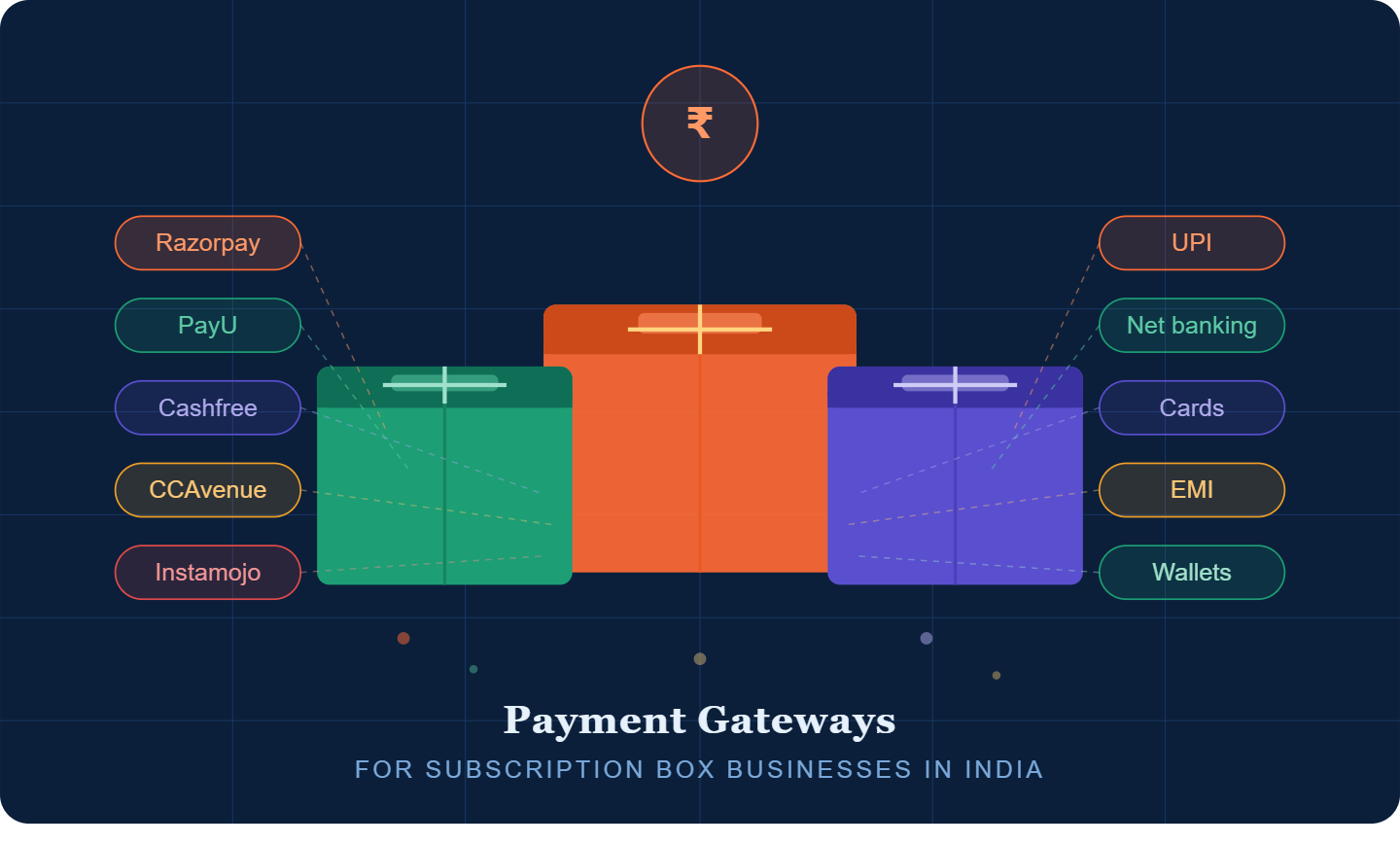
Top Payment Gateways for Subscription Box Businesses in India
Everything You Need to Know About Payment Gateway Before Launching Your Subscription Box

Now, let’s get into the real comparison.

1. Razorpay — Best Overall for Subscription Businesses

Razorpay is arguably the most popular choice among Indian D2C brands. And for good reason.

It offers a dedicated Subscriptions API that lets you create flexible billing plans easily. You can set weekly, monthly, or annual cycles. Moreover, Razorpay handles failed payment retries automatically — a feature that dramatically reduces churn.

It also supports UPI AutoPay, which is a big deal in India right now. UPI AutoPay lets customers set up auto-debits without needing to enter their card details. This increases sign-up conversions significantly.

Additionally, Razorpay’s dashboard gives you clear visibility into active subscribers, upcoming renewals, and failed transactions. For growing brands, that kind of data is gold.

Transaction fees start at around 2% per transaction. For high-volume businesses, they offer custom pricing.

2. PayU — Great for Established Brands

PayU is another strong contender. It’s been in the Indian market for years, so its reliability is well-established.

PayU supports recurring billing through its subscription management tools. It also integrates smoothly with most popular e-commerce platforms like WooCommerce, Shopify, and Magento.

Furthermore, PayU offers one of the widest coverage of banks for net banking. This is useful if your customer base skews toward older demographics who prefer traditional banking over UPI.

However, PayU’s interface is not as modern as Razorpay’s. That said, its backend stability makes it a trusted choice for businesses processing higher volumes.

3. Cashfree Payments — Best for Fast Settlements

If cash flow is a priority — and for most small subscription brands, it absolutely is — then Cashfree deserves serious attention.

Cashfree offers same-day and next-day settlement options. That means the money your customers pay today can be in your account by tomorrow. For businesses with tight operating margins, this makes a real difference.

Cashfree also has strong subscription billing capabilities, including support for UPI AutoPay and e-NACH (electronic National Automated Clearing House) mandates. Its API is clean and developer-friendly, too.

In terms of pricing, Cashfree is competitive and transparent. It also offers a free plan for early-stage startups — something worth noting if you’re just launching.

4. CCAvenue — Best for Multiple Payment Options

CCAvenue has one of the widest arrays of payment options among Indian gateways. It supports over 200 payment modes. These include all major credit and debit cards, UPI, net banking across 58+ banks, EMI options, and digital wallets.

For subscription box businesses targeting a broad customer base — including tier 2 and tier 3 cities — this kind of coverage matters. Not everyone in India uses UPI or has a premium credit card. CCAvenue fills those gaps effectively.

Its recurring billing feature handles automated deductions. Moreover, it provides multi-currency support, which is useful if you plan to expand internationally.

One downside is that CCAvenue’s onboarding process can be slower compared to Razorpay or Cashfree. But once it’s set up, it’s a solid, stable platform.

5. Instamojo — Best for Small and Early-Stage Businesses

If you’re just starting your subscription box journey, Instamojo is worth exploring. It’s simple to set up. It requires minimal technical knowledge. And it’s designed specifically for small Indian businesses.

Instamojo lets you create payment links and basic subscription plans without writing a single line of code. So, for solopreneurs or bootstrapped founders, it offers a low-barrier entry point.

That said, it’s not ideal for high-volume or technically complex subscription models. As you scale, you’ll likely need to migrate to a more robust platform.


Key Features to Look for in a Subscription Payment Gateway

Beyond brand names, here are the features that truly matter when evaluating any gateway:

Recurring billing support. This is non-negotiable. Make sure the gateway handles automatic renewals without manual intervention.

RBI e-mandate compliance. Your gateway must support the latest RBI guidelines for recurring debit transactions. Non-compliant gateways create legal and operational risk.

UPI AutoPay integration. UPI is India’s dominant payment rail. AutoPay on UPI removes friction from the subscription sign-up process.

Retry logic for failed payments. Every subscription business deals with failed payments. Smart retry logic — where the system automatically reattempts the charge — dramatically reduces involuntary churn.

Webhook and API access. If you use a custom platform or CRM, you’ll need clean webhook support to sync payment events in real time.

Transparent pricing. Hidden fees eat into margins. Always read the fine print before committing to a gateway.


Common Mistakes to Avoid

Even experienced founders make avoidable payment mistakes. Here are a few to watch out for.

Many businesses underestimate failed payment rates. On average, 5–10% of recurring payments fail each cycle due to expired cards, insufficient funds, or bank issues. Without a retry mechanism, that’s revenue lost permanently.

Another common mistake is ignoring the checkout experience. A clunky, slow, or unfamiliar payment screen kills conversions. Always A/B test your checkout flow.

Finally, some brands delay setting up proper e-mandates. If you launch recurring billing without proper mandates in place, you risk RBI non-compliance — and that can freeze your payment processing entirely.


Which Gateway Should You Choose?

Here’s a quick way to think about it.

If you want an all-round solution with great subscription tools and UPI AutoPay, go with Razorpay and if cash flow is critical and you want fast settlements, choose Cashfree. But if you serve a wide, diverse customer base across India, CCAvenue covers more payment options or if you’re a small brand just starting out, Instamojo is the simplest entry point.

Ultimately, there’s no single right answer. The best payment gateway is the one that fits your business stage, tech stack, and customer base.


Final Thoughts

Running a subscription box business in India is exciting. The market is growing. Consumers are warming up to the model. And the tools available to founders today are better than ever.

But none of that matters if your payments fail, your billing is broken, or your customers churn because the renewal process is frustrating.

Your payment gateway is not a background tool. It’s the engine that keeps your subscription business alive.

So, choose it carefully. Set it up properly. And revisit the decision as your business grows.

Because when payments work seamlessly, everything else becomes a little easier.


Found this guide helpful? Share it with a fellow subscription brand founder who’s still figuring out their payment gateway stack.


Read More:

Regulatory Sandboxes for Fintechs: Opportunities & Risks in India

How Offline payments Secure the Local Economy?

Building a Better finance Future with ESG Standards

Regulatory Sandboxes for Fintechs: Opportunities & Risks in India
Regulatory Sandboxes for Fintechs: Opportunities & Risks in India
The world of finance is moving fast, and India is leading the way with new ideas. To make sure these ideas are safe, the government uses a special tool called a regulatory sandbox. This is a controlled space where fintechs can test their new products with real users. For instance, testing how to pay without internet is a top priority right now. Because the rules are flexible in this space, fintechs can learn quickly without breaking the law. In short, these sandboxes are the best way to build the future of Indian money.

Regulatory Sandboxes for Fintechs: Opportunities & Risks in India
Why Sandboxes Matter for New Ideas

Creating a new app for a billion people is a very hard task. Traditional rules are often too strict for tiny startups with big dreams. Consequently, many fintechs worry about failing before they even start. This is because a sandbox provides a safety net for everyone involved. Furthermore, it allows the regulator to see how new tech works in the real world. Therefore, the sandbox approach helps fintechs grow while keeping the whole system stable and secure.

Another big hurdle is the high cost of following every single rule. For instance, a small team might not have the money for a full banking license. If they can test in a sandbox first, they can prove their idea works. Thus, the government encourages fintechs to join these programs to spark more competition. A smart sandbox strategy solves the problem of slow innovation by moving at the speed of tech. This keeps India ahead in the global race for digital dominance.


Opportunities for Growth in India

Testing offline payments is a vital tool for rural success. In many parts of India, the internet is not always strong or fast. Because fintechs are building tools that work without a signal, they can reach the last mile. Furthermore, these tests show if a product is easy enough for everyone to use. This means a farmer in a remote village can pay for seeds just as easily as a city worker. In short, India wins when fintechs focus on solving real-world problems for every citizen.

Access to expert guidance is another great benefit of the sandbox. Instead of guessing the rules, firms talk directly to the central bank. Because this relationship is open and honest, it builds a lot of trust. Furthermore, a successful test in a sandbox acts like a badge of honor for fintechs looking for investors. This means they can raise money faster and expand their reach across the country. Therefore, the sandbox is more than just a test; it is a launchpad for the next big thing.


Risks and Challenges in the Sandbox

Safety is the most important part of any financial test. Even in a controlled space, things can go wrong with real money. Luckily, new AI tools are great at spotting risks before they become big problems. If a test shows a security gap, the system can be paused or fixed fast. This keeps the users and the fintechs safe from hackers and fraud. Because the regulators are watching closely, they can stop any bad behavior instantly. Thus, the sandbox stays a secure place for everyone.

Additionally, some people worry about what happens after the test ends. Moving from a sandbox to the real market is a big jump for most fintechs today. It requires more money, more staff, and a much bigger focus on safety. When a firm leaves the sandbox, the rules become much harder to follow. Therefore, the risk of a mistake is higher once the safety net is gone. This is why the journey from the sandbox to the real world must be planned very carefully. Finally, clear rules ensure that the transition is smooth for the users.


The Big Future of Indian Innovation

We are only at the start of a massive shift in how we handle money. Soon, every village in India will have access to fast and safe digital tools. This means we will see a huge boost in local businesses and family savings. Instead of a hard process, we get a tailored world of easy trade for all. Forward-thinking fintechs make every transaction feel like a step toward a digital India. It is the best way to build a strong economy in 2026. If you want to lead, you must join these sandbox programs now. In conclusion, the right balance of rules and freedom will change India forever.


Frequently Asked Questions

1. What is a regulatory sandbox for fintechs?

It is a safe testing ground where new financial tools are checked by regulators before a full launch.

2. Why is India focusing on offline payments?

Because many rural areas have poor internet, and offline tools ensure everyone can join the digital economy.

3. Is my money safe during a sandbox test?

Yes, regulators set strict limits and protections to ensure no user loses their money during the trial.

4. How long does a sandbox test usually last?

Most tests in India last between six to nine months, depending on how complex the product is.

5. Can any startup join the sandbox?

Most fintechs can apply, but they must show their idea is new, safe, and solves a real problem for India.


Read More:

How Offline payments Secure the Local Economy ?

Building a Better finance Future with ESG Standards

How a payment gateway Makes Virtual Shopping Seamless?

Building a Better finance Future with ESG Standards

Building a Better finance Future with ESG Standards

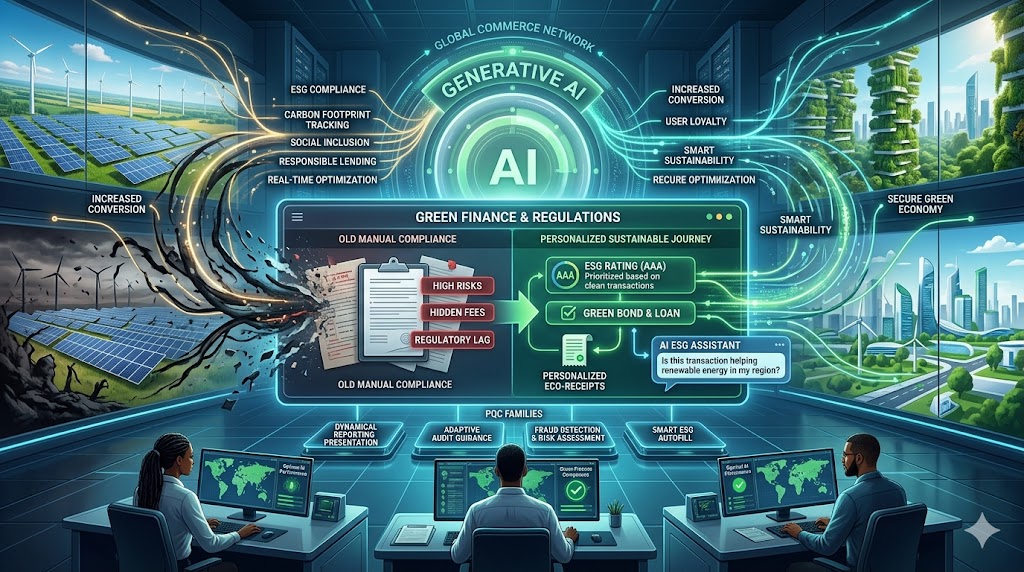
The world of money is changing to help save our planet. Today, many people care about the environment and social fairness. This is often called ESG. Because these values are so important, they are now part of global finance. Therefore, banks and payment firms must follow new green rules to stay in business. If they ignore these trends, they might face heavy fines and lose their good name. In short, the future of finance is green.


Why ESG Matters for Every Transaction

Traditional banking used to focus only on profits and speed. However, regulators now look at how money flows affect the earth. Consequently, every major player in finance must track their carbon footprint. This is because digital payments use a lot of energy in data centers. Furthermore, users want to know if their bank supports clean energy. Therefore, finance is no longer just about numbers; it is about values.

Another big issue is social fairness in the payment world. For instance, many people in poor areas still lack basic tools to pay. If a system is not inclusive, it fails the “S” in ESG. Thus, modern finance must ensure that everyone has a fair chance to use digital money. A smart strategy solves this by offering low-cost tools for every citizen. This keeps the economy healthy and builds a better society for all.

Building a Better finance Future with ESG Standards

How New Regulations Change the Game

Strict green rules are a vital part of modern trade. In many regions, firms must report how much energy their systems consume. Because this transparency is required by law, it builds more trust with the public. Furthermore, a green approach in finance can lead to lower taxes for eco-friendly firms. This means that being good to the planet can actually save a company money. In short, finance wins when it aligns with the health of the world.

Green bonds and sustainable loans are also growing fast. Instead of generic funding, banks offer special deals for green projects. Because these loans are tied to ESG goals, they encourage better behavior. Therefore, finance experts are building new frameworks to track these results accurately. This ensures that the money actually helps build wind farms or solar plants. Finally, these regulations ensure that “green” is a real action and not just a marketing trick.


Staying Safe and Compliant

Security and ethics are the most important parts of green trade. Hackers are always looking for ways to exploit new systems. Luckily, new AI tools are great at spotting fraud while staying energy-efficient. If a transaction looks odd, the system stops it fast. This keeps your money and your data very safe. Because the AI is so smart, it rarely blocks real customers. Thus, finance stays strong and secure for every global user.

Additionally, digital receipts help reduce waste without making the process slow. It uses cloud tech to prove the sale is real in a second. When you use these tools, the checkout flow feels very smooth and eco-friendly. You just click and go. Therefore, the risk of a mistake or paper waste is very low. This is the future of finance in a sustainable world. Finally, safety ensures that users feel comfortable trusting their money with green firms.


The Big Future of Sustainable Money

We are only at the start of a massive green shift. Soon, every payment app will show you the carbon cost of your coffee or clothes. This means we will see a huge need for clear and honest data. Instead of a hard process, we get a tailored world of green choices. Sustainable finance makes every transaction feel like a positive step for the earth. It is the best way to shop in 2026. If you want to stay ahead, you must use these green tools now. In conclusion, ESG is the new engine for global growth.


Frequently Asked Questions

1. Does green finance make payments more expensive?

No, it often leads to better efficiency which can lower costs for the user over time.

2. How does a payment app help the planet?

By using green data centers and offering digital receipts to save millions of trees.

3. What does ESG stand for in banking?

It stands for Environmental, Social, and Governance rules that guide fair and green trade.

4. Can I choose a green bank for my store?

Yes, many banks now have special ESG ratings to show they are eco-friendly.

5. Will all finance become green soon?

Yes, most global regulators are making green rules a requirement for all firms by 2027.


Read More:

How a payment gateway Makes Virtual Shopping Seamless?

Why does E-commerce fail at the cross-border checkout?

Why Generative AI is the Future of E-commerce: Full Guide

Why does E-commerce fail at the cross-border checkout?

Why does E-commerce fail at the cross-border checkout?

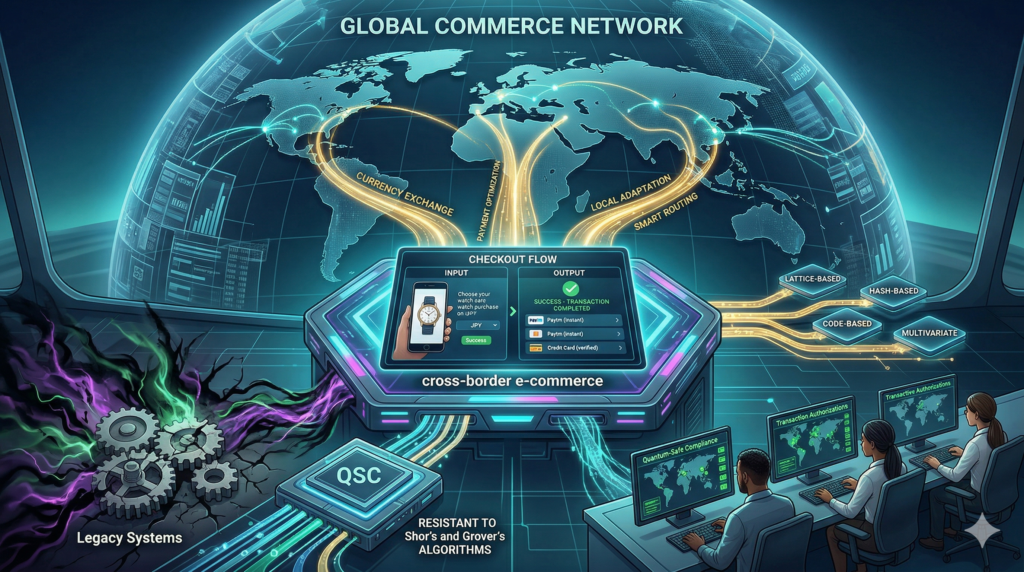
Global trade is moving faster than ever before. Most online stores now look for customers in every corner of the world. However, selling across borders brings many difficult hurdles. This is because every country has its own rules and preferred ways to pay. Therefore, businesses must find smart ways to handle these gaps. If they fail, they risk losing sales and trust. Successful e-commerce depends on a smooth and safe payment journey for everyone.


The Big Problems for Global Sellers

High fees are a major enemy of global growth. When a customer buys something from another country, banks often take a large cut. Consequently, the final price becomes too high for the shopper. This is because currency exchange rates are often unfair. Furthermore, hidden costs can surprise the customer at the final step. This leads to cart abandonment. Therefore, e-commerce firms must be very clear about all costs from the start.

Another big issue is the variety of payment habits. For instance, shoppers in Europe might prefer digital wallets. Meanwhile, customers in Asia might use QR codes or local bank transfers. If a store only offers credit cards, it will fail in these regions. Thus, a one-size-fits-all plan does not work. Every e-commerce site needs to adapt to local tastes to stay ahead.

Why does E-commerce fail at the cross-border checkout?

Solutions for a Better Payment Journey

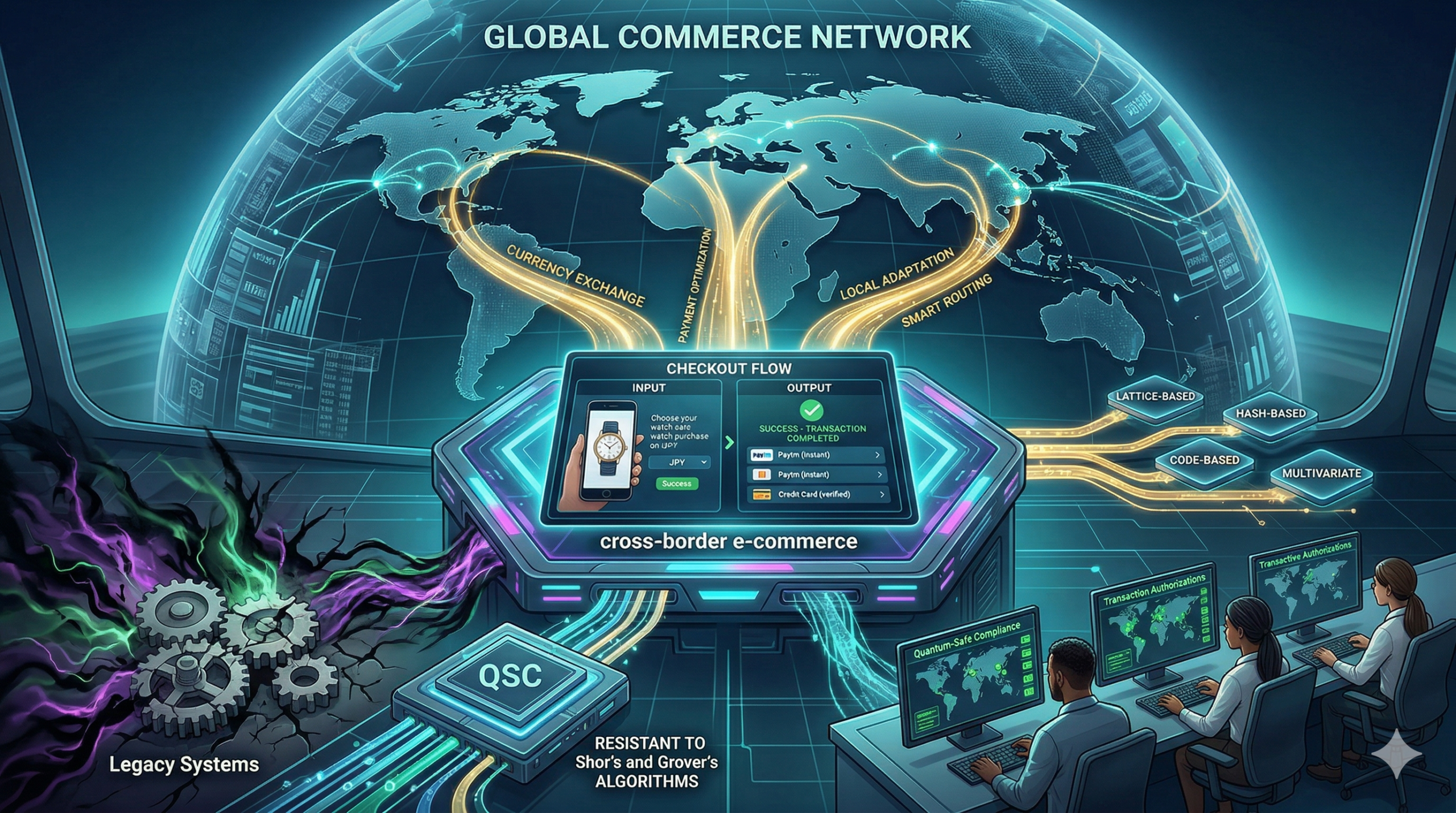
Multi-currency pricing is a vital tool for success. Customers want to see prices in their own money. Because this removes confusion, it builds instant trust. Furthermore, using a local acquiring bank can reduce transaction fees. This means the store keeps more profit while the user pays less. In short, e-commerce wins when the math is simple for the buyer.

Smart routing is another great way to fix failures. Sometimes, a bank might block a foreign payment by mistake. However, modern systems can instantly try a different bank to finish the sale. This keeps the flow moving without any delay. Because the user does not see the struggle, the experience feels like magic. Therefore, e-commerce platforms must use these intelligent tools to prevent lost sales.


Staying Safe Against Global Fraud

Security is the most important part of any global sale. Hackers are always looking for ways to steal data across borders. Luckily, new AI tools are great at spotting fraud by looking at millions of data points. If a transaction looks odd, the system stops it fast. This keeps your money and data very safe. Because the AI is so smart, it rarely blocks real customers. Thus, e-commerce stays strong and secure for everyone.

Additionally, 3D Secure 2.0 helps verify identity without making the process slow. It uses data to prove the user is real in the background. When you use these tools, the checkout flow feels very smooth. You just click and go. Therefore, the risk of a mistake or theft is very low. This is the future of e-commerce in a connected world. Finally, safety ensures that your brand grows a good name worldwide.


The Future of Global Trade

We are only at the start of a massive shift. Soon, every store will use local solutions to talk to global fans. This means we will see faster shipping and lower fees for everyone. Instead of a hard process, we get a tailored world of products. E-commerce makes every global transaction feel like a local one. It is the best way to trade in 2026. If you want to stay ahead, you must use these solutions now. In conclusion, a better payment journey is the key to global success.


Frequently Asked Questions

1. Why do global payments often fail?

They fail because banks might flag foreign cards as high-risk or due to technical errors in legacy systems.

2. How can I reduce currency exchange fees?

You should use a local payment provider or an e-wallet that offers better rates than traditional banks.

3. What is the best payment method for Asia?

Local digital wallets and QR-based systems are the most popular choices for shoppers in that region.

4. Does 3D Secure slow down my checkout?

No, the 2.0 version is much faster and often works in the background without bothering the user.

5. Is it hard to set up multi-currency pricing?

Most modern payment gateways offer this feature as a simple setting you can turn on.


Read More:

Why Generative AI is the Future of E-commerce: Full Guide

The Quantum Threat: Why Payment Security Must Evolve Today

Why generative ai is the Future of E-commerce: Full Guide

How generative ai Solves Your Cart Abandonment Issues: Full Guide

Most online stores lose customers at the final step because traditional checkout pages are often slow and boring. Now, generative ai is changing that forever by creating a personal path for every shopper. Because this technology learns what you like and how you want to pay, buying things online is faster than ever. Furthermore, smart stores use generative ai to turn one-time shoppers into loyal fans. This shift is vital for any brand that wants to grow. Consequently, the payment journey is no longer just a task; it is an experience.

Why generative ai is the Future of E-commerce: Full Guide

Why Old Checkout Systems Fail

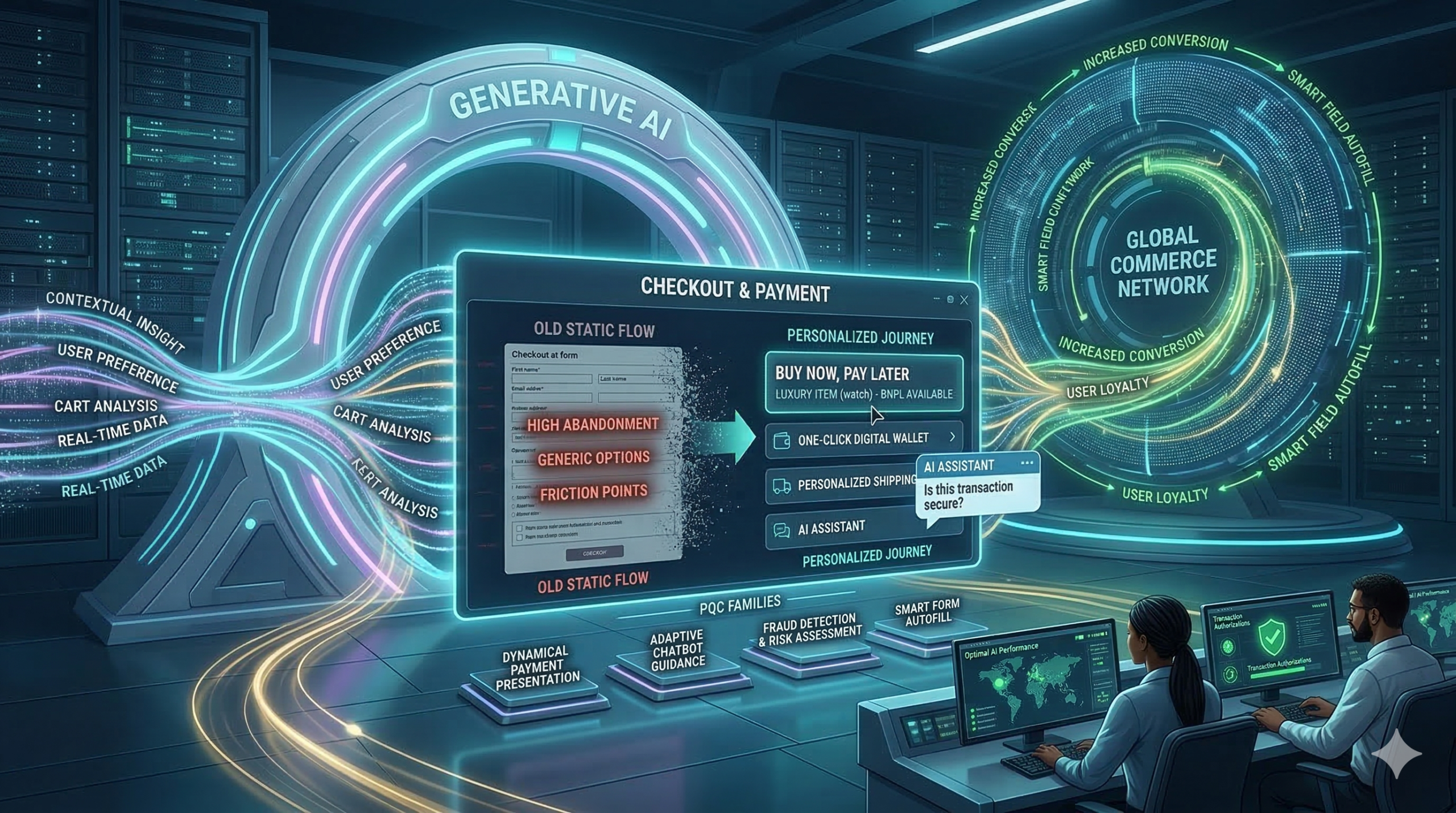
Static forms are the biggest enemy of sales because most shops show the same fields to everyone. Consequently, many people leave their carts empty. This is because the process feels long and hard. Generative ai solves this by making every page unique for the user. For instance, it knows if you are on a phone or a laptop. Furthermore, it predicts which payment method you prefer. Therefore, you spend less time typing and more time enjoying your purchase. In short, ai removes the friction that kills sales.


Real-Time Help with Generative AI

Shopping can sometimes feel confusing, especially when you have questions about shipping or taxes. Standard help pages are often hard to find. However, ai adds a smart assistant to the page to guide you. This bot answers your questions in seconds. Because the bot knows your cart, it gives perfect advice. This builds trust and keeps you moving forward. In addition, ai makes sure you never feel alone while shopping.

Moreover, these bots can offer special deals at the perfect moment. If you hesitate, the generative ai might give you a small discount to help you decide. As a result, shoppers feel valued and safe. Generative ai is not just a tool; it is a digital guide. Because of these benefits, top brands are moving to AI today. Therefore, the checkout flow becomes a conversation instead of a form.


Safer and Faster Payments

Security is the most important part of any sale because hackers are always looking for ways to steal data. Luckily, ai is great at spotting fraud by looking at millions of data points in real-time. If it sees something odd, it stops the threat fast. This keeps your money and data very safe. Because the ai is so smart, it rarely blocks real customers. Thus, generative ai makes payment security much stronger for everyone.

Additionally, generative ai helps with filling out forms by guessing your address with high accuracy. This reduces errors and saves time for the customer. When you use generative ai, the checkout flow feels like magic. You just click and go. Therefore, the risk of a mistake is very low. This is the future of ai in the payment world. Finally, this technology ensures that safety does not come at the cost of speed.


The Big Future of Generative AI

We are only at the start of this change. Soon, every store will use ai to talk to us. It will know our size, our style, and our budget. This means we will see fewer ads we do not like. Instead, we get a tailored world of products. Generative ai makes every transaction feel human. It is the best way to shop in 2026. If you want to stay ahead, you must use generative ai now. In conclusion, the personalized payment journey is the new standard for global trade.


Frequently Asked Questions

1. Is generative ai safe for my credit card?

Yes, it improves security by spotting fraud much faster than older systems.

2. Does generative ai make my phone slow?

No, most of the work happens on fast servers, so your phone stays quick.

3. Why do stores need ai?

It helps them sell more by making the checkout process easy and personal for everyone.

4. Can generative ai help with returns?

Yes, it can guide you through the return process and answer policy questions instantly.

5. Will all stores use generative ai soon?

Yes, it is becoming the global standard for all top e-commerce websites.


Read More:

Why Generative AI is the Future of E-commerce: Full Guide

The Quantum Threat: Why Payment Security Must Evolve Today

Why Europe Now Dictates Global Payment Standards?

Why generative ai is the Future of E-commerce

Why Generative AI is the Future of E-commerce: Full Guide

Most online stores lose customers at the final step because traditional checkout pages are often slow and boring. Now, generative ai is changing that forever by creating a personal path for every shopper. Because this technology learns what you like and how you want to pay, buying things online is faster than ever. Furthermore, smart stores use generative ai to turn one-time shoppers into loyal fans. This shift is vital for any brand that wants to grow. Consequently, the payment journey is no longer just a task; it is an experience.


Why Old Checkout Systems Fail

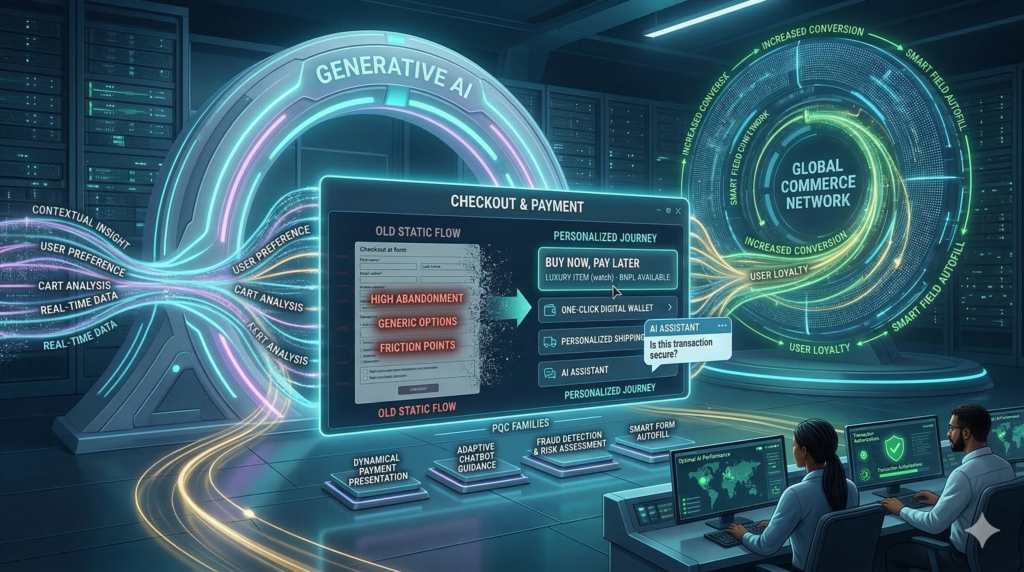
Static forms are the biggest enemy of sales because most shops show the same fields to everyone. Consequently, many people leave their carts empty. This is because the process feels long and hard. Generative ai solves this by making every page unique for the user. For instance, it knows if you are on a phone or a laptop. Furthermore, it predicts which payment method you prefer. Therefore, you spend less time typing and more time enjoying your purchase. In short, it removes the friction that kills sales.

Why generative ai is the Future of E-commerce

Real-Time Help with Generative AI

Shopping can sometimes feel confusing, especially when you have questions about shipping or taxes. Standard help pages are often hard to find. However, generative ai adds a smart assistant to the page to guide you. This bot answers your questions in seconds. Because the bot knows your cart, it gives perfect advice. This builds trust and keeps you moving forward. In addition, it makes sure you never feel alone while shopping.

Moreover, these bots can offer special deals at the perfect moment. If you hesitate, the generative ai might give you a small discount to help you decide. As a result, shoppers feel valued and safe. It is not just a tool; it is a digital guide. Because of these benefits, top brands are moving to AI today. Therefore, the checkout flow becomes a conversation instead of a form.


Safer and Faster Payments

Security is the most important part of any sale because hackers are always looking for ways to steal data. Luckily, generative ai is great at spotting fraud by looking at millions of data points in real-time. If it sees something odd, it stops the threat fast. This keeps your money and data very safe. Because the generative ai is so smart, it rarely blocks real customers. Thus, it makes payment security much stronger for everyone.

Additionally, it helps with filling out forms by guessing your address with high accuracy. This reduces errors and saves time for the customer. When you use it, the checkout flow feels like magic. You just click and go. Therefore, the risk of a mistake is very low. This is the future of generative ai in the payment world. Finally, this technology ensures that safety does not come at the cost of speed.


The Big Future of Generative AI

We are only at the start of this change. Soon, every store will use generative ai to talk to us. It will know our size, our style, and our budget. This means we will see fewer ads we do not like. Instead, we get a tailored world of products. It makes every transaction feel human. It is the best way to shop in 2026. If you want to stay ahead, you must use generative ai now. In conclusion, the personalized payment journey is the new standard for global trade.


Frequently Asked Questions

1. Is generative ai safe for my credit card?

Yes, it improves security by spotting fraud much faster than older systems.

2. Does generative ai make my phone slow?

No, most of the work happens on fast servers, so your phone stays quick.

3. Why do stores need generative ai?

It helps them sell more by making the checkout process easy and personal for everyone.

4. Can generative ai help with returns?

Yes, it can guide you through the return process and answer policy questions instantly.

5. Will all stores use generative ai soon?

Yes, it is becoming the global standard for all top e-commerce websites.


Read More:

The Quantum Threat: Why Payment Security Must Evolve Today

Why Europe Now Dictates Global Payment Standards?

How the new digital payments landscape is ending US dollar dominance?


How a Trade Agreement Protects Your Brand in New Markets

How a Trade Agreement Protects Your Brand in New Markets

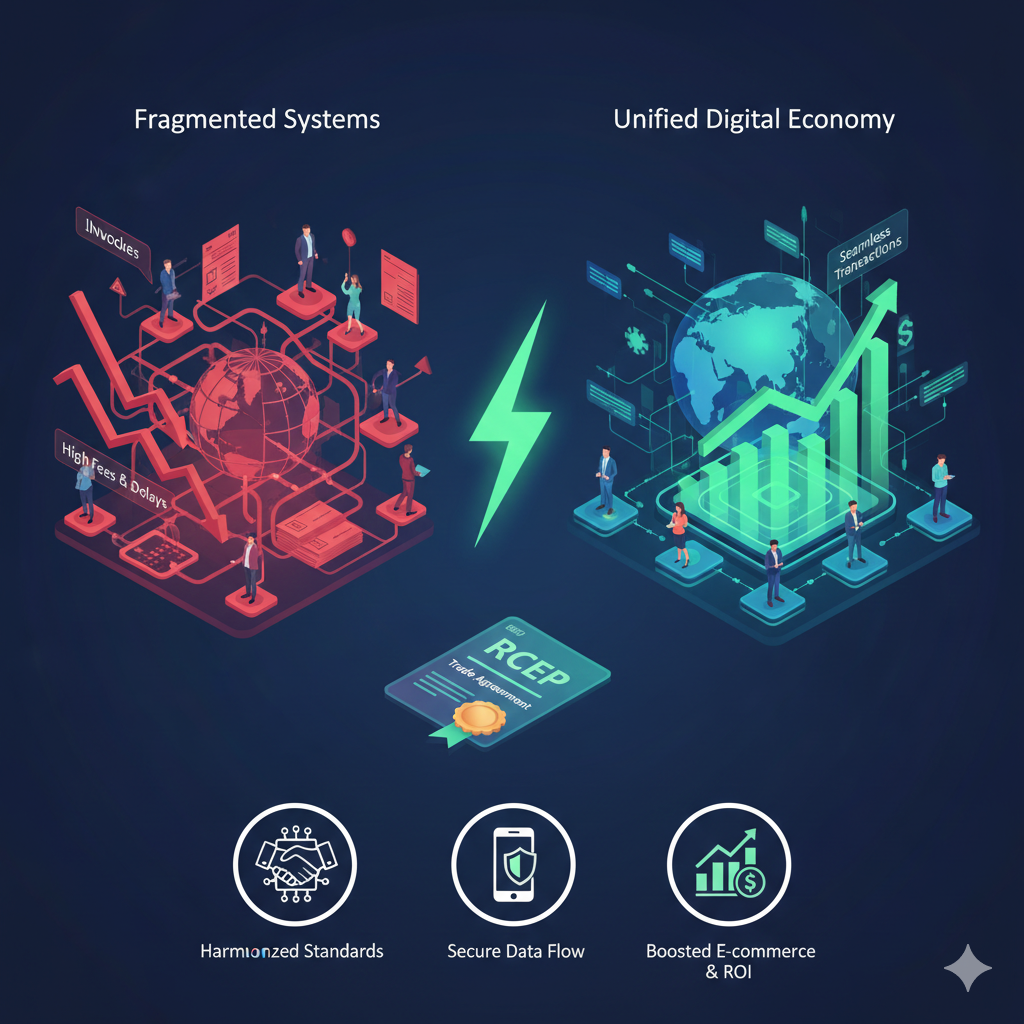
The world of global commerce is moving at a very fast pace today. Modern firms must look toward a smart and flexible leader to stay ahead. Specifically, a trade agreement like RCEP now changes how money moves across borders. This shift offers a clear map for success and a very professional way to work. Therefore, knowing how a trade agreement affects your digital growth is a vital step for your firm. This move is not just a trend for small teams. In fact, it is a very smart investment for any brand today. Consequently, a smart choice helps you build a future proof brand name. You will see a clear gain by following this powerful and strategic lead.

How a Trade Agreement Protects Your Brand in New Markets

Breaking Down Barriers with a Regional Trade Agreement

Many firms find that turning a big plan into real work is very hard. However, a major trade agreement helps to bridge this gap between strategy and action. Traditional ways are often too expensive and slow for most small firms. Specifically, poor digital flow can hide many deep and dark costs of old manual habits. By following a solid trade agreement, countries agree to lower these hurdles. Furthermore, finding a top tool that works across many borders is rare. You also miss out on fast moves while your output stays low. Similarly, a unified trade agreement ensures your payment tech stays for the long term. This helps your growth move forward at a steady pace.

Setting a Gold Standard for Digital Payments

The journey to the top begins when you pick a dedicated tech partner. At this stage, you might wonder why a local pick often fails you globally. These new tools must act as your top guide on a steady basis. A trade agreement ensures your tech and its true worth match your global goals. They are built to spark fast progress in every single project. You should also know that an executive trade agreement offers more than a simple tax cut. While a solo human just finishes a task, these rules guide your whole path. Furthermore, they move firms past the fear of bad tech choices early. This approach starts very strong by setting a gold standard for all.

Scaling Fast with Unified Payment Rules

After you join the model, the goal shifts to gaining big wins. One of the top wins of expert help is getting dedicated guidance. The reality of a modern trade agreement then delivers a very custom plan for your firm. This path matches what you need and how you act every day. Therefore, if a project starts, you get fast and clear focus. You also gain access to a very diverse and deep skillset. This includes design, dev, and very deep digital security through smart systems. Access to these skills keeps all your users very happy and safe. It also shows you know your specific needs in a tough market.

How a Trade Agreement Drives Real Business Value

As a firm’s tech grows, a strategic lead helps you find new ways. At this stage, the focus on a trade agreement builds a very strong architecture. This plan is specific to what the modern user likes and wants. For example, some might get a faster way to find new items. The timing of these moves is very key for your success. Furthermore, the leader handles all your vendors and developers with ease. This ensures your project plan is solid from the very first step. Such smart timing helps firms move toward a big global win. Smart leaders push for more scale every single year for you. Indeed, the right trade agreement reveals who is truly ready.

Turning Insights into a Sustainable Content Edge

Data is the backbone of all smart marketing and content success today. The way you handle a trade agreement constantly tracks how every user acts with your tech. This includes how they read and share your posts or apps. These facts help refine the paths for every brand you lead. Therefore, the system learns and grows over time to serve you better. This data driven path ensures the best results for your firm. It also prevents any bad risks from hurting your brand name. Smart leadership relies on real facts to win every single time. Your plan and focus are too important to risk at any step. The core of your strategy is about long term brand health.

Joining Human Talent with Efficient Tech Systems

For the best results, smart tech joins your team in a seamless way. This link ensures all facts stay in one place for your team. Managers and teams share the same live info to move faster. This stops double work and missed ideas for new products or sales. The system provides a full view of every piece you need. Consequently, it supports personal touches at every single step of the way. Your strategy works best when you see a trade agreement joined with intelligent tools. It sets a strong base for your future success in any market. Thus, picking the right tech head is about building a real team.

Conclusion and the Path Forward for Your Firm

The future of your tech is too important to leave to chance. Today, you can gain a top expert view of how a trade agreement helps you without the huge cost. This smart move helps you scale faster and much smarter too. It turns your tech into a real win for your brand name. You will see more growth and less stress every single day. Therefore, you should act now to secure your spot in the market. Knowing the truth of quality leadership leads to true success. It is the best way to ensure your success for many years. You will find that the right leader makes all the difference.


FAQs

1 What is the main goal of a trade agreement?

It helps countries trade more easily by cutting taxes and making rules the same.

2 How does it help digital payments?

It creates a set of rules that lets apps and cards work in many countries at once.

3 Are these rules hard to follow?

No, they often make the work easier by giving you one clear path to follow.

4 Does it help small firms?

Specifically, it helps small firms reach global buyers without high costs.

5 Why is this a smart move for my brand?

It builds a strong base for your future growth and keeps your brand safe.

Read More:

Data Sovereignty for Payment Providers: A Complete Guide

Why scaling like BRICS nations is the new global goal?

AI in Payments: A New Geopolitical Battleground