payment gateway

How To Integrate a Payment Gateway?


If you are running an e-commerce platform or just having an online presence, you need to have something using which your customers can make a payment online. To enable a seamless and convenient payment option that is also secure at the same time, a payment gateway is something that you will definitely need to enable your website to accept payments online. While choosing a payment gateway you have to check if the payment gateway supports all your business requirements. It has to be compatible with your existing platform, it should provide multiple payment options, and mainly it should be protected from fraud.

To know how to integrate a payment gateway into your E-Commerce site click here

What is a Payment gateway?

Well, payment gateway services are the only way in which you can accept payments through a website or mobile application. They act as a bridge between the transaction that the customer wants to make and the payment processor. The app cannot directly connect to payment processors for security reasons thus payment gateways are required.

The payment gateway can handle the following types of transactions:

Authorization:

It is the type of transaction wherein it is checked whether the user has enough amount in his bank account to make the payment for the desired product or service. If he has the amount then the order is placed. Such a type of transaction is used for orders that take time to ship.

Capture:

Capture is the actual processing of the funds to the merchant’s account after the authorization transaction.

Sale:

Sale transactions are a combination of Authorization and Capture transactions wherein the user’s card details are first authorized to check if there are enough funds in the user’s account to make payment for the product. After authorization, the funds may or may not get captured. It is used for immediate purchases like subscriptions and e-tickets.

Refunds:

The mode of transaction in which an order is canceled and the merchant has to process the refund to the user.

Void:

It is similar to a refund but can be initiated only when the funds are not captured.

How to integrate a payment gateway?


There are several methods for the integration of a payment gateway into your website.

  • Hosted Gateway: Hosted method is a third-party integration method and the customers require to leave the current web page and are directed to the payment page to complete the payment. Here the payment processing is taken care of by a service provider, also the card details of the client are saved by the vendor thus this method does not require PCI DSS and provides easy integration. Also, the drawback of such a payment gateway is that the customers may not trust the third-party payment system, and directing them to a different page will lower your conversion rate creating a negative impact on your brand. Such a payment gateway is suitable for small to medium businesses.

How to integrate: The guidelines are available on the vendor’s website. A javascript code is available on their website which needs to be integrated into your website, after integration it places a button on your website by clicking on which it activates vendor API to manage the transaction.

  • Non-Hosted Method: Non-Hosted methods allow customers to make payments without having to leave the current page. This method allows the integration of payment gateway through APIs. The benefits of having an integrated payment gateway are that you have full control over the transaction unlike hosted integration method and also provides easy customization of the payment gateway to compliment your website. The drawback is the maintenance of the payment gateway infrastructure, also before integration of a non-hosted payment gateway you need to be PCI compliant as all the clients’ card details will be stored on your own server and it becomes quite tricky if you opt for any customization. This payment gateway is suitable for medium to high business that relies on branding and user experience.

How to integrate: Non-Hosted payment gateway integration is done via API into your website. Also, a technical team is required for the integration of the payment gateway. Most non-hosted payment gateway providers have a well-documented guide readily available.

  • Direct Post Method: Direct post method allows the customers to make the payment without leaving the current web page. Also, you do not need to obtain PCI compliance. It assumes that the details of the transaction are directly sent to the payment gateway after the customer clicks on the payment button. The data is transferred to the gateway and processor without being saved on your own server. The benefits of direct post methods are similar to that of non-hosted payment gateway like the customization option but without having to be PCI compliant and the user makes payments without getting directed to any other page. The drawback is that is it not completely secure. These payment gateways are suitable for all types of businesses.

How to Integrate: The payment gateway service providers may set a connection between the payment gateway and shopping cart to transfer the user’s credentials.


Online Payment Fraud in India – How is the Youth Affected


Online Payment have taken the market by storm. The positives of digital payment have compelled most businesses to add this method as a mode of payment. Doesn’t everything sound too good to be true? Well, digital payments have downsides to it too, and with more and more people becoming aware of the risks of data breaches, banks, and payment gateways are finding better ways to secure customer data.


Studies suggest that there is a strong correlation between the rise in the adoption of mobile applications, and online payments and an increase in financial fraud. As per a global survey conducted by FIS in 2019, statistics state that Indians are amongst the most frequent victims of online banking frauds so much so that the rate has doubled to 37% this year against 18% last year.

The rapid pace of digitization has created a competitive situation in the market wherein banks and payment wallets have developed apps for customers along with websites to complete quick and hassle-free transactions. Yet, around 96% of people who chose mobile apps over traditional modes of payment were affected by online payment fraud.
As per the data released by RBI for the financial year 2017-18, banks lost around Rs 32,000 crores of public money to online payment fraud. This showed a three-fold rise in digital scams in the last 5 years.


Let’s dive a little deeper into the different types of payment fraud and what steps have been taken by financial institutes to curb the repetition of such cases.


What are the common types of online payment fraud?

Online payment
Even after banks repeatedly send out notices and warnings about the types of payment frauds and how to be wary of them, hackers find a way to pose as authorized personnel to commit the crime. The most common types of payment fraud in India are:

Phishing:

Phishing is the process of accessing the target’s personal information and financial credentials through e-mails, text messages, or over calls. This sensitive information obtained by hackers is then used by them to their benefit.
Friendly Fraud:

Also known as a Chargeback Fraud, Friendly Fraud is when a customer (fraudster) completes the payment process with his own credit card. On receiving the goods or service, he then requests the issuing bank for a chargeback stating that his card was lost.
Unsafe apps and websites:

While casually browsing on the internet, we come across a number of pop-ups and are rerouted to unknown websites or app links that turn out to be fraudulent. People who are unaware of the pitfalls of such scenarios tend to give away sensitive information that is later misused against them.

Why is there a rise in online payment fraud in India?

After businesses bore the blow of demonetization, close to 1/3rd of India’s population resorted to online payment systems. It then became fairly easy for hackers to obtain confidential data. Some of the reason why there was a hike in the rate of fraud is:


• Lack of prosecution for such crimes.
• Low priority of digital payment frauds.
• Frequent calls from people pretending to be from banks and asking you for your personal details.
• Difficulty in nabbing the fraudster due to fake accounts created by him.

To know what is online fraud and how to prevent it click here.


Who is affected the most by online payment fraud?

A number of factors drove the younger generation to move to online modes of payment from their traditional counterparts. Low cost of mobile data connectivity, user-friendly interface of apps and websites, and convenience on-the-go form the top three tiers that contribute to the growth of digital payments. The age group of 18-37 is the prime audience that is affected by such online frauds as they are the working class and it is convenient for them to make transactions while traveling because of their busy schedules.


How are payment gateways securing customer data and preventing online fraud?

Since a large chunk of people is opting for payment gateway integrations, it goes without saying that data security becomes a major concern. Many steps are taken by such gateways to ensure the customer’s information is safe and secure. Some of the basic but important methods of securing data are:


• SSL Protocol
PCI DSS Compliance
• Tokenization
Encryption of data

Such steps create a sense of security in the minds of the customers so they complete transactions without giving it a second thought.

We, at Digital Payment Guru, partner with payment gateways that are leading in the market. We understand your concern about online payment fraud and ensure all transactions are secured under PCI DSS Level 1 compliant technology and fraud scrub. This allows customers to go ahead and make payments without worrying about the threats of data leaks. Head on to Digital Payment Guru to know more!


payment gateway

How Is The Payment Gateway Beneficial For B2B Companies?


Payment gateway became necessary for B2B companies with the rise of digital payments. B2B companies are switching to digital payments to simplify their daily business operations. B2b companies have a greater liking for digital payments over traditional payments.

There are still several companies that prefer traditional methods through checks and cash, whereas digital payment methods have made online payments easy with various payment modes like UPI, Netbanking, and Credit/Debit cards.

How did B2B company’s transaction work?

Well, a transaction is called B2B when one of the businesses acts as a customer to another business, the transaction can involve services like development, email tools, and more, or can involve parts and units. With the growing business, managing payments of vendors and suppliers through cash and check becomes a difficult task.

Why should B2B companies have a payment gateway?

During the purchase of supplies and services businesses usually, prefer to make bulk payments. They look out for multiple payment modes and want to be sure their payment is secure. They want to have track of these payments and also they want to trust their business partners.

Well, all of the above mentioned things are not possible with traditional payments, in fact, there are more cons in traditional payment methods as the check gets bounced, cash is difficult during bulk transactions. Thus, having a payment gateway simplifies these problems by providing complete transactions and providing multiple payment modes which can increase customer footfall for the B2B industry.


Benefits of B2B companies having a payment gateway.

In business, your Time is Money and the payment gateway handles both these entities. The ease of payments with lesser errors enables B2B companies to accelerate their transactions from vendors to suppliers. Following are the benefits of having a payment gateway.

  1. Saves Time and Effort by providing a payment button by clicking on which payments can be made thus eliminating the efforts of handling paper checks.
  2. Guarantees the payment from the buyer to the seller.
  3. Trackable goods and services and payment notifications.
  4. All online payments are secure giving the seller confidence to do business with new parties.
  5. Faster payment collection with guaranteed to reach clients at a specific period.
  6. Hassle-free payments by eliminating the security risks associated with cash payment.

Why Switch to Digital Payments from Traditional Payments?

In traditional payments dealing with cash and checks can get tedious at times, also drawback is physically mailing the invoices to the clients which consumes a lot of time and effort. Payment gateways eliminate this process by providing payment automation wherein your clients get a notification for payments they make thus avoiding the hassle of managing cash, and checks and physically sending emails.

Related Post: Digital Payment Gateway for Successful E-Commerce Business

How do B2B companies use payment gateways?

online payment

Integrate a payment gateway into the website:

Many companies integrate a payment gateway on their website allowing the customers to make a purchase from the website. This also allows them to choose from various modes of payment like credit/debit cards, net banking, and UPI. Most business also provides NEFT.

Add bank details on the website or email bank details:

Many companies provide bank details on their website or in the pricing section which is added to the account to transfer the amount. Some companies email their client bank details to receive payments.

Payment Links:

This is the easiest way of collecting payments, B2B companies share the payment link on social media platforms like Facebook, Whatsapp, and SMS. Customers can click on this link and make payments. Payment also offers customers to use multiple payment modes to make payment.

Recurring Payment:

B2B companies provide recurring payment set up for their client so they do not need to worry about paying at regular intervals. Recurring payments are basically instructions sent to the bank to debit the amount at a certain date.

How Digital Payment Guru facilitates B2B companies?

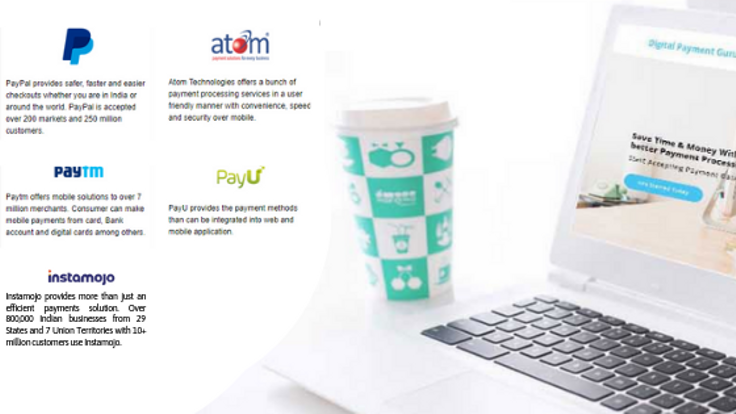
Digital Payment Guru provides top payment gateways like PayPal, PayU, Instamojo, Atom, and Paytm at the best prices compared to market rates. We help you choose the best payment gateway according to your business by analyzing your business needs.


WhatsApp Pay in the World of Payment Gateway Integration

Brace yourselves for a digital revolution that is promised to change the face of digital payments today. With the perfect combination of speed and convenience, WhatsApp Pay is set to venture into the world of Payment Gateway Integration on its app by July of this year. Imagine how convenient it will be to send and receive money while chatting with your friends. By doing so, WhatsApp has cut down on various mediums and has integrated everything into one place.


What is UPI and how does it facilitate WhatsApp Pay?

Unified Payment Interface or UPI is an online payment system that runs in real-time. It allows peer-to-peer bank transfers through a mobile platform. WhatsApp Pay is an additional in-built feature rolled out by WhatsApp that is facilitated by the Indian government’s secure UPI payments system. It allows the transfer of funds directly between the bank accounts of its users within the app itself. All the transactions take place in real-time and reflect in the bank account instantly.

How WhatsApp achieved this?

With 1.5 billion active monthly users across 180 countries in 2017, WhatsApp stands strong as the most popular messaging app today and has an ever-growing market. In 2018, WhatsApp sent out a request to the Reserve Bank of India (RBI) for approval to provide online payment options to users in India. It is working closely with many banks across the country including HDFC Bank, Axis Bank, and SBI to offer quick and easy payment solutions with just a click. WhatsApp then rolled out WhatsApp Pay as a trial for around 10 lakh users all over India.

What are the perks of using WhatsApp Pay?

Say goodbye to shuffling between apps to transfer funds to your friends! With WhatsApp Pay, you can easily send or receive money from anyone in your contact list. Payments will be a breeze when you use this UPI-based feature. Once the transfer is completed, both the sender and receiver will get a payment notification in their chat window as a confirmation. The transactions are directly linked to your bank account which makes it easy to keep track of your funds.

How is WhatsApp Pay beneficial to WhatsApp?

With an already wide user base, WhatsApp has a huge market ready for the launch of its payment feature. Since it does not require the user to put cash into the WhatsApp account or complete the tedious process of feeding in the KYC details, users are bound to prefer WhatsApp payment as a resort to their digital payment options. Integrating a payment gateway into WhatsApp is sure to become one of the smartest decisions taken by Facebook.

How to activate WhatsApp Payment?

To successfully transfer funds, users need to follow these simple steps:

  • Use a phone number that has a country code for India. This number should be registered with the UPI-supported bank account you intend to use.
  • Go to the ‘Settings drop-down and search for the ‘Payments’ tab within the app.
  • Users will next be asked to add a bank account. Select the bank through which you wish to make the transaction from the given list.
  • Next, you will be asked to accept the terms and privacy policy of WhatsApp Payments. Ensure that you go through them before you hit accept.
  • You will receive a text message that will verify your mobile number. Wait for a few seconds and you will see a list of all the bank accounts registered with the phone number you entered. Select any one from the options to continue.
  • You then need to verify the debit card details that are linked to your bank account.
  • Enter the one-time password sent to your mobile number and set up a six-digit UPI PIN.

If you cannot find the ‘Payments’ option from the ‘Settings’ drop-down, all you need to do is find someone who has activated the WhatsApp payments feature and ask them to send you funds.

online payment

How to start sending funds through WhatsApp Pay?

After setting up your details, you are now ready to send and receive payments through WhatsApp Pay. Follow these steps to send funds to anyone from your contact list:

  • Open a chat with the person you intend to pay to and tap on the ‘Attachment’ option on the text bar.
  • Enter the amount you wish to transfer. You can send money ranging between INR 1 to INR 5000.
  • Enter the six-digit UPI PIN that you had set up earlier.
  • After processing your payment, the money will be sent to the contact.
  • Once you see two ticks, be assured that your money has successfully been transferred.


You will see a similar notification when you receive online payments through WhatsApp Pay. Keep a record of the online payments by going to Settings à Payments à Viewing History.

WhatsApp is about to bring a revolutionary change to the digital payments space. This will give a tough time to other competitors like Google Pay and Paytm. The beta version alone has received such positive feedback in India that the world is ready to welcome WhatsApp as a mode of digital payment. This will cut out the need for third-party apps and offer an easier, better online payment experience. So go on and set up your WhatsApp Pay account now and experience an enhanced method of digital payment.

To know how to choose the best payment solution for your company click here.

What, how, why - UPI

WHAT? HOW? & WHY? about UPI- Unified Payment Interface

What is UPI?

Unified Payment Interface (UPI) is a single platform that provides different banking services and features. If your bank is UPI enabled, you can create a UPI ID that can be used for making transactions. A transaction can be made using an Aadhaar number, Mobile number, and Virtual Payment Address (UPI ID). UPI allows the user to transfer and receive money from one bank account to another by using a smartphone. It enables the transfer directly from a bank account to the merchant and also handles basic banking activities. UPI is a revolution that can be an alternative to e-wallets, in other words, UPI is the best thing in the online money market. 

UPI is a creation of NPCI & RBI and is an initiative by P.M Narendra Modi.

How to Use UPI?

How to use UPI?

For using UPI service on your mobile phone you just need to set up UPI ID which is linked to your bank account. There are many mobile applications that provide UPI facility, and UPI ID can be set up from these applications. UPI IDs have the same format for all UPI-enabled applications. The format is “XXXXXXXXXX@upi”,  wherein XXXXXXXXX is the number followed by @ and then followed by the application from which you’ve built your UPI ID. So if you build a UPI ID from Paytm it will be, “XXXXXXXXXXX@paytm”. It is also possible to create your own unique UPI ID.

Once you’re done with creating UPI ID the further procedure remains the same for all the mobile applications which are providing your mobile number. After providing your number an SMS is sent for fetching your bank account details. Make sure the mobile number you enter is linked with the bank account for which you seek UPI service.

Your UPI-enabled bank account will be displayed on the screen, just confirm the band details and then you can set up a 4-digit PIN, this pin will remain the same for your bank account across all the UPI-enabled applications.

UPI-enabled Banks:

UPI is the most convenient feature, many banks in India have integrated UPI payments facility into their platform. UPI facility is available through its own app. It can be implemented into their own banking app or a separate app.

There are many UPI-enabled apps, the ones listed below are the most popular,

  • State Bank of India- SBI Pay
  • Kotak Mahindra Bank- KOTAK Pay
  • Syndicate Bank- Synd UPI
  • Punjab National Bank- BHIM PNB
  • Bank of Baroda- Baroda PAY
  • Axis Bank- Axis Pay
  • Indian Overseas Bank- IOB UPI


Why UPI?

payment methods

When there are so many e-wallets, payment gateway, and online payment options available, why is the need for UPI then? Well, UPI is unlike all of these options, this initiative by NPCI eliminates the need for e-wallets and entering credit/debit card details and remembering passwords. UPI contradicts the current procedures of e-wallets and Net banking which are prone to hacking and malfunctioning, UPI is more secure. UPI is a great alternative for e-wallet for the following reasons,

Easy Usability:

Unlike e-wallet which involves several steps for money transfer, from adding the money from the bank account to the wallet and then paying the beneficiary from a wallet, it is a lengthy process, UPI is directly linked to the bank account and thus the payment is done directly from the bank account which eliminates the hassle of adding the money to wallet and then making payment giving the payer complete ease of payment.

Increased Adoption:

Many e-wallet apps have already started adopting UPI services into the application. Paytm has implemented the UPI service into their application. UPI is very much useful in transferring funds, It can be used to pay the driver’s salary or can be used to pay for goods or services. UPI platform lightened up after the launch of the BHIM app and later on apps like Google Tez increased the value of UPI in the online finance market.

No KYC:

E-wallet has this requirement called Know Your Customer(KYC) after the introduction of which e-wallets have faced a fall in payments. Whereas for UPI, KYC is not required and thus is preferred by many customers.

Incompatibility:

In e-wallets, KYC is a lengthy process because of which e-wallets have faced a fall in the volume of payments, but even after completing the KYC, you cannot transfer the money from one wallet to another.

UPI has become a central point in the process of the cashless India Initiative. UPI will transform the economy into a stronger, more independent, and purer one.

Digital Payment Guru provides the merchant with a facility in one of the payment options wherein the buyer can pay a merchant with UPI with lower transaction rates.


payment gateway

How Does Payment Gateway Charge?


If you are having an online business or planning to start an online business, a payment gateway is something that you will definitely need for accepting online payments. But when it comes to the payment gateway or any service integration, one question that comes to our mind is ‘What are the FEES?’.

Well, no service comes for free nor does payment gateway, so how do they actually charge?

When you choose a payment gateway service provider from a payment processor like Paypal or Paytm, the payment gateway is provided free of cost, which means that the code for the payment gateway is provided for free and the code needs to be blended into your website. These payment gateway processors do not provide integration service, you need to get the payment gateway blended into your website with the help of your website developer.

Usually, Payment Gateway has its own set of fees,

Setup Fee:

It is a one-time fee charged by the provider for setting up the payment gateway account and integrating the payment gateway with your website.

Annual Fees:

The payment gateway can charge you annually for the plugins, features, and support that it offers.

Transaction cost:

The payment gateway can charge you for every transaction that your customer makes. The charges are a certain percentage of every transaction plus a fixed amount.

Some payment processors do provide integration service at a cost, If you are looking for a payment gateway, You must have come across the term “One-time setup cost” which in simple words means payment gateway integration charge, wherein the payment processor does not just provides you with payment gateway but also blends it with your websites making it ready for payment acceptance.

If it is for free then how do payment gateway providers get paid?

So once the payment gateway integration into your website is completed and your website is ready to accept online payment, this is when the payment gateway providers start getting paid. Payment gateway charges you a certain percentage (1.5%-3.5%)  on every transaction that your customer makes. The charges differ for a mode of payment like Debit/Credit card, UPI or NetBanking, and more. Following are some charges from reputed payment gateways.

PayPal – 2.5%* + Fixed fee (INR 3)

Paytm–  1.75% + GST

Instamojo–  2% + Rs 3 fixed

PayU–  2% + GST

How is Digital Payment Guru different from others?

Digital Payment Guru is a payment Gateway integrator providing integration services for different types of businesses that want to start accepting payments online. What makes

Discounted  Rates:

Digital payment guru provides the payment gateway service at the cheapest rates compared to that available in the market.

Variety of Payment Gateway:

 Find different payment gateways in one place, compare the rates, and select the one that suits your business.

Customized Payment Gateways:

We provide a customized payment gateway that can be tailored according to your website and need.

Consultation:

 Our team of experts having years of experience with payment gateway integration can help you choose the best payment gateway which is suitable for your business.

Integration service:

Unlike other payment gateway service providers, Digital payment guru offers the integration service at the best rates which is a one-time cost with customer support.

Website Audit:

We conduct an entire website audit for you to ensure that the payment gateway works properly and also to find any errors in existing functionalities that can be resolved.


How is Payment Gateway different from Payment Aggregators?

Are you running an online business or planning to start one? You should have financial solutions for your online business to accept payments for the services or goods you will provide. The payment gateway is definitely something you will need, Meanwhile many merchants prefer payment aggregators because they provide a wide range of services and is beneficial in context to fees charged for those services.

What is a Payment Gateway?

Payment Gateway is online software which makes handles online payments with multiple payment modes like Credit/Debit cards, net banking, and more, It acts as an intermediate between a customer and merchant, the customer makes payments for certain goods offered by the merchant through the payment gateway.

What Are Payment Aggregators?

Payment Aggregators are basically service provider which allows the merchant to accept payments through multiple modes like credit/debit cards, Netbanking, and more without having a need for a merchant account. The term ‘aggregators’ denotes merchants are grouped together to opt for a merchant account which is controlled by a payment system on their behalf of them, whereas a merchant account, on the other hand, is owned and controlled by the merchant themselves. In other words, Payment Aggregators allow the merchant to collect the amount without setting up a merchant account that is connected with a bank.

How do Payment Gateway and Payment Aggregator work together?

It is a misconception that a payment gateway is the alone involved in an online transaction, Payment gateway handles only the data involved in the transaction and there are banks that work behind the scenes to issue merchant accounts. There can be too many merchants applying for a merchant account and willing to process payments. In such a situation, the bank has to handle both the underwriting process as well as the transaction of multiple merchants which becomes difficult. This is when a payment aggregator is needed; Payment Aggregators go through the underwriting process with acquiring banks and process payments for many merchants. Well, a Payment Aggregator can offer a Payment Gateway but a Payment Gateway cannot offer a Payment Aggregator. PayU and Instamojo are some of the payment gateway aggregators that provide payment gateway services to different merchants at a specific rate. Payment gateway service provider charges fees to the customer on behalf of the merchant and then transfers the money to the merchant account within a stipulated time period according to the payment aggregators, normally it is 3 days.

Payment Gateway vs. Payment Aggregators

Payment Gateway and Payment Aggregators both are different but interlinked, which means, payment aggregators need not act as payment gateway but payment gateway does need aggregators.

  • Payment Options: The payment gateway in India allows the merchant to accept the payment through available options that are integrated into the portal, whereas Payment Aggregators allow the merchant to collect payment with multiple options like bank transfer, e-wallet, and the latest is UPI.
  • Small Business: Payment gateways use Payment aggregators when it comes to small business because small business finds the transaction fees charged by a single payment gateway high and aggregators are beneficial in context to the cost for services.
  • Intermediates & Interface: The payment gateway acts as an intermediate between the customer and merchant, the customer makes payment through a payment gateway for certain goods/services provided by the merchant. Aggregators act as an interface for the intermediates(Payment gateway) to accept payments and make settlements.
  • Ownership: Payment gateways are owned by Payment Aggregators who cater payment processing for online businesses.
  • License: Payment aggregators require payment aggregator licenses and security certificates like PCI DSS from the Payment card industry. Payment Gateway requires RBI authorization for setting up a business.

How are Payment Gateway and Payment Aggregator beneficial for Small Businesses?

Payment Aggregators are preferred by the small business as they are cost-effective for microtransactions, and payment gateway integration becomes easy for small businesses when catered to by aggregators. Payment Aggregators tend to become a payment processing platform for small businesses because of their minimal or no startup cost and fixed rates.

Benefits of Payment Aggregator over Payment Gateway.

  • Ease of Application: Applying for a merchant account is a time-consuming process that involves a lengthy application and underwriting process, it includes a credit check, PCI compliance check and also close inspection of your business model. Whereas with Payment Aggregators there are minimal requirements and compliance checks.
  • Faster Approvals: For Payment Aggregators, approvals take a few days making it suitable for a small business where time is a constraint.
  • Get paid instantly: Once the application processing is done, the merchant can start accepting payments through multiple payment modes like Credit/Debit cards, Netbanking and more.
  • Simple Fee structure: Payment Aggregators are beneficial for small businesses making microtransactions as the cost per transaction is minimal with aggregators. So it is easier for the merchant to shell out processing fees.

What Is Online Fraud And How To Prevent It?

Have you shopped online? Online fraud is what you can come across if not aware, Online fraud is false deception intentionally made for financial gains. Online frauds are of different types:

  • Online Spoofing
  • Online Phishing.
  • Triangulation fraud.
  • Data Theft
  • Chargeback fraud.

Online Spoofing:

Spoofing is the creation of spam emails that look genuine and trick businesses to take action. No one would knowingly download a Trojan package into the system unless provoked to do it by putting fake popups on security threats for the system. How it’s done? Well, genuine-looking mail is created with corporate graphics of reputed service providers which will guide you on how to protect your business. This professional graphic makes the mail look genuine and tricks businesses to click on the link in the mail. This link executes malicious software which harms the operating system and critical files, it expands through the network and affects clients as well.

spoofing

How to prevent Spoofing?

-When you receive such suspicious emails best thing to do is hover over the senders’ address, hackers have a domain name that is very much similar to legitimate domain names, so check for spelling mistakes.

-Legitimate institute never sends an attachment like .exe, .bat, or zip, check if the email has an attachment. Red flag the mail and do not follow any instructions written in the mail.

Online Phishing:

Phishing is a form of Spoofing but unlike Spoofing where attackers tend to break into the system and fetch information, Phishing is tricking the end-user to reveal sensitive information wherein a genuine-looking message is forwarded to the end-user which consists of a fake website link. This link redirects the end user to a bogus website that asks for sensitive account-related information. Revealing this information can harm your financial assets.

How to prevent Phishing?

-There is no problem in clicking on the links when you are on a trusted site, but when it comes to clicking on the links within the email or message you need to be 100% sure as these links can be spam links. Before clicking on such a link hover over the email and check if the links direct to what it actually shows. Do not fill in any personal data on such sites as it can be a lure to steal your data.

-Install Anti Phishing tools on a browser as these tools scan the entire websites and check with a list of phishing sites. If you visit any malicious sites the tool prompts immediately, do not visit the site.

Triangulation fraud:

Triangular fraud as the name suggests involvement of three people,

  1. Customer who places an order.
  2. Fraud seller.
  3. Genuine E-commerce site.

triangulation fraud

How fraud is done? A legitimate-looking website is made by a fraud seller who displays some items at very low prices, which makes the customers buy the products. The customer is unaware of the fraud happening and places an order on this fake website. The fraud seller has stolen credit card information which he uses to make the purchase of those products for which an order has been placed on his fake website. He purchases these products from a genuine website. The customer receives all the updates with the respective product from the seller. The seller sends these updates from a genuine site to the customer.

Who is the criminal? The seller with a stolen credit card is the criminal.

Victims? Well, there are two victims, the customer, If the fraud is discovered, the genuine website will contact the customer to return the stolen products.

and the person whose credit card details were used for transactions is a victim as he is unaware of those transactions.

How to prevent Triangulation fraud?

-Speak with the customer who doubts suspect triangulation fraud, and gather as much information as possible about the seller to determine the fake website.

-Focus on the products as the seller has some list of common products which sell very frequently, this can help to analyze the pattern of fraud.

Chargeback fraud:

Chargeback is the term used for an order from a bank to a business to return the amount paid for a fraudulent purchase. How is a chargeback fraud done? The customer makes a payment through a payment gateway for certain goods or services, later on, he/she claims that the purchase was made fraudulently or makes a false request that the goods were not delivered and claims for a chargeback. When a transaction seems legitimate then chargeback is the only way to get the money back.

How to prevent Chargeback Fraud?

The customer claims a chargeback for many reasons so the first step will be to identify the reason for a chargeback. Sometimes the customer can claim a chargeback if the description doesn’t go with the product when delivered. So work on the description to avoid a chargeback.

-Use delivery confirmation to ensure that the product has been delivered to the customer, at times it happens that a customer is not at home and the package is left on the porch which can be stolen, so for you, the item is delivered but the customer did not receive the product for which chargeback can be claimed.

Why Do Your Refunds Take Time?


If you shop online then you might have faced the following situations,

  1. You return an item and the money was promised to be credited within 5-10 working days.
  2. The amount is debited from your account but the order is not placed.

You expect the refund to be reflected in your account immediately, then why does it take so long?

Well, this blog explains what exactly happens behind the scenes and what you should be doing as a customer to get your refund. The two cases mentioned above are the instances when a refund request is created. Let’s discuss these instances one by one.

1. Customer raises refund request to online business for returned goods.

Payment gateway integration

Customer purchases certain goods online which he/she then returns for some reason like poor quality of goods. The customer raises a refund.

What happens next is a return request is made by an online business via its payment gateway. The payment gateway then transfers the information to the acquired bank via API. The acquiring bank (bank associated with the online business ) communicates with the issuing bank (bank associated with the customer with which payment was made) and raises a refund request. Further, the request is accepted, filed, and processed by the issuing bank and after the process is completed the refund is reflected in the customer’s account.

Though the process seems simple on paper, it is a complicated process as the information exchange takes place between 4-5 different parties and there are many such refund requests raised, thus it takes 5-10 days for the return to reflect in the customer’s account. Sometimes it can take more than 10 days if the return request gets dropped due to System/Network failure and the request needs to be initiated again.

2. The amount is debited from the account but the order is not placed.

The customer makes an online payment for certain goods and services, he successfully checks out making the payment through a payment gateway for desired goods and services. But the order is not placed and the amount is debited from the customer’s account. The customer claims a refund.

How does the payment process work?

payment process flow

There are several steps and parties involved in the entire online payment process,

  1. A website from where the customer makes payment.
  2. Payment Gateway using which customers will make payments.
  3. Acquire a bank (bank associated with online businesses).
  4. Issuing bank( Bank associated with the customer).

While proceeding with the payment you need to choose the payment mode like Credit/Debit card and fill in the details.

Once you finish filling up the details the data is sent to the payment gateway system which then transfers the data to a bank associated with a card. Bank creates requests with payment systems like visa or master card depending on the card used. These payment systems check if the customer has the required amount on balance to pay for the purchase, if yes the bank directly connects with the merchant and the amount is transferred to the merchant’s account within several days.

Impact of failed payment:

Two-factor verification is the most relevant step when it comes to payment processing. After two-factor verification is completed a payment request is made to issuing bank which debits the required amount from the customer’s account. Issuing bank confirms the status of payment to the acquiring bank. The customer then receives the notification regarding the payment via a payment gateway.

Why Does Payment processing fail?

The payment process can fail at any step during its communication from one party to another,

Failure of payment can occur due to network or system failure as the customer should be connected to the internet until the entire transaction is completed.

There are almost 4 parties involved in the complete transaction process. Payment can fail during the communication of issuing bank with acquiring bank or can fail during the communication of the payment gateway with the acquiring bank. There are several infrastructures on which online payment systems work most of which are not that optimized to handle such issues.

Role of Payment Gateway in the refund process.

The payment gateway’s role is to check for the status of payment with the acquiring bank, payment gateway’s job doesn’t stop if the payment status with the acquiring bank is ‘failed’. When this happens, the payment gateway keeps polling the acquired bank for the payment status that is updated as ‘Failed’ and has changed to ‘Successful’. If the status is changed then the online business where the transaction was done is informed and is given two options,

  1. To collect the payment and deliver the goods/services for which the payment is made.
  2. Not to collect the payment as it is no longer in the position to serve the customer for any reason like goods for which the payment was made are no longer available. In this case, the amount will be refunded to the customer within 5-10 business days.

Do not worry about the failed payments and refunds, the amount deducted will always reflect back to the mode of payment selected while making payments. If the payment is made using a digital wallet then the amount will be refunded to a digital wallet and not the bank account.

So shop online and stop worrying about failed payments as you have knowledge about what happens behind the scenes!


Payment Links Made Simple – Even Your Kids Can Do It!

The adoption of digitization in India has created a need for effortless and accessible means of digital payment to benefit businesses of all sizes in a cashless economy. Using digitization to transform business operations reduces or even eliminates processes that do not require human intervention. Also using digital payment reduces the efforts of standing in a queue to make a payment to the client.  Small businesses like home-based businesses that deal in cash and do not have any website or online store can manage payment methods with as much ease as their online counter partners. So the question arises how this can be done? The answer to this is to address all these traditional methods, the straightforward way to do this without investing in payment infrastructure is with Digital Payment Links.

What are the Payment Links?

Payment links are web links that are securely generated and by clicking on which customers can make an online payment. Payment links provide ease and flexibility of payment for sellers as well as customers. A seller can receive payment in three simple steps:

payment gateway integration

Create Link: Payment links can be created individually or uploaded in bulk via API or Dashboard. Details like amount, receipt number, and link expiry can be managed with flexible solutions.

Share Link: After creation, the payment link can be shared through SMS, Email, Facebook Messenger, Whatsapp, and more.

Get Paid: Digital Payment Guru’s payment gateway services provide the built-in checkout method with support for multiple payment methods Credit/Debit cards, Net Banking, UPI, and more, thus reducing the payment barrier and increasing business reach.

To know more about payment links reminder click here.

Benefits of Payment Links:

  • Less chance of fraud and robbery as no cash is held on premises and for every transaction customer receives a receipt and email, and all possible information on the transaction. Also, the payment goes directly into the bank account so there is a low risk of robbery.
  • Relief from cash handling fees from the bank and the trips to banks to pay it. The transaction can be done from the mobile phone thus reducing the efforts of standing in a queue and no physical activity is done in the transfer process thus eliminating handling fees.
  • More marketing opportunities by collecting customer data for future use.
  • Average spending tends to increase. As we have access to the entire amount in the account, spending increases as one can spend until the account goes nil unlike traditional cash, one can spend only the cash he/she is carrying.

Related Post: Key Benefits Of Payment Gateway Integration for Business

Drawbacks of payment link:

  • Potential customers that would like to pay with cash may be excluded. As some people in India still feel cash payment is safe than online payment.
  • Processing fees are likely to increase if the cash is withdrawn altogether. Payment providers charge service fees so if the amount is huge the charge will be more.
  • Privacy for the customer is less. Many times credentials can be leaked while typing as someone can peek into the phone.
  • Technical Problems can cause online payment methods to go down.


Digital Payment Guru provides a customized dashboard for managing links, checking payment status, and getting real-time data insights to manage the business better. Payment links are very well suitable for all businesses whether online or offline. Payment link effortlessly links into business ecosystems and supports the host of used cases like:

Small Business: For small and traditional businesses which do not have a website or an application payment link is the best way to start accepting payment links online.

Related Post: Technology Trends Impacting Small Business Payments

Alternate Payment use case: Payment links can be used in cases such as cash on delivery or partial payment.

Chatbot integration: The implementation of chatbots is increasing for better customer experience and to provide all the technical support to the customer. Thus chatbot implementation can resolve many issues that customers are having with online payment.

Social Media Business: Running a business on WhatsApp? An easy solution to initiate payment online is by using payment links. Payment links can be shared easily on all the social media platforms like Facebook, Instagram, and many more, using which customers can make a quick payment.

When it comes to the online payment ecosystem, payment gateway integration plays a pivotal role, and choosing the wrong gateway for accepting payment from the customer can lower the entire payment process. Thus payment gateway should be picked that suits your business.

Digital Payment Guru is a team of payment gateway experts having years of experience with several banking institutions. We target to bring all MSMEs online by implementing the best digital payment gateway integration system and providing world-class experiences that are easier, quick, secure & affordable, thus generating innovative opportunities & sustainable living. We assume every business design deserves to be on the Internet to flourish.